Mining Scripture

Mining Scripture

by Rick Neubrander
Season 1

Did Jesus Declare All Foods Clean?

AI
What if the dietary laws in Leviticus 11 and Deuteronomy 14 are not obsolete, but still carry profound wisdom for God’s people today? Most Christians have been taught that Jesus fulfilled the law, declared all foods clean in Mark 7:19, and Peter’s vision in Acts 10 removed any distinction between clean and unclean meats. “Grace means freedom to eat whatever we want” — bacon, shrimp, pork, and shellfish are now fully acceptable. But what if that popular conclusion rests on a surface-level reading that misses the actual context of Scripture? In this episode, we slow down and examine the text: Jesus confronting handwashing traditions in Mark 7 (not the food laws themselves), the call to holiness in Leviticus 11, and why Peter still avoided unclean food years after the resurrection. We ask the uncomfortable questions: If the food laws were truly abolished, why did the early believers, including the apostles, continue to observe them? What does it mean for us today to live as a set-apart people in a world that eats without regard for God’s design? Could ignoring these instructions have spiritual, physical, or covenantal consequences modern teaching has overlooked? This podcast was generated from my full and complete study. I had AI turn it into an easy-to-listen discussion. For the full document, click the link below. Is All Food Clean?
The Truth About Hell and the Immortal Soul?
AI
What if one of the most comforting beliefs in modern Christianity — that every human has an immortal soul that leaves the body at death and goes immediately to heaven or hell — is not actually taught in the Bible? In this deep-dive episode of Mining Scripture, we examine the question verse by verse from Genesis to Revelation: Does Scripture teach that we possess an immortal soul? Or has a popular idea, influenced more by Greek philosophy than Hebrew and apostolic teaching, quietly shaped what many Christians assume is biblical truth? If humans already have immortal souls, why does the Bible call eternal life a gift given only through Christ? Why does it describe death as “sleep” until the resurrection rather than immediate conscious afterlife? Where did the idea of an immortal soul originate, and why is it never clearly stated in Scripture the way most people assume? Whether you’ve always believed in the immortal soul or you’ve quietly wondered about verses that seem to say something different, this episode invites you to test everything against the full testimony of God’s Word. This podcast was generated from my full and complete study. I had AI make it into a discussion so it is easy to listen to. If you wish to see the full document click on the link below. Do we have an immortal soul?
The Old & New Covenant: What are the Differences?

AI
What if one of the most misunderstood ideas in modern Christianity is that the Old Covenant is simply “done away with” — replaced, discarded, and no longer relevant for believers today? In this deep-dive episode of Mining Scripture, we slow down and examine the actual difference between the Old Covenant and the New Covenant. Did God truly abolish what came before, or did He fulfill and transform it in ways most of us have never been taught? From Genesis to the Prophets, from Moses to Yeshua, we trace the thread of covenant language through Scripture itself — not tradition, not assumption, just the text. Along the way, we confront the quiet tensions many believers feel: Why does Jesus quote, uphold, and deepen the Torah rather than dismiss it as obsolete? What did the apostles actually mean when they spoke about the “new” covenant — and what was truly new about it? Is the real issue the Law itself… or how God writes it on the heart? How do we reconcile grace with commandments that were never framed as contrary to it? This episode invites you to step back from inherited assumptions and see the covenant story as one continuous revelation rather than two disconnected systems. This podcast was generated from my full and complete study. I had AI turn it into a conversational format to make it easier to listen to. If you would like to explore the full written document, you can find it through the link below. The Old & the New Covenant
Does the Bible Teach Trinity?
AI
What if one of the most foundational and unquestioned doctrines in modern Christianity — the Trinity — is far more complex, and far less explicitly defined in Scripture, than many believers realize? In this deep-dive episode of Mining Scripture, we slow down and examine a question that is rarely explored without assumptions already in place: Does the Bible actually teach the doctrine of the Trinity as it is commonly presented today, or has a later theological framework been read back into the text? Moving carefully from Genesis to Revelation, we examine the passages most often used to support Trinitarian theology — and the many passages that seem to speak in a different voice — allowing Scripture to interpret Scripture rather than beginning with creeds and councils. Along the way, we wrestle with questions many Christians have wondered about but were never encouraged to ask: Why do Jesus and the apostles consistently speak of one God — the Father — while distinguishing Jesus as His Son? What role does the Holy Spirit play in Scripture — person, presence, or power? And when did formal Trinitarian language actually enter Christian theology? This episode is not an attack on faith — it is an invitation to deeper faith rooted in the text itself. We set aside later doctrinal formulas long enough to hear the biblical writers on their own terms, in their own language, within their own worldview. Whether you have always accepted the Trinity without question, or you have a different outlook, this episode will encourage you to test everything against the full testimony of God’s Word. This podcast was generated from my full and complete study. I had AI turn it into a conversational format to make it easier to listen to. If you would like to explore the full written document, you can find it through the link below. Trinity
Has the Sabbath been Altered?
AI
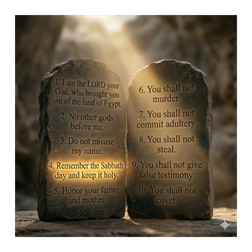
What if one of the most overlooked and yet clearly commanded practices in the entire Bible — the seventh-day Sabbath — is far more important to God’s people than most modern Christians realize? In this deep-dive episode of Mining Scripture, we slow down and examine the Sabbath question from Genesis to Revelation, verse by verse. We ask: Does the Bible actually teach that the seventh-day Sabbath was only for ancient Israel, or is it a lasting gift and sign for all of God’s people throughout time? Why does God repeatedly call the Sabbath a holy, perpetual covenant and a sign between Him and His people? If the Sabbath was “nailed to the cross,” why did Jesus, the apostles, and the early church continue keeping it? What does the Sabbath reveal about God’s character, His rest, and the New Covenant? How does remembering the Sabbath change the way we understand creation, redemption, and the coming kingdom? Whether you’ve always kept Sunday, always kept Saturday, or you’ve quietly wondered why the topic creates so much confusion, this episode will invite you to test everything against the full testimony of God’s Word — without tradition or assumption getting in the way. This podcast was generated from my full and complete study. I had AI make it into a discussion so it is easy to listen to. If you wish to see the full document click on the link below. Sabbath
Once Saved, Always Saved. Is it Biblical?
AI
What if one of the most comforting and widely accepted teachings in modern Christianity — that once a person is truly saved, they can never lose their salvation no matter what they do — is not actually taught in Scripture the way many assume? In this deep-dive episode of Mining Scripture, we slow down and examine the question verse by verse, from the Gospels to the letters of Paul and all the way to Revelation: Does the Bible actually teach “once saved, always saved”? Or has a popular idea — shaped more by later theology than by the full counsel of God’s Word — quietly shaped what many Christians believe? If salvation is eternally secure no matter what, why does Jesus repeatedly warn His followers about falling away, being cut off, or having their names blotted out of the Book of Life? Why do the apostles urge believers to “make their calling and election sure,” to continue in the faith, and to work out their salvation with fear and trembling? What does the Bible actually say about the possibility of apostasy, and how does it balance God’s preserving power with human responsibility? How does reading the warnings and promises of Scripture together change the way we understand assurance and perseverance? Whether you’ve always believed in eternal security or you’ve quietly wrestled with passages that seem to say something different, this episode will invite you to test everything against the full testimony of God’s Word — honestly and without assumption. This podcast was generated from my full and complete study. I had AI make it into a discussion so it is easy to listen to. If you wish to see the full document click on the link below. Once saved, always saved!
Is Reformed Theology Biblical (T.U.L.I.P)?

AI
What if one of the most influential and carefully systematized doctrines in modern Christianity — the Five Points of Calvinism known as T.U.L.I.P. — contains assumptions that, while comforting to many, may not fully align with the whole counsel of Scripture? In this deep-dive episode of Mining Scripture, we slow down and examine each point of T.U.L.I.P. verse by verse, from Genesis to Revelation: Total Depravity, Unconditional Election, Limited Atonement, Irresistible Grace, and Perseverance of the Saints. We ask honestly: Does the Bible actually teach T.U.L.I.P. as it is commonly presented today, or has a powerful theological system — developed centuries after the apostles — shaped how many Christians read the text? If God chooses some for salvation unconditionally and others for damnation, how do we reconcile this with the many passages that say God desires all people to be saved? Does “Limited Atonement” truly reflect the biblical language that Christ died for the sins of the whole world? Why does Scripture repeatedly call people to respond, repent, and believe if grace is irresistible and election is unconditional? How do the warnings about falling away and the calls to persevere fit with the idea that the truly saved will always persevere? Whether you’ve long embraced Reformed Theology, grew up in a Calvinist tradition, or you’ve quietly wondered why certain verses seem to create tension with T.U.L.I.P., this episode will invite you to test everything against the full testimony of God’s Word — with honesty, humility, and a willingness to let Scripture speak for itself. This podcast was generated from my full and complete study. I had AI make it into a discussion so it is easy to listen to. If you wish to see the full document click on the link below. TULIP
Is there an Investigative Judgement?
AI
What if one of the most unique and debated doctrines in Adventist Christianity — the Investigative Judgment — is actually a deeply biblical teaching that reveals both God’s justice and His mercy in a remarkable way? In this deep-dive episode of Mining Scripture, we slow down and examine the Investigative Judgment verse by verse, tracing it from the Old Testament sanctuary service all the way through Daniel, the Gospels, and the book of Revelation. We ask: Does the Bible truly teach a pre-Advent judgment where the lives of the professed followers of God are reviewed before the Second Coming, or is this idea simply a later theological construct? Why does the Bible describe a judgment that begins with the house of God rather than only judging the wicked at the end? What is the real meaning of the “cleansing of the sanctuary” in Daniel 8:14, and how does it connect to the heavenly Day of Atonement? If salvation is by grace through faith, why would God still need to investigate the records of believers? How does the Investigative Judgment beautifully uphold both the assurance of salvation and the seriousness of genuine discipleship? Whether you’re an Adventist who has always believed in the Investigative Judgment, a Christian from another background who finds the teaching strange, or someone who has quietly wondered how it fits with the gospel, this episode will invite you to test everything against the full testimony of God’s Word — with honesty and an open heart. This podcast was generated from my full and complete study. I had AI make it into a discussion so it is easy to listen to. If you wish to see the full document click on the link below. Investigative Judgement
What is Secret about the Rapture?
AI
What if one of the most popular and comforting ideas in modern Christianity — that believers will suddenly be secretly snatched away to heaven in a pre-tribulation Rapture, leaving the world behind — is not actually taught in Scripture? In this deep-dive episode of Mining Scripture, we slow down and examine the question verse by verse, from the Gospels to the letters of Paul and the book of Revelation: Does the Bible actually teach a secret Rapture of the Church before the tribulation? Or has a relatively recent idea — shaped more by 19th-century teachings than by the full testimony of the Hebrew and apostolic writings — quietly shaped what many Christians assume is true? If the Rapture is a secret event that removes believers before tribulation, why does Jesus say His coming will be visible like lightning and every eye will see Him? Why does Scripture repeatedly describe the resurrection and gathering of believers as happening at the last trumpet, on the day of the Lord, rather than in a separate, silent event years earlier? Where did the popular pre-tribulation Rapture idea actually originate, and why is the exact sequence and timing never clearly stated in the Bible the way most people assume? What changes when we read the promises about Christ’s return and the end times through the lens of the whole counsel of God instead of later traditions? Whether you’ve always believed in a pre-tribulation Rapture or you’ve quietly wondered why certain verses seem to describe only one future coming of Christ, this episode will invite you to test everything against the full testimony of God’s Word. This podcast was generated from my full and complete study. I had AI make it into a discussion so it is easy to listen to. If you wish to see the full document, click on the link below. The Rapture
Christ's Last Week - Triumphal Entry to Resurrection
AI
What if one of the most important and widely accepted timelines in modern Christianity — the sequence of events from the Triumphal Entry to the Resurrection — deserves a careful, verse-by-verse examination straight from the Gospels? In this deep-dive episode of Mining Scripture, we slow down and walk through the final week of Christ day by day and hour by hour, comparing the accounts in Matthew, Mark, Luke, and John: What exactly does the Bible say happened from the night of the Last Supper, through the betrayal, trials, crucifixion, burial, and the empty tomb on the third day? Or has a simplified traditional outline quietly shaped what many Christians assume is the full story? If the timeline is straightforward, why do the four Gospels give different details about the timing of certain events, the Passover meal, and the exact sequence of trials? Why does Jesus emphasize “three days and three nights” in the heart of the earth, and how does that fit with the actual hours from burial to resurrection? Where do common assumptions about “Good Friday to Easter Sunday” come from, and how closely do they align with the full testimony of the Hebrew calendar and the apostolic writings? What changes when we read the Passion narrative through the lens of the whole counsel of God — paying close attention to the Jewish feasts, the hours of the day, and the repeated emphasis on fulfillment of Scripture — instead of later traditions? Whether you’ve always followed the traditional Holy Week timeline or you’ve quietly wondered how all the pieces fit together without contradiction, this episode will invite you to test everything against the full testimony of God’s Word. This podcast was generated from my full and complete study. I had AI make it into a discussion so it is easy to listen to. If you wish to see the full document click on the link below. Last Week Of Christ
1 of 4