Magic in the Moment: Mindfulness In Real Time

Magic in the Moment: Mindfulness In Real Time

by Clayton Platt
Season 1
Summer Series Ep 2: Two Ears One Mouth
What is the last thing you told yourself you would start once things settled down a little? That is exactly where this episode begins. In this first installment of a special summer series, Clayton goes deeper into the ideas at the heart of his new book, Magic in the Moment, Mindfulness in Real Time. Not reading it word for word, but using each chapter as a starting point for the kind of conversation this show does best. Personal, honest, and grounded in real life. Chapter one is called Start Where You Are. And Clayton opens it with something he admits is not easy to say as a mindfulness teacher. He is a world-class procrastinator when it comes to beginning things. He will wait for the right conditions, the right alignment, the right moment of readiness. And what twenty-five years of sitting practice has taught him is that the right time is almost never the real issue. The real issue is a voice. You probably know the one. It shows up whenever something matters. It sounds reasonable, even wise. And it is almost never telling the truth. This episode explores what meditation teaches us about beginning, why the wandering mind is not a problem to solve but a practice to return to, and how that same invitation available on the cushion is available right now in every area of your life where you have been waiting for the starting line to appear. It has already appeared. It is here. It has always been here. This episode is brought to you by Meditation for Leadership. Leadership happens in the space before the decision. Meditation for Leadership helps you pause under pressure, notice what is really happening, and choose how you respond instead of react. Visit www.meditation4leadership.org to learn more.
Summer Series Ep 1: Start Where You Are
What is the last thing you told yourself you would start once things settled down a little? That is exactly where this episode begins. In this first installment of a special summer series, Clayton goes deeper into the ideas at the heart of his new book, Magic in the Moment, Mindfulness in Real Time. Not reading it word for word, but using each chapter as a starting point for the kind of conversation this show does best. Personal, honest, and grounded in real life. Chapter one is called Start Where You Are. And Clayton opens it with something he admits is not easy to say as a mindfulness teacher. He is a world-class procrastinator when it comes to beginning things. He will wait for the right conditions, the right alignment, the right moment of readiness. And what twenty-five years of sitting practice has taught him is that the right time is almost never the real issue. The real issue is a voice. You probably know the one. It shows up whenever something matters. It sounds reasonable, even wise. And it is almost never telling the truth. This episode explores what meditation teaches us about beginning, why the wandering mind is not a problem to solve but a practice to return to, and how that same invitation available on the cushion is available right now in every area of your life where you have been waiting for the starting line to appear. It has already appeared. It is here. It has always been here. This episode is brought to you by Meditation for Leadership. Leadership happens in the space before the decision. Meditation for Leadership helps you pause under pressure, notice what is really happening, and choose how you respond instead of react. Visit www.meditation4leadership.org to learn more.
Flipping the Mic: Producer Jon Goehring on Presence, Storytelling, Mindfulness, and OCD
Every episode of this show starts the same way for you. You press play and a finished conversation appears. The music rises on cue. The pauses sit where they should. The moments that matter rise to the top. Today Clayton flips the microphone around. Jon Goehring of StoryTrust Media has been inside almost every episode of this show, not as a guest but as the person who sits alone with the raw recording, listening and watching closely, deciding what stays and what goes. He has heard Clayton stumble over names, restart sentences, and occasionally compete with a barking dog for the microphone. He knows this show from the inside out. And somewhere in that editing process, something unexpected kept happening. This conversation goes places that were not planned. Jon shares what it actually feels like to sit with someone else's story so fully that you stop editing from your own opinions and start listening from something quieter. He talks about what storytelling has always meant to him and why the medium keeps changing while something fundamental about it never does. And then he goes somewhere most guests do not. Jon opens up honestly about living with OCD, what it actually is beneath the cultural shorthand, how it has shaped his relationship with his own mind, and why the very act of editing a podcast has become one of the most reliable mindfulness practices in his life. Not because he planned it that way. Because the work itself keeps putting him there. Find Jon Goehring and StoryTrust Media at storytrust.media. The Limitless Leadership Lounge podcast is at limitlessleadershippodcast.com.
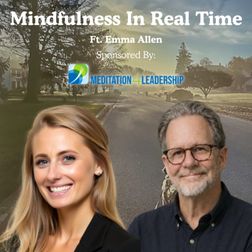
How Kindness Travels: What Stops Us from Being Kind and What Sets Us Free
Late night. Cross County Parkway. A flat tire. A really nice suit. And then three strangers pulled over. In this solo episode Clayton returns to a moment from the mid-1990s that he has been carrying for thirty years without quite having the language for it, until a recent episode of the podcast Hidden Brain and psychologist Amit Kumar's research on kindness finally gave it a name. What Kumar found across study after study is quietly extraordinary. When people perform acts of kindness they consistently underestimate how much it will mean to the person receiving it. We evaluate the competence of what we are offering. The receiver experiences the warmth of being seen. Those are two completely different things. And we keep talking ourselves out of acting because we are measuring the wrong one. The three men who stopped on that highway thirty years ago almost did not. Not because they did not want to help but because they were afraid of how they would be received. That hesitation, and what it cost them almost to act on it, is at the heart of everything Clayton explores in this episode. What does the pause between impulse and action actually contain? What would it cost us to simply make the offer, not solve the problem, not have the right words, just stop and say I see you? And what happens to both people when that threshold gets crossed? This one stays with you. Find Clayton at mindfulnessrealtime.com. The Friday morning sangha on Zoom is open to all.
The Leadership Stroke: Frank Rowe on Precision, Presence, and the Rowing Life
Picture a rowing eight at full speed. Eight people. One boat. Every blade entering the water at the same instant. Nobody pulling harder than anyone else. The whole thing moving like a single organism. Now here is the question worth sitting with. What is actually happening inside those eight people? Frank Rowe has spent a lifetime asking a version of that question, first in the boat and then in the boardroom. He walked onto the rowing team at UC Santa Barbara with no experience, made it to the 1991 Pan American Games, and somewhere along the way discovered that everything the boat demands of you, trust, timing, precision, and the willingness to say what is actually true, is exactly what great leadership requires too. His new book is The Leadership Stroke: Precision, Practice and Performance Under Pressure. And the conversation that unfolds from it goes places that will surprise you. There is a story about a day on the water in Boston when something unspoken between teammates finally got named, and the boat got faster. Not because anyone's technique changed. Because the space between them did. There is a conversation about beginner's mind, and what it looks like when a 43-year rower goes out on the water and pretends he has never rowed before, noticing things he had long since stopped seeing. And there is an honest reckoning with identity, performance, and what it actually means to keep showing up for something you love when the results are no longer what they once were. Frank and Clayton also share something personal in this one. Both rowed at the collegiate level. Both found the sport through something close to accident. And both carry it with them still, as a lens, a practice, and a reminder that presence is not just a concept. It is something you can feel in your body, in a boat, at full speed, when eight people finally stop fighting each other and start moving as one. About Frank Rowe: Executive Coaching: https://cecondopinion.com/ Author of The Leadership Stroke: https://books.google.com/books/about/The_Leadership_Stroke.html?id=59MO0gEACAAJ Linkedin: https://www.linkedin.com/in/frankrowejr/ Philadelphia City Rowing: https://philadelphiacityrowing.org/ Philadelphia City Rowing Podcast Episode With Frank: https://open.spotify.com/episode/6tBYxqA7gPSO95yHApNBbs?si=zuld3SdyTDudyXkVy-rtVw
The Door Was Always Open: Three Voices on Presence and Coming Home
Three guests. Three very different stories. One thread running through all of them that took three conversations to fully see. Hans Andreas Weygoldt spent 15 years running a family business while quietly losing himself inside it. Ray Arata has devoted more than 25 years to helping men lead from the heart, and yet the hardest work of his life turned out to be something he had never taught anyone else. And Kira Higgs sat down in 2020 to write a business book, and by day two, the book said no. What connects them is not a method or a framework. It is something quieter and more essential than either of those things. And it has been waiting for each of them the whole time. Clayton weaves these three voices together into a single conversation they never actually had, and what emerges is one of the most honest explorations of presence, pain, acceptance, and the courage it takes to finally stop pushing against the door that this podcast has ever produced. Links to the full episodes: Hans Andreas Weygoldt: https://www.youtube.com/watch?v=i11y873ZmaM Ray Arata: https://youtu.be/Q0xjsxPdnDs?si=Zp_VK41vRf7qdrdH Kira Higgs: https://youtu.be/TVOHtmq1i_g?si=W-27ZdbvCQp2wa7O
Read the Room: Jake Stahl on Presence, Invisible Captions, and Being Heard
Before you say a single word, people are already reading you. Not your resume. Not your title. Not your carefully prepared talking points. You. The way you carry yourself, the energy you bring into the room, the invisible caption floating above your head that is the accumulated echo of every interaction, every expectation, and every unspoken belief you have ever carried into a conversation. Jake Stahl has spent his career decoding exactly what that means and what to do about it. Creator of Neurostrategy, CEO of Orchestrate, author of Own the Room, and one of the most sought after behavioral trainers working today, Jake brings a fascinatingly parallel perspective to the work Clayton does through mindfulness. Different vocabulary, different entry points, strikingly similar destination. What Jake calls reading the room, Clayton calls awareness. What Jake calls recalibrating in real time, Clayton calls the space between stimulus and response. And what both of them have discovered through their very different paths is that showing up fully and authentically is not a personality trait. It is a practice. One that can be learned, developed, and deepened over time. This conversation goes places you will not expect. A study involving professors and college students that reveals something almost unsettling about how quickly and accurately we read each other without a single word being spoken. The neuroscience behind why a slight tilt of the head in a headshot builds trust before you have even met someone. The difference between talking to a person and talking to the invisible caption above their head. And a surprisingly simple tool for recalibrating a conversation that is going sideways before it goes any further. There is also an honest and genuinely funny exchange about imperfection, self-compassion, and the very human reality that nobody masters communication. They just get a little better at it. This episode is for anyone who has ever walked out of a conversation wondering what just happened, and for anyone who suspects they are broadcasting something they did not intend to. About Jake Stahl: CEO of Orchestraight: www.orchestraight.com Author of Own the Room: Own the Room: How to Communicate to Be Seen, Heard and Respected: Stahl, Jake: 9781968318253: Amazon.com: Books Host of the Own the Room podcast: Own the Room with Jake Stahl - YouTube Watch for those moments of magic when mindfulness shows up in real time in your life.
The Signal I Missed: Awareness, Energy, and the Curious Life
In 1979, Clayton's body answered before his mind had a chance to weigh in. He could not sleep for two nights. Not anxious, sleepless nights. Alive ones. In this deeply personal solo episode, Clayton shares a story he has carried for over 40 years, one that asks a question most of us quietly avoid: what has your energy been trying to tell you that you have not yet been willing to hear? This is not a productivity episode. It is not a career advice episode. It is something rarer than either of those things. It is an honest conversation about the signals we learn to ignore, the assumptions we mistake for physics, and what becomes possible when we finally slow down enough to feel what is actually alive in us. Clayton draws on the work of Stanford professor Dave Evans, the Buddhist concept of prajna, 25 years of contemplative practice, and one conversation with a dear friend that stopped him cold. The energy, he says, is patient. It has been waiting. This episode is for anyone who has ever had a moment when their body knew something their mind had not yet caught up to. And for anyone who wonders whether it might be too late to listen. It is not. Find Clayton at mindfulnessrealtime.com and on LinkedIn, Facebook, and Instagram.
The Identity Advantage: Kaihan Krippendorff on Strategy, Presence, and Outthinkers
What business are you really in? And who are you really being while you run it? Those two questions sit at the heart of this rich and wide ranging conversation between Clayton and Kaihan Krippendorff, author of six books, founder of Outthinker, podcast host of Outthinkers, and one of the most original thinkers working at the intersection of strategy, identity, and human potential. Kaihan opens with a story about his son, a kid who played piano, built gaming computers, loved video games, and resisted every sport his parents pushed him toward until robotics brought it all together in his senior year. In that moment, the dots connected. The programming, the building, the gaming, the mechanical intuition, it all cohered into something real and his own. For Kaihan, watching that unfold was not just a parenting milestone. It was a living demonstration of the power of identity to quietly shape everything we see and everything we choose. That insight drives the work he does with organizations through his IDEA framework, a four part approach to strategy built around imagination, dissection, expansion, and analysis. But beneath the business language, Kaihan is really talking about something that listeners of this podcast will recognize immediately. The stories we live inside. The narratives we inherited without knowing it. The identities we mistake for fixed truths when they are actually just hats we have been wearing long enough to forget we put them on. Kaihan shares his own moment of reckoning with this, the realization that his identity as Kaihan the Dreamer, while genuine and valuable, was quietly limiting him. Not because dreaming is wrong, but because a dreamer who cannot learn sales, cannot allocate capital, and cannot build operations will always stop at the threshold of what is possible. The shift to Kaihan the Learner opened everything. Not by abandoning the dreamer but by adding to him. The conversation moves through neuroscience, mindfulness, AI, branding, visualization, and the Taoist framework behind Kaihan's book The Way of Innovation. Clayton and Kaihan explore how meditation develops the capacity for mental time travel, how emotional memory shapes what the brain treats as possible, and how the most powerful brands in the world connect not at the functional level but at the identity level, not what a product does but who you are when you use it. About Kaihan Krippendorff: Author of six books including Outthink the Competition and The Way of Innovation, founder of Outthinker, and host of the Outthinkers podcast. Frequent contributor to Harvard Business Review and Fast Company. https://kaihan.net/ https://www.amazon.com/stores/Kaihan-Krippendorff/author/B001JPBYKU?ref=ap_rdr&shoppingPortalEnabled=true&ccs_id=d82bd747-7b6a-4932-87e6-702df7846ad5 https://www.fastcompany.com/user/kaihan-krippendorff https://www.instagram.com/kaihankrippendorff/ https://www.linkedin.com/in/kaihankrippendorff/
Coming Home to Yourself: Three Scientists on Presence and Connection
Two strangers. A pile of Legos. No talking. And their heartbeats started to synchronize. That is not a metaphor. That is what the data showed. And according to neuroscientist Dr. Michael Platt, it works every time, but only when both people have genuinely arrived. When both people are truly present. In this solo compilation episode, Clayton weaves together three conversations from the Magic in the Moment archive, each offering a different doorway into the same truth. What does it actually mean to come home to yourself? And what becomes possible, in your body, your relationships, and your work, when you do? Dr. Vera Ludwig is a psychologist and neuroscientist at the University of Pennsylvania's Positive Psychology Center, where she directs the Human Sexuality and Wellbeing Project. She spent her PhD studying willpower and self-control, and then quietly noticed that the way she was living, pushing from goal to goal in a constant state of forcing, was not actually working. She burned out. She ended up on a small island in Germany teaching yoga and running workshops. And something happened there that no amount of willpower had ever produced. A flow she had never experienced in her academic life. What she discovered was the difference between forcing yourself toward a life and listening your way into one. Listen to the full conversation with Dr. Vera Ludwig here: https://rss.com/podcasts/mindfulness-in-real-time/2473633/ Elizabeth McKenzie is a certified mindfulness teacher and researcher on the faculty at the University of Pennsylvania, whose peer-reviewed work examines what happens when mindfulness is woven into the fabric of learning itself. She brings to this episode a quote from Jon Kabat-Zinn that stops Clayton in his tracks: when people can appreciate that awareness is at least as powerful as cognition, things change. Western education has focused almost exclusively on thinking, analyzing, and problem-solving. What gets left out of the equation, Elizabeth argues, is pure awareness, and that is actually a big part of being human. She also offers one of the most quietly powerful descriptions of mindfulness practice in the episode: sometimes the practice is most powerful in the pause before the reactive word, in the space where we choose not to say the thing burning on our tongue. Listen to the full conversation with Elizabeth McKenzie here: https://podcasts.apple.com/tw/podcast/beyond-stress-relief-how-awareness-transforms-education/id1815592752?i=1000735289766 Dr. Michael Platt is the James S. Riepe University Professor at the University of Pennsylvania, holding appointments in neuroscience, psychology, and marketing, and directing the Wharton Neuroscience Initiative. His research on physiological synchrony reveals something almost astonishing: when two people are truly present with each other, not performing, not distracted, not managing an impression, their heartbeats begin to align. Their breathing synchronizes. Their nervous systems come into relationship. This is not metaphor. This is biology. And it only happens when both people have arrived. What breaks it is equally telling. Distraction breaks it. Half presence breaks it. The body knows the difference between being truly seen and being processed. Listen to the full conversation with Dr. Michael Platt here: https://rss.com/podcasts/mindfulness-in-real-time/2119439/ Watch for those moments of magic when mindfulness shows up in real time in your life.
1 of 5