Mapping Healthcare: Healthcare improvement lessons from around the world

Mapping Healthcare: Healthcare improvement lessons from around the world

by Dr. Ulfat Shaikh
Season 2
38. The Words We Wear: Clarifying Professional Identity in Healthcare from Vermont
Is your job title just a label or a signal of trust? In this episode, we go beyond the word "provider" to explore the ethics of naming in modern medicine. From the 1965 Medicare origins of the "P-word" to the complex journey of Professional Identity Formation, we discuss how titles like Physician, Nurse Practitioner, and Physician Assistant shape team-based care and the therapeutic relationship. Jan Carney tells us how the ethics of names and labels can change healthcare from a commercial transaction back into a human calling. Discover why clarity is a form of kindness for patients and why reclaiming professional identities is vital for clinician wellbeing and resilience. References: Beasley JW, Roberts RG, Goroll AH. Promoting trust and morale by changing how the word provider is used: encouraging specificity and transparency. JAMA. 2021;325(23):2343-2344. Sulmasy LS, Carney JK; ACP Ethics, Professionalism and Human Rights Committee. Physicians are not providers: the ethical significance of names in health care: a policy paper from the American College of Physicians. Ann Intern Med. 2026;179:556-558. Cornett M, Palermo C, Ash S. Professional identity research in the health professions—a scoping review. Adv Health Sci Educ Theory Pract. 2023;28:589-642. Cruess RL, Cruess SR, Boudreau JD, Snell L, Steinert Y. Reframing medical education to support professional identity formation. Acad Med. 2014;89(11):1446-1451. Goroll AH. Eliminating the term primary care “provider”: consequences of language for the future of primary care. JAMA. 2016;315(17):1833-1834. doi:10.1001/jama.2016.2329 Mangione S, Mandell BF, Post SG. The language game: we are physicians, not providers. Am J Med. 2021;134(12):1444-1446. Mayer M, Newton D. Primary care “provider” and professional identity [letter]. JAMA. 2016;316(13):1411-1412. Monrouxe LV. Identity, identification and medical education: why should we care? Med Educ. 2010;44(1):40-49. Sternszus R, Steinert Y, Razack S, et al. Being, becoming, and belonging: reconceptualizing professional identity formation in medicine. Front Med (Lausanne). 2024;11:1438082. Wald HS. Professional identity (trans)formation in medical education: reflection, relationship, resilience. Acad Med. 2015;90(6):701-706.

37. Minding the Leadership Communication Gap in Healthcare from São Paulo
We invest millions in health technology, redesign workflows, and publish protocols grounded in the best available evidence. Yet many healthcare improvement efforts stall or never fully take hold. Not because the idea was wrong, but because the message didn’t land. Camilla Covello shares how somewhere between the boardroom and the bedside, communication breaks down and frontline teams are left to interpret change on their own. We explore communication gaps in healthcare leadership, what the evidence tells us about why healthcare improvement fails, and how we can get it right. References: Edmondson AC. Psychological Safety and Learning Behavior in Work Teams. Admin Sci Q. 1999;44(2):350-383. Frankel A, Graydon-Baker E, Neppl C, et al. Patient Safety Leadership WalkRounds. Jt Comm J Qual Saf. 2003;29(1):16-26. Ginsburg L, Easterbrook A, Geerts A, et al. ‘We listened and supported and depended on each other’: a qualitative study of how leadership influences implementation of QI interventions. BMJ Qual Saf. 2025;34(2):146-156. Singh A, Yeravdekar R, Jadhav S. Investigating the influence of selected leadership styles on patient safety and quality of care: a systematic review and meta-analysis. BMJ Leader. 2024;8(4):208-214. Tawfik DS, Adair KC, Palassof S, et al. Leadership Behavior Associations with Domains of Safety Culture, Engagement, and Health Care Worker Well-Being. Jt Comm J Qual Patient Saf. 2023;49(3):156-165.
36. The Cost of Caring: Keeping Healthcare Workers Safe in Thailand
Remember those clanging pots for healthcare heroes? The gratitude has faded but the dangers are louder than ever. In this episode, we explore five hazards - biological, sharps, ergonomic, violent, and psychological - threatening those who care for us. There are two million needle stick injuries each year and 60% of healthcare staff face workplace violence. Piyawan Limpanyalert and I look at solutions from motorized lifts to save backs to streamlining paperwork to save minds. We move beyond resilience to see what health systems can do to ensure healthcare worker safety. References: Bouya S, Balouchi A, Rafiemanesh H, et al. Global Prevalence and Device Related Causes of Needle Stick Injuries among Health Care Workers: A Systematic Review and Meta-Analysis. Ann Glob Health. 2020;86(1):35, 1–8. Abdul Halim NSS, Ripin ZM, Ridzwan MIZ. Efficacy of Interventions in Reducing the Risks of Work-Related Musculoskeletal Disorders Among Healthcare Workers: A Systematic Review and Meta-Analysis. Workplace Health Saf. 2023;71(12):575-587. Harrell M, Selvaraj SA, Edgar M. DANGER! Crisis Health Workers at Risk. Int J Environ Res Public Health. 2020;17(15):5270. Jacquier-Bret J, Gorce P. Prevalence of Body Area Work-Related Musculoskeletal Disorders among Healthcare Professionals: A Systematic Review. Int J Environ Res Public Health. 2023;20(1):841. Krishnanmoorthy G, Rampal S, Karuthan SR, Baharudin F, Krishna R. Effectiveness of Participatory Ergonomic Interventions on Work-Related Musculoskeletal Disorders, Sick Absenteeism, and Work Performance Among Nurses: Systematic Review. JMIR Hum Factors. 2025;12:e68522. Liu J, Gan Y, Jiang H, et al. Prevalence of workplace violence against healthcare workers: a systematic review and meta-analysis. Occup Environ Med. 2019;76(12):927-937. Mohr DC, Elnahal S, Marks ML, Derickson R, Osatuke K. Burnout Trends Among US Health Care Workers. JAMA Netw Open. 2025;8(4):e255954. Murthy VH. Confronting Health Worker Burnout and Well-Being. N Engl J Med. 2022;387(7):577-579. O’Brien CJ, van Zundert AAJ, Barach PR. The growing burden of workplace violence against healthcare workers: trends in prevalence, risk factors, consequences, and prevention – a narrative review. eClinicalMedicine. 2024;72:102641. Ugonabo N, Shah P, Adotama P, Zampella JG. Needlestick and Sharps Injuries Among Resident Physicians. JAMA Surg. 2021;156(1):96-97.
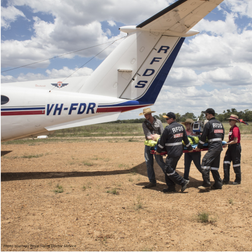
35. Healthcare in the Air: Retrieval Medicine in Remote Australia
How would you survive a critical emergency hundreds of miles from civilization? Retrieval medicine is a high-stakes flying ICU that brings medical expertise directly to a patient’s side. In this episode we trace the evolution of care in the air, from 1870s mail balloons to modern jets that fight the laws of physics. Shannon Nott from the Royal Flying Doctor Service tells us about delivering lifesaving care across vast distances in the Australian Outback. From the hidden danger of expanding gases at altitude and how aviation-style safety checklists keep teams and patients alive, we hear why your geography shouldn't be your destiny. References: Shirley PJ, Hearns S. Retrieval medicine: a review and guide for UK practitioners. Part 1: Clinical guidelines and evidence base. Emerg Med J. 2006;23(12):937-942. doi:10.1136/emj.2006.036897 Hearns S, Shirley PJ. Retrieval medicine: a review and guide for UK practitioners. Part 2: safety in patient retrieval systems. Emerg Med J. 2006;23(12):943-947. doi:10.1136/emj.2006.038075 Laverty C, Tien H, Beckett A, et al. Primary aeromedical retrieval crew composition: Do different teams impact clinical outcomes? A descriptive systematic review. CJEM. 2020;22(S2):S89-S103. doi:10.1017/cem.2020.404 Muyambi K, Gardiner F, Sollid S, et al. Aeromedical retrieval services characteristics globally: a scoping review. Scand J Trauma Resusc Emerg Med. 2022;30(1):71. doi:10.1186/s13049-022-01053-x Parrino C, Galvagno SM Jr. Aeromedical transport for critically ill patients. Crit Care Clin. 2024;40(3):481-495. doi:10.1016/j.ccc.2024.03.004
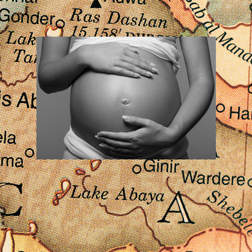
34. Preventing Maternal Deaths During Childbirth in Ethiopia
A mother dies from preventable causes related to pregnancy or childbirth every two minutes. We have the medical knowledge about what works to prevent these avoidable deaths. So why do they still occur? Explore the global maternal mortality crisis and the three delays that turn a joyful event into a tragedy. Abebe Alene tells us how Dessie Hospital in Ethiopia halved its maternal deaths. We talk about simplifying birthing workflows in hospitals, standardizing lifesaving medical procedures, the life-saving power of midwives, and the role of paid maternity leave policies. References: Gunja MZ, et al. Insights into the U.S. Maternal Mortality Crisis: An International Comparison. Commonwealth Fund. June 4, 2024. doi:10.26099/cthn-st75 Davidson KW, Terry MB, Braveman P, et al. Maternal mortality: a National Institutes of Health Pathways to Prevention panel report. Obstet Gynecol. 2024;143(3):e78-e85. doi:10.1097/AOG.0000000000005488 Ekwuazi EK, Chigbu CO, Ngene NC. Reducing maternal mortality in low- and middle-income countries. Case Rep Womens Health. 2023;39:e00542. doi:10.1016/j.crwh.2023.e00542 Langlois EV, Reid A, Khosla R. Mothers deserve better: evidence-based strategies to address maternal mortality. Lancet Glob Health*. Published online April 8, 2025. doi:10.1016/S2214-109X(25)00149-4 Nassar AH, Usta I. Factors contributing to the reduction of the global maternal mortality ratio. Lancet Glob Health. 2026. World Health Organization. Maternal mortality. 2025. https://www.who.int/news-room/fact-sheets/detail/maternal-mortality
33. The Rural Community Pharmacy: A Lifeline on Catalina Island
In rural counties most pharmacies are independently owned. When these rural pharmacies close, they don’t just leave a gap in healthcare, they affect a region's economy. Because who wants to move to a town where you can’t get a prescription filled for 40 miles? Hear the audio story that I created at the Transom Story Workshop on Catalina Island about Sue Ponce, the sole pharmacist on Catalina Island’s only drug store for three decades. When I arrived at the workshop I thought I was there to learn some audio technical skills. What I didn’t expect was to also rethink how stories work and their place in healthcare. References: Berenbrok LA, Tang S, Gabriel N, et al. Access to community pharmacies: A nationwide geographic information systems cross-sectional analysis.J Am Pharm Assoc. 2022;62(6):1816-1822.e2. Catalano G, Khan MMM, Chatzipanagiotou OP, Pawlik TM. Pharmacy Accessibility and Social Vulnerability.JAMA Netw Open. 2024;7(8):e2429755. doi:10.1001/jamanetworkopen.2024.29755. DiStefano MJ, Chen NC, Asche CV, Anderson KE, Mattingly II TJ.“The crux of the community”: A qualitative focus group study of the impact of community pharmacy closures in Colorado and Utah.J Am Pharm Assoc. 2026;66:102940. doi:10.1016/j.japh.2025.102940. Gravlee E, Ramachandran S, Qato D.Critical Access Pharmacy Designations Could Strengthen Access. Health Affairs Forefront. December 19, 2025. doi:10.1377/forefront.20251216.325474. Kono M, Deller S. Rural Pharmacies an Overlooked Piece of the Rural Health Care Milieu.Choices. 2023;34(4). Luchen GG, Hall KK, Hough KR. The Role of Community Pharmacists in Patient Safety.PSNet. October 25, 2021. Accessed May 7, 2026. https://psnet.ahrq.gov/perspective/role-community-pharmacists-patient-safety. Moodley S. Rethinking Community Pharmacy: A Path To A Sustainable Model.Health Affairs Forefront. July 28, 2025. doi:10.1377/forefront.20250724.565622.
32. What Matters to You: A Simple Question That Transforms Care in Switzerland
In healthcare, we’re trained to move fast, to diagnose, treat, and fix. But what happens when we slow down just enough to ask a different question: What matters to you? In this episode, we reflect on how one simple question can transform not just clinical decisions, but relationships, trust, and meaning for patients, families, and clinicians. Christian von Plessen shares what happens when we stop asking “What’s the matter?” and start asking “What matters to you?”. Whether you're wearing a stethoscope or the hospital gown, this seemingly simple question is a reminder of why connection matters. References: von Plessen C, Vasserot K, Bonnevie L, Coelho V, Dell'Eva E, Piazza V, Staines A. “What matters to you ?” From campaign to daily practice. Rev Med Suisse. 2025 Jun 4;21(921):1192-1196. French. doi: 10.53738/REVMED.2025.21.921.47318. Barry MJ, Edgman-Levitan S. Shared decision making — the pinnacle of patient-centered care. N Engl J Med. 2012;366(9):780-781. doi:10.1056/NEJMp1109283. Staines A, Laroussi-Libeault L, Coelho V, Pomey MP. “What matters to you?”: a powerful question to unlocking partnership in care. Int J Qual Health Care. 2025;37(1):mzaf007. doi:10.1093/intqhc/mzaf007. Barry M. Ask “what matters to you?” when it matters most. Institute for Healthcare Improvement Blog. September 17, 2019. Accessed April 11, 2026. Janerka C, Hooper AR, Sanders B, Gallagher O. How has ‘what matters to you’ been used for patient care? A scoping review. Health Expect. 2025;28:e14300. doi:10.1111/hex.14300. Kebede S. Ask patients “what matters to you?” rather than “what’s the matter?”. BMJ. 2016;354:i4045. doi:10.1136/bmj.i4045.
31. A Voice from the Village: Primary Care in Rural Ireland
Today we’re in a place where everybody knows your name, but also where the nearest specialist may be a three hour drive away. In a city, your physician is someone you may see a couple of times a year. In a rural area you see them in the grocery store or at the Friday night football game. This creates a whole new level of social connection. John Brennan tells us about his experience providing primary care to people in County Kilkenny, Ireland. Join us as we explore the rugged landscape of rural healthcare and hear why this lifeline that depends heavily on committed primary care physicians, is becoming increasingly fragile. References: Arredondo K, Bay K, Witte L, et al. Rural practice made attractive: a scoping review of rural primary care physician recruitment and retention incentives. J Gen Intern Med. Published online January 26, 2026. doi:10.1007/s11606-026-10218-8. Kaboli P, Blaine A, Mares J, Fortney J, Ono S, O’Shea AMJ. Health care access from the rural perspective: a narrative review. J Rural Health. 2026;42:e70119. doi:10.1111/jrh.70119. Maganty A, Byrnes ME, Hamm M, et al. Barriers to rural health care from the provider perspective. Rural Remote Health. 2023;23(2):7769. doi:10.22605/RRH7769. Huffstetler AN, Greiner A, Kempski A, Park J, Filippi MK, Langa M. Closing the Distance in Rural Primary Care: Primary Care Collaborative 2025 Evidence Report. Washington, DC: Primary Care Collaborative/Robert Graham Center; 2025. Serchen J, Johnson D, Cline K, et al. Improving health and health care in rural communities: a position paper from the American College of Physicians. Ann Intern Med. 2025;178:701-704. doi:10.7326/ANNALS-24-03577.
30. Smart Risks in High-Stakes Health Systems from the Netherlands
Healthcare faces urgent challenges. Rising complexity, widening inequities, burned-out clinical teams, and health systems stretched to their limits. But what if the biggest risk is playing it safe? Behind every breakthrough in healthcare, there is a moment when someone chose to take a thoughtful, informed risk. Ellen Joan van Vliet tells us how to question the status quo, experiment responsibly, and push forward when it matters most. Hear what it really takes to make smart bets that improve patient care, strengthen communities, and accelerate meaningful change – one intelligent risk at a time. References: Edmondson AC. Learning from failure in health care: frequent opportunities, pervasive barriers. BMJ Qual Saf. 2004;13(Suppl 2):ii3‑ii9. doi:10.1136/qshc.2003.009597 Macrae C, Vincent C. Learning from failure: the need for independent safety investigation in healthcare. J R Soc Med. 2014;107(11):439‑443. doi:10.1177/0141076814555939 Hibbert PD, Stewart S, Wiles LK, et al. Improving patient safety governance and systems through learning from successes and failures: qualitative surveys and interviews with international experts. Int J Qual Health Care. 2023;35(4):mzad088. doi:10.1093/intqhc/mzad088 Bates DW, Singh H. Two decades since To Err Is Human: an assessment of progress and emerging priorities in patient safety. Health Aff (Millwood). 2018;37(11):1736‑1743. doi:10.1377/hlthaff.2018.0738 Ramar K, Oxentenko AS, Dowdy SC. Transforming health care through quality and safety. Mayo Clin Proc. 2025;100(8):1385‑1401. doi:10.1016/j.mayocp.2025.03.021
29. Improving Clinical Environments for Nurses from South Africa
About 40% of nurses say they plan to leave nursing in the next five years because of unmanageable stress, workload, and understaffing. There are scales to measure the health of a workplace that look at staffing, leadership support, nurse-physician relationships, participation in hospital affairs, and the quality of care delivered. Sabelile Tenza tells us about her research on the relationship between nurses' practice environments and the quality and safety of healthcare. Hear how we can create clinical environments where nurses don’t just survive their 12-hour shifts, but where they are empowered to thrive. References: Leary KB, Lee M, Mossburg S. Patient Safety Amid Nursing Workforce Challenges. PSNet. April 24, 2024. Chiminelli-Tomás V, Tutte-Vallarino V, Ferreira-Umpiérrez A, Hernández-Morante JJ, Reche-García C. Impact of Nursing Practice Environments in Work Engagement and Burnout: A Systematic Review. Healthcare. 2025;13(7):779. Leone S, Rosato I, Poli E, Canova C, Danielis M. Factors Related to Turnover Intention Among OR Nurses: A Systematic Review. AORN J. 2025;121(5) Mabona JF, Van Rooyen DRM, Ten Ham-Baloyi W. Best practice recommendations for healthy work environments for nurses: An integrative literature review. Health SA Gesondheid. 2022;27:a1788. Martinez E, Cartwright T, McKenzie L, Faulkner B. Cultivating Healthy Work Environments Through the Lens of Nursing’s Code of Ethics. Nursing Administration Quarterly. 2026;50:25–30.
1 of 4