Interfaiths

Interfaiths

by Iqbal Akhtar
Season 5
Re-Covering a Mutual Language: Bukharan Jews in Austria

This podcast episode explores the academic article by Ariane Sadjed, which investigates the shifting communal and religious identities of Bukharan Jews living in Austria. The research explores how memories of a shared cultural and linguistic past with Muslims in Central Asia are being reconstructed within a modern European context. Sadjed highlights a transition from localized, traditional practices to a more rigid pan-Jewish religious identity, often influenced by movements such as SHAS and Chabad. The episode further examines how this internal transformation is impacted by Austrian political discourse, which frequently instrumentalizes minority relations to serve specific strategic agendas. Through ethnographic fieldwork and interviews, the author illustrates how historical commonalities can occasionally bridge modern divides despite increasing social polarization. Ultimately, the study depicts the complex negotiation of belonging for a community navigating the intersections of Soviet history, Zionism, and Western European politics.
Forgiveness, Trauma, and Family Reconciliation

This podcast focuses on a conference focused on the psychological and spiritual dimensions of family estrangement and the complex journey toward reconciliation. The keynote was by sociologist Karl Pillemer, who highlights that over one-quarter of Americans live with family rifts. Key discussions explore the impact of chronic stress, the role of religious traditions in fostering forgiveness, and the "long arm of the past" regarding childhood trauma. Breakout sessions address specialized topics such as Polyvagal Theory, LGBTQ+ elder support, and the specific challenges of sibling or parental detachment. Ultimately, it emphasizes that while reconciliation requires relinquishing rigid narratives, the effort often serves as a powerful catalyst for personal growth and emotional healing.
Hate to Hope: Building a New Jewish-Muslim Future

This episode documents Hate to Hope, a 2025 interfaith initiative that united students from Elhaam Academy and Kinneret Day School. Through a series of five collaborative events, young people from Muslim and Jewish backgrounds engaged in cultural exchange at locations like The Met and the Museum of Jewish Heritage. The program sought to cultivate empathy and mutual respect by encouraging participants to share personal faith artifacts and explore their common theological roots. By documenting over 30 hours of programming and numerous student reflections, the text illustrates how meaningful dialogue can dismantle prejudice. Ultimately, these records celebrate the capacity of youth leadership to build lasting bridges between diverse religious communities.
Beyond Insularity: Reimagining Interfaith Literacy in Islamic Schools
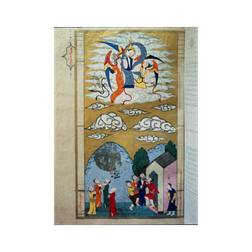
This episode examines a research study by Dr Iqbal Akhtar concerning the lack of interfaith literacy within contemporary American Islamic school curricula. Through a qualitative analysis of twelve institutions, the research identifies a significant comparative deficit where other religions are either ignored or framed solely as theological foils. The findings suggest that educators feel underprepared to teach religious diversity due to a lack of resources, training, and institutional support. Rather than adopting secular ideals, Akhtar argues for a recovery of classical Islamic scholarship, citing historical figures like al-Bīrūnī as models for rigorous cross-cultural inquiry. He proposes three pathways for improvement: enhancing teacher formation, developing generous curricular resources, and fostering lived partnerships with other faith communities. Ultimately, the work advocates for equipping Muslim youth with the comparative literacy necessary to thrive as citizens in a religiously diverse democracy.
Jesus in Islam and the Spirit of Universal Brotherhood
In this podcast, we explore the theological status of Jesus, known as Nabi Isa, within Islam, highlighting his titles as the Word and Spirit of God and his miraculous virgin birth. By juxtaposing Islamic and Christian traditions, we promote covenantal pluralism, urging Muslims to maintain their distinct identity while honoring a shared prophetic heritage with their neighbors. The narrative also invokes the legacy of Muhammad Ali to illustrate how faith and American citizenship can coexist through principled conviction. Ultimately, the documents serve as a guide for fostering interfaith respect and communal service in a diverse society.
Secrets in Contact: Secrecy and Religious Exchange
This episode examines the complex role of secrecy as a dynamic force that facilitates interreligious contact rather than merely obstructing it. While scholars often face methodological hurdles when studying hidden knowledge, the authors argue that secrets serve as "blank spaces" or interfaces that allow different traditions to overlap and communicate. By shifting the focus from the elusive content of a secret to its social and linguistic functions, the source establishes a taxonomy of how concealment creates new zones of interaction. This framework highlights how strategic silence and the allure of the unknown can trigger "concrescence," where religious traditions grow together through mutual interpretation. Ultimately, the introduction suggests that secrecy acts as a powerful attractor, enabling diverse groups to exchange ideas and navigate power dynamics within the history of religions.
Xinshen and the Ethics of Reliance in Human-AI Relations
This podcast explores the Mohist concept of xinshen, traditionally interpreted as "integrity," and recontextualises it as a foundational framework for modern AI ethics. The author argues that xinshen represents a dual structure: the delegation of perception to trusted agents and the outward extension of moral virtue. When applied to human-AI relations, this concept reveals that current technologies fail to meet ancient ethical standards because they lack genuine moral agency and are prone to systemic biases. Furthermore, the text critiques the commercial motives of major tech firms, suggesting that prioritizing profit over public welfare contradicts the Mohist principle that true benefit must be rooted in righteousness. Ultimately, the research proposes xinshen as a normative ideal to guide the development of socially responsible and virtue-aligned intelligent systems.
Unchaining the Soul: The Quest for an American Islam
This episode explores the profound internal crisis within American Islam following a series of violent attacks by Muslim men during the holy month of Ramadan in 2026. We argue that mainstream religious organisations have prioritised political activism and external defense over the essential work of spiritual cultivation and theological nativisation. By comparing the community's development to the historical trajectory of American Judaism, we highlight a significant institutional deficit in fostering a uniquely indigenous, pluralistic identity. We suggest that reclaiming the mystical traditions of Sufism and addressing unresolved tensions regarding American civic life are vital for resisting radicalisation. Ultimately, the source calls for the creation of robust intellectual and religious institutions capable of integrating Islamic ethics into the broader American story.
Covenants and Conflict: The Jewish-Muslim Historical Continuum
This episode examines the historically intricate and often misunderstood evolution of Muslim-Jewish relations, moving beyond modern political friction to highlight a shared Abrahamic heritage. Dr. Shoaib Arif provides a scholarly analysis of this relationship through historical cooperation, current challenges, and the potential for future reconciliation. Complementing this, Rabbi Dr. Yakov Nagen proposes a renewed religious fraternity rooted in sacred texts, arguing that both faiths are complementary parts of a divine narrative. He suggests that by returning to foundational scriptures, believers can view one another not as competitors but as spiritual allies. Ultimately, we advocate for a text-based theological dialogue to dismantle misconceptions and foster peace between these two ancient faith communities.
Season 4
The Shia World's Khilafat Moment The killing of Ayatollah Khamenei and the end of political Islam's last state project
This podcast examines a theoretical future where the assassination of Ayatollah Khamenei and the collapse of Iran’s regional influence signal the definitive failure of Shia political Islam. It draws a historical parallel to the 1924 abolition of the Ottoman caliphate, suggesting that both events represent a "Khilafat moment" where a central pillar of transnational religious authority evaporates. By comparing the current Iranian system to historical pan-Islamic movements in South Asia, we illustrate how the ideological dream of a faith-based state has succumbed to the reality of the modern nation-state. It further highlights the internal theological bankruptcy of the Iranian model, contrasting it with more traditional, quietist approaches to clerical guidance. Ultimately, we argue that the Shia world now faces a profound identity crisis, caught between embracing secular pragmatism or returning to older religious traditions.
1 of 6