The Intentional Surgeon with Sharon L. Stein, MD

The Intentional Surgeon with Sharon L. Stein, MD

by Sharon L. Stein, MD
Season 3
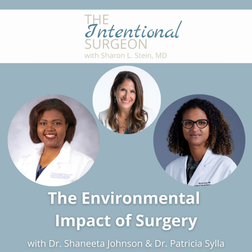
S03E10: The Environmental Impact of Surgery with Dr. Shaneeta Johnson & Dr. Patricia Sylla
If the global healthcare sector were a country, it would be the fifth-worst greenhouse gas emitter on the planet! Within hospitals, the operating room generates a staggering one-third of that entire carbon footprint. In this episode, Dr. Sharon Stein sits down with Dr. Patricia Sylla (System Chief of Colon and Rectal Surgery at Mount Sinai Health System) and Dr. Shaneeta Johnson (Chair of Surgery at Meharry Medical College School of Global Health). Together, they discuss the massive environmental toll of the OR, from volatile anesthetics to single-use plastics, and map out a collaborative blueprint for a more sustainable future. In This Episode, They Discuss: Climate, Access, and Disparities: Dr. Johnson shares her experience providing medical aid in the Bahamas after Hurricane Dorian, illustrating how climate change causes extreme weather which directly disrupts healthcare access, particularly for vulnerable communities. The Surgical Carbon Footprint: Dr. Sylla details why waste is only one small piece of the problem. True environmental impact spans energy expenditure, water usage, and the relentless stream of single-use materials hitting landfills. The Threat of Volatile Anesthetics: Why a transition to a zero-desflurane policy across health systems can dramatically drop carbon emissions overnight. The Supply Chain "Hotspots": Examining Life Cycle Analysis (LCA) data which reveals that up to 60% of a laparoscopic cholecystectomy's environmental footprint stems directly from disposable instrumentation. Top 3 Actions for Surgeons Today: Lean the Instrument Trays: Standardize trays down to tools used in 70% or more of cases. Pack the remaining 30% separately and keep them unopened on the back table until explicitly needed. Stop Automated Openings: Instruct OR staff to stop opening specialized devices automatically. Wait until you are ready to use them to avoid creating unnecessary landfill waste. Appoint a Green Champion: Build an institutional team bridging surgeons, anesthesia, central processing (SPD), and supply chain stakeholders together just like we did when starting enhanced recovery programs! Resources The Carbon Footprint of a Laparoscopic Cholecystectomy SAGES: Sustainability in Surgical Practice Enjoying the podcast? Help us shift the culture of medicine. Please like, review, and subscribe on your favorite platform!
S03E09: Stop Saying Yes to Everything with Dr. Sharon L. Stein
As surgeons, we’ve all been told the same lie: The only way to get ahead in your career is to say yes to everything. We are conditioned to believe that if we turn down a single opportunity, committee, or research project, the powers that be will stop asking, and our academic or clinical careers will stall. In this episode on the Intentional Surgeon, Dr. Sharon L. Stein dispels this toxic surgical myth. Drawing from her own unconventional path, including the time her mentors told her she was committing "academic suicide" by dropping to a four-day work week, Sharon shares how learning to say yes selectively actually accelerated her success as a busy clinician, professor, and national society president. In This Episode, I Discuss: Why saying no to the wrong things doesn’t kill your career—it actually makes your time more valuable. A hard truth for perfectionist surgeons: doing a job badly is significantly worse than not doing it at all. The Opportunity Framework: Before accepting any new role, filter it through these five metrics to ensure it aligns with your short- or long-term goals:Skills: Will it teach you a new technical technique or leadership capability?Networking: Who will you be working alongside, and can you learn from them?Goodwill: Is it building social capital with your chief or the hospital CFO?Advancement: Is this a necessary rung on your path to chair or society president?Control: Will this role give you more autonomy over your schedule or resources?Bonus: Fun! Don't discount an invitation simply because it sounds enjoyable or involves travel to a great culture. The "Negotiated Yes": How to protect your plate when your boss forces an assignment on you. Sharon breaks down the four ways to negotiate constraints: Time-limiting: offering a 6-month term instead of a year. Scope-limiting: writing the proposal but passing off the board presentation. Effort-limiting: accepting that some hospital paperwork only needs "B-grade" work, not an A-plus treatise. Additional Assistance: demanding administrative or clinical support to get the job done. The Three Ways to Deliver a Respectful "No": How to turn down an invitation while preserving the relationship, including the power of sponsorship—passing the opportunity to a junior colleague or fellow to help build their CV. Key Takeaway for Listeners: "Saying yes to everything is not the answer to anything. Truly effective and successful surgeons aren't doing it all — they are incredibly focused on what they love and what they are good at, which means they are saying 'no' to a whole lot else." — Dr. Sharon Stein Challenge for the Week: Pull out a sticky note and audit your week. Track how many times you say "yes" to an add-on patient, a meeting, or a schedule change versus how many times you protect your time with a "no." If you are sitting on a committee playing Tetris on your phone just to have a line on your CV, it might be time to take something off your platter. Connect with Sharon: Do you disagree? Has saying "no" ever backfired in your department? Sharon wants to hear your stories. Website: www.intentionalsurgeon.com
S03E08: Organizational Psychology of Surgery with Dr. Katrina Monton
We often treat surgical culture as an immovable force of nature, something we simply have to survive. But what if the norms we pride ourselves on, the "win-at-all-costs" mentality and the "show no weakness" rule, are actually holding us back from our true potential? In this episode, Dr. Sharon L. Stein welcomes Dr. Katrina Monton, an organizational psychologist and former professional athlete. Katrina bridges the worlds of high-performance sport and medicine to unpack Masculinity Contest Culture and the deep structures that shape how surgeons work, lead, and suffer. We Discuss: High Performance vs. High Stakes: Defining the environments where visibility is high, margins for error are low, and the pressure is constant. The Four Norms of Masculinity Contest Culture: Katrina breaks down the framework that defines many high-stakes workplaces: Show No Weakness: The psychological demand to suppress vulnerability or mental health struggles. Strength and Stamina: Valorizing the 80-hour work week and physical endurance as a measure of worth. Put Work First: The prioritization of the profession over self, family, and personal identity. Dog-Eat-Dog: A culture of constant comparison and hyper-competitiveness. The "Olympic Shelf Life": Why high-pressure cultures work for short-term gains (like a 4-year Olympic cycle) but lead to attrition and burnout in a 30-year surgical career. Invisible Architecture: Why we are still following rules and norms created for a workforce that no longer exists, and how to navigate the "clash" between tradition and a diverse, modern society. Brave Space vs. Safe Space: Why growth requires discomfort. Katrina explains how to lean into "controversy with civility" and the courage to act even when you're scared. Micro-Interactions for Macro-Change: How leadership isn't about grand mandates, but about small, daily choices—like soliciting feedback, using first names, or simply saying hello. The "F-Word" in High Performance: Why the most successful teams in high-stakes environments (like Speed Skating Canada) actually prioritize fun and joy as fuel for excellence. Featured Guest: Katrina Monton, PhD is an organizational psychologist and a former member of the Canadian Women's National Water Polo team. Her research focuses on the impact of culture on physician outcomes and how to build human capacity in high-stakes environments. Key Takeaway: "I’m not in the business of removing challenge. I’m in the business of building up human capacity so that the human being can withstand more. If we can build people up instead of breaking them down, they can achieve more than we ever imagined." — Dr. Katrina Monton Join the Conversation: Do you recognize the "Dog-Eat-Dog" norm in your department? What is one "micro-behavior" you can change today to build a braver space for your team? Connect with Dr. Sharon L. Stein: www.intentionalsurgeon.com
S03E07: The Missing Pillar in Surgical Training with Dr. Sharon L. Stein
In our surgical training, we are masters of the clinical and the technical. We know the anatomy, the indications, and the surgical techniques. But there is a missing pillar in our education — one that often accounts for 70% of the problems residency directors and surgical chairs face. In this episode, Dr. Sharon Stein dives into the "Soft Skills" of surgery: communication, negotiation, emotional intelligence, and team building. Often dismissed or ignored, these skills are actually the bedrock of effective leadership, whether you are leading a committee or simply leading a patient through a life-changing diagnosis in the clinic. In This Episode, We Discuss: Why the term isn't about being "soft" or "weak," but about the non-physical skills that the military has long prioritized as essential for leadership. Why professional development is the third, often ignored, leg of the surgical stool. Leadership in the "Just a Surgeon" Role: Why every surgeon is a leader — from convincing a patient to accept a necessary stoma to managing a team with mismatched priorities in the OR. The "One-and-Done" Course Problem: Why weekend leadership retreats often fail to stick and why we need longitudinal, consistent practice to build these "muscles." A Lesson in Communication Styles: Sharon shares a personal story of a "messy" interaction with a colleague and how understanding the difference between "speaking-to-think" and "thinking-to-speak" changed her team’s dynamic. How to recognize when a conflict isn't about who is right or wrong, but about whose values are at play, and how to find a solution that honors both. Launching the Next Generation: Sharon also discusses her passion for teaching graduating residents and fellows how to negotiate and prioritize early, with the goal of reducing the 50% turnover rate for first surgical jobs. Key Takeaway for Listeners: "We are smart enough to learn how to do complex surgery; we are certainly smart enough to learn leadership. But first, we have to prioritize it. Most of the problems we deal with aren't technical — they’re interpersonal." — Dr. Sharon Stein Connect with Sharon: The Surgeons Launchpad: Coaching for Residents & Fellows: Are you graduating soon? Learn the skills to get your first job and retain those skills for life... Learn more on how to launch your career with intention here. Institutional Workshops: Does your division have recurring conflict? Sharon works with departments to embed these soft skills into the culture through longitudinal programs. Website: www.intentionalsurgeon.com
S03E06: Lessons in Leadership with Dr. Daniel Eiferman
Explicit
In surgery, we are taught the mechanics of saving a life, but rarely the mechanics of managing ourselves. In this episode, Dr. Sharon Stein sits with Dr. Daniel Eiferman, a trauma and critical care surgeon at The Ohio State University and author of the new book, Cut Open: A Surgeon's Stories of Loss, Resilience, and Growth. They dive into the "black book" of stories Danny kept for a decade, the lessons he has learned as a surgeon and a leader. In This Episode, We Discuss: Resulting: How deciding to change a process (such as a surgical technique) because of results can end up with worse outcomes. Time as the Ultimate Currency: Time —not money or status—is our most precious resource as a surgeon, and how we choose to spend it defines us. The Power of Curiosity: Why asking "Tell me more about that" is the No 1 trait of a high-performing healthcare provider. Building the "Perfect" Team: Lessons on how to create psychological safety in the OR through two specific behaviors: Ostentatious Listening: Showing the team that their voice is worth your time. Conversational Turn-Taking: Ensuring the scrub tech and the medical student feel safe enough to speak up Featured Guest: Daniel S. Eiferman, MD, MBA is a Professor of Surgery at The Ohio State University, specializing in Trauma and Critical Care. He is a sought-after speaker on surgical leadership and the author of Cut Open. Key Takeaway for Listeners: "Culture is the least acceptable activity that we are willing to accept. When we allow beratement in the OR, that becomes our culture. When we show vulnerability first, we build trust instead." — Dr. Daniel Eiferman Order the Book: Find Cut Open: A Surgeon's Stories of Loss, Resilience, and Growth on Amazon, Barnes & Noble, or at integritysurgery.org. Connect with Dr. Sharon Stein: Website: www.intentionalsurgeon.com
S03EP04: Rethinking Traditional Organization with Dr. Vikram Kashyap
We often think that our traditional model of specialty-based hierarchy is the most effective - for our patients and us... but what happens when we rethink that model, and create more patient- centric models of care. It is one of many topics we cover in this episode, as Dr. Sharon Stein sits down with Dr. Vikram (Vik) Kashyap, Chair of the Meijer Heart and Vascular Institute and Vice President of Cardiovascular Health at Corewell Health. In this episode, they discuss the "reverse migration" from established academic centers to innovative integrated models, the shift away from traditional departmental silos, and why the future of medicine relies on "operational brilliance" and collaborative compensation. Featured in This Episode: The "Out of the Blue" Opportunity: Sometimes your next step is one that takes you away from your own expectations. Why exploring this opportunity may be your next great growth opportunity. The Integrated Service Line Model: Moving beyond the "Venn diagram of control" where departments of surgery and medicine compete. Vik explains the benefits of having over 1,000 people and an eight-story heart hospital all under one strategic umbrella and one profit-and-loss (P&L) statement - to serve their patients The Four Strategic Pillars: How Vik aligns a massive team around Clinical Excellence, Operational Brilliance, Research & Education, and Strategic Growth. Ending Turf Battles: How the institute model reduces friction between interventional radiology, cardiology, and vascular surgery by putting everyone on the same team. About the Guest: Vikram S. Kashyap, MD, is a nationally recognized leader in vascular surgery and cardiovascular health. Prior to his current role at Corewell Health, he served as the Chief of Vascular Surgery at University Hospitals Cleveland Medical Center and held leadership positions at the Cleveland Clinic. Key Takeaway for Surgeons: "The Institute model is the future because it all comes down to the patient. If you can tell a person they have a heart or vascular problem and they only have to call one number to be appropriately triaged, you’ve removed the biggest barrier to care." — Dr. Vik Kashyap Join the Conversation: How is your institution handling the "turf" between specialties? Could a shared compensation model work in your department? Connect with Sharon L. Stein, MD: Website: www.intentionalsurgeon.com LinkedIn: Share your thoughts on this episode's leadership strategies on our social media channels @theintentionalsurgeon
S03EP03: Physicians in Politics with Dr. Bryan & Dr. Jana Hambley
What happens when a surgeon and a hematologist-oncologist decide to take their commitment to public health from the bedside to the ballot box? In this episode, Dr. Sharon Stein is joined by trauma surgeon Jana Hambley, MD, and her husband, Bryan Hambley, MD, a leukemia specialist currently running for Secretary of State of Ohio. From their early days meeting in freshman chemistry at Notre Dame to navigating residency as a married couple, the Hambleys share how a shared passion for community service evolved into a statewide political campaign. This isn't a conversation about politics—it's about the unique perspective physicians bring to leadership, the challenges of raising a family while one parent is on the road, and why "intentionality" is the secret weapon for successfully managing it all. In This Episode, We Discuss: The "Doctor-Politician" Trend: Why more physicians are running for office (including recent guests like Dr. Brian Williams) and how seeing systemic flaws like medical bankruptcy and gun violence up close drives the desire for legislative change. The Secretary of State’s Role: Demystifying a powerful office. Bryan explains how this position influences everything from independent redistricting commissions to the "intentional confusion" found in ballot language. The "Village" Model: Jana opens up about the logistical "dance" of being a surgical mom while her husband travels 4-5 nights a week. They discuss the power of community, from live-in help to local volunteers who open their homes on the campaign trail. The Anatomy of a Ballot: Why medical consent forms are written at a 5th-grade reading level, but ballot initiatives are often written in complex legalese designed to discourage voters. Life Lessons for the Kids: What the Hambley children are learning about ambition, service, and the fact that "fighting for what you love" sometimes means sacrifice. A Bipartisan Hope: Bryan shares his reflections from 13 months on the road, staying in farmhouses across Ohio, and why he firmly believes that—despite national headlines—the American people are better than the current political climate suggests. About the Guests: Bryan Hambley, MD is a hematologist-oncologist at the University of Cincinnati and a 2026 candidate for Ohio Secretary of State. Jana Hambley, MD is a surgeon on faculty at the University of Cincinnati and a former resident of Dr. Stein’s. Key Takeaway for Listeners: "Ambition needs to be married to a vision that’s more than someone’s personal ambition. It has to be ambition for a system, a hospital, or a state." — Dr. Bryan Hambley Connect with the Hambleys: Social Media:@hambleyforohio Join the Conversation: Are you a physician considering a move into advocacy? Reach out on LinkedIn and share your story.
S03EP02: Gender, Economics, & the Future of Surgical Equity with Dr. Tanaz Ferzandi
In this episode of the Intentional Surgeon, Dr. Sharon Stein welcomes her longtime colleague and friend, Dr. Tanaz Ferzandi, Director of Urogynecology at Keck Hospital of USC and Past President of the American Urogynecologic Society (AUGS). Drs. Stein and Ferzandi dive into the power of "cross-pollination" between surgical specialties, the systemic gender inequities built into healthcare reimbursement models, and why surgeons must move from being "cogs in the wheel" to empowered leaders at the decision-making table. What You'll Learn The Power of Cross-Pollination: Stepping outside your surgical "silo" is essential. Dr. Ferzandi explains how collaborating with other specialties (like colorectal and urology) offers fresh perspectives on surgical planes and techniques that improve patient outcomes. The same is equally true outside of the OR, where research projects and quality initiatives can be strengthened through multi-specialty collaboration. Finding Your Tribe: The importance of choosing mentors and allies intentionally. Dr. Ferzandi discusses navigating "girl-on-girl crime" in medicine and the value of both male and female sponsors who champion your growth without feeling threatened. The "Feminization" of Healthcare Economics: A stark look at how fields dominated by women often see a flattening of hierarchy and a subsequent drop in salary and reimbursement. This affects not only the providers, but our patients as well, as care for women is often reimbursed less generously. Dr. Ferzandi shares a powerful example of systemic bias: a mid-urethral sling procedure for a woman vs. a man. While the surgical steps are nearly identical, the hospital reimbursement for the male procedure can be 2.5 times higher than for the female procedure. "If You're Not at the Table, You're on the Menu": A call to action for surgeons to educate themselves on the business side of medicine. Dr. Ferzandi emphasizes that "best care" cannot be delivered without the proper resources, which requires advocacy at the administrative level. This is why surgeons need to understand the "tributaries" of revenue they create—from radiology and lab work to physical therapy—to gain leverage during negotiations with hospital leadership. Ready to invest in yourself? If you’re ready to move from "cog in the wheel" to empowered leader, visit intentionalsurgeon.com to learn more about career coaching for surgeons.
S03EP01: How Ego Hurts & Helps Us As Surgeons with Dr. Sharon L. Stein
Welcome to 2026! In this solo episode, Dr. Sharon Stein kicks off the year by exploring a topic that defines—and often derails—surgical careers: The Surgical Ego. We all know the TV stereotype of the arrogant surgeon. But Sharon dives into a more subtle version: the ego that hides behind the mask of the "humble, meticulous surgeon." Whether you walk into a room saying "I’ve got this" or rack yourself over the coals after a complication, both extremes stem from the same risky belief: that we have total control over every outcome. What You'll Learn The Summit of Ego: A residency story about a surgeon who believed the worst thing that could happen to a patient was something happening to him. The "Humble" Trap: Sharon shares how her own guilt over an anastomotic leak revealed a hidden ego—the belief that being "careful enough" could prevent all complications. Ego as a Distraction: Why questioning your skill mid-case directs focus away from the patient and toward your own self-doubt. Suffering as "Payment": The common but illogical feeling that if we suffer enough along with the patient, we can "pay" for a bad outcome. The Learning Cycle: Why our "precious surgical ego" makes us want to hide mistakes rather than being curious about how to improve. Finding Balance: How to maintain the confidence required to operate while accepting that some factors remain beyond our control. Key Takeaways for 2026 Notice the Shift: Watch for when your ego—through overconfidence or shame—takes the driver's seat. Focus on the Patient: In difficult moments, move from "Am I good enough?" to "What does this patient need right now?" Ditch Perfection: Meticulousness is a goal, not a guarantee. Even the best surgeons have complications. Join the Conversation: How has ego helped or hurt your practice? Sharon wants to hear your stories at www.intentionalsurgeon.com. Ready to be intentional about your surgical career? Visit intentionalsurgeon.com/launchpad to learn about securing the right surgical position for you.
Season 2
S02EP26: End-of-Year Reflection, Identity & The Power of Creation with Dr. Mel Thacker
In the final episode of the year, Dr. Sharon Stein sits down with Dr. Mel Thacker, an otolaryngologist and master certified coach, to discuss how surgeons can design success on their own terms. Obligation vs. Creation Energy Dr. Thacker explores the shift from "obligation energy"—performing tasks out of a sense of "should"—to "creation energy." By approaching surgery and clinic as a creative act, physicians can rediscover presence and joy. This mindset shift transforms work from a heavy burden into a deliberate choice. The Identity House A core concept discussed is the Identity House. If your identity consists of only one room—"Surgeon"—and that room burns down due to burnout or injury, you lose everything. Dr. Thacker emphasizes the need to "diversify your identity" by building other rooms for hobbies, family, and creative outlets. This diversification provides the resilience needed to survive demanding professional landscapes. Goal Setting and Essentialism Rather than overwhelming New Year’s resolutions, Dr. Thacker recommends Essentialism: Pick Three: Identify three essential goals (e.g., a new skill, a leadership role, or better boundaries). Reverse Engineer: Determine the exact steps and mindset needed to achieve those results. Hold Goals Loosely: Recognize that while a "mountaintop" provides direction, the process and internal motivation are what truly matter. Moving from Victim to Creator Many surgeons feel stuck in the "dream" of an older version of themselves or their parents. Dr. Thacker encourages listeners to let those old versions go. By reclaiming their power and setting firm boundaries, surgeons can move from feeling like victims of the system to creators of their own lives. Resources: The Hippocratic Collective How to save lives with two minutes of listening, Dr. Mel Thacker on TEDxSouthLakeTahoe Parting Words: "Design your life however you want it to look, and then make it happen."
1 of 6