
Crowdtalks History

Crowdtalks History

by SHANE APPEL
Season 1
Myths of History: September 2025

From the battlefields of Gallipoli to the coronation of England’s kings, the sinking of the Titanic history is full of stories we think we know—but don’t. In this episode, we pull apart some of the biggest myths that have shaped how we remember the past. Did more Australians really die at Gallipoli than the British? Was William the Conqueror truly the first king of England? And what happens when a so-called “myth” turns out to be true after all? Join us as we separate fact from fiction, and discover why some myths just won’t die.
No Terms, No Mercy. Unconditional Surrender 02-09-2025

Unconditional Surrender: No Terms, No Mercry. In this episode, we explore the idea of unconditional surrender—what it means, why leaders demand it, and how it has shapes the outcomes of major conflicts. With a focus on Imperial Japan and the 1945 surrender we’ll examine the the controversy behind wars that end without negotiation.
History in Minutes: Evil Dads in History 26-08-25

Welcome to our fathers day special - evil dads in history. This week we explore the faily life of Josef Stalin, Ivan the Terrible, Constantine the Great and Henry the VIII.
History in Minutes: Upcoming Film and TV 05 August 2025

This week we preview unreleased historical films and TV by kicking off with Nuremburg starring Russell Crowe and due in November. We than look at BBC One's King and Conqueror a biopic of King William the first of England and a Hungarian language film Orphan, a story set in post 1956 uprising Hungary. Our last is a TV series, Death by Lightning a look at President James A Garfield and his death in 1881 starring Michael Shannon.
History in Minutes: History in the News 29 July 2025
History in Minutes captures some of the more recent media coverage of our favourite topic - history! The presenter surveys a mixture of electronic and print media.
History in Minutes: Historian Profile 21 July 2025
In this episode we explore the work of renowned Canadian historian Professor Bruce Trigger. Trigger was one of Canada's leading archaeologists from the 1960's to the early 2000s. He worked extensively in anthropology and ethnohistory at McGill University.
History in Minutes: New Film and TV 15 July 2025
This week we survey recent releases in film and TV. Joy, an account of the early IVF program from Netflix is presented along with September 5 a new interpretation of the 1972 Munich Olympic Games attack by Palestinian terrorists. The last release is William Tell, the story of Switzerland's epic folk hero who shot the apple on his son's head.
History in Minutes: New Books 8 July 2025
This episode of History in Minutes completes a short overiew of recent releases historical works. Shane Appel the presenter surveys three new contemporary releases from Amazon's new realeases list and Cambridge University Press. Want to get in touch? Email crowdtalks@proton.me
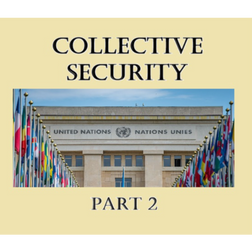
Studies in Foreign Policy: The Origins of Collective Security Part 2
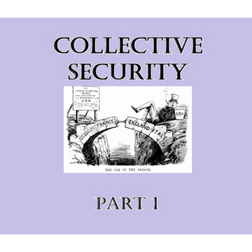
The great experiment of collective security commences but is immediately setback by the complex post-war political environment. In this part we consider the transition of geopolitics to the new model of global stability only to see it fail as the world hurtles towards a new world crisis. Out of the ashes of the Second World War, collective security rises again and the influence of Franklin Roosevelt's support discussed. The United Nations is created to carry forth the hopes and ideals of the collective security movement but is limited the onset of cold war politics and the coming of nuclear weapons. Want to get in touch? Email crowdtalks@proton.me
Studies in Foreign Policy: The Origins of Collective Security Part 1
Forged in the fires of the First World War, collective security was a new idea to manage geopolitics advocated by the US President Woodrow Wilson. Promoted as a way to stabilise international relations its suporters claimed that that the world would be safer and the tragedy of future world crisis could be avoided. This first part focusses on its orgins and competition with significant exploration of the Versailles Peace Conference in 1919. Want to get in touch? Email crowdtalks@proton.me
1 of 2