HealthTech Hour

HealthTech Hour

by Steve Roest
Season 1
The Mental Health Crisis Starts in Primary School | Laura Earnshaw, myHappymind
Children's mental health, prevention vs treatment, resilience, self-esteem, the CAMHS waiting list - Laura Earnshaw, Founder of myHappymind, on why we're solving children's mental health at the wrong end, and what teaching it early actually looks like. What if most children's mental health problems could be prevented years before they ever reach a waiting list? Steve Roest sits down with Laura Earnshaw, former Global Head of Talent at AstraZeneca, now Founder and CEO of myHappymind, the NHS-backed programme in over 2,000 schools. After her own son struggled at school and a family member was sectioned, Laura left her corporate career to build the skills she'd been teaching senior leaders for children as young as three. In this episode: Why children's mental health needs prevention, not just treatment What myHappymind teaches children as young as three The 120% vs 20% data proving early intervention works The commissioner who wouldn't fund prevention and why Why "character, not competence" builds real self-esteem Why founders should stop publicly blaming the NHS Laura's mottos for getting through the hard days 0:00 Why we get children's mental health backwards 0:51 Intro 2:20 From AstraZeneca to founding myHappymind 5:44 The two moments that changed everything 8:04 A million kids waiting: prevention vs treatment 10:34 What you can teach a three-year-old 11:38 Character, not competence: building real self-esteem 15:54 The data - 120% vs 20% on school absence 19:12 The commissioner who wouldn't fund prevention 40:44 Why founders should stop blaming the NHS 42:42 How the NHS came to her first 50:05 "Everything is figureoutable" 🎧 New episodes bi-weekly with the founders, clinicians, journalists and leaders shaping the future of healthcare.
The Chair of NHS England on Global Healthcare, NHS Data & Cancer Referrals | Dr Penny Dash
NHS data, global healthcare systems, cancer referrals, the single patient record, A&E pressures - Dr Penny Dash, Chair of NHS England, on what the UK gets right, what it gets wrong, and what it could learn from the rest of the world. Is there a healthcare system better than the NHS? Steve Roest sits down with Penny Dash — former hospital doctor, ex-McKinsey European healthcare lead, and now Chair of NHS England - for one of the most wide-ranging conversations the show has had. After more than four decades in the system, she remains a rare voice of optimism: a realist who never sugarcoats, but always sees the potential for things to be better. In this episode: Why there's no clear winner among global healthcare systems, and what the UK still leads on Why Dr Dash believes India could lead the world in healthcare How Germany prices surgery like a market to manage waiting lists Why your GP and hospital records still don't connect The single patient record debate, and thirty years of the same resistance Why "don't come to A&E" is the wrong message Why most urgent cancer referrals now find nothing 0:00 Is there a better system than the NHS? 0:51 Intro 2:26 Staying optimistic after 45 years in healthcare 5:44 Which countries do healthcare best 9:19 Why India could lead the world in healthcare 11:50 How Germany prices surgery like a market 19:12 Innovation vs adoption: the 17-year lag 27:41 The single patient record debate 42:22 Why your GP and hospital records don't connect 47:48 "Telling people not to come to A&E is our failure" 56:31 Why 9 in 10 cancer referrals find nothing 🎧 New episodes every week with the founders, clinicians, journalists and leaders shaping the future of healthcare. Follow HealthTech Hour:
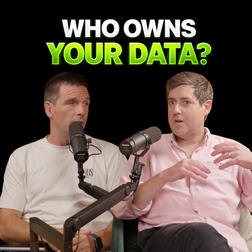
Who Owns Your Health Data? NHS Data, Palantir & the Federated Data Platform | Matthew Whitty, ex-NHS England
Health data, the single patient record, Palantir, the Federated Data Platform, UK Biobank, synthetic data — Matthew Whitty, former Director of Innovation at NHS England, on who really owns your health data and why the NHS still can't join it up. Matt's career has spanned hospital pharmacy, commissioning, consultancy and national policy, giving him a rare view from the intersection of government, industry, academia and patient care. In this episode, Steve gets into why the data debate is really about trust, and what it'll take to unlock the NHS's most valuable asset safely. We discuss: Why the "privatisation" debate is really about trust and motivation, not sell-offs Who actually owns your health data, and why no single patient record exists The Federated Data Platform and Palantir controversy, explained without the noise How de-identified data gets re-identified, and what really happened with UK Biobank Why synthetic data and "sandbox" environments could make Britain the number one place to build healthtech Why the NHS may compare far better to other systems than the headlines suggest The NHS holds one of the largest single-system health datasets in the world The question isn't whether to use it, but how to do it in a way patients actually trust 0:00 Who owns your health data? 0:55 Intro 4:00 From hospital pharmacist to NHS England innovation lead 8:45 The public vs private NHS debate 13:19 Who owns your data & the UK Biobank breach 17:24 The Federated Data Platform & Palantir, explained 33:30 Why healthtech gets support no other industry does 43:18 Synthetic data & sandboxes 48:00 Abolishing NHS England & reasons for optimism Follow HealthTech Hour for more conversations with the founders, operators and builders shaping the future of UK health and tech. HealthTech Hour Socials: https://linktr.ee/healthtechhour

Is the NHS Broken? A 20-Year Health Journalist on Waiting Lists, Funding & Reform | Paul Gallagher
NHS waiting lists, funding, staffing, maternity scandals, Alzheimer's drugs, social care — Paul Gallagher, a 20-year veteran of UK health journalism, on whether the NHS is actually broken or just badly managed. In this episode of HealthTech Hour, Steve Roest speaks with veteran health journalist Paul Gallagher about the pressures facing the NHS, including waiting-list backlogs, workforce shortages, delayed hospital discharges, social-care gaps and the political sensitivity surrounding reform. Paul draws on two decades of healthcare reporting to examine why the NHS repeatedly falls into short-term crisis management, how public expectations compare with the amount the UK is willing to spend, and why discussions about restructuring are so often reduced to fears of privatisation. The conversation also explores the role technology can play in moving care from hospitals into communities, improving prevention and making services easier to access. Steve shares how a single SMS offering an at-home health check generated 80% uptake among previously unresponsive patients, illustrating how service design, not patient apathy, can determine engagement. They discuss: Why social-care shortages keep medically fit patients in hospital How fragmented care and workforce vacancies create system-wide delays Whether technology can meaningfully reduce pressure on NHS staff Why convenience matters for preventative-health participation The difference between private delivery and charging patients Why NHS reform debates often default to comparisons with the US What the UK could learn from healthcare systems in Europe and Japan Whether higher taxation could support better public services How politics and the media reinforce short-term decision-making 0:00 Is the NHS broken? 0:51 Intro 3:27 The state of the NHS: funding, waiting lists & the bed crisis 9:09 Staffing shortages & the ethics of overseas recruitment 13:03 Why people don't engage with health checks, and how to fix that 18:16 Privatisation, reform & what we're not allowed to debate 26:20 Real stories from the frontline & why change never sticks 32:40 Maternity scandals & accountability failures 38:23 Alzheimer's: causes, breakthroughs & the future of diagnosis Paul Gallagher is a health journalist with more than 20 years of experience, including a decade as health correspondent at the i Paper and work for publications including The Times, The Telegraph and The Mirror. He is also contributing to an Alzheimer’s Disease International report focused on clinical trials. HealthTech Hour features the founders, clinicians, journalists and system leaders changing healthcare in the UK and beyond. Follow HealthTech Hour for more conversations with the founders, operators and builders shaping the future of UK health and tech. HealthTech Hour Socials: https://linktr.ee/healthtechhour

Why Outpatients Shouldn't Exist - Fixing the NHS with Agentic AI | Tom Whicher, CEO of DrDoctor
NHS outpatients, agentic AI, the NHS App, EPRs and digitisation - Tom Whicher, CEO of DrDoctor, on why outpatient care as we know it shouldn't exist, and how AI could fix it. DrDoctor has powered nearly 200 million NHS appointments for 37 million patients and delivered over £150 million in NHS savings. In this episode of HealthTech Hour, Tom shares how a naval architecture degree and a chance consultancy project peeling onions for Domino's Pizza led him to co-found DrDoctor in 2012 - and why 13 years later, he believes outpatient care as we know it shouldn't exist. We explore: Why hospital appointments haven't fundamentally changed since the 1600s, how DrDoctor has powered nearly 200 million NHS appointments for 37 million patients, why 40% of outpatient activity could be delivered at home, how agentic AI is now transforming how patients interact with the NHS, why EPRs alone don't deliver the savings the NHS was promised, the shift from digitisation to optimisation in NHS strategy, why every CEO of a software business needs to embrace AI, the paradox of the most-wanted job being a doctor while most doctors want to leave, how UK health tech founders can build lasting relationships with the NHS. Tom also explains how DrDoctor is becoming the agentic operating system for the NHS — integrating deeply with EPRs, powering the NHS App, and building the AI tools that free up clinicians to focus on patient care. Whether you're a healthcare professional, founder, investor, policymaker, or simply interested in the future of healthcare, this conversation offers a rare inside view of what really needs to change to make the NHS fit for the future. 00:00 The Future of Healthcare 02:15 From naval architecture to health tech 06:30 The orange form and box of roses story 12:00 Why outpatients shouldn't exist in 2026 16:30 Being thrown out of a CIO's office in 2012 20:00 How DrDoctor powers the NHS App 25:00 The agentic AI tool that changes hospital appointments 29:00 Why EPRs don't save the NHS money 37:30 Why success can make you the enemy in UK health tech 41:00 What every CEO should do about agentic AI 47:30 Learning from the king of milk Follow HealthTech Hour for more conversations with the founders, operators and builders shaping the future of UK health and tech. HealthTech Hour Socials: https://linktr.ee/healthtechhour
Solving the NHS GP Shortage - GPs Working from Abroad | Julian Titz, CEO of Asterix Health
The NHS GP shortage, primary care workforce, the 10-Year Health Plan — Julian Titz, CEO of Asterix Health, on solving the 50,000-GP shortfall by embedding UK-registered doctors working from abroad into NHS surgeries. Asterix Health now serves practices with 250,000 patients, has onboarded 150+ doctors, and was the first approved provider under the new NHS rules endorsed by the 10-Year Health Plan. In this episode of HealthTech Hour, Julian shares how a personal diagnosis of a bicuspid aortic valve sparked his journey into healthcare and why he believes preventative care should be far more accessible. We explore: Why the NHS workforce crisis continues to worsen, why thousands of GPs are leaving the profession, how remote UK-qualified doctors can support primary care, the future of global healthcare workforces, why AI won't replace doctors anytime soon, the challenges of building healthtech companies in the UK, the role of prevention in reducing long-term healthcare costs, what the NHS 10-Year Plan means for healthcare innovation. Julian also explains how Asterix Health is helping GP practices manage complex clinical workloads, reduce administrative burden, and improve patient care by reconnecting experienced doctors with the healthcare system. Whether you're a healthcare professional, founder, investor, policymaker, or simply interested in the future of healthcare, this conversation offers a fascinating look at one of the biggest challenges facing health systems today. HealthTech Hour Socials: https://linktr.ee/healthtechhour?utm_source=ig&utm_medium=social&utm_content=link_in_bio&fbclid=PAZXh0bgNhZW0CMTEAc3J0YwZhcHBfaWQPOTM2NjE5NzQzMzkyNDU5AAGnsN6ssapHy8dRCj9FLlSzwOqM5FOrr1RuqoEsh4BtdTWY_P7jNQ9rObpLyDY_aem_wcar0bSeTXec06ISHGRgHA 00:00 The Future of Healthcare 03:36 Julian's heart valve diagnosis and the move into healthcare 07:00 Why workforce is the biggest problem in healthcare 09:31 The 50,000 GP shortage and why doctors are leaving 12:55 The NHS 10-Year Plan endorsement 24:50 Building incentives that align with how the NHS actually works 36:00 Where the UK tech ecosystem wins
Navigating the US Healthcare System for UK Founders with Demi Radeva, CEO of Across
This week on HealthTech Hour, Steve sits down with Demi Radeva, CEO and co-founder of Across, who is helping UK health tech founders enter and succeed in the United States. With nearly 20 years of experience spanning the world's largest US payer, the London School of Economics, and a teaching role at the University of Minnesota, Demi brings a rare dual perspective - she's lived inside both health systems, studied how they finance themselves, and built and co-founded multiple digital health ventures of her own. Demi is particularly passionate about helping founders follow the money - understanding reimbursement, structuring ROI, and accessing the right buyers across the 1,100 decision-making bodies that shape US healthcare. We get into what that looks like in practice - why UK health tech consistently brings stronger evidence to the table, how to access programmatic spend when no billing code exists, and why making your customer money beats saving them money every time. Outside of work, Demi is shaped by her own immigration journey from Bulgaria to the US, an experience that informs how she thinks about culture, incentives, and what it actually takes to move between two very different systems. A sharp, practical conversation with one of the leading voices helping UK health tech founders take their first serious step into the American market. Follow HealthTech Hour for more conversations with the founders, operators and builders shaping the future of UK health and tech.
Tackling Health Inequalities with Data and Innovation with Sam Fay, CEO of SISU Health
This week on HealthTech Hour, Steve sits down with Sam Fay, CEO of SISU Health, who is leading the mission to make preventative health more accessible across the UK. With 25 years of experience in strategic transformation and senior leadership, Sam has a strong track record of scaling organisations and delivering measurable impact - and she brings that operator's lens to one of the biggest challenges in healthcare today: shifting the system from treating illness to preventing it. Sam is particularly passionate about using innovation and data to tackle health inequalities and improve outcomes at scale, and we get into what that looks like in practice - what's actually working, where the system gets stuck, and how SISU is building for reach rather than just reach for those who already engage with healthcare. Outside of work, Sam is a keen outdoor adventurer - long walks with her Ridgeback, skiing, and coastal escapes when the diary allows. A practical, grounded conversation with one of the leaders putting preventative health within reach of the people who need it most. Follow HealthTech Hour for more conversations with the founders, operators and builders shaping the future of UK health and tech.
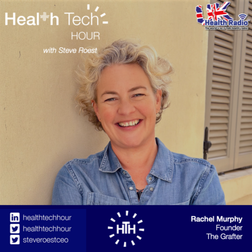
From the NHS App to Eight-Figure Exit - Rachel Murphy on Building What Lasts
Rachel Murphy launched the NHS App and sold multiple businesses. Now she helps other founders do the same. In this episode of HealthTech Hour, we sit down with Rachel Murphy — founder of The Grafter and one of the UK's most trusted operators when it comes to building real business value. Rachel has grown, scaled and sold multiple companies, including the eight-figure exit of her second business, Difrent. She also led the launch of the NHS App, now with over 30 million downloads and one of the UK's most impactful digital programmes. At the start of 2026, Rachel was recognised on the Ideas Fest New Year Honours List, reflecting not just what she's built, but how she shows up for founders and leaders across the UK. Through The Grafter, Rachel works alongside ambitious business owners who want to build something that stands up commercially, strategically and emotionally — helping founders create clarity, drive sustainable revenue, and build long-term value, whether they're scaling, raising, or preparing for their next chapter. Known for her calm authority, straight talking, and ability to sit with complexity when it matters most, Rachel is the person founders trust when the stakes are high — because she's been there, she's done it, and she doesn't flinch. Follow HealthTech Hour for more conversations with the founders, operators and builders shaping the future of UK health and tech.
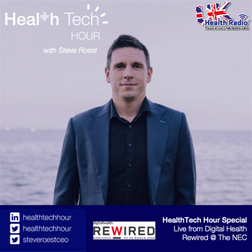
Rewired at the NEC - A Live Panel on the Future of UK Digital Health
This week, HealthTech Hour comes to you live from Digital Health Rewired at the NEC - one of the UK's biggest gatherings of the people building, leading and shaping digital health. Steve is joined at the event by three special guests: Alex Lawrence - Fellow at The Health Foundation, bringing a sharp policy and research lens to the conversations happening across the show floor. Hassan Chaudhury - one of digital health's best-known advisors and connectors, with a knack for cutting through hype and spotting what actually moves the needle. Hayley Grafton - an accomplished digital nurse leader, representing the clinical voice that so often gets left out of the tech conversation. Together, they unpack what's really happening in UK digital health right now: the ideas getting traction at Rewired, the gaps between policy and frontline reality, and where the next wave of impact is most likely to come from. A live, on-the-ground episode you don't want to miss. Follow HealthTech Hour for more conversations with the founders, operators and builders shaping the future of UK health and tech.
1 of 16