HaleSense

HaleSense

by Massimo Luppi
Season 1
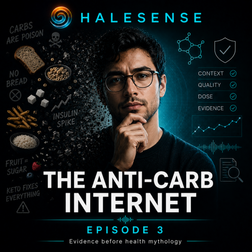
The Anti-Carb Internet
The internet has turned carbohydrates into one of its favorite health villains. Bread becomes poison. Fruit becomes “just sugar.” Pasta becomes a moral failure. Every glucose rise becomes a crisis. Every weight problem gets reduced to one enemy: carbs. But the anti-carb story works because it is not completely false. Added sugar, refined starches, ultra-processed foods, overeating, insulin resistance, and type 2 diabetes are real issues. The problem begins when those real issues are inflated into a total food mythology. In this episode of HaleSense, we dissect the anti-carb internet: why it is so persuasive, how it misuses insulin and glucose panic, why low-carb diets can be useful tools without becoming universal doctrine, and how food fear turns nutrition into identity. Carbs are not magic. Carbs are not poison. The real question is context, quality, dose, evidence, and the life a person can actually sustain. Evidence before health mythology.
Anti-Inflammatory Everything
Inflammation is real. Chronic inflammation can matter. Diet can influence inflammatory processes. But modern wellness culture has turned “anti-inflammatory” into one of the most overused, overmarketed, and fear-loaded words in health content. In this episode, HaleSense examines how a legitimate biological concept became a total explanation for fatigue, bloating, pain, aging, weight gain, brain fog, hormone problems, food fear, and almost every vague discomfort people experience. We separate the real science from the fake certainty: acute vs chronic inflammation, pattern-based nutrition vs miracle foods, mechanisms vs meaningful outcomes, and practical dietary judgment vs wellness mythology. This episode is not anti-nutrition, anti-lifestyle, or anti-supplement. It is anti-confusion. Because “anti-inflammatory” can be a useful concept when handled carefully — but it becomes dangerous when it turns every meal into a moral test, every symptom into a hidden crisis, and every supplement into salvation. Topics include: Why inflammation is not automatically bad The difference between acute and chronic inflammation How wellness marketing turns real biology into mythology Why mechanism is not proof Why anti-inflammatory diets should be pattern-based, not purity-based Turmeric, berries, olive oil, green tea, supplements, and miracle-food logic Why dose, context, evidence, and outcomes matter How food fear disguises itself as health intelligence Why fundamentals still beat hacks Evidence before health mythology. Pattern before ingredient. Dose before drama. Judgment before panic. Educational only. Not medical advice.
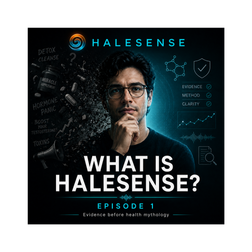
What is HaleSense?
Health is too important for mythology. In this first episode, HaleSense defines its mission: helping people build better judgment in a health culture flooded with wellness myths, supplement hype, fear marketing, food panic, detox claims, hormone hysteria, and pseudo-scientific certainty. HaleSense is not generic wellness, anti-medicine conspiracy, pharma worship, or optimization theater. It is an evidence-based health intelligence project built around one central principle: Evidence before health mythology. This episode explains why health misinformation is not harmless, why fear is not evidence, why mechanism is not proof, and why the modern wellness economy often turns confusion into a business model. We also define the HaleSense posture: attack grift, not confused people; protect the vulnerable, do not mock them; expose false maps, but keep human dignity at the center. Topics covered include: Why health misinformation matters How wellness grift turns fear into revenue Why “natural” does not automatically mean safe Why mechanism is not proof Why anecdotes can start questions but cannot settle them Why boring health fundamentals still matter Why clarity is a form of protection What HaleSense will cover in future episodes The goal is not panic. The goal is judgment. Evidence before health mythology. Fundamentals before hacks. Judgment before panic. Educational only. Not medical advice.