Guided Practices for The Healing Circle

Guided Practices for The Healing Circle

by Dr. Ernesha Smith-West
Season 9
Coming Home to Yourself
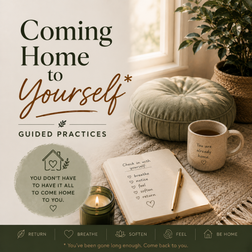
Have you ever felt like a stranger in your own life? This practice is the return, back to the things that are true about you, back to the heartbeat under your hand, back to the person who's been here through all of it. πŸ“š Healing Education Library β†’ Series 5: Rebuild It β€” Session 32: "Healing and Still Being You, Identity After the Work" is the education companion β€” it explores what it means to come back to yourself after a long season of being defined by everything and everyone else. πŸ“ Resource Vault β†’ RV-16: After the Breakthrough β€” four tools for navigating the identity shift when the old version of you no longer fits. And RV-13: Who Are You Without the Role for rebuilding from the inside out. πŸƒ Movement Library β†’ Embodied Movement Practices or Self-Compassion Exercises: Coming home to yourself is a full-body experience. Follow this meditation with an Embodied Movement session to anchor the return in physical sensation, or Self-Compassion Exercises for something softer and more restorative.
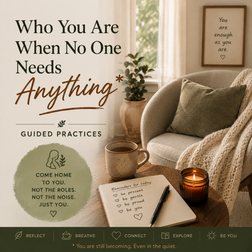
Who You Are When No One Needs Anything
Underneath the mother, the partner, the professional, the fixer who's actually there? This meditation creates space to find the self that exists beneath the roles. She hasn't gone anywhere. She just needs a moment to be seen. πŸ“š Healing Education Library β†’ Series 4: Release It β€” Session 24: "Releasing the Identity of the Strong One" is the direct education companion to this practice, it explores what it costs to hold that identity and what it feels like to put it down. πŸ“ Resource Vault β†’ RV-13: Who Are You Without the Role β€” four tools to find yourself beneath the titles and identities others assigned you. This is the practical guide version of what this meditation opens up. πŸƒ Movement Library β†’ Embodied Movement Practices: Identity isn't just a thought, it's something you feel in the body. After this meditation, an Embodied Movement session helps you inhabit yourself physically, not just conceptually.
Season 8
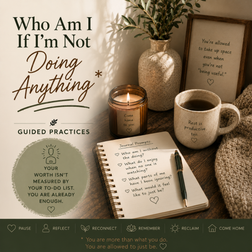
Who Am I If I'm Not Doing Anything
You can stop. But the quiet feels uncomfortable, like something is wrong, like you should be doing something. This practice sits with that specific feeling. The question underneath it is worth staying with: who are you when you're not producing anything? πŸ“š Healing Education Library β†’ Series 1: Know Yourself β€” Session 3: "Which Type of High-Capacity Woman Are You?" surfaces the identity layer underneath productivity, the belief system that makes rest feel like a threat to who you are. πŸ“ Resource Vault β†’ RV-13: Who Are You Without the Role β€” four tools to find yourself beneath the titles and functions. This is the guide for the identity work this meditation opens up. And RV-16: After the Breakthrough β€” for navigating the shift when the old version of you no longer fits. πŸƒ Movement Library β†’ Self-Compassion Exercises: The Self-Compassion Exercises series offers physical practices specifically for the woman who doesn't yet know how to be gentle with herself, movement as an alternative entry point when stillness feels threatening.
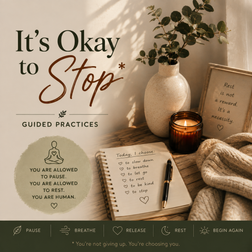
It's Okay to Stop
You are allowed to stop. Not because everything is done, it's never all done, but because you are a person, and people need to stop. This practice gives you the words, the breath, and the space to actually receive that permission. πŸ“š Healing Education Library β†’ Series 4: Release It β€” Session 23: "When Rest Feels Wrong" explains the conditioning behind rest resistance β€” why stopping feels dangerous even when nothing is actually at risk. πŸ“ Resource Vault β†’ RV-17: Why Rest Feels Wrong for tools to interrupt the guilt. And RV-18: The Seven Types of Rest You're Not Getting β€” because the rest you need might not be sleep, and this guide helps you identify which type is actually missing. πŸƒ Movement Library β†’ Self-Compassion Exercises: If stopping still feels hard after this practice, the Self-Compassion Exercises series has gentle movement specifically designed to reinforce rest as valid rather than something to earn.
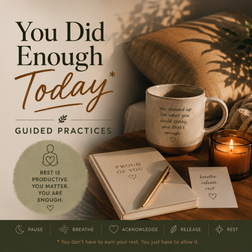
You Did Enough Today
The list isn't done. It never is. But you are. This practice gives you explicit permission to put the day down and acknowledge that what you did today was enough. Even if it doesn't feel that way. Especially then. πŸ“š Healing Education Library β†’ Series 4: Release It β€” Session 23: "When Rest Feels Wrong" is the education partner to this meditation β€” it explains where rest guilt comes from and why the discomfort of stopping is not evidence that you should keep going. πŸ“ Resource Vault β†’ RV-17: Why Rest Feels Wrong β€” four tools to interrupt rest guilt and teach the nervous system that stillness is safe. The written companion to exactly what this session addresses. And RV-20: Building a Rest Practice That Actually Holds for the longer protocol. πŸƒ Movement Library β†’ Self-Compassion Exercises: Rest and self-compassion are the same practice in different forms. The Self-Compassion Exercises series offers gentle movement that reinforces what this meditation gives you permission to feel.
Season 7
After Giving Everything to Everyone
You gave a lot today. Before you keep going, take seven minutes to come back to yourself. This practice helps you put down what you've been carrying for other people and find what's actually yours underneath. πŸ“š Healing Education Library β†’ Series 4: Release It β€” Session 21: "How to Stop Carrying Everyone" is the education behind this pattern β€” it explores why we pick up what isn't ours and what it takes to put it back down. πŸ“ Resource Vault β†’ RV-07: Over-Functioning in Love β€” four tools to identify the invisible labor, interrupt the cycle, and ask for what you actually need. And RV-48: The Resentment Map β€” if this session surfaces resentment, this guide helps you trace it to its source. πŸƒ Movement Library β†’ Mindful Stretching Practices: After giving everything, the Mindful Stretching series offers a gentle way to return to your own body β€” slow movement that says 'this is mine' without requiring any more emotional output.
Saying No Without Guilt
Your body knows what a 'no' feels like before your mouth can say it. This practice helps you feel what a clean, clear no actually is in your body so that the next time you need to use it, it comes from somewhere real. πŸ“š Healing Education Library β†’ Series 5: Rebuild It β€” Session 27: "Boundaries That Come From Values, Not Fear" is the education companion to this practice, it explains why boundary-setting feels physical and why that's exactly right. πŸ“ Resource Vault β†’ RV-01: The Yes I Didn't Mean β€” four tools to catch the automatic over-commitment before it leaves your mouth. The guide version of what this meditation practices in the body. And RV-02: Boundaries from Values, Not Fear for the deeper identity layer. πŸƒ Movement Library β†’ Somatic Exercises: The Somatic Exercises series includes body-based boundary practices that help you feel what a clear limit is physically, reinforcing what this meditation opened up.
Where You End and They Begin
If you've lost track of where you end and someone else begins, this visualization is for you. We use breath and imagery to find the edges of yourself again, not to shut people out, but to know where you actually are. πŸ“š Healing Education Library β†’ Series 1: Know Yourself β€” Session 6: "People-Pleasing Is a Trauma Response, Not a Personality" explains the roots of why the edges of self dissolve in relationships β€” and why this practice is rebuilding something that was never really about limits. πŸ“ Resource Vault β†’ RV-02: Boundaries from Values, Not Fear β€” four tools to hold limits from identity instead of depletion. This is the practical guide for what this meditation visualizes. And RV-07: Over-Functioning in Love β€” for the boundary dissolution that shows up specifically in close relationships. πŸƒ Movement Library β†’ Embodied Movement Practices: The Embodied Movement series includes practices around personal space and physical self-definition, making this visualization real in the body, not just in the mind.
Season 6
For When You Don't Even Know What You're Feeling
Sometimes the most honest answer to 'how are you feeling' is: I have no idea. This practice works with that. We skip the labels and go straight to the body, where the feeling lives before it has a name. πŸ“š Healing Education Library β†’ Series 2: Feel It β€” Session 9: "What Happens When You Never Let Yourself Cry" β€” emotional fog often builds when we've been suppressing feeling for a long time. This session names that pattern clearly. πŸ“ Resource Vault β†’ RV-47: When You Don't Know What You're Feeling β€” a structured prompt sequence designed specifically for this state. It walks you from 'I don't know' to something true, step by step. πŸƒ Movement Library β†’ Grounding Techniques or Somatic Exercises: When you can't name what you're feeling, movement sometimes clarifies what stillness can't. Try a Grounding Techniques session to land in the body first, then a Somatic session to let whatever is there begin to move.
For Grief You Haven't Named
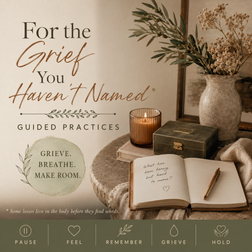
Grief doesn't only come from death. It comes from the version of your life that didn't happen, the relationship that changed, the part of you that had to be put down to keep going. This meditation creates space for that kind of loss. πŸ“š Healing Education Library β†’ Series 2: Feel It β€” Session 12: "Grief Nobody Gave You Permission to Have" is the direct education partner to this meditation β€” it names the grief that doesn't have a socially recognized form and explains why unnamed grief stays stuck. πŸ“ Resource Vault β†’ RV-25: The Grief You Haven't Named Yet β€” four tools to surface and witness the losses that never got a proper ceremony. And RV-28: Sitting With What Can't Be Fixed β€” for the grief that isn't solvable and needs a container rather than a resolution. πŸƒ Movement Library β†’ Embodied Movement Practices: Grief that's been named needs somewhere to go. The Embodied Movement series includes slow, intentional sequences designed to honor what the body is carrying without rushing it out.
1 of 3