Evidence Strong | Weightlifting Science

Evidence Strong | Weightlifting Science

by Evidence Strong
Retiring from elite weightlifting with Meredith Alwine
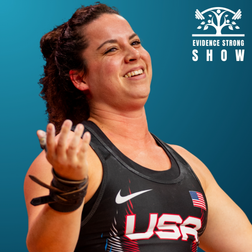
πŸ‹οΈβ€β™€οΈ Extended version of this interview: https://www.patreon.com/evidencestrong/posts/retiring-from-166804119 πŸ‹οΈβ€β™€οΈ To become a great athlete, a person needs to make their sport a priority. This is the exact reason why retiring from an elite sport may be an extremely hard transition. Meredith Alwine retired two years ago; we sat down for a candid conversation on what helped and what still needs to be dealt with. Meredith Alwine is a former Team USA 71/76kg weightlifter who won the 2021 World Championships, the 2020 World Cup, 3 Pan American Championships, and other titles before retiring in 2024. She now serves as the Elite Athlete Director on the USAW Board of Directors, the Vice Chair of the Athletes' Advisory Council, and the weightlifting representative on the Team USA Athletes' Commission. Outside of weightlifting, Meredith attends SMU Dedman School of Law and lives in Dallas, Texas, with her boyfriend and two dogs. Enjoy! ❀️ Join Evidence Strong Patreon: https://www.patreon.com/evidencestrong ▢️ Watch the episodes on YouTube: https://www.youtube.com/playlist?list=PL9L-_m0WGD_7xV0sf87Zy7oMVDdtqR3bG πŸ–ΌοΈ Weightlifting research infographics: https://evidencestrong.com βœ‰οΈ Follow Meredith Alwine: πŸ”Ή https://www.instagram.com/meredithalwine πŸ”Ή https://www.linkedin.com/in/meredith-alwine-72210b384 πŸ’ͺ Follow Evidence Strong: πŸ”Ή https://www.instagram.com/evidence_strong πŸ”Ή https://x.com/EvidenceStrong All the content is for informational purposes only and is not intended as medical, nutritional, coaching, or financial advice, nor does it substitute for advice from your health care professional/provider. Any actions you will take, changes you will make to your nutrition, training or health care, are on your own responsibility and not mine.
Why Coming Home Can Be the Hardest Part of the Olympics β€” with Dr Karen Howells
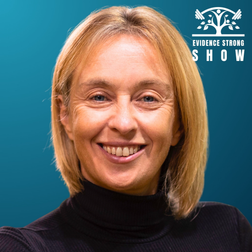
πŸ‹οΈβ€β™€οΈ Extended version of this interview: https://www.patreon.com/evidencestrong/posts/post-competition-166449364 πŸ‹οΈβ€β™€οΈ After representing their country on the biggest stages of the world, athletes face the hard comeback to a normal life, called post-Olympics blues. It is a known but hardly researched phenomenon. Dr Karen Howells is working to change this situation, with the ultimate goal of developing interventions to help athletes recover successfully. Dr Karen Howells is a Senior Lecturer in Sport and Exercise Psychology at Cardiff Metropolitan University in Wales, UK. She is a Chartered Psychologist of the British Psychological Society (BPS), a registered Practitioner Psychologist with the Health and Care Professions Council (HCPC) and regularly provides sport and performance psychology support to athletes from a wide range of individual and team sports competing at a variety of levels. Her research interests are in elite sport and mental health, specifically looking at adversity and growth, and the post-Olympic Blues. She has published her research in a number of academic journals and co-edited a book on Adversity and Growth in Sport. Enjoy! Original research paper: Holly Bradshaw, Karen Howells & Mathijs Lucassen (2022) Abandoned to manage the post-Olympic blues: Olympians reflect on their experiences and the need for a change, Qualitative Research in Sport, Exercise and Health, 14:5, 706-723, DOI:10.1080/2159676X.2021.1993974 https://doi.org/10.1080/2159676X.2021.1993974 ❀️ Join Evidence Strong Patreon: https://www.patreon.com/evidencestrong ▢️ Watch the episodes on YouTube: https://www.youtube.com/playlist?list=PL9L-_m0WGD_7xV0sf87Zy7oMVDdtqR3bG πŸ–ΌοΈ Weightlifting research infographics: https://evidencestrong.com βœ‰οΈ Follow Dr Karen Howells: πŸ”Ή https://x.com/mind4sportpsych πŸ”Ή https://x.com/CMetSportPsych πŸ”Ή https://scholar.google.com/citations?user=GvbyC0QAAAAJ πŸ”Ή https://www.cardiffmet.ac.uk/schoolofsport/staff/Pages/Dr-Karen-Howells.aspx πŸ’ͺ Follow Evidence Strong: πŸ”Ή https://www.instagram.com/evidence_strong πŸ”Ή https://x.com/EvidenceStrong All the content is for informational purposes only and is not intended as medical, nutritional, coaching, or financial advice, nor does it substitute for advice from your health care professional/provider. Any actions you will take, changes you will make to your nutrition, training or health care, are on your own responsibility and not mine.
Which Isometric Pull Best Predicts Weightlifting Performance? β€” with Wesley Gawel
πŸ‹οΈβ€β™€οΈ Extended version of this interview: https://www.patreon.com/evidencestrong/posts/which-isometric-164760069 πŸ‹οΈβ€β™€οΈ Power position isometric testing has been around for some time now, allowing for effective monitoring and programming for athletes in varius sports, not only Olympic weightlifting. Recently however, two additional positions started to be tested to give more insight into force production capabilities. Dr Wesley Gawel came on the Evidence Strong Show to discuss his study testing forces and rate of force development in three positions in Olympic weightlifters. Wesley Gawel, PhD, CSCS, is a sport scientist and strength and conditioning coach who works at Driveline Baseball, handling biomechanics data collection and processing. He earned his PhD in Sport Physiology and Performance at East Tennessee State University, where he focused on training theory and application. He's also a USA Weightlifting Level 1 coach and has worked with lifters ranging from youth to senior national level. Enjoy! Original research paper: Gawel W, Bauer M, You CH, Rochua K, Gahreman D, Hornsby G, Mizuguchi S, Stone M. A Preliminary Investigation of the Relationship of Three Key Bar Positions on Weightlifting Performance. International Journal of Strength and Conditioning. 2026 Jun 6;6(1). https://journal.iusca.org/index.php/Journal/article/view/508 ❀️ Join Evidence Strong Patreon: https://www.patreon.com/evidencestrong ▢️ Watch the episodes on YouTube: https://www.youtube.com/playlist?list=PL9L-_m0WGD_7xV0sf87Zy7oMVDdtqR3bG πŸ–ΌοΈ Weightlifting research infographics: https://evidencestrong.com βœ‰οΈ Follow Wesley Gawel: πŸ”Ή https://x.com/GawelWes πŸ”Ή https://www.instagram.com/growl_23 πŸ”Ή https://www.linkedin.com/in/wesley-gawel-2b8737101 πŸ’ͺ Follow Evidence Strong: πŸ”Ή https://www.instagram.com/evidence_strong πŸ”Ή https://x.com/EvidenceStrong
The Valsalva Maneuver: Blood Pressure, Blackouts and Heavy Lifting β€” with Blake Perry
πŸ‹οΈβ€β™€οΈ Extended version of this interview: https://www.patreon.com/evidencestrong/posts/valsalva-blood-164415042 πŸ‹οΈβ€β™€οΈ The fact is that we have very little research about the Valsalva maneuver and resistance training, cardiac health, or health in general. But our understanding of the maneuver is growing. Dr. Blake Perry discussed the nuances of what happens during the Valsalva maneuver and how it relates to cardiac risks, the possibility of developing weightlifter's blackout, and its influence on overall health. Blake Perry is an integrative human physiologist at Massey University, Wellington, New Zealand. His research is focused on blood flow to the brain, particularly during large changes in blood pressure induced by resistance exercise and the Valsalva maneuver (modified breath-hold). These research interests stem from a personal interest in both powerlifting and cardiovascular physiology. Blake’s current research is exploring the effects of resistance exercise on arterial stiffness, and the potentially confounding role of the Valsalva maneuver. Enjoy! Original research paper: Perry BG, Perry MJ, Dixon R, Bush M, Ryan-Stewart H. Resistance exercise with combined Valsalva maneuver acutely increases carotid-femoral pulse wave velocity in healthy untrained individuals. European Journal of Applied Physiology. 2026 May 29:1-3. https://link.springer.com/article/10.1007/s00421-026-06167-z ❀️ Join Evidence Strong Patreon: https://www.patreon.com/evidencestrong ▢️ Watch the episodes on YouTube: https://www.youtube.com/playlist?list=PL9L-_m0WGD_7xV0sf87Zy7oMVDdtqR3bG πŸ–ΌοΈ Weightlifting research infographics: https://evidencestrong.com βœ‰οΈ Follow Blake Perry: πŸ”Ή https://www.linkedin.com/in/blake-perry-56293880/ πŸ”Ή https://scholar.google.com/citations?user=41oz8NkAAAAJ πŸ”Ή https://www.researchgate.net/profile/Blake-Perry πŸ’ͺ Follow Evidence Strong: πŸ”Ή https://www.instagram.com/evidence_strong πŸ”Ή https://x.com/EvidenceStrong All the content is for informational purposes only and is not intended as medical, nutritional, coaching, or financial advice, nor does it substitute for advice from your health care professional/provider. Any actions you will take, changes you will make to your nutrition, training or health care, are on your own responsibility and not mine.
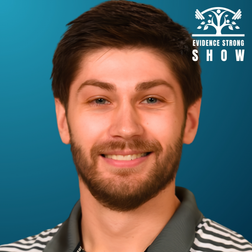
How Much Does Cardio Hurt Weightlifting Power? With Emidio Pistilli
πŸ‹οΈβ€β™€οΈ Extended version of this interview: https://www.patreon.com/evidencestrong/posts/modeling-how-is-164322473 πŸ‹οΈβ€β™€οΈ Okay. Here is the thing: we're getting told that even weightlifters should do some cardio for health and recovery, but will it ruin Olympic weightlifting performance? No one has tested. And I get it. Imagine running a training study where you get weightlifters to run a certain number of minutes (or kms) and test whether their power production drops. Sounds like a hard sell for me. Dr Emidio Pistilli's approach was different. Instead of testing real Olympic weightlifters, he modeled the interference effect between cardio and power generation using existing data. Ed Pistilli is a professor in the Division of Exercise Physiology at West Virginia University, where he has taught courses in neuromuscular physiology and strength & conditioning. He holds a master's degree in Exercise Science from Appalachian State University, a PhD in Exercise Physiology from West Virginia University, the Level 1 Coach certification from USA Weightlifting, and completed postdoctoral training at the University of Pennsylvania. Current research interests Dr. Pistilli is pursuing include muscle fatigue and cancer, as well as neuromuscular adaptations to weightlifting. Enjoy! Original research paper: Pistilli EE, Mizener AD, Clayton SA. A Model to Simulate the Interference Effects of Acute Aerobic Exercise on Rate of Force Development in Weightlifters. bioRxiv. 2025 Dec 22:2025-12. https://www.biorxiv.org/content/10.64898/2025.12.18.695222v1.abstract RFD Simulator Webapp: https://rfdsimulator.stuartclayton.me/ ❀️ Join Evidence Strong Patreon: https://www.patreon.com/evidencestrong ▢️ Watch the episodes on YouTube: https://www.youtube.com/playlist?list=PL9L-_m0WGD_7xV0sf87Zy7oMVDdtqR3bG πŸ–ΌοΈ Weightlifting research infographics: https://evidencestrong.com βœ‰οΈ Follow Emidio Pistilli: πŸ”Ή https://github.com/PistilliLab πŸ’ͺ Follow Evidence Strong: πŸ”Ή https://www.instagram.com/evidence_strong πŸ”Ή https://x.com/EvidenceStrong All the content is for informational purposes only and is not intended as medical, nutritional, coaching, or financial advice, nor does it substitute for advice from your health care professional/provider. Any actions you will take, changes you will make to your nutrition, training or health care, are on your own responsibility and not mine.
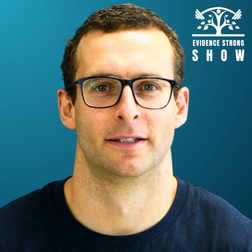
Can Shoe Sensors Measure Weightlifting Technique? β€” with Veni Kong
πŸ‹οΈβ€β™€οΈ Extended version of this interview: https://www.patreon.com/evidencestrong/posts/shoe-sensors-and-164147675 πŸ‹οΈβ€β™€οΈ Can we use shoe sensors and a camera to assess the biomechanics of Olympic weightlifting movements? Can these measures replace laboratory-grade equipment in providing coaches with meaningful insight? Dr Veni Kong discusses her study on testing the biomechanics of the snatch in the Singaporean national weightlifting team. Dr Pui Wah (Veni) KONG is an Associate Dean and Associate Professor at the National Institute of Education, Nanyang Technological University, Singapore. She obtained her PhD in sports biomechanics from Loughborough University, United Kingdom. Her research focuses on human performance and musculoskeletal health. She has led research projects in high-performance sports, gait analysis, footwear, low back pain, sports injuries, rehabilitation, and exoskeletons. Enjoy! Original research paper(s): Ang CL, Kong PW. Field-based biomechanical assessment of the snatch in Olympic weightlifting using wearable in-shoe sensors and videosβ€”A preliminary report. Sensors. 2023 Jan 19;23(3):1171. https://www.mdpi.com/1424-8220/23/3/1171 ❀️ Join Evidence Strong Patreon: https://www.patreon.com/evidencestrong ▢️ Watch the episodes on YouTube: https://www.youtube.com/playlist?list=PL9L-_m0WGD_7xV0sf87Zy7oMVDdtqR3bG πŸ–ΌοΈ Weightlifting research infographics: https://evidencestrong.com βœ‰οΈ Follow Veni Kong: πŸ”Ή https://x.com/venikong πŸ”Ή https://dr.ntu.edu.sg/entities/person/Kong-Pui-Wah πŸ”Ή https://www.linkedin.com/in/pui-wah-kong-900064a1 πŸ”Ή https://scholar.google.com/citations?user=kM0w-3cAAAAJ πŸ”Ή https://www.researchgate.net/profile/Pui-Kong πŸ’ͺ Follow Evidence Strong: πŸ”Ή https://www.instagram.com/evidence_strong πŸ”Ή https://x.com/EvidenceStrong All the content is for informational purposes only and is not intended as medical, nutritional, coaching, or financial advice, nor does it substitute for advice from your health care professional/provider. Any actions you will take, changes you will make to your nutrition, training or health care, are on your own responsibility and not mine.
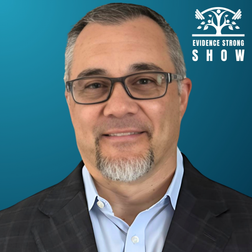
Can One Test Predict Long-Term Weightlifting Performance? With Shaun Joffe
πŸ‹οΈβ€β™€οΈ Extended version of this interview: https://www.patreon.com/evidencestrong/posts/isometric-and-163580288 πŸ‹οΈβ€β™€οΈ Isometric testing has become quite popular in recent years, but we still don't know how predictable these tests can be in the long run. Shaun Joffe discusses his two newest studies, which cover isometric testing in three positions (start, transition, and power) and assess their correlation with performance in Olympic weightlifting, both together and separately. Shaun Joffe is a Senior Lecturer in Strength and Conditioning at St Mary’s University and a UKSCA-accredited strength and conditioning coach. He is also a British Weightlifting licensed coach and remains actively involved in coaching several national-level weightlifters. Shaun is currently a PhD candidate at St Mary’s University, where his research focuses on the neuromuscular determinants of weightlifting performance. Enjoy! Original research paper: Shaun A. Joffe, Shyam Chavda, Jesse Gilham, Gavin R. H. Sandercock & Jamie Tallent (2026) A comparison of maximal isometric force in the first pull, transition and second pull of the clean and their contribution to predict performance in national and international level weightlifters, Sports Biomechanics, 25:2, 281-297, DOI:10.1080/14763141.2025.2458478 https://doi.org/10.1080/14763141.2025.2458478 ❀️ Join Evidence Strong Patreon: https://www.patreon.com/evidencestrong ▢️ Watch the episodes on YouTube: https://www.youtube.com/playlist?list=PL9L-_m0WGD_7xV0sf87Zy7oMVDdtqR3bG πŸ–ΌοΈ Weightlifting research infographics: https://evidencestrong.com βœ‰οΈ Follow Shaun Joffe: πŸ”Ή https://www.instagram.com/shaunjoffe πŸ”Ή https://x.com/ShaunJoffe πŸ’ͺ Follow Evidence Strong: πŸ”Ή https://www.instagram.com/evidence_strong πŸ”Ή https://x.com/EvidenceStrong All the content is for informational purposes only and is not intended as medical, nutritional, coaching, or financial advice, nor does it substitute for advice from your health care professional/provider. Any actions you will take, changes you will make to your nutrition, training or health care, are on your own responsibility and not mine.
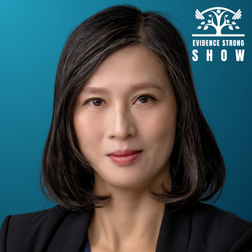
How to Pick the Right Weight Class for Long-Term Progress β€” with Kedric Kwan
πŸ‹οΈβ€β™€οΈ Extended version of this interview: https://www.patreon.com/evidencestrong/posts/cutting-weight-162946851 πŸ‹οΈβ€β™€οΈ How to decide whether cutting weight is the right move for a competition? How to do it safely and effectively? What factors should we consider when planning long-term lifter development? Dr. Kedric Kwan discusses his research and experience working with powerlifters. Dr. Kedric Kwan is a co-founder and lead nutritionist of Reformance Training. He has coached multiple powerlifters to World Championship medals, after his own successes at the World level. Kedric has published several research papers on the topics of powerlifting, weight manipulation, and nutrition. Enjoy! Original research paper(s): Kwan K, King A, Helms ER. The Magnitude of Rapid Weight Loss Affects Subjective Stress and Recovery in Elite Powerlifters at the World Championships: An Exploratory Analysis. Research Quarterly for Exercise and Sport. 2026 Mar 29:1-0. https://www.tandfonline.com/doi/full/10.1080/02701367.2026.2635723 ❀️ Join Evidence Strong Patreon: https://www.patreon.com/evidencestrong ▢️ Watch the episodes on YouTube: https://www.youtube.com/playlist?list=PL9L-_m0WGD_7xV0sf87Zy7oMVDdtqR3bG πŸ–ΌοΈ Weightlifting research infographics: https://evidencestrong.com βœ‰οΈ Follow Kedric Kwan: πŸ”Ή https://reformancetraining.com/about-us πŸ”Ή https://www.instagram.com/kedric.reformance πŸ’ͺ Follow Evidence Strong: πŸ”Ή https://www.instagram.com/evidence_strong πŸ”Ή https://x.com/EvidenceStrong All the content is for informational purposes only and is not intended as medical, nutritional, coaching, or financial advice, nor does it substitute for advice from your health care professional/provider. Any actions you will take, changes you will make to your nutrition, training or health care, are on your own responsibility and not mine.
Are Weights Safe for Kids and Teens? 20 Years of Data β€” with Ben Carnovale
πŸ‹οΈβ€β™€οΈ Extended version of this interview: https://www.patreon.com/evidencestrong/posts/back-injuries-in-162121269 πŸ‹οΈβ€β™€οΈ Back injuries are the most common injuries in powerlifting and the second most common injuries in Olympic weightlifting. The popularity of strength sports is continuously rising across all age groups, and with it, concern about a possible increase in injuries. Ben Carnovale studied the exact patterns of spinal and paraspinal injuries in youth and adolescents engaged in weightlifting (lifting weights) over the last 20 years, and agreed to share his research with us. Benjamin J. Carnovale is a medical student at the University of Pittsburgh School of Medicine and a researcher in the Spine Computational Outcomes Learning Institute (SCOLI), where his interests include neurosurgery, spine biomechanics, sports-related injuries, and medical device innovation. He earned his degree in electrical engineering from the University of Pittsburgh, where he developed a passion for applying engineering principles to clinical challenges. His work investigates neurosurgical outcomes, injury prevention, pediatric and adolescent musculoskeletal health, and intelligent implant technologies. He has authored several peer-reviewed publications on spine surgery, sports medicine, neurosurgical outcomes, and injury epidemiology. Enjoy! Original research paper(s): Carnovale BJ, Lavadi RS, Patel J, Kumar RP, Mooney J, Shah MJ, McDowell MM, Hamilton DK, Agarwal N. Spinal and Paraspinal Injuries from Weightlifting in Minors. World Neurosurgery. 2026 Mar 30:124961. https://www.sciencedirect.com/science/article/pii/S1878875026001774 Post about article: https://www.scoli.org/blog/posts/spinal-and-paraspinal-injuries-from-weightlifting-in-minors ❀️ Join Evidence Strong Patreon: https://www.patreon.com/evidencestrong ▢️ Watch the episodes on YouTube: https://www.youtube.com/playlist?list=PL9L-_m0WGD_7xV0sf87Zy7oMVDdtqR3bG πŸ–ΌοΈ Weightlifting research infographics: https://evidencestrong.com βœ‰οΈ Follow Ben Carnovale: πŸ”Ή https://www.linkedin.com/in/ben-carnovale-10838a278/ πŸ”Ή https://www.scoli.org/ πŸ’ͺ Follow Evidence Strong: πŸ”Ή https://www.instagram.com/evidence_strong πŸ”Ή https://x.com/EvidenceStrong All the content is for informational purposes only and is not intended as medical, nutritional, coaching, or financial advice, nor does it substitute for advice from your health care professional/provider. Any actions you will take, changes you will make to your nutrition, training or health care, are on your own responsibility and not mine.
What It Takes to Coach Your Child to the Olympics – with Tripp Morris
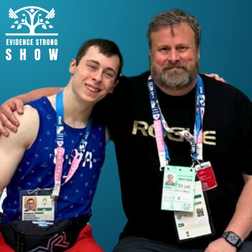
πŸ‹οΈβ€β™€οΈ Extended version of this interview: https://www.patreon.com/evidencestrong/posts/parenting-and-to-160587328 πŸ‹οΈβ€β™€οΈ After 10 years of training with his father, Hampton Morris won a bronze medal at the Paris Olympics, adding to a collection of medals and records in the Pan American and World championships. It was the first Olympic medal in weightlifting for the U.S. in 40 years. I sat down with Tripp Morris to talk about his parenting and coaching of Hampton. Tripp Morris is an accomplished material chemist who serves as the Director of Research & Innovation. Outside his professional corporate career, he is a Senior International Coach for USA Weightlifting at Ritual Weightlifting in Marietta, Georgia. In this coaching role, he guided his son, Hampton Morris, to elite international success, culminating in a historic trip to the 2024 Paris Olympics, where Hampton earned Bronze. Balancing the roles of an innovation leader and an elite athletic mentor, Tripp also shares his passionate sporting journey directly alongside his wife and daughter, who actively support the Ritual Weightlifting Team. Enjoy! ❀️ Join Evidence Strong Patreon: https://www.patreon.com/evidencestrong ▢️ Watch the episodes on YouTube: https://www.youtube.com/playlist?list=PL9L-_m0WGD_7xV0sf87Zy7oMVDdtqR3bG πŸ–ΌοΈ Weightlifting research infographics: https://evidencestrong.com βœ‰οΈ Follow Tripp Morris: πŸ”Ή https://www.instagram.com/tripphomer πŸ”Ή https://www.instagram.com/ritual_weightlifting πŸ’ͺ Follow Evidence Strong: πŸ”Ή https://www.instagram.com/evidence_strong πŸ”Ή https://x.com/EvidenceStrong All the content is for informational purposes only and is not intended as medical, nutritional, coaching, or financial advice, nor does it substitute for advice from your health care professional/provider. Any actions you will take, changes you will make to your nutrition, training or health care, are on your own responsibility and not mine.
1 of 16