Do You See What I Mean?

Do You See What I Mean?

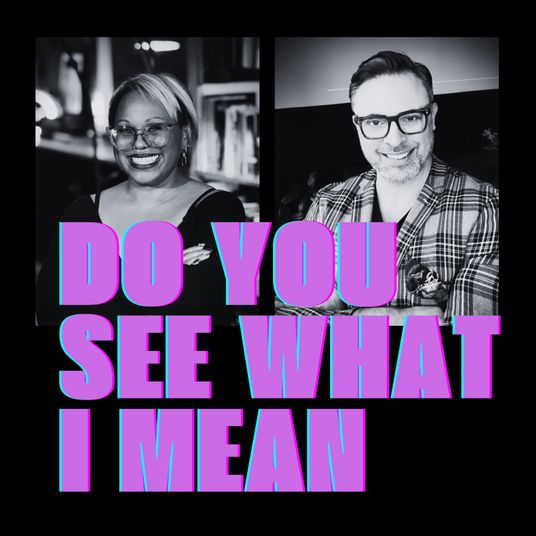
by Joe Cooper & Mia Ward
Season 2
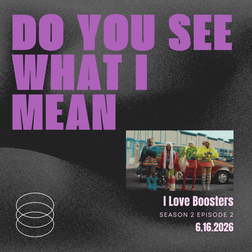
I Love Boosters
Explicit
“People don’t want to be the art – they want to be the artist.” We’d be hard-pressed to find another living artist with as much imagination and slapstick genius as Boots Riley, the Oakland multimedia artist and political provocateur behind the 2018 hit Sorry to Bother You. A band of fashion thieves (“boosters”) take revenge on an evil queen designer, and no color in the rainbow is left out.
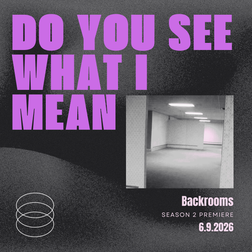
Welcome to Season Two, and Backrooms
Mia and Joey are back for another season of Do You See What I Mean, and they are starting off with the horror hit of the year -- Backrooms. Step inside to find out how far the rabbit hole goes (and whether it went far enough) on our first episode of a new season.
Season 1
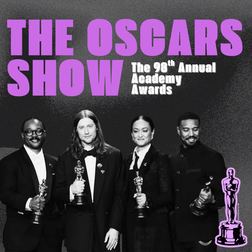
The Oscars Show: The 98th Annual Academy Awards
Explicit
The show, the awards, the brooches, the Babs -- we've got it all covered on our season finale episode about the 98th Annual Academy Awards.
Sinners (and Why It's Best Picture)
Ten nominees, two contenders: will Best Picture go to One Battle or Sinners in five short days? Mia and Joe revisit one of their favorite films of 2025, and make a case for why it is Best. From the idea, to the cast, to the music and more, we're headed to the Mississippi delta in 1932 to explore and celebrate Ryan Coogler's historical epic.
Oscar Nominated Film Scores
It's time for tunes on this special episode, where Joe and Mia break down the five scores nominated for Academy Awards on March 15: Bugonia, Frankenstein, Hamnet, One Battle After Another and Sinners. We're talking composers, leitmotifs and what makes a Best Score on Do You See What I Mean.
Nominated & Notable Films of Now
Kate Hudson — really? (Yes.) What about Ethan Hawke? (Absolutely.) How about the other Safdie brother’s film? (Definitely.) Every year is a great year for film if you know where to look, and fortunately, the Academy has expanded its sights to include a wider variety of films as the years go on. In the latest episode of Do You See What I Mean, we cover notable films that didn’t get their own episodes from the 2026 Oscar nominations list: Marty Supreme The Secret Agent No Other Choice Blue Moon Song Sung Blue Sirat The Smashing Machine Dead Man’s Wire
"Wuthering Heights": We Were Promised Moor than We Got
Explicit
Cathy's here, and Heathcliff too -- but that’s nearly we get from Emily Brontë’s 1847 novel in the latest of a long line of adaptations and interpretations, this one from director Emerald Fennell. In place of the full story, we do get eggs, synth pop and swoony lighting. In the latest episode of Fo You See What I Mean, Mia and Joe explore why Fennell made the choices she did, who this version is for, and why the amount of sultry steam we were promised in the trailers — ended up being conspicuously small.
Sex Off Screen: Five Films that Edited Out Sex
Explicit
There are all kinds of films that reference, or stage in the story, or explicitly discuss sex but have little to none onscreen. These are films that felt the romance, sexual identity, gender identity, or sex scenes had to go because they would hurt the storyline, not help it. (Or for other reasons.) Sometimes, Hollywood flinches. Sometimes a performer says “no thanks.” And sometimes, these decisions work — while at others, they leave something missing. We take a look back at five films from the last several decades and ask why. The Color Purple (1985) Fried Green Tomatoes (1991) The Silence of the Lambs (1991) A Few Good Men (1992) 300 (2006)
Die My Love & If I Had Legs I’d Kick You: Is Parenting Overrated?
In this episode of Do You See What I Mean, Mia and Joe take on two recent films about motherhood pushed to the breaking point: Lynne Ramsay’s Die My Love and Mary Bronstein’s If I Had Legs, I’d Kick You. Both films center mothers in crisis—but they provoke very different reactions. As the conversation unfolds, Mia and Joe find themselves sharply divided, interrogating not just the films themselves but the assumptions critics and audiences bring to stories about maternal suffering. Together, these films raise difficult questions: what happens when motherhood is moralized on screen? When does empathy curdle into indulgence? And do we allow women to be monstrous when they become mothers?
Hamnet: Chloe Zhao and her Bedtime Story of Maternal Melancholy
Explicit
Racing through awards season is Jessie Buckley for her raw portrayal of a longsuffering mother and wife of William Shakespeare in Chloe Zhao’s adaptation of the Maggi O’Farrell novel. Mia and Joe share slightly different takes about this fatiguing story that features a whole lot of wailing and very little Shakespeare. Nonetheless, it has captured audiences for its simplicity and raw portrayal of loss, in a return to form for Zhao, who described having a breakdown after the misfire that was Marvel’s The Eternals. Is her hyper natural approach enough to fuel a long career? What about her did producers Steven Spielberg and Sam Mendes jump to get behind? And is there anything to learn from such a dour slog through parental pain?
1 of 2