
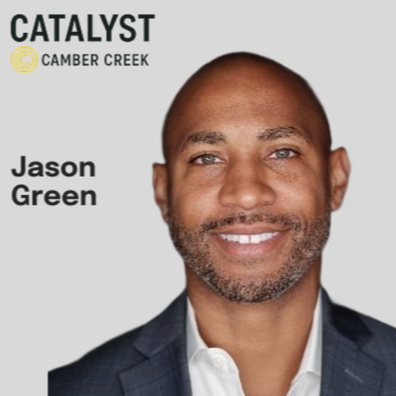
One Community, Three Segregated Churches, and an Experiment in Democracy
Episode notes
In 2013, Jason Green left his position at the White House—a position he had worked most of his life to obtain—to sit with his terminally ill grandmother and be an audience for the stories she knew about their family and the community they all grew up in.
If you stop the description there, it may sound quaint and commendable. But what he learned was that the person he thought of as “Sweet Grandma Green” was a community organizer—and a bit of a radical—who helped merge three churches, two white and one Black, shortly after the assassination of Martin Luther King, Jr.
Jason thought he would be the family archivist. Instead, he became convinced that the ordinary people he loved and grew up with had something urgent to teach us about the unfinished work of American democracy.
His new book is Too Precious to Lose: A Memoir of Family, Community, and Possibility. We spoke a few weeks before its publication.
1:18 Jason’s book is about hope rooted in lived experience rather than abstract optimism.
2:40 Jason’s multifaceted background and his time in the White House.
4:40 Jason recounts working on local and national political campaigns, including witnessing Barack Obama’s 2004 DNC speech and deciding to support his presidential run.
6:10 Jason’s uncynical view of politics
10:00 Leaving a “good government job”
11:00 Money can be a catalyst rather than a corrupting force
16:30 The power of intergenerational conversations
18:50 Quince Orchard, its farming roots and segregated history
21:00 The Black and white Methodist congregations in Quince Orchard lived parallel but largely separate lives for decades.
23:00 Economic decline and shrinking membership force the congregations to confront the possibility of merging.
24:20 The impact of Martin Luther King Jr.’s assassination
27:00 Jason’s initial disbelief upon learning that his own grandmother helped lead what he now recognizes as a radical act of integration
29:00 The real miracle was not simply coming together but the decades-long commitment to staying together.
36:00 Civic infrastructure and small relational bridges make large-scale reconciliation possible when crises strike.
40:00 Jason’s 102-year-old great-uncle still drives weekly to the integrated church.