Vedic Astrology - Career, Personality, Relationships, Case Studies

Vedic Astrology - Career, Personality, Relationships, Case Studies

by Arun
Season 113
Venus in Ashlesha, Jyeshtha & Revati: D9 Intimacy, Tatva Compatibility & Karmic Marriage
AI
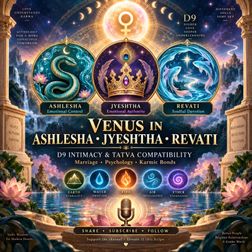
When Venus falls in Ashlesha, Jyeshtha, or Revati, intimacy can become far more than attraction—it can become a psychological, elemental, and karmic experience that reshapes marriage from within. In this episode of Vedic Astrology Deep Learning, we decode Tatva Intimacy Compatibility in the Navamsha (D9) through three powerful Mercury-ruled nakshatras. 🐍 Ashlesha – Water Tatva: Magnetic emotional merging, vulnerability, possessiveness, psychological intensity, and the need to master emotional power without control. 👑 Jyeshtha – Air Tatva: Strategic intimacy, guarded emotions, earned trust, autonomy, emotional authority, and the delicate balance between control and surrender. 🌊 Revati – Ether Tatva: Gentle devotion, spiritual companionship, energetic sensitivity, karmic bonding, emotional grace, and intimacy that feels like sanctuary. We also examine how Earth, Water, Fire, Air, and Ether Tatvas interact within D9 relationships—revealing why some partnerships create emotional security while others trigger volatility, detachment, obsession, or profound transformation. The Navamsha chart can reveal your deeper spouse psychology, post-marriage intimacy patterns, emotional safety needs, hidden power dynamics, and karmic relationship contracts. Your Venus nakshatra and elemental compatibility can help explain whether love feels secure, strategic, consuming, or transcendent. 🔮 For a personalized D9 Marriage, Spouse & Intimacy Reading, visit Astrovagmi.com and explore your karmic relationship blueprint in greater depth. If this episode adds value, share it, subscribe, follow the podcast, and support Vedic Astrology Deep Learning so more serious, research-driven astrology can reach those seeking deeper understanding. #Ashlesha #Jyeshtha #Revati #Navamsha #D9Chart #VedicAstrology #MarriageAstrology #TatvaCompatibility #NakshatraCompatibility #KarmicMarriage #IntimacyAstrology #SpouseReading
Venus in Rohini, Shravana & Hasta: D9 Intimacy, Marriage & Tatva Compatibility
AI
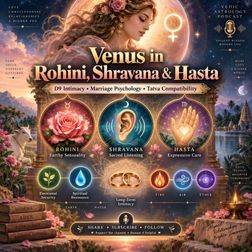
What makes intimacy survive after attraction fades? In this deep-dive into D9 Navamsha marriage psychology, we decode how Venus in Rohini, Shravana and Hasta Nakshatras experiences love, sensuality, emotional safety and long-term partnership through the lens of Tatva Intimacy Compatibility. 🌹 Venus in Rohini — Earth Tatva Sensual, nurturing and devotion-oriented. Rohini seeks consistency, physical affection, emotional loyalty and comforting relationship rituals. Earth and Water can create powerful stability and emotional bonding, while mismatched pacing may turn attraction into dissatisfaction. 👂 Venus in Shravana — Air Tatva Intimacy grows through listening, communication and emotional intelligence. Shravana needs clarity, respect, loyalty and balanced emotional exchange. Mental compatibility becomes as important as physical chemistry. ✋ Venus in Hasta — Fire Tatva Love becomes active, expressive and tangible. Hasta shows affection through touch, care, attention and emotional service. Intimacy thrives when warmth is supported by grounded rhythm and meaningful communication. But this episode goes deeper than individual Nakshatras. You will discover how Earth, Water, Fire, Air and Ether Tatvas influence: • Emotional security • Sexual and physical rhythm • Psychological safety • Communication patterns • Spiritual resonance • Spouse dynamics • Marriage longevity • Long-term intimacy sustainability The Navamsha is not merely a secondary marriage chart. It can reveal why some relationships feel intensely magnetic yet become unstable, while others appear quiet but deepen into profound emotional and spiritual companionship. Tatva compatibility helps explain the hidden rhythm underneath attraction. Your complete intimacy blueprint, however, depends on much more than one Nakshatra — including Venus placement, houses, aspects, planetary influences and divisional-chart patterns. 💍 For a personalized D9 Marriage & Intimacy Reading, visit Astrovagmi.com. If this episode expands your understanding of Vedic Astrology, follow and subscribe to the podcast, share it with someone exploring relationships or marriage astrology, and support the channel so we can continue producing deeper Vedic Astrology learning content. #RohiniNakshatra #ShravanaNakshatra #HastaNakshatra #Navamsha #D9Chart #VedicAstrology #MarriageAstrology #TatvaCompatibility #SpouseCompatibility #NakshatraCompatibility #RelationshipAstrology #IntimacyAstrology #KarmicMarriage #AstrologyForLove #Astrovagmi
Venus in Dhanishta, Mrigashira & Chitra: D9 Intimacy & Marriage Compatibility
AI
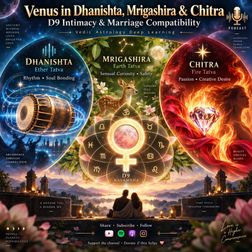
What makes intimacy survive after attraction fades? In Vedic Astrology, marriage is not sustained by chemistry alone—it depends on emotional rhythm, psychological safety, freedom, desire, and elemental compatibility. In this episode of Vedic Astrology Deep Learning, we decode Tatva Intimacy Compatibility in the D9 Navamsha through three powerful Mars-ruled nakshatras and examine how Venus expresses itself once long-term relationship karma becomes active. 🥁 Venus in Dhanishta – Ether Tatva Intimacy becomes rhythmic, expansive, artistic, and soul-oriented. Freedom, movement, shared purpose, and emotional flexibility become essential. Ether and Water can create profound karmic resonance, while Earth stabilizes and Fire energizes. 🦌 Venus in Mrigashira – Earth Tatva Love becomes sensual, curious, playful, and exploratory. Emotional reassurance matters as much as physical attraction. Water brings softness and trust, Earth creates dependable affection, while excessive Air can produce inconsistency or emotional distance. 🔥 Venus in Chitra – Fire Tatva Intimacy becomes magnetic, expressive, passionate, and creatively charged. Fire and Air amplify chemistry, Earth gives staying power, and Ether can elevate desire into shared purpose. Without emotional maturity, attraction can turn into ego conflict. The Navamsha D9 can reveal spouse psychology, sexual rhythm, emotional pacing, intimacy burnout, karmic relationship patterns, and the deeper sustainability of marriage. Tatva compatibility helps explain why some relationships deepen into sacred partnership while others struggle despite powerful initial attraction. For a personalized D9 Intimacy & Marriage Reading, explore your Venus nakshatra together with house placement, aspects, Moon dynamics, D9 lord strength, and the wider marriage pattern. 👉 Visit Astrovagmi.com for consultations. If this episode deepens your understanding, share it, subscribe, follow the podcast, and support Vedic Astrology Deep Learning so more serious, research-driven Jyotisha content can continue. #Dhanishta #Mrigashira #Chitra #Navamsha #D9Chart #MarriageAstrology #VedicAstrology #TatvaCompatibility #NakshatraCompatibility #IntimacyAstrology #KarmicMarriage #RelationshipAstrology #SpouseDynamics #Jyotish #Astrovagmi
Shatabhisha, Swati & Ardra: Venus, Intimacy and Tatva Compatibility in Vedic Astrology
AI
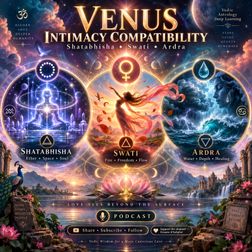
What happens when Venus—the planet of love, attraction and intimacy—moves through Shatabhisha, Swati or Ardra? The answer goes far deeper than romantic chemistry. In this episode of Vedic Astrology Deep Learning, we decode Tatva Intimacy Compatibility through three powerful Rahu-ruled nakshatras, each expressing love through a radically different elemental psychology. Shatabhisha – Ether Tatva: Love needs space, silence and soul resonance. Intimacy can feel mystical, independent and emotionally non-invasive. Ether and Air may flow naturally, Earth provides grounding, Water draws out vulnerability, while Fire can awaken passion—but may also push too hard. Swati – Fire Tatva: Love seeks freedom, movement, experimentation and mental stimulation. Air fuels Swati's independence, Fire matches its momentum, Ether expands intimacy into something unconventional and spiritual, while emotionally dense Water can challenge Swati's need for autonomy. Ardra – Water Tatva: Love becomes intense, cathartic and transformative. Ardra wants emotional truth rather than superficial harmony. Water can mirror its depth, Earth can stabilize its storms, and Ether can turn emotional healing into spiritual intimacy. Fire and Air may create stronger friction when emotional pacing is mismatched. The deeper question is not simply "Are two people compatible?" It is: How do they experience closeness, emotional space, vulnerability, touch, freedom and attachment? Understanding Nakshatra Tatva can reveal why one person experiences silence as intimacy while another experiences it as distance—and why some relationships naturally soothe us while others repeatedly activate us. If this exploration deepens your understanding of Vedic Astrology, Venus compatibility, Nakshatra relationships and intimacy psychology, follow and subscribe to Vedic Astrology Deep Learning, share this episode with fellow seekers, and support the podcast if you find the content valuable.
Venus in D9: Anuradha, Uttara Bhadrapada & Pushya Marriage Compatibility
AI
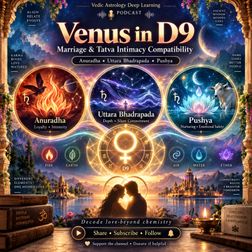
What happens to love after attraction settles, routines begin, and marriage is tested by time? In this episode of Vedic Astrology Deep Learning, we explore Venus in the Navamsha D9 through three Saturn-ruled nakshatras—Anuradha, Uttara Bhadrapada and Pushya—to understand intimacy, loyalty, emotional pacing and long-term marital compatibility. Rather than surface chemistry, D9 reveals how love actually sustains itself inside marriage. 🔥 Venus in Anuradha brings passionate loyalty, emotional intensity, devotion and the need for sincere commitment. Fire seeks a relationship strong enough to hold both passion and responsibility. 🌊✨ Venus in Uttara Bhadrapada creates quiet, mystical and deeply introspective intimacy. Love develops slowly, often through emotional maturity, silent understanding and karmic depth. 🌊 Venus in Pushya seeks nurturing, protection, consistency and emotional security. Affection becomes an act of care, responsibility and dependable presence. We also decode Tatva Compatibility—Fire, Earth, Water, Air and Ether—to understand why some relationships feel naturally supportive while others generate emotional exhaustion, withdrawal, mismatched intimacy or recurring power struggles. You will discover how D9 can illuminate spouse psychology, sexual and emotional rhythm, attachment patterns, relationship endurance and the deeper karmic architecture of marriage. Your Venus nakshatra is only one layer. House placement, Moon dynamics, planetary aspects and the strength of the 7th lord must also be considered. For a personalized D9 Intimacy & Marriage Reading, visit Astrovagmi.com. If this episode expands your understanding of Vedic Astrology, share it with someone who may benefit, subscribe and follow the podcast, and support the channel so deeper Vedic Astrology learning can continue.
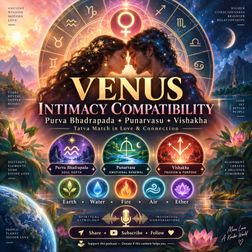
Jupiter Nakshatras & Intimacy Compatibility | Purva Bhadrapada, Punarvasu & Vishakha
AI
Why can one relationship feel emotionally safe, another intensely passionate, and another almost spiritual—yet strangely difficult to explain? In this episode of Vedic Astrology Deep Learning, we explore the deeper intimacy patterns of Venus in Purva Bhadrapada, Punarvasu and Vishakha Nakshatras through the elemental intelligence of Tatva compatibility—Earth, Water, Fire, Air and Ether. You will discover how Venus changes its language of love depending on the Nakshatra it occupies. Venus in Purva Bhadrapada seeks soul-level connection, spiritual resonance, mystery and sacred emotional space. Ether compatibility can create profound non-verbal bonding, while Water, Air, Fire and Earth each bring different forms of emotional support, stimulation or friction. Venus in Punarvasu seeks emotional restoration, trust, nurturing, forgiveness and psychological safety. Water and Earth can provide emotional continuity and stability, while Ether can elevate intimacy toward healing and spiritual connection. Venus in Vishakha expresses love through intensity, loyalty, purpose and focused devotion. Fire creates passion, Air brings stimulation, Earth provides grounding, and Ether can transform desire into a relationship centred on growth and deeper meaning. The deeper lesson is powerful: attraction alone does not determine compatibility. Emotional rhythm, elemental nature, intimacy needs, energetic pacing and the ability to honour another person's psychological space may determine whether attraction becomes sustainable connection. This episode takes you beyond simplistic Nakshatra matching into a more nuanced understanding of Vedic Astrology relationship compatibility, Venus psychology, Tatva dynamics, emotional intimacy and spiritual bonding. If this exploration adds value to your understanding, share this episode, subscribe and follow the podcast so you do not miss future sessions in Vedic Astrology Deep Learning. Your support helps this channel continue developing deeper, structured and practical explorations of Vedic Astrology. If you find the work valuable, consider supporting the podcast and sharing it with someone who would benefit from this knowledge.
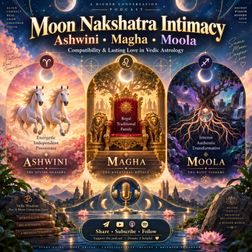
Moon Nakshatra Intimacy: Ashwini, Magha & Moola Compatibility | Vedic Astrology
How does your Moon Nakshatra shape the way you experience intimacy, emotional bonding, freedom, passion and lasting love? In this episode of Vedic Astrology Deep Learning, we explore relationship compatibility through the distinctive intimacy signatures of Ashwini, Magha and Moola Nakshatras. Rather than treating compatibility as a simple chart-matching exercise, the discussion goes deeper into an essential question: How does your partner actually perceive love, closeness and emotional connection? Discover why Ashwini Moon brings energy, initiative, independence, spontaneity, passion and an adventurous approach to relationships; why Magha Moon values dignity, tradition, family, ancestry, loyalty, recognition and more conventional relationship roles; and why Moola Moon seeks freedom, intellectual depth, authenticity, intense connection, personal growth and the courage to uncover what lies beneath the surface. We also examine the deeper logic behind Moon-sign and Nakshatra compatibility, including relationship positions, Gana considerations and why technical compatibility alone may never explain whether two people can genuinely understand and nourish each other over a lifetime. If you are interested in Vedic Astrology, Nakshatra compatibility, relationship astrology, marriage compatibility, Moon Nakshatra psychology and deeper human relationship patterns, this series is designed to take you beyond superficial horoscope matching. Share this episode with someone exploring relationships through Vedic Astrology, subscribe on Spotify or Apple Podcasts, follow the channel, and support Vedic Astrology Deep Learning as we continue decoding all 27 Nakshatras one layer at a time.
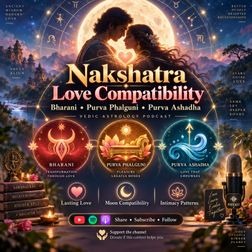
Bharani, Purva Phalguni & Purva Ashadha: Nakshatra Love Compatibility
What makes two people emotionally compatible for lasting love—not merely temporary attraction? In this episode of Vedic Astrology Deep Learning, we explore the relationship and intimacy signatures of Bharani, Purva Phalguni and Purva Ashadha Nakshatras, examining how Moon Nakshatra compatibility can reveal what each person truly seeks from love, intimacy, commitment and partnership. Bharani brings passion, sensuality, intensity, protectiveness, persistence and emotional transformation. It wants a bond that can survive challenges, yet its depth may also express itself through possessiveness, jealousy or strong attachment. Purva Phalguni carries a distinctly romantic, magnetic, artistic and pleasure-loving relationship archetype. It seeks warmth, affection, social connection, beauty, creativity and shared enjoyment—but romantic idealism can become unrealistic when expectations are disconnected from the partner's actual emotional nature. Purva Ashadha expresses love through optimism, adventure, personal growth, ambition, exploration and passionate commitment. It seeks a partner who supports development, respects independence and can participate in a larger journey of discovery and purpose. We also explore why conventional compatibility scores alone may not tell the whole relationship story. Moon signs, Nakshatra Gana, compatible zodiac signs and—most importantly—the intimate psychology of each Nakshatra must be understood together. A relationship becomes stronger when you stop asking only, “Are we compatible?” and begin asking, “How does my partner experience love—and can I understand that language?” Follow Vedic Astrology Deep Learning for deeper explorations of Nakshatras, relationships, compatibility, intimacy, psychology and the hidden architecture of human bonding. If this work adds value to your journey, share this episode, subscribe and follow the podcast, and consider supporting the channel with a donation so this deeper Vedic Astrology learning can continue.
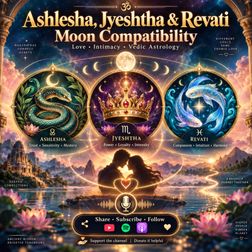
Ashlesha, Jyeshtha & Revati Moon Compatibility | Love, Intimacy & Vedic Astrology
What makes two people feel emotionally safe, magnetically attracted, deeply understood—or fundamentally incompatible? In this episode of Vedic Astrology Deep Learning, we explore the relationship and intimacy signatures of Ashlesha, Jyeshtha and Revati Nakshatras, moving beyond superficial zodiac compatibility into the deeper psychology of the Moon. Discover how Ashlesha Moon seeks profound emotional bonding, trust, loyalty and almost instinctive intimacy. Ruled by the Nagas, Ashlesha can sense what remains unspoken, making honesty and emotional transparency essential. Its intensity can create extraordinary closeness, but possessiveness, defensiveness and emotional complexity must also be understood. We then examine Jyeshtha, where intimacy becomes intertwined with authority, independence, dedication and emotional loyalty. Jyeshtha needs a partner who respects autonomy while bringing genuine commitment. Power dynamics can become important, particularly when both partners naturally want to lead. Finally, we enter the sensitive world of Revati, where compassion, tenderness, imagination, spirituality and emotional receptivity shape relationships. Revati seeks gentleness, harmony and a partner capable of respecting its deeply intuitive and idealistic emotional nature. Alongside these psychological patterns, we explore Moon-sign and Nakshatra compatibility principles for lasting love, including why attraction alone does not guarantee emotional sustainability. This series is for anyone who wants to understand relationships through a deeper Vedic lens—not simply asking, “Are we compatible?”, but asking, “How do we experience intimacy, trust, loyalty and emotional evolution differently?” If this exploration adds value to your understanding of Vedic Astrology, follow and subscribe to the podcast, share this episode with someone exploring relationship compatibility, and support the channel so I can continue creating deeper Vedic Astrology learning content.
Punarvasu & Vishakha Moon Compatibility | Vedic Astrology of Lasting Love
AI
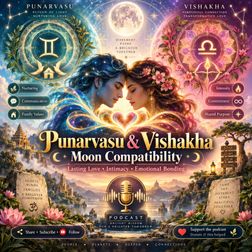
What makes two people feel emotionally compatible—not just attracted, but capable of sustaining a meaningful bond over time? In this episode of Vedic Astrology Deep Learning, we explore Punarvasu and Vishakha Nakshatra Moon compatibility, examining how the Moon, Nakshatra, zodiac sign, Pada, Gana and Bhakoot principles can reveal deeper patterns of emotional bonding, intimacy and relationship sustainability. For Punarvasu Moon, intimacy is strongly connected with nurturing, emotional support, adaptability, meaningful conversation, family values, transparency and the need for emotional stability. The Gemini expression of Punarvasu especially seeks intellectual connection and communication as an important pathway toward intimacy. For Vishakha Moon, relationships carry a different signature: intensity, commitment, ambition, shared purpose, evolution, problem-solving, social engagement and the desire to bring divergent forces toward a common point. Vishakha seeks a relationship that develops—not merely one that exists. We also examine why Nakshatra compatibility cannot be reduced to a simplistic “compatible or incompatible” judgment. Sign placement, specific Nakshatra Padas and the broader compatibility framework matter, and the principle discussed here represents only one dimension within a larger Vedic matching system. If you want to understand why you bond deeply with certain people, what your Moon actually seeks in intimacy, and which relationship patterns may support lasting emotional connection, this series takes you beyond generic zodiac compatibility into the deeper architecture of Vedic Astrology. Follow and subscribe to Vedic Astrology Deep Learning on Spotify and Apple Podcasts, share this episode with someone exploring relationships and Nakshatras, and support the channel as we continue decoding Vedic Astrology one principle at a time.
1 of 224