Black College Achievers @ Metropolitan State University

Black College Achievers @ Metropolitan State University

by Mr. Lucky — Social Studies Teacher, M.A., M.S. Urban Education Student
Season 15
Students: 11 Ways Black Professors Act Inferior
11 Ways Black College Professors Act “Inferior” SEND THIS EPISODE TO OTHERS. Keep It Moving. https://rss.com/podcasts/bsu-podcast-metropolitan-state-university/2936975/ Avoiding Other Black Faculty Limiting visible association to avoid being labeled a “clique” or “activists.” This is managing white perception. Staying Close to White Colleagues Proximity offers safety: fewer accusations of bias, more legitimacy, and access to information. Over‑correcting Tone and Emotion Suppressing frustration, softening feedback, over‑smiling, and speaking formally to avoid “angry” or “intimidating” stereotypes. This is emotional self‑management under white fragility. Downplaying Black Identity Avoiding AAVE, cultural hairstyles, Black references, or racial justice topics to avoid being labeled “too political.” This is code‑switching for survival. Over‑performing Rigor (“Twice as Good”) Being hyper‑prepared and hyper‑credentialed because competence is questioned more. This is a response to systemic bias. Avoiding Conflict Challenging colleagues or policy carries harsher consequences, so silence becomes protection. Chicken Shit Professors. Minimizing Cultural Expression Hiding music, food, politics, or community ties because Black culture is treated as “unacademic.” Grading Black Students More Harshly Fear of being accused of favoritism leads to stricter grading and over‑documentation. This is fear of White retaliation, Policing Other Black Faculty/Students Correcting tone, discouraging advocacy, or distancing from outspoken colleagues to avoid collective punishment. Over‑identifying With Institutional Norms Enforcing rules rigidly, appearing hyper‑neutral, or suppressing cultural empathy to avoid scrutiny. Avoiding Outspoken Black Students Distancing from students who challenge inequity to protect tenure and signal “I’m not like him.” This is the 'Chicken Shit" Am I Ok Massa - inferior mindset. Noticing Black Professors Acting “Inferior” This dynamic is rooted in assimilation as survival, shaped by racial battle fatigue and white normativity. In HWIs, whiteness defines professionalism and authority; any deviation becomes a risk. Notice Professors Lacking the Courage to Be Black. Classroom Behavior Fear of being labeled “angry” or “unprofessional” leads to self‑moderation—softened feedback, over‑validation, and reduced authority. This weakens rigor and suppresses authentic, passionate teaching. Impact on Evaluations Student evaluations mirror racialized expectations. Attempts to appear “safe” are read as weakness, reinforcing the very bias professors are trying to avoid. Conclusion Students must refuse to imitate this inferior mindset. Enter the workforce with courage—speak truth, challenge inequity, and lead with authenticity. Survival is not liberation. Reject fear‑based conformity and embody the confidence and cultural integrity that dismantle the systems demanding silence. “Telling the truth is not winning a popularity contest. That’s cool beans with me. Period.” — Mr. Lucky Student Contribution: Observe Professors and Submit Observation Reports To: radiotalklr@gmail.com
MSU Religious Studies: COMING SOON
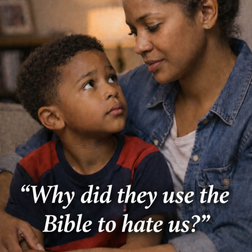
This Episode: COMING SOON A child’s question shakes history: “Why did they use the Bible to hate us?” You won’t hear this in Religious Studies Classes on This Campus? Black College Achievers and Allies: Confront the truths fragility keeps out of the classroom. Silence protects no one. Truth frees everyone. This Episode COMING SOON-KEEP WATCHING
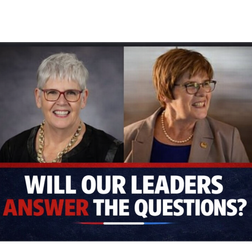
Provost, President, Professors: Listen and Answer — Will They
Questions for Provost, President and Professors- Please Answer. 1. “Why weren’t we taught that thousands of Black soldiers fought in the American Revolution?” Students want to know why figures like Crispus Attucks, Peter Salem, and James Armistead Lafayette are missing from most textbooks. 2. “If Black soldiers fought for freedom in 1776, why did slavery continue for almost 100 more years?” My questions forces educators to address the contradiction between American ideals and American reality. 3. “Why did the 54th Massachusetts have to fight for equal pay even while risking their lives in the Civil War?” The New Generation of College Achievers recognize injustice and want to understand how racism operated inside the Union Army. 4. “How could the Harlem Hellfighters be heroes in WWI but face lynching and segregation when they came home?” The next question highlights the brutal gap between military honor and civilian racism. 5. “Why were Black WWII veterans denied GI Bill benefits and blocked from buying homes because of racial covenants?” Today's students want to understand how federal policy helped create the racial wealth gap. 6. “Why were so many Black soldiers sent to frontline combat in Vietnam, and why did they return to the same racism they left behind?” This question connects military service to civil rights struggles of the 1960s and 70s. 7. “If Black Americans served in every war up to Iraq and Afghanistan, why are their contributions still left out of class discussions?” For the lesson plan for this episode email: radiotalklr@gmail.com Contact; 773-809-8594 Daring to Teach Uncomfortable Truths in Ethnic Studies "Daring to teach uncomfortable issues in Ethnic Studies is not the problem — silence and fragility are. A new generation of students are asking real questions about race, power, history, and identity. They are not divided by truth; they are divided when institutions avoid it. Courage in teaching builds clarity. Avoidance builds confusion. If we claim to prepare students for a diverse society, then we must stop protecting comfort and start protecting honesty. Silence and fragility are divisive — not the willingness to confront what students are ready, eager, and demanding to learn." Mr. Lucky Students email and Get the PowerPoint for This Episode radiotalklr@gmail.com Mr. Lucky, M.A., Master of Advocacy and Political Leadership (MAPL) M.S., Graduate Student, School of Urban Education Host, Black College Achievers Podcast @ Metro State University. 773-809-8594
Ms. Edget: The Resilience of Africa and Black Americans
For A Copy of My Book: www.weusoursluckybooks.com To Be a Guest on The Podcast call: 773-809-8594 Lesson Plan — “Tikar Sew” (Teddy Afro) Theme: Unity, justice, and national healing in Ethiopian society. Learning Objectives (with examples) Analyze how the song uses historical references to promote unity. Example: Students identify a lyric that references past conflict and explain how it calls for reconciliation. * Interpret the cultural symbolism in the song’s imagery. Example: Students explain how references to “the people” or “the land” symbolize shared identity. Learning Outcomes (with examples) Students will explain the song’s message about collective responsibility. Example: A student states how the chorus encourages citizens to care for one another. Students will connect the song’s themes to modern social issues. Example: A student compares the song’s call for unity to current community tensions or divisions. 5E Learning Model Engage: Play the opening section; ask students what emotions or images they immediately feel. Explore: Students discuss Ethiopia’s historical struggles and how artists use music to address national healing. Explain: Break down key lyrics and visuals from the music video, focusing on unity, justice, and shared humanity. Elaborate: Students create a short reflection, poem, or sketch showing how “Tikar Sew” applies to their own community’s challenges. Evaluate: Students share their work and explain how their piece reflects the song’s message of unity and responsibility. Formative Assessment One‑minute written response: “What message from ‘Tikar Sew’ is most important for society today, and why?” Evaluate for clarity, connection to the song, and evidence of critical thinking.
Blacks Saved America: WIN $200 — ASK ME HOW
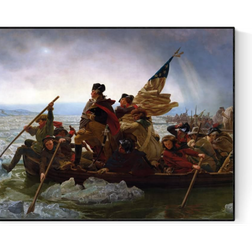
DON'T GET MAD AT ME FOR THE TRUTH COLLEGE STAFF See My Lesson Plan Below Black Americans: Nothing But the Truth All parents, teachers, and fellow Americans must listen to this episode. Share it with someone—then ask them to share it with someone else. Keep it moving. Keep the truth alive. "We were never told the full story about Black Americans and the American Revolution. Pull up images of the Battle of Bunker Hill and Washington’s crossing of the Delaware. Look closely. Find the Black patriots. Learn the truth." Mr. Positive. 🧭Lesson Plan to Be Used with This Podcast: Reclaiming Black Patriots of the American Revolution Presented by the Positive People USA Podcast 🎯 Learning Objectives (with Examples) Students will: Identify and explain the contributions of Black patriots in the Revolutionary War, such as:Wentworth Cheswell, the first Black elected official in U.S. history, who rode north in 1774 to warn of British troop movements. James Armistead Lafayette, a double agent whose intelligence helped secure victory at Yorktown in 1781. Analyze how post-Civil War political forces erased Black contributions from historical narratives, using:David Barton’s claim that Southern Democrats rewrote textbooks between 1870–1890 to support segregation and suppress Black patriotism. "Verbal Presentation." Evaluate primary sources to restore historical truth, including:William Cooper Nell’s 1855 book, The Colored Patriots of the American Revolution, which documents figures like Crispus Attucks and Salem Poor. 📈 Learning Outcomes By the end of the lesson, students will be able to: Name and describe at least five Black patriots, including:Peter Salem, who killed British Major Pitcairn at Bunker Hill (June 17, 1775). Phillis Wheatley, who corresponded with George Washington in 1775–76, praising his leadership through poetry. Explain the mechanisms of historical erasure, such as:The removal of Black figures from post-Reconstruction textbooks to justify Jim Crow policies and white supremacy. Create a civic restoration message that reclaims a forgotten legacy, such as:A podcast script honoring Lemuel Haynes, the first Black ordained Protestant minister, who preached liberty and pastored churches in Massachusetts and New York. 🧪 Assessment Formative: Quick write: “Why was Wentworth Cheswell’s election in 1768 historically significant?” Group discussion: Analyze Prince Whipple’s symbolic presence in Washington Crossing the Delaware and its implications for visual legacy. Draw a picture and explain the significance of any part of the podcast that strikes you as important. Summative: Civic Restoration Project: Students will produce a mini-podcast script, PSA, or infographic that reclaims one Black patriot’s legacy and critiques the mechanisms of historical erasure. Rubric will assess:Historical accuracy (dates, locations, roles) Comments to: radiotalklr@gmail.com
Season 14
WIN $200 — ASK ME HOW
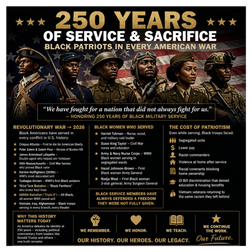
Celebrating 250 Years of Black Patriots in American History Blacks Fought for A Nation That Did Not Always Fight for Them Lesson Plan: 250 Years of Black Military Service Objective 1: Students will explain how Black Americans have served in every U.S. war from the Revolution to today. Example: A student identifies the 54th Massachusetts, the Harlem Hellfighters, and the 6888th Battalion and states how each advanced American democracy. Objective 2: Students will evaluate how racism shaped Black veterans’ experiences during and after service. Example: A student explains how Vietnam veterans returned to racial covenants, GI Bill discrimination, and unequal access to housing and education. Learning Outcomes Outcome 1: Students will produce a short written or verbal explanation of how Black service members showed patriotism despite barriers. Example: A student describes how the 54th fought for a nation that denied them equal pay. Outcome 2: Students will connect past discrimination to modern debates about equity and national memory. Example: A student explains how GI Bill exclusion contributed to the racial wealth gap still visible today. Student Challenge (Instructor Must Complete) Students challenge the instructor to identify one overlooked Black military figure or unit not covered in class and explain their contribution in under 60 seconds. If the instructor cannot answer, students choose the next figure or topic for class exploration. 5E Learning Model Engage: Students examine images of Black soldiers from the Revolution, Civil War, WWI, WWII, Vietnam, and modern conflicts. Prompt: “What patterns do you see across time?” Explore: Students rotate through stations on the 54th Massachusetts, Harlem Hellfighters, Tuskegee Airmen, the 6888th, and Vietnam veterans facing discrimination. Explain: Students share findings. Instructor clarifies themes: service in every war, racism in the ranks, denied benefits, and the contradiction between service and citizenship. Elaborate: Students respond to: “How does recognizing 250 years of Black service change our understanding of American democracy?” They must use two historical examples. Evaluate (Formative Assessment): Exit Ticket: Name one Black military unit or figure and explain their contribution. Describe one form of discrimination Black veterans faced and its impact. Order My Book: www.weusoursluckybooks.com Contact; 773-809-8594 or radiotalklr@gmail.com
My Bad- I am Sorry
Comments: radiotalklr@gmail.com Voicemail: 773-809-8594 Get a free copy (eBook) my book “Relationships the Power of Illusion” by using the website and redeeming code. Beat others to one of the codes. Only use one code. Mr. Lucky www.iuniverse.com/en/redeem 10600000441447 10600000441448 10600000441450 10600000441451 10600000441452 10600000441453 10600000441454 10600000441455 10600000441456 10600000441457
Bump The Past Bullshit
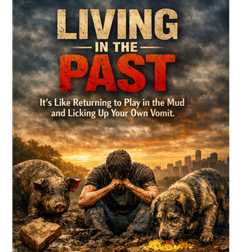
Order My Book: www.weusoursluckybooks.com PERSONAL CHANGE WORKSHEET 1. What Part of My Past Keeps Pulling Me Back? Describe the habit, mindset, or behavior you keep returning to. 2. What Does “My Mud” Look Like? Identify the specific behavior that keeps you stuck. Example: snapping in anger, shutting down, avoiding responsibility. 3. What Is “My Vomit”? What harmful action or pattern do you keep returning to even though it hurts you? 4. What Trigger Pulls Me Back Into It? List the situations, people, or emotions that send you into the old cycle. 5. What New Behavior Will Replace the Old One? Be specific and realistic. Reality Therapy (WDEP) Self‑Assessment W – WANT: What do I truly want to change in my life? D – DOING: What am I doing right now that keeps me stuck? E – EVALUATE: Is what I’m doing helping me get what I want? □ Yes □ No Explain: P – PLAN: What is my next clean step forward TODAY? Contact: 773-809-8594 or radiotalklr@gmail.com
Their Flag vs. Your Cross at Work
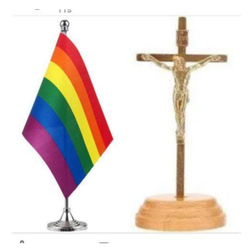
Min. Lucky's Observation Plan Lesson Plan: Observing Inclusion and Institutional Behavior on Campus Learning Objectives Students will identify visible signs of inclusion and exclusion on campus by analyzing symbols, policies, and classroom behaviors. Example: noticing Pride flags in common areas compared to the absence of crosses or Bibles on desks. Students will evaluate how institutional practices shape classroom dialogue and influence which viewpoints feel safe to express. Example: observing when instructors avoid topics involving religion, race, or political disagreement. Learning Outcomes Students will document at least three examples of selective inclusion based on campus observations. Example: tampons in men’s restrooms vs. restrictions on religious symbols. Students will explain how institutional norms affect student learning using evidence from class discussions or campus spaces. Example: describing how instructors redirect conversations that challenge dominant narratives. 5E Learning Model Engage: Students view images of campus spaces (desks, restrooms, offices) and discuss what symbols or messages appear most often. Explore: Students walk through designated campus areas to observe visible inclusion practices and note what is present vs. absent. Explain: Students share findings and connect them to concepts of inclusion, conformity, and institutional culture. Elaborate: Small groups analyze how selective inclusion influences classroom dialogue, student comfort, and intellectual diversity. Evaluate: Students reflect on whether campus inclusion practices support or limit diverse viewpoints. Formative Assessment Exit Ticket: Students write one observed example of selective inclusion and one question they still have about how institutions shape which viewpoints are welcomed or avoided. Comments: radiotalklr@gmail.com
LIES OUR TEACHERS TOLD US: American Revolution
DO NOT ALLOW COLLEGE INSTRUCTORS TO DO THE SAME See My Lesson Plan Below Comments call: 773-809-8594 Black Americans: Nothing But the Truth All parents, teachers, and fellow Americans must listen to this episode. Share it with someone—then ask them to share it with someone else. Keep it moving. Keep the truth alive. "We were never told the full story about Black Americans and the American Revolution. Pull up images of the Battle of Bunker Hill and Washington’s crossing of the Delaware. Look closely. Find the Black patriots. Learn the truth." Mr. Positive. 🧭Lesson Plan to Be Used with This Podcast: Reclaiming Black Patriots of the American Revolution Presented by the Positive People USA Podcast 🎯 Learning Objectives (with Examples) Students will: Identify and explain the contributions of Black patriots in the Revolutionary War, such as:Wentworth Cheswell, the first Black elected official in U.S. history, who rode north in 1774 to warn of British troop movements. James Armistead Lafayette, a double agent whose intelligence helped secure victory at Yorktown in 1781. Analyze how post-Civil War political forces erased Black contributions from historical narratives, using:David Barton’s claim that Southern Democrats rewrote textbooks between 1870–1890 to support segregation and suppress Black patriotism. "Verbal Presentation." Evaluate primary sources to restore historical truth, including:William Cooper Nell’s 1855 book, The Colored Patriots of the American Revolution, which documents figures like Crispus Attucks and Salem Poor. 📈 Learning Outcomes By the end of the lesson, students will be able to: Name and describe at least five Black patriots, including:Peter Salem, who killed British Major Pitcairn at Bunker Hill (June 17, 1775). Phillis Wheatley, who corresponded with George Washington in 1775–76, praising his leadership through poetry. Explain the mechanisms of historical erasure, such as:The removal of Black figures from post-Reconstruction textbooks to justify Jim Crow policies and white supremacy. Create a civic restoration message that reclaims a forgotten legacy, such as:A podcast script honoring Lemuel Haynes, the first Black ordained Protestant minister, who preached liberty and pastored churches in Massachusetts and New York. 🧪 Assessment Formative: Quick write: “Why was Wentworth Cheswell’s election in 1768 historically significant?” Group discussion: Analyze Prince Whipple’s symbolic presence in Washington Crossing the Delaware and its implications for visual legacy. Draw a picture and explain the significance of any part of the podcast that strikes you as important. Summative: Civic Restoration Project: Students will produce a mini-podcast script, PSA, or infographic that reclaims one Black patriot’s legacy and critiques the mechanisms of historical erasure. Rubric will assess:Historical accuracy (dates, locations, roles)
1 of 9