Bioethics Babe

Bioethics Babe

by Arina Grossu Agnew
Season 1
They Wanted Him Aborted for a Heart Defect. The Surrogate Fought to Save Him: The Case of McKenna West | Ep. 46
A surrogate was hired. Then, at 20 weeks, he was diagnosed with a serious heart defect, and everything changed. McKenna West, a 28-year-old cardiac nurse and mother of two, says the intended parents asked her to abort their biological son after he was diagnosed with hypoplastic left heart syndrome (HLHS). Their surrogacy agreement reportedly required termination for a fetal abnormality if the intended parents requested it. McKenna scheduled the abortion. Then she refused to go through with it. Instead, she began researching how to save the baby's life, eventually relocating to Texas, where he was born and underwent major heart surgery. Now comes the extraordinary twist: the same parents who requested his abortion are pursuing treatment to save his life and fighting for their parental rights. His biological mother calls him “the love of our lives,” yet testified that she does not regret requesting his abortion. How can those two things coexist? In this episode of Bioethics Babe, Arina Grossu Agnew examines the extraordinary case of McKenna West and Baby Gabriel/Rumi and the profound bioethical questions it raises about commercial surrogacy, abortion, disability, reproductive technology, parental rights, and the commodification of women and children. Can a surrogacy contract punish a woman for refusing to abort? Does a child's right to life depend on whether he is healthy and wanted? And why should the same heart defect that in their eyes justified ending his life before birth become a reason to marshal surgeons and intensive care to save him after birth? This case ultimately forces us to confront one fundamental question: What makes a human life worthy of protection?
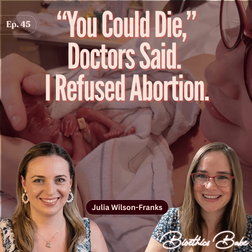
“Her Water Broke at 19 Weeks. Doctors Said She Could Die and Pressured Her to Abort. She Refused.” with Julia Wilson-Franks | Ep. 45
What happens when a mother facing a devastating pregnancy complication is told that continuing her pregnancy could cost her uterus or even her life? When Julia Wilson-Franks’ water broke just after 19 weeks, her daughter Lucia was still alive. But Julia says that over the next 10 days, numerous OB/GYNs repeatedly pressured her to induce labor or end her pregnancy. One doctor asked her, “Are you willing to leave your son without a mother?” Sitting beside Julia when she heard those words was her 10-year-old son, Quinn, whom she had also been advised to abort years earlier. Julia refused. Ten days after her water broke, Lucia was born naturally at 20 weeks and 6 days. She lived for six minutes in her mother’s arms. Julia understood that Lucia might not survive, but she experienced the 10 additional days of pregnancy very differently from her doctors. While she felt they viewed each passing day primarily as increasing risk, she was grateful for every moment her daughter remained alive inside her. In this episode of Bioethics Babe, Julia shares what happened behind closed doors during those 10 days and why she believes medical counsel crossed the line into coercion. We discuss informed consent, patient autonomy, medical paternalism, the loss of trust that eventually led her to subsequent home births, and the inherent dignity of human life regardless of prognosis or length of life. And we confront a provocative question: In a medical culture that champions “choice,” what happens when a mother uses that choice and autonomy to refuse abortion?
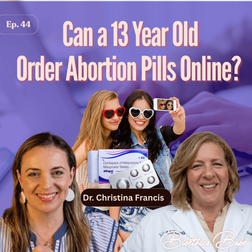
“Can a 13-Year-Old Order Abortion Pills Online? An OB/GYN Went Undercover” with Dr. Christina Francis | Ep. 44
Can a 13-year-old order abortion pills online without anyone verifying her age, confirming her pregnancy, or speaking with her face-to-face? Dr. Christina Francis, a board-certified OB/GYN and CEO of the American Association of Pro-Life Obstetricians and Gynecologists (AAPLOG), decided to find out. She went undercover, posing as a 13-year-old with multiple serious medical risk factors, including severe anemia, an IUD, a history of ectopic pregnancy, multiple prior C-sections, and blood thinner use. According to Francis, despite the red flags, she was able to obtain abortion pills through the mail without an ID check or an in-person medical evaluation. What arrived four days later raised even more questions about medical oversight, informed consent, follow-up care, and what happens when complications occur. In this episode of Bioethics Babe, Dr. Francis takes us inside her undercover investigation and explains the medical risks women and girls may face, including hemorrhage, infection, incomplete abortion, and the danger of an undiagnosed ectopic pregnancy. We also examine how easily abortion pills could potentially be obtained by abusers or traffickers, why Dr. Francis believes the current system falls short of genuine telemedicine and informed consent, and what she is calling on the FDA to do as it reviews the safety of mifepristone. How did we get to a point where powerful abortion drugs can be mailed with so little direct medical oversight, and what does that mean for the women and girls medicine is supposed to protect? Subscribe for more conversations If this episode encouraged you, please like, subscribe, and share to help more people discover thoughtful conversations about bioethics, human dignity, and human flourishing. 📚For Episode Resources, please visit the episode page. Follow BB on social media: YouTube: https://www.youtube.com/@BioethicsBabe Facebook: https://www.facebook.com/profile.php?id=61576554667052 Instagram: https://www.instagram.com/bioethicsbabe X: https://x.com/bioethicsbabe
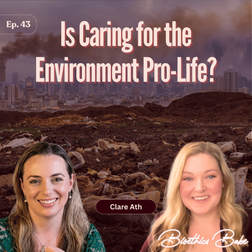
“Is Caring for the Environment Actually a Pro-Life Issue?” with Clare Ath | Ep. 43
Has environmentalism become so politicized that Catholics have forgotten what the Church actually teaches? And here’s the bigger question: Is caring for the environment actually a pro-life issue? In this episode of Bioethics Babe, I sit down with Clare Ath, co-founder and president of Vita et Terra, to unpack a side of Catholic teaching that is often misunderstood, dismissed, or surrendered to politics. We explore why Catholics are called to care for creation, what Scripture really means when it gives humanity “dominion” over the earth, and why that does not mean domination. We also examine Laudato Si’, integral ecology, human ecology, and the contributions of St. John Paul II and Pope Benedict XVI to the Church’s environmental teaching. But this conversation goes far beyond theology and into practical effects. What happens when chemicals, plastics, pesticides, and other environmental toxins make their way into our food and water? What could environmental degradation mean for fertility, pregnancy, children, and future generations? And can we protect the natural world without embracing an environmental ideology that treats human beings as the problem? Clare makes the case that Catholics should reject the false choice between protecting human life and caring for creation. Authentic environmental stewardship begins with human dignity and recognizes that clean water, clean air, healthy communities, and responsible stewardship ultimately serve the human person. We also tackle consumerism, the technocratic mindset, environmental policy, subsidiarity, and practical ways families can care for creation without falling into partisan politics or nature worship. Can you be authentically pro-life while ignoring the world future generations will inherit? And have Catholics ceded the environmental conversation for too long? This is a conversation about reclaiming care for creation from politics and putting the human person back at its center.
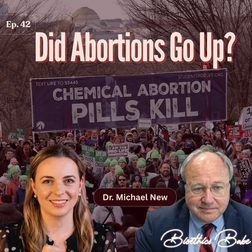
“Four Years After Roe Was Overturned: Did Dobbs Save Babies?” with Dr. Michael New | Ep. 42
Four years after Roe v. Wade was overturned, did Dobbs actually save babies? Many headlines claim abortions have increased, pro-life laws have failed, maternal deaths have risen, and women are receiving worse medical care. But does the data support those claims? In this evidence-driven conversation, Dr. Michael New, assistant professor at The Catholic University of America, Senior Associate Scholar at the Charlotte Lozier Institute, and one of America's leading researchers on abortion policy, examines what has actually happened since the Supreme Court's 2022 Dobbs decision. We discuss: • Have pro-life laws saved babies? • Why abortion numbers alone don't tell the whole story • The rise of telehealth chemical abortions and mail-order abortion pills • New research on births in Texas, Florida, and other states • Infant mortality and maternal mortality after Dobbs • Are women receiving worse miscarriage care? • Are OB-GYNs leaving pro-life states? • What migration and public health data really shows • The biggest myths surrounding Dobbs • What the evidence says nearly four years later Whether you're pro-life, pro-choice, or simply looking for an honest examination of the evidence, this episode goes beyond headlines to explore what the data actually reveals.
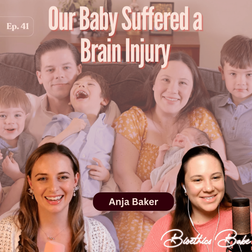
“When Your Baby Is Born With a Brain Injury: One Mother's Story of Hope” with Anja Baker | Ep. 41
When your child is born with a severe brain injury, how do you grieve the future you imagined while fully embracing the child in front of you? Where do you find hope when doctors, therapies, uncertainty, and endless medical decisions become your new normal? In this powerful episode of Bioethics Babe podcast, Arina Grossu Agnew sits down with Anja Baker—pro-life advocate, wife, mother of four, and disability parent—to share the remarkable story of her son, Hershey, who suffered a severe hypoxic-ischemic encephalopathy (HIE) brain injury at birth. Anja opens up about the heartbreak of receiving a devastating diagnosis, the realities of medical parenting, and how her family's faith, community, and supportive school helped them find hope and to "dream again." She also offers encouragement for parents navigating grief, disability, and life-altering diagnoses while challenging our culture's assumptions about human dignity and the value of every life. In this episode, we discuss: What HIE (hypoxic-ischemic encephalopathy) is and how it changed Hershey's life How parents can grieve while continuing to love and celebrate their child Why human dignity is never determined by ability, intelligence, independence, or any other characteristic The realities of raising a child with profound disabilities How parents become their child's strongest medical advocate Why faith, community, respite care, and support systems are essential How Harbor Day School gave Anja's family the "space to dream again" What hope looks like when circumstances are difficult Practical encouragement for families facing life-changing diagnoses Whether you're a parent, healthcare professional, pro-life advocate, or simply someone seeking a deeper understanding of disability and human dignity, this conversation will challenge, encourage, and inspire you. Subscribe for more conversations If this episode encouraged you, please like, subscribe, and share to help more people discover thoughtful conversations about bioethics, human dignity, and human flourishing. 📚For Episode Resources, please visit the episode page at https://bioethicsbabe.com/when-your-baby-is-born-with-a-brain-injury-one-mothers-story-of-hope-with-anja-baker-ep-41/. Follow BB on social media: YouTube: https://www.youtube.com/@BioethicsBabe Facebook: https://www.facebook.com/profile.php?id=61576554667052 Instagram: https://www.instagram.com/bioethicsbabe X: https://x.com/bioethicsbabe
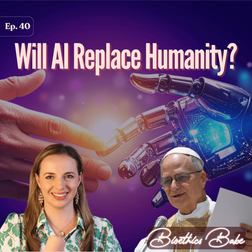
"Will AI Decide What Human Life Is Worth?" | Pope Leo XIV's Warning | Ep. 40
Artificial intelligence is transforming medicine, health care, education, scientific research, and nearly every aspect of modern life. But as AI becomes more powerful, one question rises above all the others: What does it mean to be human? In this episode of Bioethics Babe, Arina Grossu Agnew explores Pope Leo XIV's groundbreaking encyclical Magnifica Humanitas ("Magnificent Humanity") and examines how Catholics, and everyone concerned with human dignity, should think about artificial intelligence. Topics include: • Pope Leo XIV's vision for AI • Christian personalism and human dignity • AI in medicine and health care • Embryo grading, embryo ranking, & designer babies • Quality-of-life medicine & algorithmic bias • Catholic social teaching and AI ethics • How ordinary people can help shape the future of AI The stakes could not be higher. Technology should always remain the servant of humanity—not its master. Subscribe for more conversations If this episode helped you, please like, subscribe, and share it to help more people discover thoughtful conversations on bioethics, medicine, and the inherent dignity of every human person. 📚For Episode Resources, please visit the episode page at https://bioethicsbabe.com. Follow BB on social media: YouTube: https://www.youtube.com/@BioethicsBabe Facebook: https://www.facebook.com/profile.php?id=61576554667052 Instagram: https://www.instagram.com/bioethicsbabe X: https://x.com/bioethicsbabe
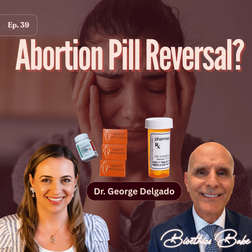
"Abortion Pill Reversal: She Changed Her Mind Hours Later. Can the Baby Be Saved?" with Dr. George Delgado | Ep. 39
She took the abortion pill... then changed her mind just hours later. Is there anything that can be done? Thousands of women have found themselves in this heartbreaking situation, believing there was no hope. But according to family physician and abortion pill reversal pioneer Dr. George Delgado, that isn't always the end of the story. In this in-depth conversation, Dr. Delgado explains the science behind abortion pill reversal, how progesterone can counteract the effects of mifepristone, and what the published medical evidence actually shows. He also shares the remarkable story of how abortion pill reversal was first discovered after women asked physicians for help, leading to a worldwide network that has now helped save more than 8,000 babies. We discuss: How the abortion pill (mifepristone and misoprostol) works The difference between the abortion pill and Plan B How abortion pill reversal works biologically Success rates and why timing matters Whether abortion pill reversal is safe for mothers and babies What the peer-reviewed studies actually show The controversy surrounding the halted 2019 clinical trial Why some medical organizations oppose abortion pill reversal The FDA, informed consent, and the ethics of giving women a second chance The stories of women who immediately regretted taking the abortion pill The future of abortion pill reversal research and patient care Dr. Delgado also responds to common criticisms, including claims that abortion pill reversal is "unproven" or causes birth defects, discusses ongoing research to improve treatment protocols, and explains why he believes women deserve to know this option exists before taking the first abortion pill. Whether you've heard abortion pill reversal, this episode examines the evidence, the ethics, and the real-life stories behind the science. If you or someone you know has taken the first abortion pill and regrets it, time is critical. Seek help immediately and visit www.abortionpillreversal.com. Subscribe for more conversations If this episode helped you, please like, subscribe, and share it to help more people discover thoughtful conversations on bioethics, medicine, and the inherent dignity of every human person. 📚For Episode Resources, please visit the episode page at www.bioethicsbabe.com. Follow BB on social media: YouTube: https://www.youtube.com/@BioethicsBabe Facebook: https://www.facebook.com/profile.php?id=61576554667052 Instagram: https://www.instagram.com/bioethicsbabe X: https://x.com/bioethicsbabe
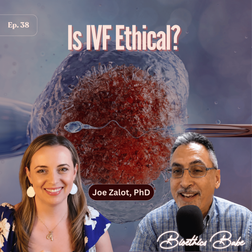
“What Fertility Treatments Are Ethical? IVF, IUI, & Embryo Ethics” with Joe Zalot, PhD | Ep. 38
Millions of couples struggle with infertility, yet few realize that not every fertility treatment is ethically the same. Is IVF the only option? Is IUI morally acceptable? Why does the Catholic Church oppose some reproductive technologies while embracing others? And what happens to the millions of frozen embryos already in storage? In this episode of Bioethics Babe, I sit down with Joe Zalot, PhD, Director of Education at the National Catholic Bioethics Center, to unpack one of the most misunderstood topics in modern medicine and Catholic bioethics. Joe has responded to more than 2,400 ethics consultations and has spent years helping physicians, priests, and families navigate the difficult moral questions surrounding infertility, IVF, embryo freezing, surrogacy, donor conception, and restorative reproductive medicine. Together, we discuss: • Why infertility is a profound cross and how the Catholic Church responds with compassion and hope • The difference between morally acceptable and unacceptable fertility treatments • Why IVF remains one of the most controversial procedures in modern medicine • The ethical concerns surrounding embryo destruction, embryo freezing, and genetic screening • Why children are gifts, not products or entitlements • What Catholics should know about IUI, ICSI, NaProTechnology, fertility awareness methods, and restorative reproductive medicine • The truth about sperm and egg donation, surrogacy, and third-party reproduction • Whether modern fertility medicine treats infertility or simply bypasses it • What should happen to the estimated 2 million frozen embryos in the United States, with at least 3-5 million total worldwide. • Practical guidance for couples seeking ethical fertility care while remaining faithful to Catholic teaching Whether you're struggling with infertility, discerning fertility treatment options, working in healthcare, or simply trying to understand the Church's teaching on human dignity and reproductive technology, this conversation offers clarity, compassion, and practical guidance rooted in Catholic bioethics. 📌 Subscribe for weekly conversations with leading physicians, scientists, ethicists, legal scholars, and policy experts exploring today's most challenging bioethical issues through the lens of human dignity.
“What Happens to a Society When It Starts Killing Its Elderly?” with Amanda Achtman | Ep. 37
What happens to a society when it starts killing its elderly? What happens when a doctor offers death to a lonely senior before offering treatment? When a grandchild loses a grandparent not to disease, but to euthanasia? When aging parents begin to wonder whether they're a burden rather than a gift? In Canada, euthanasia now accounts for approximately 1 in 20 deaths, and the program continues to expand. What began as a narrowly defined option for a small group of patients has become one of the most controversial bioethical issues of our time. In this powerful and deeply human conversation, Amanda Achtman, founder of Dying to Meet You, explains why euthanasia is not merely a medical issue, but an existential crisis touching families, medicine, aging, disability, loneliness, meaning, and human dignity. Drawing from hundreds of conversations with seniors, families, physicians, disability advocates, and people directly affected by Canada’s euthanasia program, Amanda shares heartbreaking stories of grandparents lost to euthanasia, patients offered death before treatment, family members left with trauma and unanswered questions, and seniors who increasingly fear becoming a burden. We discuss: • Why elderly people are essential to the flourishing of society • How euthanasia affects children, grandchildren, and entire families • The hidden psychological impact of being offered euthanasia • Why loneliness, loss of meaning, and fear often drive euthanasia requests more than physical pain • The expansion of euthanasia in Canada and what it teaches the rest of the world • How legal euthanasia changes medicine, culture, and our understanding of human worth • Why Amanda calls euthanasia "the new suicide" • Practical ways to build a culture where people are accompanied rather than abandoned This conversation goes far beyond politics. It asks a deeper question: What kind of society do we become when death is presented as the answer to suffering? Subscribe for more conversations If this episode helped you, please like, subscribe, and share it. 📚For Episode Resources, please visit the episode page: https://bioethicsbabe.com/what-happens-to-a-society-when-it-starts-killing-its-elderly-with-amanda-achtman-ep-37/. For more information, the latest episodes, and additional resources, visit www.bioethicsbabe.com. Follow BB on social media: YouTube: https://www.youtube.com/@BioethicsBabe Facebook: https://www.facebook.com/profile.php?id=61576554667052 Instagram: https://www.instagram.com/bioethicsbabe X: https://x.com/bioethicsbabe
1 of 5