Alabama Prison Reform Proposal

Alabama Prison Reform Proposal

by R. L. Robinson
Season 2
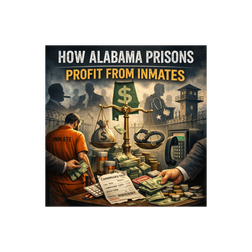
How Alabama Prisons Profit From Inmates
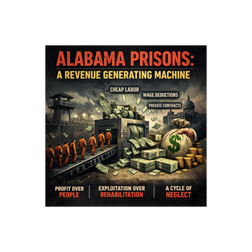
Alabama’s prison system isn’t just about punishment—it’s a business model. In this episode, we expose how incarceration generates revenue through inmate labor, phone calls, commissary fees, healthcare contracts, and hidden deductions that funnel money out of the poorest communities in the state. We break down who profits, how the incentives work, and why financial exploitation is baked into daily prison operations—often at the expense of safety, rehabilitation, and public accountability. This is a clear-eyed look at the economics of mass incarceration in Alabama and what it means for incarcerated people, their families, and taxpayers.
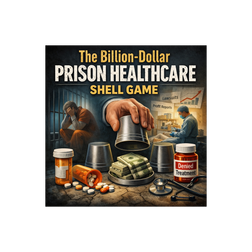
The Billion-Dollar Prison Healthcare Shell Game
This episode pulls back the curtain on Alabama’s prison healthcare system, where billions in public funds flow through private medical contracts—yet incarcerated people report delayed treatment, denied medications, and preventable deaths. We examine how outsourcing care creates layers of deniability, shields decision-makers from accountability, and shifts costs without improving outcomes. The Billion-Dollar Prison Healthcare Shell Game connects lawsuits, budget data, and lived experience to ask a direct question: when healthcare becomes a contract instead of a duty, who is actually being served—and who is being sacrificed?
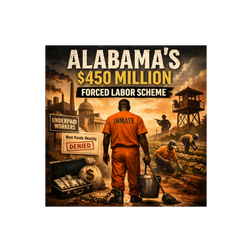
Alabama’s $450 Million Forced Labor Scheme
This episode investigates how Alabama’s prison labor system generates hundreds of millions of dollars while the people doing the work earn little to nothing. We unpack the structure behind so-called “voluntary” labor, the role of state agencies and private contractors, and how parole decisions, disciplinary threats, and economic coercion keep the system running. Alabama’s $450 Million Forced Labor Scheme connects policy, profit, and power—examining whether this model serves public safety or perpetuates exploitation, and why accountability has lagged despite mounting legal and ethical challenges.
FCC Bans Predatory Prison Phone Kickbacks
In this episode, we break down a major but widely misunderstood shift in prison communications: the FCC’s ban on predatory prison phone kickbacks. For decades, incarcerated people and their families have been charged exorbitant rates to stay connected—while states quietly collected commissions on every call. We explain what the FCC ruling actually does, what it does not do, and why families are still paying the price through hidden fees, monopolized service contracts, and broken technology. From accountability gaps to the human cost of isolation, this episode connects federal policy to real-life consequences inside Alabama’s prisons—and asks whether ending kickbacks is reform, or just the first overdue step.
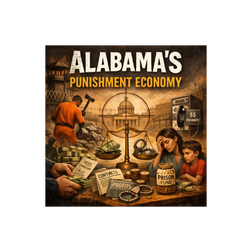
Alabama’s Punishment Economy
This episode examines how Alabama’s prison system has evolved into a revenue-driven enterprise—where incarceration generates profit through labor, fees, commissary, communications, and contracts, while public safety and rehabilitation take a back seat. We unpack how billions in taxpayer dollars coexist with chronic understaffing, violence, and constitutional failures, and why families often bear hidden costs for basic survival inside. Alabama’s Punishment Economy connects policy decisions at the Statehouse to lived consequences behind the walls, challenging listeners to confront who pays, who profits, and what accountability should look like when punishment becomes an economic model rather than a path to safety or redemption.
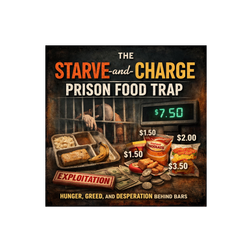
The Starve and Charge Prison Food Trap
This episode exposes a quiet but deadly cycle inside Alabama’s prisons: people are underfed at chow, then forced to survive by purchasing overpriced commissary—if they can afford it. When food becomes a commodity instead of a basic obligation, hunger turns into leverage, families become revenue streams, and desperation fuels violence, extortion, and illness. The Starve-and-Charge Prison Food Trap breaks down how inadequate meals, inflated commissary pricing, and lack of oversight intersect to create a system that punishes poverty, endangers lives, and shifts constitutional responsibilities onto incarcerated people and their families. This isn’t about comfort—it’s about survival, accountability, and the real cost of a broken corrections model.
Turning Alabama Prisoners Into Revenue Streams
This edition exposes a hard truth: Alabama’s prison system increasingly treats incarcerated people as financial assets rather than human beings. Through work-release labor, wage deductions, and institutional incentives, profit is prioritized while violence, understaffing, and failed rehabilitation persist. The result is a system that generates revenue without accountability—at significant human and public-safety costs. ALPRP challenges this model by demanding transparency, ethical labor standards, and a shift from extraction to rehabilitation.
Alabama Prisoners Are a Valuable Revenue Stream
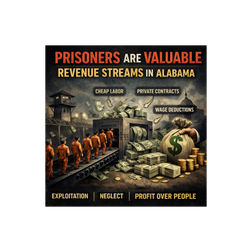
Alabama’s prison system is often framed as a public safety necessity—but what if it is also a revenue-generating machine? In this episode of the Alabama Prison Reform Proposal Podcast, we examine how incarcerated people have become a source of profit through prison labor, wage garnishment, fees, and prolonged incarceration, while meaningful rehabilitation and accountability remain underfunded or ignored. Drawing on investigative reporting, public records, and lived experience, this episode exposes how financial incentives distort parole decisions, exploit prison labor, and perpetuate a cycle that benefits institutions while harming families and communities. We discuss: How prison labor generates millions while incarcerated workers remain trapped Why parole denial and “risk” narratives often conflict with real-world work release practices The hidden costs to taxpayers through lawsuits, medical neglect, and federal intervention How profit-driven incarceration undermines rehabilitation, public safety, and human dignity This episode is not about ideology—it is about incentives, data, and accountability. If prisons profit from people staying incarcerated, reform becomes harder, not easier. Real public safety requires transparency, rehabilitation, and systems designed to reduce harm—not monetize it. Listen. Learn. Share. Reform is not optional—it’s overdue.
Statehouse Suits vs Snack Cake Murder
Explicit
In this episode, we confront the brutal disconnect between policy decisions made in Montgomery and the daily realities inside Alabama’s prisons. While lawmakers debate budgets and talking points, people are dying over basic survival—food, safety, and neglect. Statehouse Suits vs. Snack Cake Murder exposes how overcrowding, understaffing, and failed oversight turn minor deprivations into deadly outcomes, and why these aren’t “isolated incidents” but predictable results of systemic failure. This is not rhetoric. It’s accountability. And it’s a warning: what happens behind prison walls doesn’t stay there—it defines public safety, fiscal responsibility, and Alabama’s moral credibility.
When the Guards Break the Law: Corruption Inside Alabama Prisons
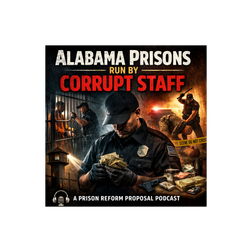
In this episode, we expose a side of Alabama’s prison crisis that rarely gets full public scrutiny: staff corruption and the cost of unchecked power behind prison walls. From contraband smuggling and falsified reports to excessive force, retaliation, and silence enforced through fear, we examine how a small number of corrupt actors can destabilize entire facilities—and how weak oversight allows it to continue. Drawing from documented cases, lawsuits, investigative reporting, and firsthand accounts, we break down how corruption among correctional staff fuels violence, enables gangs, undermines rehabilitation, and drives up costs for taxpayers through settlements, federal intervention, and emergency responses. We also confront the uncomfortable reality that accountability mechanisms often fail the very people they are meant to protect—incarcerated individuals, honest officers, and the public. This episode makes one thing clear: prison reform is not anti-officer—it is pro-accountability. Most correctional staff want safe, lawful workplaces. Corruption puts everyone at risk and erodes trust in the justice system as a whole. We close by discussing what real oversight looks like—from body cameras and independent investigations to data transparency and technology that protects both staff and incarcerated people. 🎧 Part of the Alabama Prison Reform Proposal podcast series—focused on truth, accountability, and safer prisons for a safer Alabama.
1 of 5