WorldSnap – History, Civilizations & Lessons from the Past

WorldSnap – History, Civilizations & Lessons from the Past

di World Snap

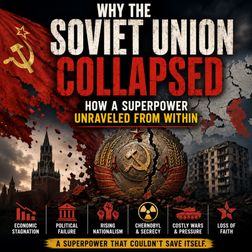
Why the Soviet Union Collapsed: How a Superpower Unraveled from Within
IA
For decades, the Soviet Union stood as one of the most powerful states in the world—a nuclear superpower with vast territory, a massive military, and global influence. Yet in 1991, it disappeared without invasion or decisive military defeat. This episode explores the deeper forces behind the collapse of the Soviet Union, including economic stagnation, political rigidity, military pressure, nationalism, the war in Afghanistan, Gorbachev’s reforms, Chernobyl, and the failed coup of 1991. It is the story of how a seemingly permanent superpower slowly lost the trust, unity, and legitimacy needed to survive.

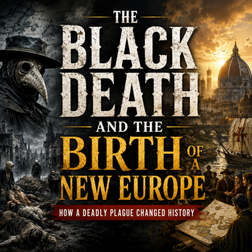
The Black Death and the Birth of a New Europe
IA
The Black Death was one of the deadliest catastrophes in human history, but its impact reached far beyond the millions of lives it claimed. In this episode, we explore how the plague transformed medieval Europe by making labor more valuable, weakening feudal obligations, redistributing property, challenging the authority of the Church, and encouraging the growth of cities, stronger governments, and new economic systems. This is not a story of tragedy automatically creating progress. It is the story of how a devastating demographic collapse broke the balance of the medieval world and opened the way for a different Europe to emerge.

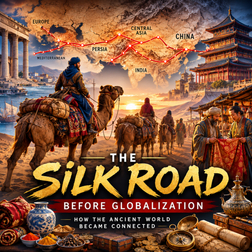
The Silk Road Before Globalization: How the Ancient World Became Connected
IA
Long before airplanes, container ships, and the internet, the ancient world was already connected by a vast network of trade routes known as the Silk Road. Stretching across China, Central Asia, India, Persia, the Middle East, and the Mediterranean, these routes carried much more than silk. In this episode, we explore how merchants, empires, oasis cities, and nomadic communities helped goods, religions, technologies, knowledge, and diseases travel across continents. We also examine the role of the Sogdians, the importance of Central Asia, the expansion of trade under the Mongol Empire, and the devastating spread of the Black Death. The Silk Road was not one road, but an early system of global interdependence—one that brought distant civilizations together centuries before modern globalization.

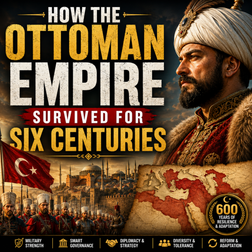
How the Ottoman Empire Survived for Six Centuries
IA
How did a small frontier principality grow into one of history’s longest-lasting empires? In this episode, we explore the political flexibility, military strength, strategic geography, religious diversity, diplomatic skill, and constant reform that allowed the Ottoman Empire to survive for more than six hundred years. From the conquest of Constantinople to the Tanzimat reforms and the final collapse after World War One, this is the story of an empire that repeatedly adapted, retreated, and rebuilt itself instead of disappearing.

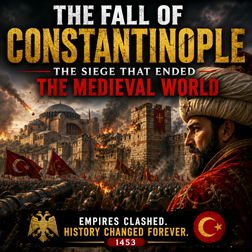
The Fall of Constantinople: The Siege That Ended the Medieval World
IA
In 1453, the ancient city of Constantinople faced its final and most devastating siege. For more than a thousand years, its massive walls had protected the capital of the Eastern Roman Empire. But when the young Ottoman Sultan Mehmed II arrived with a powerful army, a fleet, and enormous cannons, the balance of history began to shift. This episode explores the dramatic final days of the Byzantine Empire, the rise of Ottoman power, the military technology that transformed siege warfare, and the deeper political failures that left Constantinople isolated. It also examines why the city mattered so much, how its defenders resisted against overwhelming odds, and whether its fall truly marked the end of the medieval world.

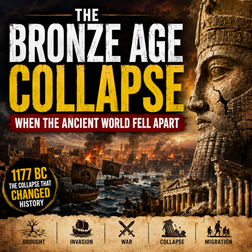
The Bronze Age Collapse: When the Ancient World Fell Apart
IA
Around 1200 BC, the great civilizations of the eastern Mediterranean began to collapse. Powerful empires disappeared, cities burned, trade routes failed, and entire systems of government vanished within only a few generations. In this episode, we explore the mysterious Bronze Age Collapse and examine how drought, famine, migration, warfare, rebellion, earthquakes, and disrupted trade may have combined into a devastating chain reaction. We also investigate the Sea Peoples, the destruction of Ugarit, the fall of the Hittite Empire, the decline of Mycenaean Greece, and the survival of Egypt. More than an ancient mystery, the Bronze Age Collapse is a timeless warning about interconnected societies, fragile supply chains, political legitimacy, and the difference between efficiency and resilience.

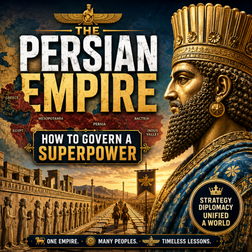
The Persian Empire: How to Govern a Superpower
IA
How do you govern an empire stretching from Egypt and the Mediterranean to Central Asia and the Indus Valley? The Achaemenid Persian Empire ruled millions of people who spoke different languages, worshipped different gods, and followed different laws and traditions. Its survival depended on far more than military conquest. In this episode, we explore how Persian rulers used satrapies, royal roads, taxation, local autonomy, intelligence networks, bureaucracy, and political symbolism to manage one of the ancient world’s largest superpowers. We also examine the constant tension between central authority and powerful provincial governors, the dangers of disputed succession, and the weaknesses that eventually helped the empire unravel. This is the story of an empire that understood a timeless lesson of statecraft: ruling a vast and diverse world does not require controlling everything. It requires knowing what must be controlled, what can remain local, and how to keep distant peoples invested in the system.

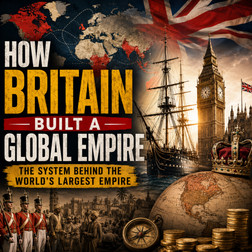
How Britain Built a Global Empire: The System Behind the World’s Largest Empire
IA
How did a relatively small island nation build the largest global empire in history? In this episode, we explore the powerful system behind Britain’s rise—from naval supremacy and global trade to banking, industrialization, strategic ports, private companies, and alliances with local rulers. This is not simply a story of conquest. It is the story of how Britain connected military power, commerce, finance, technology, and information into a worldwide network. We also examine the human cost of empire, including slavery, exploitation, political inequality, and resistance across the colonized world. Discover how Britain transformed trade into influence, influence into control, and control into a global empire whose legacy still shapes borders, languages, institutions, and international relations today.

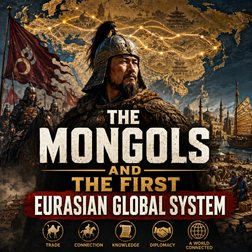
The Mongols and the First Eurasian Global System
IA
The Mongols are often remembered as ruthless conquerors, but their empire did more than destroy kingdoms. It connected China, Central Asia, Persia, Russia, the Middle East, and Europe through protected trade routes, relay stations, diplomacy, migration, and the movement of knowledge. This episode explores how the Mongol Empire created the first truly Eurasian global system. It examines the Pax Mongolica, the Yam communication network, merchant partnerships, cultural exchange, technological transfer, and the darker side of connectivity, including conquest, exploitation, and the spread of the Black Death. The Mongols did not create modern globalization, but they showed how political power, infrastructure, and trade could connect distant societies within one vast network.

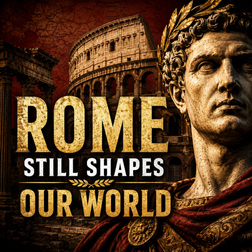
Rome: The Empire That Still Shapes Our World

IA
The Roman Empire disappeared centuries ago, but its influence remains deeply embedded in the modern world. In this episode, we explore how Rome shaped government, law, citizenship, language, religion, architecture, infrastructure, and military power. From modern senates and legal systems to roads, cities, and political symbolism, Rome created institutions and ideas that survived long after its emperors were gone. We also examine the collapse of the Roman Republic, the rise of imperial rule, and the lessons Rome offers about inequality, political division, military loyalty, institutional decline, and the challenges facing powerful states. Rome is not simply ancient history. In many ways, we are still living in the world it helped create. This episode features an AI-generated voice created using Minimax TTS.
3 di 4