
Note sull'episodio
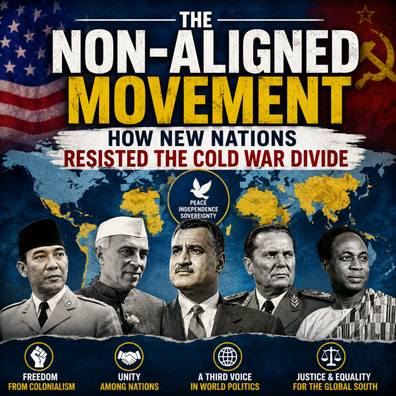
During the Cold War, the world seemed divided between two superpowers: the United States and the Soviet Union. But across Asia, Africa, the Middle East, and beyond, newly independent nations refused to become pawns in someone else’s struggle.
This episode explores the rise of the Non-Aligned Movement, from the Bandung Conference of 1955 to the Belgrade Summit of 1961. It follows leaders such as Jawaharlal Nehru, Gamal Abdel Nasser, Josip Broz Tito, Sukarno, and Kwame Nkrumah as they searched for a third path—one based on sovereignty, anti-colonialism, economic independence, and strategic freedom.
Discover why non-alignment was more than simple neutrality, how developing nations used superpower rivalry to gain leverage, and why internal divisions, proxy wars, and economic dependency weakened the movement. The episode also examines the lasting legacy of non-alignment and its connection to today’s ideas of strategic autonomy and multi-alignment.