
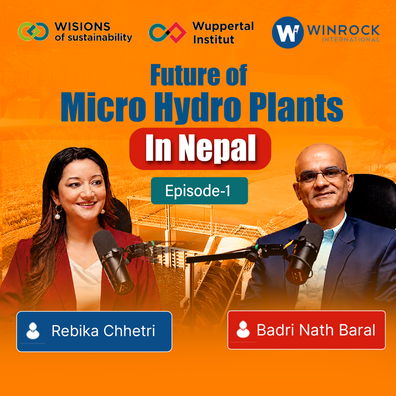
Note sull'episodio
The discussion highlights how micro hydropower plants have supported rural electrification in Nepal for decades and why these valuable assets should not be viewed as part of the past. As the national grid continues to expand, grid interconnection offers a practical pathway to improve the sustainability, productivity, and financial stability of micro hydro systems.
This episode also examines the WISIONS Innovation Lab’s achievements, including the successful grid connection of three micro hydro plants, while discussing policy reforms, community ownership, international cooperation, and future opportunities for strengthening Nepal’s clean energy transition and rural resilience for generations to come across the country.
Our Guest, Mr. Badrinath Baral, Country Director of Winrock International Nepal, who brings more than two decades of experience in renewable energy, sustainable development, private investment, enterprise development, access to finance, and capacity building. Through his professional journey, Mr. Baral has worked closely with hydropower companies, development agencies, financial institutions, local governments, cooperatives, and rural communities.