What's Good Miami

What's Good Miami

di Alan Philips
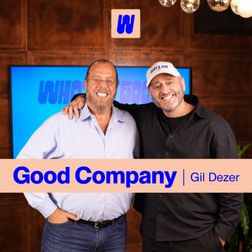
WGM Weekender: Gil Dezer Pod, the King of Sunny Isles has “the Last Pepsi in the Desert”
What’s Good Podcast with Gil Dezer, Sunny Isles Builder with the Last Pepsi in the Desert Six Trump towers. Porsche Design Tower. Armani Residences. Now Bentley Residences, rising on that same strip right now. I sat down with Gil Dezer for this week’s Good Company interview and covered a lot of ground. Here is what stuck. Dezer put it plainly: “It’s amazing how people can drive by the same street all day long and think it’s junk, but another person can have a completely different vision.”
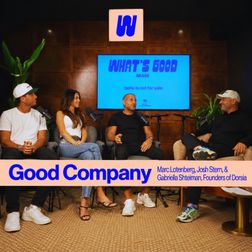
Interview with Dorsia Founder Marc Lotenberg, and co-founders Josh Stern & Gabriella Shteiman
Interview with Dorsia Founder Marc Lotenberg, and co-founders Josh Stern & Gabriella Shteiman Building Impeccable Taste Into Impeccable Infrastructure I have known Marc Lotenberg for twenty years. Before Dorsia, before Surface, before the W days at Conde Nast, he was running 944 out of Miami and I was building my own thing on the other side of that same media world. Josh Stern I go back with too, through his I Know the Chef days, back when getting a table at Carbone meant knowing somebody who knew somebody. Gabriella Shteiman, a co-founder as well, is new to our crew and just weeks into Miami, but already fluent in the brand. The three of them run Dorsia, the membership platform that has quietly become the reservation infrastructure for the world’s best restaurants and, increasingly, the operating system underneath the world’s most exclusive clubs, festivals, and experiences. We sat down for this week’s Good Company interview and covered a lot of ground. Here is what stuck.
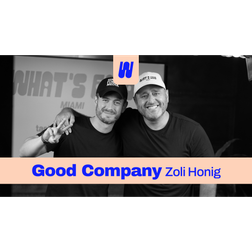
New Series Alert: Life in Short Form w/ Zoli Honig, Miami Entrepreneurship, Technology, & Life from the Frontlines
New Series Alert: Life in Short Form w/ Zoli Honig, Miami Entrepreneurship, Technology, & Life from the Frontlines COVID shut the world down and opened a door for me instead. I arrived at Reef Technology, through a teams call, not knowing a soul, and Zoli Honig was on the other side of the line. Reef raised over two billion dollars and was the largest startup in Miami. Sixteen of us were on a Microsoft Teams call at 8am every morning trying to keep it standing. Zoli was the one person in the building who already knew short form video was going to change everything. He taught me how it’s was done. I returned the favor. We are done keeping those conversations off the record. Life in Short Form is a new monthly series I am launching with Zoli, taped out of the What’s Good Studio at the Moore. No script. No polish. Two guys who met as employees, went out and built our own things, and stuck around long enough to watch this city change shape in real time. We both thought we could get rich living inside someone else’s dream. Turns out, like most things worth having, you only get there by doing it yourself, risk and all. That is the path to the money. It is also the path to fulfillment, and we didn’t understand that until we were already on it. Building a Small Business in Miami Every transplant from New York says the same thing in year one. Nothing moves. Zoli calls it the Miami stupid tax. Nobody calls you back same day. Zoli’s wife closed her first real estate deal here and the clients called her the best agent they’d ever worked with. She didn’t do anything extraordinary. She showed up on time. She answered her texts. As Woody Allen said “eighty percent of success is showing up.” In Miami, showing up puts you in the top ten percent. That gap is the opportunity. “Hustle plus insight plus AI, you should be hitting grand slams.” Miami also runs twelve to eighteen months behind New York, LA, and San Francisco on execution speed, even while it exports culture faster than many of them. Put an understanding of AI on top showing and the math breaks wide open. You can do damage here with that combination, that is rarely possible anywhere. The Origin Story Zoli built three companies before Reef ever knew his name. One landed him on Shark Tank with a deal from Mr. Wonderful. Say those two words to him now and his eyes roll into the back of his head. He could split the atom tomorrow and Shark Tank would still be the only line anyone remembers. Zoli left because I asked him one question. What do you want your life to look like in five years. What is that going to cost? We wrote the number down. We looked at it together. I asked if Reef was ever going to pay him that number. He said absolutely not. So I asked the only question left. So what are you doing here. We had both spent years thinking the dream we were chasing belonged to somebody else’s company. It didn’t. It was ours the whole time, waiting on us to go build it ourselves.

The Legendary Miami Restaurants List, We Built This City
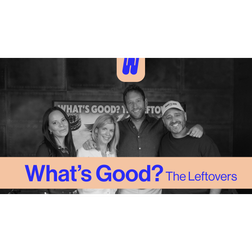
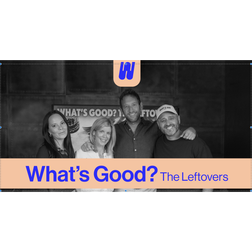
Everyone wants to talk about what’s hot. Nobody wants to talk about what’s permanent. A legendary Miami restaurant isn’t just a good meal. It’s a place that got here before the city knew what it was becoming, and then helped decide what it would become. Some of these are still standing. Some are gone, replaced by a bank branch or a condo lobby, remembered only by the people who ate there before it mattered to anyone else. Either way, they mean more than dinner. They’re the reason Miami has a food identity at all instead of just a coastline. Erin, Ollie, and I sat down for Episode 2 (we missed you Matt) of What’s Good? The Leftovers and put together the definitive list. Not the best. Not the newest. The legendary. We split it two ways: the locals who were born here and built the city from the inside, and the imports who arrived from New York and LA and never left because they didn’t need to.
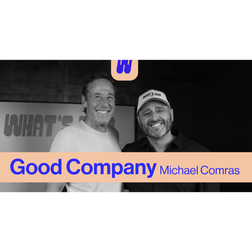
The Weekender: Michael Comras Transforming Lincoln Road with NoLi & Building Miami
There are people who read a city, and then there are people who write it — who walk down a boarded-up block of Collins Avenue in 1992, past aluminum chairs chained to porches, and see not what's there, but what's coming. Michael Comras is the second kind. Today, I sit down with the man who has spent three decades rewriting Miami Beach's map one street at a time — from the cold call that brought The Gap to a forgotten corner, to NoLi, his boldest bet yet on the future of Lincoln Road. This isn't just an interview. It's the origin story of how Miami's retail landscape became what it is, told by the man who built it, and a look at exactly where he thinks it's going next. If you have any stake in this city's real estate, consider this required reading.
The Heat is On: WGM X The Leftovers Heat Index
The Heat is On: WGM X The Leftovers Heat Index I’ve spent the last decade arguing that Miami deserves real media. Not pay-for-play coverage dressed up as editorial. Not another breathless opening item because someone bought a table at a charity dinner. Real opinions from people who’ve actually eaten the food, sat in the room, and don’t owe the publicist anything. This week, that argument got company. On Wednesday at What’s Good Studio at The Moore, I sat down with three of the most credentialed food journalists this city has ever produced, Erin Michelle Newberg, Olee Fowler, and Matt Melzer, to record the first episode of “What’s Good? The Leftovers”, a monthly podcast collaboration between What’s Good Miami and The Leftovers Miami. Sixty collective years of food writing. One room. Zero sponsored content. The centerpiece of everything we’re building together is The Heat Index, and I’ll say it plainly: this is going to be the most important restaurant list in Miami. Not because we say so. Because of who’s making it and why.
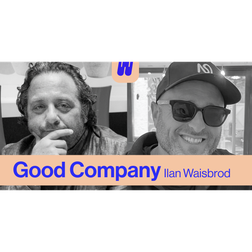
WGM Good Company Interview: Ilan Waisbrod Of Studio Gaia
Sitting down w Ilan Waisbrod of studio Gaia. The famous Israeli Designer tells us about his journey and past projects.
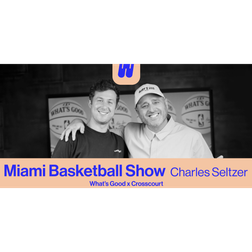
WGM Weekender: NBA Finals, Destiny and Knicks in Six with Charles Seltzer of Crosscourt
All the info on the NBA finals and the Knicks with Charles Seltzer of Crosscourt
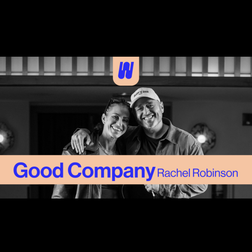
Interview with Rachel Robinson of RachelFitness & Barry’s Bootcamp
A conversation with Rachel Robinson at What’s Good Miami’s new content studio at The Moore, on freedom, family, and the discipline of showing up — every single day, for six straight years. There’s a moment, sitting in any room with Rachel Robinson, when you realize the workout isn’t actually the workout. The sweat is real. The treadmill is real. The 10.0 sprints she calls out by name — yours, mine, the woman in the back — are real. But the thing Rachel is actually doing, the thing that has packed her 9:30 a.m. Monday class on Purdy Avenue for years on end, is something else entirely. She’s having a conversation with herself out loud, and inviting fifty people to listen in. I sat down with Rachel last week at What’s Good Miami’s new content studio at The Moore. The room felt right for it. She came up on reality television, where the cameras turn the room into the performance. She built her business on Instagram Live, where the bedroom is the studio. And she’s spent the last decade teaching one of the most kinetic group fitness classes in the city, where the studio is, in the end, a kind of broadcast. Rachel doesn’t really exist in private. Or maybe more accurately: Rachel doesn’t really make a distinction between the two. The whole point of what she does — and the reason it works — is that there isn’t one. If her name doesn’t immediately ring a bell, it should. Rachel is Miami fitness royalty in the most Miami way possible. Born in the Chelsea Hotel in New York to a photographer mother who, in her own words, “always had a camera on me.” Raised in Miami since she was five. A true OG of a city that has very few of them left. She came up on reality television during the original Road Rules era — the analog days, before social media, before the playbook, before anyone went on the show planning to make a career out of it. She left it behind to live a life, got married to Natalie (the founder of G-Beauty, the family-built skincare and facial studio business that’s expanding into a new flagship in Toronto), had three kids under three, and built the kind of family life that most reality TV alumni quietly envy. Then, after an eleven-year hiatus, she went back. The producers had been calling her for years. The timing finally worked. She returned to The Challenge as an all-star — and won. A literal Cinderella moment for a woman in her late thirties who hadn’t been on television in over a decade. She’ll tell you herself: that doesn’t normally happen. But by then, she wasn’t really a reality TV person anymore. She was a fitness person.
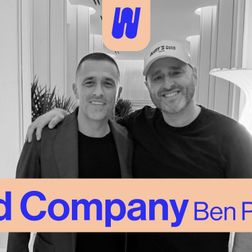
Epic Interview with Delano's Ben Pundole
WATCH THE FULL LONG FORM INTERVIEW BY CLICKING ABOVE “Always Be a Gentleman, and Never Play by the Rules” A conversation with Ben Pundole at the new Delano, on dreaming, trusting, and the city that finally stopped following. “As we pulled up to the porte cochère, I remember being thrilled. The entrance to the Delano had a magnitude and energy I’d rarely, if ever, experienced before. The valets were all perfectly dressed in crisp white outfits, the people getting out of their cars were beautifully put together, and the architecture was the perfect combination of classic Art Deco and clean modern lines. While the arrival alone was magnificent, it wasn’t until I entered the lobby that I was swept away: fifty-foot ceilings, a straight-shot visual hundreds of feet from the entrance to the rear orchard, and charming vignettes of whimsical seating and social areas throughout. The beauty was unmistakable, and the energy was so real you could almost drink it. Every step I took built on the drama of the experience. By the time I exited the lobby and stepped into the orchard, I felt changed, as if my appreciation for what the imagination could manifest had been heightened. I didn’t say a word for ten minutes after I walked outside. I just smiled, completely satisfied by what I had just consumed.” - The Age of Ideas by Alan Philips (Yes Me :)) There’s a moment, sitting in the new Delano, when you realize the building is doing something quieter than it used to. The old Delano was a statement, flowing white curtains, Philippe Starck swagger, a lobby that felt like the velvet rope of an entire decade. The new one isn’t trying to be that. It’s trying to be something harder: a place you actually want to come back to. I sat down with Ben Pundole there last week. If that name doesn’t immediately ring a bell, it should. Ben is hospitality royalty in the most British, understated way, “I just happened to be in the room when it all started” kind of way. He came up at the Groucho Club in London in 1992, what he calls his university. He was at the Met Bar when the Met Bar was the room. He spent 23 years orbiting Ian Schrager, the man credited with birthing boutique hospitality as we now understand it. What I wanted to know was simple: what does that lineage build, and what’s it doing in Miami right now?
1 di 3