

ウルセーうちん○

ウルセーうちん○

di KōdenTeruaki
Stagione 1

Chap 6. Saving Feral Kids From A Burning Arcade

Bonus
IA
Longer analysis of ウルセーうちん○ Chapter 6: 第六話: ゼロ・ゼッド・ジパング!! "In this episode, 30-year-old aspiring novelist Ōwa Nadeko is forced to spend a promotional event inside the stifling costume of a mascot for a government nuclear agriculture agency, only to become stranded in the mountains after a series of workplace humiliations and a severe concussion. Lost between reality and hallucination, she encounters Issun-bōshi and a hidden community of tiny people whose desperate struggle against both the wilderness and the relentless advance of modern civilization echoes her own exploitation by corporate bureaucracy. After using the remnants of her mascot suit to save a group of mysterious children from a bear, Nadeshiko returns to discover that they were the spirits of victims from a decade-old tragedy, enabling their final message of forgiveness to reach a grieving grandfather. Yet her extraordinary experience is quickly swallowed by corporate indifference, while the revelation that every supernatural event closely matches an urban legend she had previously read leaves unresolved whether her journey was a genuine encounter with the spirit world or a trauma-induced reconstruction of memory. Blending sharp social satire, Japanese folklore, psychological ambiguity, and ghost story elements, the episode explores the dehumanizing effects of modern institutions, the erosion of traditional culture, the persistence of grief, and the transformative power of stories to shape both perception and healing."

Chap 5. The Mascot Suit and the Ghost Girl
Bonus
IA
Longer analysis of ウルセーうちん○ Chapter 5: 第五話: ゆらりゆられ、よるにイエローゆりをゆるされ. "In this episode, 30-year-old aspiring novelist Ōwa Nadeko, working part-time as the costumed mascot of a government nuclear agriculture agency, is sent to a mountain hot spring resort to help repair the agency's public image after a reactor accident, only to become stranded in the surrounding forest following a workplace mishap and a severe concussion. As reality gives way to an ambiguous encounter with Japanese folklore, she joins the legendary Issun-bōshi and a hidden community of tiny people in a desperate struggle against the wilderness, ultimately using the very corporate mascot suit that symbolized her exploitation to save a group of children from a bear. After awakening, Nadeshiko discovers that the children she met were the spirits of victims killed in the same forest years earlier, allowing a grieving grandfather to finally receive his granddaughter's message of forgiveness. Yet her extraordinary experience is dismissed by the modern world as corporate routine resumes, and the discovery that the entire supernatural episode closely mirrors an urban legend she had previously read leaves unresolved whether she witnessed genuine spirits or merely reconstructed reality through memory. Blending biting satire, folklore, psychological ambiguity, and ghost story elements, the episode explores corporate dehumanization, the erasure of traditional culture, the persistence of grief, and the power of stories to shape both perception and healing."

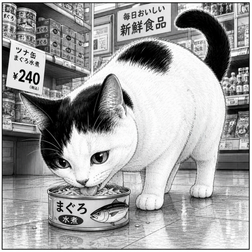
Chap 4. Labor traps and the 240 yen cat

Bonus
IA
Longer analysis of ウルセーうちん○ Chapter 4: 第四話: 心臓、気持ち、意志、思考、魂。明け暗れのブチネコ. "In this episode, 30-year-old aspiring novelist Ōwa Nadeko spends a sleepless night caring for her gravely ill friend Miharu, an overworked part-time public school teacher whose dangerous fever exposes the hidden human cost of debt, insecure employment, and systemic exploitation in modern Japan. While waiting for medicine to arrive, Nadeshiko discovers Miharu's secret shrine-like collection of classic manga and is mysteriously transported into one of its stories, where she experiences life through the eyes of a rescued stray cat adopted by an unconventional found family. As the cat quietly observes its owners' lives—from youthful hopes and careers to love, loss, and the subtle ways economic hardship shapes human decisions—it reflects on identity, agency, and the fragile bonds that give life meaning despite suffering. Returning to reality after the cat's tragic fate, Nadeshiko finds the boundary between fiction and the real world increasingly uncertain, ultimately realizing that stories do not merely offer escape from hardship but reveal the emotional truths that help people endure the everyday struggles of modern life."

Chap 3. Fighting underworld demons in a burial kimono

Bonus
IA
Longer analysis ウルセーうちん○ of Chapter 3: 第三話: 仙土地: ヒーローのネ申客死. "In this episode, 30-year-old aspiring novelist Ōwa Nadeko, returns to her hometown for a New Year's shrine visit while struggling with profound depression and a sense of personal failure, only for a breathing exercise to send her living spirit into the Japanese underworld. There, she joins a talking rabbit in infiltrating an oni-run prison where female yōkai are held captive, using her ghostly ability to pass through barriers to orchestrate a daring rescue that culminates in the liberation of the prisoners with the aid of a grateful water dragon. Although she longs to save everyone, Nadeshiko is ultimately forced to return to the world of the living, where she awakens on her cousin Toyo's back and quietly resumes ordinary life. A shared rabbit amulet and the mysterious appearance of a family of wild rabbits leave the boundary between spiritual reality and psychological experience deliberately ambiguous, while the episode ultimately frames compassion, human connection, and the courage to keep living as the true victories over despair."

Chap 2. Magical Girl Cosplay vs the Japanese Military
Bonus
IA
Longer analysis of ウルセーうちん○ Chapter 2: 第二話: 「門」 攻撃は最大の防御なりだって。ホームアドバンテージはどうですか? "The episode (“Gate”) centers on Ōwa Nadeko, a 30-year-old freelance journalist forced into an absurdly elaborate magical-girl cosplay to infiltrate a hyper-insular gaming convention, where authenticity paradoxically requires performance rather than sincerity. As she struggles through the physically oppressive, almost grotesque environment of the crowded venue, the narrative grounds her professional reality in discomfort and coercion, exposing the gig economy’s exploitative demands. The story’s core tension emerges when she reaches a Japan Ground Self-Defense Force booth—an institutional anomaly attempting to gamify military recruitment through a VR simulator—where a fundamental clash unfolds between rigid, legacy authority structures and the fluid logic of digital-native culture. This friction is embodied both in misaligned communication (game mechanics versus military epistemology) and in the cumbersome, overengineered simulation apparatus, ultimately framing the episode as a critique of institutional failure to adapt, while foregrounding the central paradox of identity: that artificial personas may function not as escape, but as the only viable means of accessing truth within tightly coded social systems."

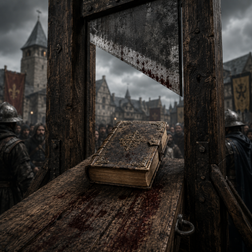
Chap 1. Guillotined by a giant capitalist larva

Bonus
IA
Longer analysis of ウルセーうちん○ Chapter 1: 第一話:児童労働搾取○・資本○な本の虫. "This episode follows the struggling aspiring novelist Ōwa Nadeko as an ordinary cigarette beetle infestation in her apartment spirals into a surreal fantasy in which she is transported to an orphanage ruled by an enormous anthropomorphic beetle larva. There, she and a group of children are forced into lethal industrial labor manufacturing textbooks while trapped in a rigged economic system that pays generous wages only to reclaim them through rent, equipment fees, and medical charges, forming an inescapable cycle of debt. After a failed rebellion inspired by a story she secretly inserts into one of the textbooks, Nadeko is condemned to death—not for assaulting the orphanage director, but because her writing is deemed ideologically dangerous. Executed after finding bittersweet satisfaction that someone finally read her work, she awakens in the real world after a year-long coma, only to discover that reality mirrors the fantasy's exploitation: funeral expenses, hospital bills, continued rent collection, and crushing debt leave her no freer than before. Blending Kafkaesque horror, absurdist comedy, and sharp social satire, the episode examines exploitative labor, the commodification of creativity, the financial burden of simply existing, and the paradoxical power of literature to inspire resistance even when its author considers herself a failure."

Overview - ウルセーうちん○

IA
An overview of ウルセーうちん○ series "This episode follows Ōwa Nadeko as what begins as an ordinary journey gradually unfolds into a layered exploration of Japanese society, history, and human relationships. Through a series of ironic encounters, unexpected discoveries, and humorous misunderstandings, the protagonist moves between travelogue, personal reflection, and social critique, examining how local traditions, historical memory, and contemporary issues intersect with everyday life. While maintaining a light, comedic tone, the narrative steadily reveals deeper emotional and philosophical themes, using the journey not merely as a physical trip but as a means to question identity, prejudice, and the often-overlooked complexities of modern Japan."
3 di 3