
ウルセーうちん○

ウルセーうちん○

di KōdenTeruaki
Stagione 1

Chap 15-16. Nadeko Oowa Survived AI Across Japan

IA
Analysis of ウルセーうちん○ Chapters 15: 第十五話: ウルセーうちん○ 【前編】 and 16: 第十六話: ウルセーうちん○ 【後編】 . "This episode traces the abrupt collapse of Ōwa Nadeko’s carefully constructed life and follows her ensuing two-year descent into instability and reinvention, beginning with her sudden replacement by generative AI after a decade of work as a niche magazine writer. Stripped of income, dignity, and even her living space by the cascading consequences of unemployment within Japan’s rigid rental system, she is forced into a precarious, nomadic existence, documenting her journey under an exaggerated online persona while surviving on an extreme daily budget. As she travels across Japan—from urban centers to remote regions—her encounters with scams, exploitative labor, and moments of unexpected human connection expose the harsh realities beneath both modern economic systems and romanticized notions of freedom. The episode gradually reframes her journey from mere survival to a deeper confrontation with identity, resilience, and cultural context, particularly through her interactions with family and marginalized communities, ultimately presenting her displacement not as liberation but as a disorienting, often brutal negotiation with a world that has abruptly withdrawn all structural support."

Chap 12-14. Chasing Nadeshiko's running book of trauma

IA
Analysis of ウルセーうちん○ Chapters 12 第十二話: 東遊記: 温故知新書 【前編】; 13 第十三話: 東遊記: 温故知新書 【中編】 and 14 第十四話: 東遊記: 温故知新書 【後編】. "This episode unfolds as a surreal psychological thriller centered on Ōwa Nadeko, a 31-year-old aspiring novelist who is unexpectedly abducted by her own friends under the guise of a birthday surprise and taken to a mysterious, decaying Western-style mansion. Inside, she encounters an enigmatic elderly psychoanalyst who forces her to confront a disturbing idea: that trauma and regret are not separate from identity but fundamentally define it. As reality begins to dissolve, the mansion transforms into a symbolic landscape of her subconscious, where memories manifest physically—most notably as a living, fleeing book that compels her to chase her own past. Through vivid, often unsettling imagery and abrupt shifts between environments, the episode explores how unresolved experiences shape the self, using magical realism to depict the inescapable, often disorienting process of confronting and integrating one’s deepest psychological wounds."

Chap 11. Trapped in a Human Washing Machine

IA
Analysis of ウルセーうちん○ Chapter 11: 第十一話: 永合い:三途の川で散ずる. "This episode follows Ōwa Nadeko, a burned-out aspiring novelist and gig worker, as she guides her rural cousin Toyo through a hyper-commercialized Tokyo super bathhouse, where everyday hygiene has been transformed into an absurd showcase of overengineered “smart” technology. What begins as a satirical exploration of convenience culture—contrasting simple, affordable “dumb” products with bloated, expensive smart alternatives—quickly escalates when Nadeko undertakes a job reviewing a fully automated “human washing machine,” an invasive AI-driven pod that monitors her biometrics, analyzes her DNA, and dictates her entire bathing experience. The situation turns from comedic to deeply unsettling when a remote connectivity failure traps her inside the sealed machine, exposing the fragility of systems that depend entirely on constant network access. Through this claustrophobic ordeal, the episode sharpens its critique of technological overreach, data exploitation, and the precariousness of gig labor, using exaggerated but plausible scenarios to highlight how convenience-driven innovation can easily slip into loss of control and systemic vulnerability."

Chap 10. Machete wielding ragweed and botanical warfare

Esplicito
IA
Analysis of ウルセーうちん○ Chapter 10: 第十話: 色々な色っぽい色艶. "This episode plunges Ōwa Nadeko and her companions into a vividly imagined, hostile ecosystem after they are swept into a dangerous vine-infested region, where predatory, snake-like plants hunt and immobilize them in a suffocating canopy of decay. The immediate threat escalates when a militarized army of anthropomorphic ragweed—originally introduced as a biocontrol measure against the vines—emerges as a far more destructive invasive force, violently reshaping the environment and triggering catastrophic floods to expand its control. As the group flees through collapsing ecological and social defenses, they are ultimately cornered at a cliff, where a sacrificial act by a pink bellflower shrine maiden allows Nadeshiko to escape, abruptly pulling her back into reality at the flower market. The episode interweaves botanical horror with ecological allegory, using the ragweed invasion as a macro-scale metaphor for allergic response and environmental imbalance, while tying the surreal conflict back to mundane details established earlier, creating a tightly integrated and thematically rich narrative."

Chap 9. The Tier Four superhero birthday party disaster
IA
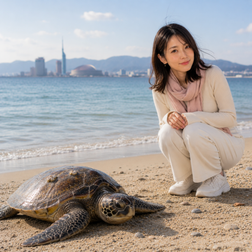
Analysis of ウルセーうちん○ Chapter 9: 第九話: 私たちは愛弗廉じゃ〜. "Chapter 9 follows Ōwa Nadeko, a 30-year-old aspiring novelist who moonlights as the Pink Flame heroine in the low-tier superhero troupe E-Flame, as the group accepts a lucrative birthday-party performance that quickly descends into chaos. Through the disastrous event—unsupervised children, an improvised villain attack by well-meaning parents, a flour-filled bazooka mishap, and the exhausting cleanup that follows—the episode satirizes precarious gig work, rigid corporate hierarchies, and the commercialization of intellectual property while contrasting adults' obsession with rules and authenticity against children's boundless imaginative play. Although Nadeko ultimately discovers that the promised financial reward is largely consumed by licensing fees and expenses, the genuine affection she earns from the birthday girl reveals that the true value of her work lies not in money or professional status, but in the emotional connections forged through the unpredictable, unscripted moments that emerge when carefully planned performances inevitably fall apart."

Chap 8. Shark Yakuza and the Toxic Soup Crisis
IA
Analysis of ウルセーうちん○ Chapter 8: 第八話: 八百屋が九重で三軍に. "In this episode, aspiring novelist and freelance photographer Ōwa Nadeko joins a fishing boat off the coast of Fukuoka to capture a sunrise photograph but is thrown into the sea while rescuing a loggerhead turtle from being mutilated. Transported to a surreal underwater Dragon Palace, she becomes entangled in an escalating series of absurd crises involving a vegetable merchant, shark gangsters, yakuza power struggles, and a bureaucratic royal court. After accidentally helping the kingdom solve a culinary problem by replacing a toxic chemical with ordinary salt, she inadvertently sparks an economic boom that devolves into an obesity epidemic, black markets, and a satirical critique of monopolies, demographic decline, organized crime, and late-stage capitalism. Eventually returning to the human world with proof that her adventure was real and a magical gift from the turtle princess, Nadeko discovers that her greatest obstacle remains painfully mundane: her electricity has been cut off because an unpaid utility bill exceeded the deposit she left with her landlord, underlining the episode's central theme that even the most extraordinary adventures cannot free one from the everyday burdens of modern bureaucracy."

Chap 7. Reality TV farming and alien timeshare fraud

IA
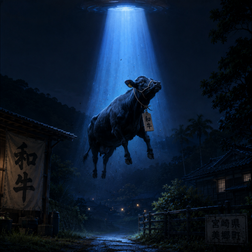
Analysis of ウルセーうちん○ Chapter 7: 第七話: 売るトラが牛ナウ. "This episode begins as a satirical portrayal of a brutally exploitative farming reality show on a Wagyu ranch, where contestants are subjected to engineered deprivation and corporate manipulation while the aspiring novelist Ōwa Nadeko is humiliated as a mascot due to nepotism. As the narrative exposes the dehumanizing logic of entertainment, labor, and industrial livestock production, it abruptly shifts into absurdist science fiction when Nadeshiko is abducted by bipedal alien cattle who mistake her costume for the armor of their greatest enemy. The ensuing encounter—with an apex predator revealed to be a predatory intergalactic timeshare salesman—extends the story's critique from physical exploitation to financial exploitation, arguing that modern predation operates through contracts and economic coercion rather than brute force. Returning to Earth, the episode emphasizes how indifference enables such systems to persist, as both aliens and humans dismiss the suffering of those beneath them until Nadeshiko ultimately breaks her own passivity by intervening to protect a vulnerable idol from corporate abuse. The closing scenes, in which even the preparation of a cucumber echoes the language of slaughterhouse procedures, reinforce the unsettling conclusion that bureaucratic violence, consumerism, and moral apathy have become so deeply internalized that exploitation itself is perceived as ordinary."

Chap 6. Trapped in a Burning Akihabara AR Arcade

IA
Analysis of ウルセーうちん○ Chapter 6: 第六話: ゼロ・ゼッド・ジパング!! "In this episode, 30-year-old aspiring novelist Ōwa Nadeko is assigned to portray the mascot of a government nuclear agriculture agency during a luxury hot spring public-relations campaign intended to distract from a recent reactor accident, only to become stranded in the surrounding mountains after a humiliating workplace mishap leaves her concussed and alone. Drawn into an ambiguous world where Japanese folklore, history, and reality intertwine, she encounters Issun-bōshi and a hidden community of tiny people whose struggle against both the wilderness and the encroachment of modern civilization mirrors her own exploitation by corporate institutions. After using the remnants of her mascot costume to save a group of mysterious children from a bear, Nadeshiko returns to discover that the children were spirits of victims from a long-forgotten tragedy, allowing their final message of forgiveness to bring closure to a grieving grandfather. Yet the modern world quickly buries both her experience and the reactor incident beneath corporate public relations, while the revelation that she had previously read an urban legend nearly identical to her ordeal leaves unresolved whether her journey was supernatural or the product of trauma and memory. Blending biting satire, ghost story, psychological ambiguity, and Japanese folklore, the episode explores corporate dehumanization, historical displacement, grief, and the enduring power of stories to shape both reality and healing."

Chap 5. The nuclear mascot and the magic mallet
IA
Analysis of ウルセーうちん○ Chapter5: 第五話: ゆらりゆられ、よるにイエローゆりをゆるされ. "In this episode, 30-year-old aspiring novelist Ōwa Nadeko, temporarily working as the mascot of a nuclear agriculture agency, is sent to a luxury hot spring resort to help conceal the public fallout from a reactor accident, only to become lost in the surrounding mountains after a series of humiliating workplace mishaps. Following a concussion, she enters an ambiguous realm where Japanese folklore comes alive, joining the legendary Issun-bōshi and a hidden community of tiny people in a desperate struggle for survival against the dangers of the wilderness before ultimately confronting a bear with the remnants of her corporate mascot suit. Her ordeal culminates in helping the restless spirit of a young girl finally deliver a message of forgiveness to her grieving grandfather, transforming an apparently heartless executive into a sympathetic figure. Returning to ordinary life, Nadeshiko discovers evidence suggesting that her supernatural adventure may have been nothing more than a hallucination shaped by stories she had previously read, leaving the boundary between folklore, memory, and reality unresolved while exploring themes of corporate dehumanization, the displacement of traditional culture, grief, and the enduring power of stories to shape human experience."

Chap 4. Japanese Debt and the 240 Yen Cat

IA
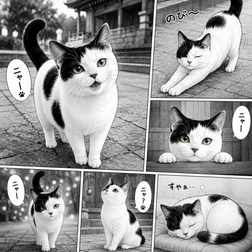
Analysis of ウルセーうちん○ Chapter 4: 第四話: 心臓、気持ち、意志、思考、魂。明け暗れのブチネコ. "In this episode, 30-year-old aspiring novelist Ōwa Nadeko cares for her gravely ill friend and overworked teacher Miharu, whose collapse exposes the crushing realities of precarious labor, debt, and bureaucratic exploitation in modern Japan. While waiting for medicine, Nadeshiko discovers Miharu's hidden collection of manga masterpieces and is mysteriously drawn into one of the books, where she experiences the world through the eyes of an unusually philosophical stray cat adopted by an unconventional found family. As the cat witnesses its new family's joys, hardships, and struggles with identity, social expectations, and personal autonomy, its life becomes a poignant allegory for human vulnerability, the psychological scars of poverty, and the search for belonging. Returning to reality after the cat's tragic death, Nadeshiko finds that the boundaries between fiction and life have become strangely blurred, leading to revelations about Miharu's family and a renewed appreciation for empathy, imagination, and the quiet resilience required to endure the ordinary "trucks" of everyday life."
1 di 3