Unveiling Jesus Christ

Unveiling Jesus Christ

di John Cassinat
Stagione 1

CFM007: Seven Churches - Part 2

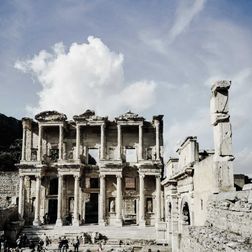
This podcast is the second of a two-part series that describes the seven cities of Asia Minor from the Book of Revelation. The focus in this part is limited to the history, events and attributes of the last six cities of Smyrna, Pergamos, Thyatira, Philadelphia, Sardis, and Laodicea from Revelation 2 and 3. This overview of the seven cities generally does not include a discussion of the seven churches themselves.

CFM006: Seven Churches in the Book of Revelation - Part 1

This podcast is an introduction and overview of the seven letters that John the Revelator wrote to the seven churches in Asia Minor in 96 AD. Following the overview of all seven letters and churches, this podcast discusses the history of Ephesus as the capital city for the province of Ionia, as a commercial center, and as a religious center that included the temple of Diana. The podcast also includes the song, “In the Hollow of Thy Hand” by Judith Kapp Perry and a personal story about sister Perry.

CFM005: The Book of Revelation Numerology and Symbols

This podcast describes the numerology used by John the Revelator in the Book of Revelation. Numerology is the study of the symbolism of numbers that communicate concepts, ideas and truths. The podcast explains­­, and gives many examples of, the historical use of the numbers 3, 3½, 4, 6, 7, 8, 10, and 12 in both religious and secular contexts. Hidden truths in the Book of Revelation will be unveiled as the symbolic meaning of these numbers are understood.

CFM004: The Book of Revelation Organization and Structure

This podcast discusses the structure of the Book of Revelation in the context of the Israel-Hamas War that began on October 7, 2023. The podcast includes a historical summary of conflict and warfare in Palestine since the end of World War I to provide a greater perspective for this latest war that some people are calling “Armageddon.” Based on the chronological structure used by John the Revelator in the Book of Revelation it’s clear that the current Israel-Hamas war is not the start of Armageddon. The current war is, however, a foreshadow of worse tings to come when the world is finally engulfed in the battle of Armageddon.

CFM003: Unveiling Jesus Christ: The Book of Revelation Made Plain

In this world of rapid-fire events and living conditions, it’s hard to find the time to study the scriptures in general. The problem is even worse for the Book of Revelation that requires more time and diligent study due to its complex symbols and images. This podcast explains how you can use your time most effectively to better understand the words of John the Revelator until you too can say that it is “one of the plainest books that God ever caused to be written.” (Joseph Smith, TPJS, 290)

CFM002: The Date and Canonization of the Revelation

This podcast describes the canonization of the Bible, and the miracle that occurred when the Book of Revelation was included in the Bible canon during the council at Carthage in 397 AD. This podcast also explores the date on which John received his visions while banished on the island of Patmos, how the contents miraculously got off the island, how they miraculously circulated in the Roman Empire, and how they miraculously survived intact into the modern era.

CFM001: John the Revelator – “He’s the Guy”

This podcast by John E. Cassinat describes in detail the person of Saint John the Divine­­­­—also known as John the Revelator­­—who wrote the Book of Revelation as the last book of the New Testament. Topics include John’s premortal foreordination to be the Revelator; his names and personal attributes; his familial and personal relationship with Jesus Christ; and their shared experiences until Christ’s crucifixion.

[§329] Rev 20:5-6: The Rest of the Dead in the First Resurrection

This podcast explains John’s vision of the first resurrection as described in Revelation 20:5-6, which states: “But the rest of the dead lived not again until the thousand years were finished. This is the first resurrection. Blessed and holy is he that hath part in the first resurrection: on such the second death hath no power, but they shall be priests of God and of Christ, and shall reign with him a thousand years.” The rest of the dead referred to in this verse are terrestrial-worthy people who come forth in the first resurrection at the end of the millennium in one large group. Telestial-worthy people and sons of perdition also resurrect at the end of the millennium during the second resurrection of the unjust, but they are not‒strictly speaking‒referred to as "the rest of the dead" in Revelation 20:5. Exaltation-worthy saints who come forth in the morning of the first resurrection are blessed and holy because they have no part in the second death, which is the opposite of eternal life. The second death is a permanent punishment for sons of perdition. The priests of God and of Christ in Revelation 20:6, are the kings and queens identified in Revelation 20:4 that will rule and reign with Christ in their resurrected condition throughout the millennium.

[§328] Rev 20:4: Exalted Saints Reign with Christ in the Millennium

This podcast explains the symbolism used by John to describe exaltation-worthy people who come forth in the morning of the first resurrection as kings and queens that rule and reign with Jesus Christ throughout the millennium in Revelation 20:4. This verse states: “And I saw thrones, and they sat upon them, and judgment was given unto them: and I saw the souls of them that were beheaded for the witness of Jesus, and for the word of God, and which had not worshipped the beast, neither his image, neither had received his mark upon their foreheads, or in their hands; and they lived and reigned with Christ a thousand years.” (Rev 20:4) The judgment given to these resurrected saints is twofold. First, it means they were judged themselves and found worthy to be resurrected to a glorified and exalted state. Second, it also means that after their resurrection they sit as judges in connection with their millennial reign. Those who qualify to rule and reign with Jesus Christ are those who suffered martyrdom for their testimony of Jesus Christ or, alternatively, overcame Satan by refusing to worship the beast or his image. The mark of the beast in the forehead or in the hand refers to mortal sons of perdition who receive the mark of the beast in their forehead and to telestial-worthy people who receive the mark of the beast in their right hand. Such people will not come forth in the first resurrection of the just, but will be resurrected last after the millennium and end of the earth during the resurrection of the unjust.

[§327] Rev 20:4-6: John’s Vision of the First Resurrection

This podcast provides an overview of the first resurrection using Revelation 20:4-6 as the foundational Scripture. Among other things, this podcast explains how the resurrection occurs in stages from highest to lowest without overlap between the celestial, terrestrial, telestial, and sons of perdition resurrections. Within the first resurrection of the just, there are four separate groups of people who resurrect to celestial glory. They include: (1) Exaltation-worthy people who lived during the Old Testament and were resurrected with Christ in the meridian of time as “firstfruits” in the morning of the first resurrection. (2) Exaltation-worthy people who have lived since the resurrection of Jesus Christ and resurrect when the morning of the first resurrection resumes at the Second Coming. This stage of the resurrection will continue from the end of the Second Woe just before the Second Coming until the end of the millennium. (3) Unexalted, but celestial-worthy people who have lived in any and every age that resurrect with celestial bodies shortly after the Second Coming. This stage of the resurrection is called the afternoon of the first resurrection and it will continue throughout the millennium. (4) Terrestrial-worthy people resurrected in one large group from all ages of time at the end of the millennium. This stage of the resurrection is called the evening of the first resurrection. This podcast also explains the condition of physical bodies that have been resurrected to their perfect frame and form regardless of which stage of the resurrection they come forth. In addition, this podcast explains the status of resurrected children who die as infants or before their adolescent bodies are fully mature. Exaltation worthy parents will have the ability to adopt and raise these children during the millennium until their physical bodies have grown to the full stature of their inward spirit.
15 di 30