Thoughtfully Us

Thoughtfully Us

di Thoughtfully Us
Stagione 2
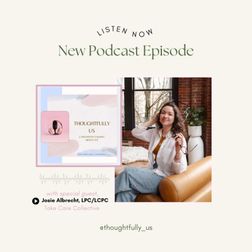
Therapists Need Therapy Communities Too: Defining Collective Community with Josie Albrecht
This week, we're joined by Josie Albrecht, LCPC, co-founder of Take Care Collective, for an important conversation about community and networking for therapists. If you know our podcast, you know that we often express the struggle with knowing we need to network and being scared of it. Josie provides us with her journey as a young therapist to co-founding the Take Care Collective, a mental health wellness collective focused on community building and providing quality care. Josie also expresses the missing conversation pieces about accessible care, providing support to those experiencing domestic violence, intimate partner violence and sexual assault. Needed conversations as violence is often overlooked. Connect with Josie by visiting takecarecollective.org or following on social media @takecarecltv and check out their wonderful support for clinicians and community members like you!
Rest, Boundaries & the Need to Please
We thought we were done talking about rest. Turns out, we had more to say. In this follow-up to our conversation about why rest can feel so difficult, we're digging deeper into what can actually get in the way of slowing down. We talk about the emotional discomfort of setting boundaries and how people-pleasing, conflict avoidance, and even our need for control can make saying "no" feel much harder than it sounds. We also explore the idea that rest isn't something we should have to earn by being productive enough first. It's a biological necessity. Yet so many of us have learned to treat it like a reward we can only access once everything else is done. And as therapists, we noticed an interesting contradiction: setting boundaries with clients can sometimes feel much easier than setting them with the people in our personal lives. So what changes when the role, expectations, and built-in limits of the therapy room disappear? We're continuing our conversation about rest, but this time we're asking what we might have to say no to, let go of, or become a little uncomfortable with in order to actually get it.
Why Is It So Hard to Just Rest?
Why can doing absolutely nothing feel so uncomfortable? In this episode, we're talking about our complicated relationships with rest — why we know we need it, why we still feel guilty when we take it, and why sometimes being "productive" feels easier than simply slowing down. We explore how our identities as women of color, therapists, and moms can shape the way we think about rest and productivity, and Maya challenges Nelly and Morgan to look a little deeper at why they tend to avoid resting in the first place. Because sometimes the question isn't just, "Why can't I rest?" It's also, "What comes up for me when I finally stop?" Our conversation also takes us into the heaviness of consuming difficult stories in the news, including the Lindsey Clancy case, and the permission we may need to step away — particularly for therapists and people whose own postpartum experiences make certain stories especially difficult to hold. That leads us to a larger conversation about empathy, listening, and remembering that we don't get to decide someone else's experience for them. Sometimes supporting another person means trusting that they are the expert on what their own life, body, and emotions have felt like. From rest and productivity to motherhood, avoidance, empathy, and knowing when to unplug, this episode asks us to consider what might happen if we stopped treating rest as something we have to earn.
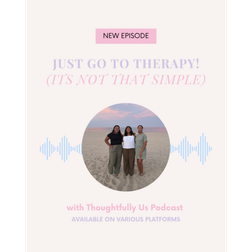
Just Go to Therapy! (It’s Not That Simple)
Sometimes we tell someone, “You should go to therapy,” as if going is the hard part. But what happens when someone doesn’t want to go? Or when they show up because a partner, friend, or family member wants them there, but they aren’t actually ready for therapy themselves? That question took us into a much bigger conversation about what therapy actually is… and what it isn’t. We unpack the stigma that still surrounds mental health care, the expectation that therapy should provide an immediate solution, and why simply getting someone into a therapist’s office doesn’t guarantee change. We also reflect on what it’s like moving through the world as therapists with a deeper understanding of human behavior, systems, and the many factors that shape a person’s experiences. And because apparently we had a LOT to say this week, we turn the lens back on our own profession. We talk about the importance of the therapeutic relationship, choosing modalities intentionally rather than treating them as one-size-fits-all solutions, and some of the structural issues within the mental health field itself. Basically, we started with “Can you make someone go to therapy?” and somehow ended up examining therapy as a whole. Come unpack it with us.
Healing the Healers with Kenya Crawford
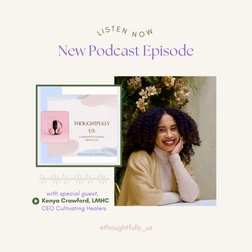
This week, we're joined by Kenya Crawford, LMHC founder of Cultivating Healers, for an inspiring conversation about what it truly takes to support the people providing mental health care. Kenya shares the mission behind Cultivating Healers and her passion for creating more equitable, sustainable spaces for clinicians. We explore her anti-racist consultation work, the challenges therapists face navigating insurance systems, and why self-care alone isn't enough if the systems we're working within remain unsustainable. Whether you're a therapist, helping professional, or simply interested in creating healthier communities, this conversation is a powerful reminder that caring for others begins with caring for ourselves and each other. Connect with Kenya here: Grab your exclusive gift here: https://www.kenyacrawford.com/podcast Instagram: https://www.instagram.com/cultivatinghealers/
The Loneliness of Constant Connection

We're living in one of the most connected times in history… so why are so many people feeling lonely? In this episode, we explore the paradox of modern connection. We discuss how social media has changed the way we build and maintain relationships, whether constant digital access has replaced meaningful in-person connection, and how being reachable at all times can actually leave us craving more space and solitude. Together, we reflect on what genuine connection looks like today, how technology has reshaped our relationships, and how we can intentionally create moments of belonging in an increasingly connected world.
Redefining Success with Bianca Hughes
This week, we're joined by the incredible Bianca Hughes, Georgia-based therapist, entrepreneur, and passionate advocate for helping high achievers and perfectionists build lives that feel just as fulfilling as they look. Together, we explore the relationship between ambition, perfectionism, and mental health. Bianca shares how her own mindset around success shaped her journey as both a clinician and business owner, while also reflecting on the lessons she's learned about slowing down, setting boundaries, and caring for herself along the way. We also discuss why perfectionism is often misunderstood, how it can quietly impact our relationships, careers, and self-worth, and why self-care isn't just a luxury—it's essential for those who spend their lives caring for others. Whether you're a therapist, entrepreneur, high achiever, or simply someone trying to balance ambition with well-being, this conversation is one you won't want to miss. Follow Bianca on social media: Websites: authenticallybeyou.com & soulfulclinician.com Instagram @authenticallybeyou
Where We've Been & What's Next
We're back! 🎉 Season 2 is officially here, and we're catching you up on everything that's been happening since our last season. Morgan introduces the newest (and cutest!) addition to her family, Maya shares what's been keeping her busy professionally, and Nelly reflects on earning her perinatal mental health certification while balancing the many joys and challenges of life outside the therapy room. We also give you a sneak peek into what you can expect this season—from more honest conversations and incredible guest speakers to deeper discussions about mental health, current events, relationships, and everything in between. Most importantly, we want this season to be shaped by you. What topics are you hoping we cover? We'd love to hear your ideas. Season 2 is here, and we couldn't be happier to be back behind the mic with you.
Stagione 1
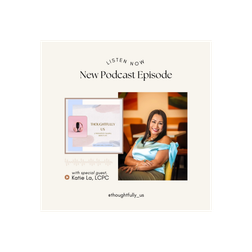
Guest Episode: Katie La, LCPC
In Episode 19, we’re joined by the incredible Katie La who is a Licensed Professional Counselor, Supervisor, and advocate for trauma-informed, justice-oriented, and culturally responsive care. Katie shares what she’s loved most about being a therapist and reflects on how her lived experience as a Vietnamese refugee has shaped the way she shows up in the therapy room. We talk about the importance of centering immigrant communities in mental health spaces, embracing decolonized healing practices, and moving beyond individualism toward collective care. Katie also sheds light on the topics she believes the therapy community needs to be talking about more openly such as culturally grounded approaches to body-based modalities like EMDR, brainspotting, polyvagal-informed work, and somatic healing. And because we believe joy matters, especially in hard times, we close by asking Katie where she found a moment of joy this week. This episode is grounding, expansive, and a reminder that healing can be both personal and collective. Follow Katie on social media: @cogrevpllc
Black History Month: The Joy, the Gaps, and the Reality
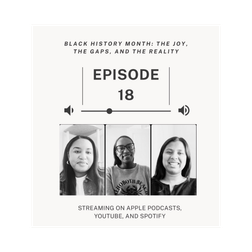
In this episode, we center Black History Month and reflect on what it has meant and continues to mean for Morgan and Maya as Black mental health providers. Morgan shares important context and statistics around Black representation in the mental health field, access to care, and the ongoing barriers Black communities face when seeking support. Together, we talk about what feels affirming and meaningful about Black History Month, as well as what often feels missing or overlooked, especially within wellness and mental health spaces. Nelly closes by expressing gratitude for Morgan and Maya’s openness, vulnerability, and the labor they carry in sharing these experiences. This conversation is a reminder that honoring Black history also means listening deeply to Black voices in the present.
1 di 3