Theophilus Podcast

Theophilus Podcast

di D. Gene Williams Jr., PhD
Stagione 4
Trinity, Episode 6: Eternal Sonship
IA
If Jesus obeyed the Father, does that mean the Son has always been subordinate to the Father? In this teaching, we examine the doctrine of eternal Sonship and the modern debate surrounding Eternal Functional Subordination, Eternal Subordination of the Son, and Eternal Relations of Authority and Submission. Historic Nicene Christianity confessed Jesus Christ as “begotten, not made” and homoousios with the Father, meaning that the Son eternally and completely shares the one divine essence. Eternal generation therefore describes the Son's relation of origin from the Father, not a hierarchy in which the Father possesses greater deity, power, or divine authority. We examine the biblical language of Christ's obedience, especially in the Gospel of John, Philippians 2, and 1 Corinthians 15. Jesus truly obeys the Father, but His obedience must be understood within the incarnation and His mediatorial mission as the God man. Particular attention is given to Dyothelite Christology, the historic Christian confession that Christ possesses both a divine nature and a human nature, with a natural will corresponding to each. Christ's genuine human obedience therefore does not require the existence of a subordinate divine will within the Trinity. We also consider the classical doctrines of one divine will and inseparable operations. Father, Son, and Holy Spirit are personally distinct, yet they do not function as three independent divine agents negotiating with one another. The one Triune God acts according to one undivided divine nature and will. Also available through YouTube Music as an episode of Theophilus Podcast. The central distinction is simple but important: • Eternal generation concerns relation of origin. • Eternal subordination concerns relation of authority. • The Son is eternally from the Father, but He is never after the Father, beneath the Father, or less divine than the Father. • Begotten, not made. • Eternally Son, never lesser. Also available through YouTube Music as an episode of Theophilus Podcast. Research and Further Study This teaching draws from the following papers: • Begotten, Not Subordinate: Eternal Functional Subordination and Eternal Subordination of the Son • Eternally Son, Never Lesser: Why Jesus Obeyed the Father Without Being Less Than God • B-Theory of Time: A Defense of God’s Eternal Now in Christian Theology • God’s Eternal Now: Understanding Time and God’s Relationship To It The academic study develops the biblical, patristic, Christological, and metaphysical arguments in considerably greater detail. Defend the Word Ministries DefendtheWord.com Academic Papers GeneWilliamsJr.academia.edu Remember these wise words I once took to heart when studying Scripture: “If it’s weird, it’s important. What you know may not be so.” Think carefully. Follow the evidence. And let's see where it leads. #Trinity #EternalSonship #JesusChrist #NiceneCreed #EternalGeneration #Christology #ChristianTheology #TrinitarianTheology #Apologetics #DefendTheWord Production Note This teaching is presented using an AI digital twin of Gene Williams. The research, arguments, and teaching content are his own.
Trinity, Episode 5: Ontology and Economy
IA
If the Father, Son, and Holy Spirit are genuinely distinct, does that mean God is a society of three divine individuals? In this teaching, we examine one of the most important distinctions in classical Trinitarian theology: the difference between the ontological Trinity and the economic Trinity. Ontology concerns who God eternally is in Himself. Economy concerns how the Father, Son, and Holy Spirit reveal themselves and act within creation and redemption. Scripture reveals the Father sending the Son, the Son entering the world and accomplishing redemption, and the Holy Spirit being sent and applying the work of salvation. These distinctions are real. We examine the classical principle that the Economy reveals the ontology but does not construct it. The Son does not become Son because He is sent into the world. He is sent because He is eternally Son. Likewise, the Spirit's mission within history reveals eternal procession rather than creating His identity. We then examine divine simplicity, inseparable operations, and the unity of the divine will and action. The external works of God are the inseparable operations of the one God, even while Scripture genuinely distinguishes the persons within those works. We also consider the strengths and limitations of Social Trinitarianism. Modern descriptions of the Trinity sometimes speak of three centers of consciousness, three divine selves, or a perfect divine society. While this language often attempts to protect genuine personal distinction, it can also project modern ideas of psychological individuality into the eternal life of God. The issue is not whether the Father, Son, and Holy Spirit are genuinely distinct. They are. The deeper question is how those distinctions should be understood without turning the one God into three divine beings united primarily through cooperation, relationship, or shared purpose. Finally, we consider eternal relations of origin, the obedience of Christ within the Incarnation, the problem of role based definitions of the divine persons, and why economic submission should not automatically be projected backward into the eternal divine ontology. The central question is not simply whether the Father, Son, and Holy Spirit relate to one another. Scripture clearly reveals that they do. The deeper question is whether those relations should be understood through the categories of three autonomous divine individuals or through the classical confession of one indivisible divine essence eternally subsisting as Father, Son, and Holy Spirit. Research and Further Study This teaching draws from the following papers: • The Trinity: Ontology, Economy, and the Limits of Social Trinitarianism • The Trinity: Why God Is Not a Divine Society The academic study examines divine simplicity, inseparable operations, eternal relations of origin, Social Trinitarianism, projectionism, economic mission, and the relationship between the ontological and economic Trinity in greater detail. Defend the Word Ministries DefendtheWord.com Academic Papers GeneWilliamsJr.academia.edu Remember these wise words I once took to heart when studying Scripture: "If it's weird, it's important. What you know may not be so." Think carefully. Follow the evidence. And let's see where it leads. #Trinity #TrinitarianTheology #Ontology #EconomicTrinity #DivineSimplicity #SocialTrinitarianism #ChristianTheology #Apologetics #HolySpirit #JesusChrist #DefendTheWord Production Note This teaching is presented using an AI digital twin of Gene Williams. The research, arguments, and teaching content are his own.
Trinity, Episode 4: Defending the Trinity
IA
Is the Trinity a contradiction? In this teaching, we examine one of the most common challenges to historic Christianity: how can Christians confess one God while also affirming the Father, Son, and Holy Spirit as distinct and fully divine? The doctrine of the Trinity does not claim that one God is three gods or that one person is three persons. It affirms one divine essence eternally existing in three distinct persons. The question, then, is whether that distinction is logically coherent and whether it actually accounts for the biblical evidence. We examine the biblical foundation for Trinitarian belief, including the divinity and distinction of the Father, Son, and Holy Spirit, and consider why the Church developed theological terms such as ousia and hypostasis to express what Christians believed Scripture required them to confess. • We then address several common objections. • If Jesus is God, who was He praying to? • Why did Jesus say the Father was greater than He was? • If Jesus is divine, why did He say He did not know the day or hour of His return? • How can God die on a cross? • Does the Shema, "The Lord is one," rule out the Trinity? • Does calling Jesus God violate biblical monotheism? • Was the Trinity borrowed from pagan religion? • And does the doctrine ultimately amount to three gods? Particular attention is given to the relationship between Trinitarian theology and the Incarnation. The distinction between Christ's divine and human natures helps explain how Jesus could genuinely pray, obey, suffer, experience human limitation, and die while remaining the eternal divine Son. We also examine the difference between mystery and contradiction. Christianity does not claim that God is one and three in the same respect. God is one with respect to divine being and three with respect to personal distinction. We consider why the Trinity matters for Christianity itself. The central question is not whether the Trinity is difficult to understand. It clearly is. The deeper question is whether difficulty should be confused with contradiction, and whether any simpler model can account for the full biblical witness concerning the Father, Son, and Holy Spirit without denying something Scripture requires us to affirm. Also available through YouTube Music as an episode of Theophilus Podcast. Research and Further Study This teaching draws from the following papers: • A Defense of the Trinity: The Foundation Without Which There Is No Christianity • The Trinity: The Heart of Christian Faith • Trinitarian Objections Answered: A Theological Defense of Christ's Divine Identity • If God Is One… Then How?: Answering Common Questions About the Trinity The academic studies develop the biblical, philosophical, historical, and Christological defense of the Trinity in greater detail, while also addressing common Jewish, Unitarian, skeptical, and philosophical objections to the doctrine. Defend the Word Ministries DefendtheWord.com Academic Papers GeneWilliamsJr.academia.edu Remember these wise words I once took to heart when studying Scripture: "If it's weird, it's important. What you know may not be so." Think carefully. Follow the evidence. And let's see where it leads. #Trinity #DefendingTheTrinity #TrinitarianTheology #ChristianTheology #Apologetics #JesusChrist #HolySpirit #BiblicalMonotheism #Incarnation #ChristianFaith #DefendTheWord Production Note This teaching is presented using an AI digital twin of Gene Williams. The research, arguments, and teaching content are his own.
Trinity, Episode 3: Trinity in Jewish Scripture
IA
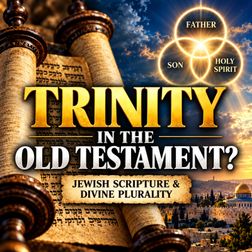
Is a Triune God Foreign to the Hebrew Bible? Is the Trinity a later Christian invention, or does Jewish Scripture already contain categories that make a triune understanding of God possible? In this teaching, we examine the Hebrew Bible and Jewish interpretive traditions to ask whether the Christian doctrine of the Trinity is fundamentally foreign to Jewish monotheism. We begin with the Shema in Deuteronomy 6:4 and an important distinction. Scripture clearly teaches that there is one God, but the confession that God is one does not by itself answer every question concerning personal distinction within the divine identity. From there, we examine the mysterious Angel of the LORD in Genesis and Exodus, particularly the burning bush account where the Angel of the LORD appears while the speaker identifies Himself as the God of Abraham, Isaac, and Jacob. We also explore personified Wisdom in Proverbs 8, Jewish traditions concerning the Memra or Word of God, and the Ruach Elohim, the Spirit of God, throughout creation, prophecy, empowerment, and renewal. Special attention is given to Genesis 1:26 and the Divine Council worldview. Rather than treating "Let us make man in our image" as a simple Trinity proof text, we examine the ancient heavenly council context and distinguish what the passage explicitly teaches from what later Christian theology may reasonably infer. We then consider Isaiah 48:12 through 16, Zechariah 12:10, the Jewish debate later called "Two Powers in Heaven," and the development of Jewish reflection on divine unity and plurality. The medieval Zohar is also considered with an important historical qualification. Its threefold mystical language cannot prove that pre Christian Judaism taught the Trinity, but it demonstrates that Jewish theological reflection has itself wrestled with complexity within divine unity. The central argument is not that the Hebrew Bible contains the Nicene Creed in advance. It does not. Rather, Jewish Scripture already contains conceptual categories of divine distinction, manifestation, Word, Wisdom, and Spirit that make later Trinitarian theology intelligible within biblical monotheism rather than foreign to it. Research and Further Study This teaching draws primarily from: • The Triune God: A Coherent Defense Rooted in Scripture and Jewish Texts • The Triune God: Understanding the Trinity Through the Lens of Jewish Texts The academic paper develops the biblical, historical, rabbinic, philosophical, and theological arguments in considerably greater detail. Defend the Word Ministries DefendtheWord.com Academic Papers GeneWilliamsJr.academia.edu Remember these wise words I once took to heart when studying Scripture: "If it's weird, it's important. What you know may not be so." Think carefully. Follow the evidence. And let’s see where it leads. #Trinity #OldTestament #HebrewBible #JewishScripture #DivinePlurality #AngelOfTheLord #HolySpirit #DivineCouncil #TwoPowersInHeaven #BiblicalTheology #ChristianTheology #Apologetics #DefendTheWord Production Note This teaching is presented using an AI digital twin of Gene Williams. The research, arguments, and teaching content are his own.
Trinity, Episode 2: Understanding One God and Three Persons
IA
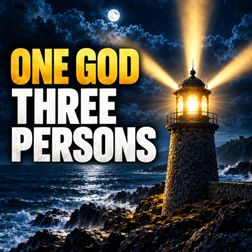
How can the Father, Son, and Holy Spirit each be fully God without Christians believing in three gods? In this teaching, we explore what Christians mean when they confess one God in three persons, distinguishing between the unity of the divine essence and the genuine personal identities of the Father, Son, and Holy Spirit. We begin with the biblical foundations of that confession and explain the theological vocabulary of essence, nature, and person. God’s unity does not mean three separate divine beings who agree perfectly. The Father, Son, and Spirit possess the numerically one, undivided divine essence. We then examine what belongs to the one divine nature, including one divine mind, will, power, and operation. We then consider how the persons remain irreducibly distinct through their eternal relationships without introducing division, inequality, or separate divine intellects. A distinction is given between mind & personal consciousness within my Triadology framework which affirms one divine intellect while describing three irreducible personal identities. These distinctions concern who the persons eternally are, rather than differences in knowledge or competing wills. We introduce the Lighthouse Model, dimensional illustrations, and the Theological Unity Equation as conceptual aids for understanding unity and distinction. The lighthouse does not reduce the persons to impersonal windows, dimensional imagery does not provide scientific proof of the Trinity, and the equation does not suggest that God is assembled from parts. We also explain the distinction between ontology, who God is in Himself, and economy, how God acts and reveals Himself within creation. This leads into inseparable divine operations and a brief connection with the incarnation, the Integrated Hypostatic Union Model, and the Two Ship Analogy. The central question is what is one in God and what is three. The goal is to clarify how Christians can affirm one undivided divine being while preserving the eternal personhood of the Father, Son, and Holy Spirit, and why that confession matters for prayer, worship, and our understanding of salvation. Research and Further Study This teaching draws from the following papers: • Triadology: An Ontological and Dimensional Model of the Triune Godhead • Understanding God: One Nature, Three Persons • The Lighthouse Model: A Metaphysical and Relational Framework for Understanding the Trinity and the Incarnation • The Theological Unity Equation: A Mathematical and Theological Framework for Understanding the Trinity • Understanding the Trinity: A Simple Way to Think About It The academic studies develop the distinctions between essence, personhood, intellect, will, and personal consciousness in greater detail. The popular level companion papers introduce these concepts in more accessible language. These explanatory models are offered for examination and reflection, while remaining distinct from Scripture and the historic confession they seek to illuminate. Defend the Word Ministries DefendtheWord.com Academic Papers GeneWilliamsJr.academia.edu Remember these wise words I once took to heart when studying Scripture: "If it's weird, it's important. What you know may not be so." Think carefully. Follow the evidence. And let's see where it leads. #Trinity #TrinitarianTheology #Triadology #OneGodThreePersons #LighthouseModel #ChristianTheology #Apologetics #HolySpirit #JesusChrist #TheophilusPodcast #DefendTheWord Production Note This teaching is presented using an AI digital twin of Gene Williams. The research, arguments, and teaching content are his own.
Trinity, Episode 1: How Did the Trinity Develop?
IA
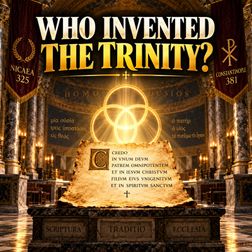
Did the early Church invent the Trinity at the Council of Nicaea? In this teaching, we trace the historical development of Trinitarian doctrine from its biblical foundations through the early Church Fathers and the major councils of Nicaea in AD 325 and Constantinople in AD 381. Christianity emerged from Jewish monotheism, yet the earliest Christians also confessed Jesus as divine and spoke of the Holy Spirit in ways that could not easily be reduced to an impersonal power. The challenge was not simply deciding whether God is one. Christians already believed that. The challenge was explaining how the Father, Son, and Holy Spirit could be distinguished while remaining within the identity of the one God. We examine the contributions of Ignatius of Antioch, Justin Martyr, Irenaeus of Lyons, Theophilus of Antioch, and Tertullian, paying careful attention to the fact that early Christian language was still developing and should not be read as though every second century writer already possessed later Nicene terminology. We then examine the Arian controversy, the significance of homoousios at Nicaea, and the Church's affirmation that the Son is begotten, not made, and of the same divine essence as the Father. From there, we move to Constantinople and the developing articulation of the full divinity of the Holy Spirit. Finally, we consider the later concept of perichoresis, or mutual indwelling, and the important distinction between the development of theological language and the invention of a theological belief. The central question is not simply whether Trinitarian terminology developed. It clearly did. The deeper question is whether that development represents the invention of something new or increasingly precise language intended to preserve what Christians believed Scripture required them to confess about God. Also available through YouTube Music as an episode of Theophilus Podcast. Research and Further Study This teaching draws from the following papers: • The Development of Trinitarian Doctrine: Defining the Deity of Christ and the Personhood of the Holy Spirit • How Did the Trinity Develop: Tracing the Journey from Scripture to Doctrine The academic study traces the early controversies, the contributions of the Church Fathers, the councils of Nicaea and Constantinople, and the development of theological terminology in greater detail. Defend the Word Ministries DefendtheWord.com Academic Papers GeneWilliamsJr.academia.edu Remember these wise words I once took to heart when studying Scripture: "If it's weird, it's important. What you know may not be so." Think carefully. Follow the evidence. And let's see where it leads. #Trinity #TrinitarianTheology #Nicaea #NiceneCreed #ChurchHistory #EarlyChurch #ChristianTheology #Apologetics #HolySpirit #JesusChrist #DefendTheWord Production Note This teaching is presented using an AI digital twin of Gene Williams. The research, arguments, and teaching content are his own.
Stagione 3
Understanding the Bible, Episode 4: How did we get the Bible, and who decided which books belonged in it?
IA
How did we get the Bible, and who decided which books belonged in it? In this teaching, we examine the historical development of the biblical canon and the dating of the New Testament writings. Also available through YouTube Music as an episode of Theophilus Podcast. The Bible did not appear as a completed book, and the twenty-seven books of the New Testament were not created by a fourth-century church council. They emerged within the apostolic age as Gospels, Letters, historical narratives, and apocalyptic writings that were copied, circulated, read publicly, debated, collected, and gradually recognized throughout the early Christian world. We begin by examining what the word canon means and the difference between the authority of Scripture and the historical recognition of Scripture. We then consider the major criteria used by early Christians, including antiquity, apostolicity, catholicity, and orthodoxy. The teaching also examines disputed books, respected early Christian writings such as the Shepherd of Hermas and the Didache, the challenge posed by Marcion, the testimony of early Christian writers, Athanasius's twenty-seven-book list, and the regional councils of Hippo and Carthage. The second half turns to the dating of the New Testament. We examine historical anchors such as Gallio, Paul's missionary activity, the literary relationship between Luke and Acts, the dating of the Gospels, the significance and limits of arguments from silence, manuscript evidence, paleography, and the difference between the date of a completed book and the much earlier traditions it may preserve. The central argument is not that an early date proves inspiration or historical reliability. Rather, the evidence places the New Testament firmly within the world of first-century Christianity and shows that the later Church councils recognized writings that had already been circulating, copied, preached, and preserved for generations. Research and Further Study This teaching draws from the following papers: • The Recognition of the Biblical Canon • How Did We Get the Bible • Dating the New Testament • When Was the New Testament Written? The deeper academic work develops these questions in considerably greater detail, including the historical recognition of the biblical canon, apostolicity and canonical reception, disputed writings, early Christian manuscript traditions, the dating of the New Testament books, historical and chronological evidence, and the relationship between the date of a completed text and the earlier traditions it may preserve. Defend the Word Ministries DefendtheWord.com Academic Papers GeneWilliamsJr.academia.edu Remember these wise words I once took to heart when studying Scripture: "If it's weird, it's important. What you know may not be so." Think carefully. Follow the evidence. And let's see where it leads. #BiblicalCanon #HowWeGotTheBible #NewTestament #NewTestamentDating #BibleHistory #ChurchHistory #BiblicalStudies #ChristianTheology #Apologetics #DefendTheWord Production Note This teaching is presented using an AI digital twin of Gene Williams. The research, arguments, and teaching content are his own.
Understanding the Bible, Episode 3: Why Ancient Translations Matter
IA
Why do ancient translations matter, and what can they tell us about the Bible we read today? In this teaching, we examine the Septuagint, Masoretic Text, Dead Sea Scrolls, and what ancient textual witnesses reveal about the Old Testament. Also available through YouTube Music as an episode of Theophilus Podcast. The Septuagint is the ancient Greek collection of translations of the Jewish Scriptures. Produced within the Greek speaking Jewish world, it became part of the scriptural environment inherited by early Christians. Even familiar book names such as Genesis, Exodus, Leviticus, Numbers, and Deuteronomy come through the Greek tradition. We then examine the relationship between the Septuagint and Masoretic Text and what changed with the discovery of the Dead Sea Scrolls. The scrolls revealed textual diversity within ancient Judaism. Some Hebrew manuscripts preserve readings closer to the Septuagint than the later Masoretic tradition, showing that a different Greek reading may reflect a different underlying Hebrew text. Deuteronomy 32:8 preserves a difference involving the “sons of Israel” and “sons of God,” with implications for the Divine Council worldview. Psalm 22 raises the question surrounding “like a lion” and “they pierced my hands and my feet,” showing how small manuscript differences can affect a passage. Finally, we examine Isaiah 7:14 and the Hebrew words almah and bethulah. Does almah mean “virgin” or “young woman”? Why does the Septuagint, translated centuries before Christianity, use the Greek parthenos? What does this reveal about Jewish interpretation before Matthew applied the passage to Jesus’ birth? The goal is not to choose the textual tradition that gives us our preferred theology. It is to follow the manuscript evidence and understand the historical context in which Scripture was transmitted and interpreted. Textual variation does not require abandoning biblical authority. Most differences do not substantially change a passage’s meaning, and major Christian doctrines do not depend upon selecting a convenient manuscript reading. Research and Further Study This teaching draws from the following papers: • Septuagint and Masoretic Text: A Comparative Study of Textual Divergences and Their Theological Implications • How Ancient Translations Shaped the Bible We Read Today: Septuagint and Masoretic Text • ʿAlmâ, Bethulah, and the Septuagint • Virgin or Young Woman: • Psalm 22: A Prophetic Foreshadowing of Christ’s Passion The deeper academic work develops these questions in considerably greater detail, including the Septuagint and Masoretic textual traditions, the Dead Sea Scrolls, textual criticism, Hebrew Vorlage, the Divine Council worldview, Deuteronomy 32, Psalm 22, Isaiah ⁠7:14⁠, almah, bethulah, parthenos, the virgin birth, and the use of the Old Testament within the New Testament. Defend the Word MinistriesDefendtheWord.com Academic PapersGeneWilliamsJr.academia.edu Remember these wise words I once took to heart when studying Scripture:"If it's weird, it's important. What you know may not be so."Think carefully. Follow the evidence. And let's see where it leads. ⁠#Septuagint⁠ ⁠#MasoreticText⁠ ⁠#DeadSeaScrolls⁠ ⁠#BiblicalStudies⁠ ⁠#TextualCriticism⁠ ⁠#BibleHistory⁠ ⁠#Isaiah714⁠ ⁠#Psalm22⁠ ⁠#DivineCouncil⁠ ⁠#ChristianTheology⁠ ⁠#Apologetics⁠ ⁠#DefendTheWord⁠ Production NoteThis teaching is presented using an AI digital twin of Gene Williams. The research, arguments, and teaching content are his own.
Understanding the Bible, Episode 2: How to Handle Difficult Texts?
IA
What should Christians do when a biblical passage appears scientifically impossible, morally troubling, or historically strange? In this teaching, we examine how historical, cultural, literary, theological, and scientific context can help us approach some of Scripture's most difficult passages without dismissing the Bible or forcing the text into assumptions it was never intended to carry. We begin with Genesis and the questions surrounding Noah's flood, extraordinary human lifespans, ancient numerical patterns, and the mysterious appearance of the Nephilim both before and after the flood. Particular attention is given to ancient Near Eastern literary conventions and the possibility that universal sounding language can function hyperbolically without diminishing the theological significance of the narrative. We then examine one of the most serious moral challenges raised against Scripture: slavery. Rather than ignoring difficult texts such as Leviticus 25 or Paul's instructions to slaves and masters, we place them within the broader biblical movement from creation, through Exodus and Torah, to Christ and the early Church. This introduces the concepts of divine accommodation and a canonical trajectory of accommodation, reform, and transformation. Finally, we consider a different kind of interpretive problem: assumptions we repeat about the Bible that the text itself does not necessarily support. Were all the apostles poor and uneducated? Evidence from Galilean fishing enterprises, Roman taxation, early Christian households, and the wider social networks surrounding Jesus suggests a more diverse picture. The central principle throughout this teaching is simple: difficult texts should be studied in their literary, historical, cultural, theological, and canonical contexts. Scripture remains primary, while history, archaeology, linguistics, ancient literature, and credible science help us recover the world behind the words. Research and Further Study This teaching draws from the following papers: • Genesis: Hyperbole and History in the Flood, Lifespans, and Language of the Ancient World • Floods, Lifespans, and Giants: Rethinking the Genesis Story • Slavery and Scripture: Accommodation, Transformation, and the Trajectory Toward Freedom • From Chains to Freedom: How the Bible Planted the Seeds to End Slavery • Social and Economic Backgrounds of the Apostles: A Historical Reconstruction from Textual and Historical Evidence • The Apostles Were Not All Poor: Why the Earliest Followers of Jesus Came from Different Social Backgrounds The deeper academic work develops these questions in considerably greater detail, including biblical authority, ancient Near Eastern literature, flood traditions, biblical genealogies, slavery in the ancient world, divine accommodation, trajectory hermeneutics, first century economics, archaeological evidence, and the social backgrounds of the earliest Christian movement. Defend the Word Ministries DefendtheWord.com Academic Papers GeneWilliamsJr.academia.edu Remember these wise words I once took to heart when studying Scripture: "If it's weird, it's important. What you know may not be so." Think carefully. Follow the evidence. And let's see where it leads. #DifficultBiblePassages #BiblicalInterpretation #BibleContext #Genesis #NoahsFlood #SlaveryAndScripture #BiblicalHistory #ChristianTheology #Apologetics #PrimaScriptura #DefendTheWord Production Note This teaching is presented using an AI digital twin of Gene Williams. The research, arguments, and teaching content are his own.
Understanding the Bible, Episode 1: How to Read the Bible: Context, Authority, and Prima Scriptura
IA
How should Christians actually read the Bible? In this teaching, we examine biblical interpretation, historical and cultural context, the limits of a purely plain reading, and the relationship between Sola Scriptura, Prima Scriptura, and the use of sources outside the biblical text. We begin with a simple but important distinction: the Bible was written for us, but it was not originally written to us. The biblical authors wrote within real historical settings, using languages, customs, idioms, literary forms, and cultural assumptions that their original audiences often understood without explanation. From there, we consider the question of authority. What does Sola Scriptura actually mean? How is it different from Solo Scriptura or Nuda Scriptura? And why do I use the term Prima Scriptura? Prima Scriptura does not diminish the authority of Scripture. Scripture remains the highest theological authority. But Scripture is not isolated from history, language, archaeology, reason, church tradition, ancient literature, or the created order. Using examples from Genesis 1, Psalm 82, Jude, First Enoch, the meaning of apocalypse and Gehenna, modern idioms, and even a simple Strong's Concordance word study, we examine how easily modern readers can understand the words of a passage while still missing what those words meant within their original context. Particular attention is given to interpretive "false friends," familiar words, images, or ideas that can cause us to import modern meanings into ancient texts without realizing we are doing it. We also consider why differences among responsible Bible translations can provide valuable clues that something beneath the English text deserves further investigation. Historical background, archaeology, ancient literature, and linguistic study must not become tools for forcing Scripture to say more than the evidence supports. Similarity does not prove dependence, possible meanings are not interchangeable definitions, and responsible interpretation sometimes requires us to say, "I don't know." The central principle throughout this teaching is simple: Scripture first. Not Scripture isolated. If God inspired real authors who wrote to real audiences within real languages, cultures, and historical settings, then taking those contexts seriously is part of taking inspiration seriously. Sometimes the plain meaning is enough. But when Scripture becomes strange, difficult, or culturally foreign, the strange thing may be exactly where we need to start digging. Research and Further Study This teaching draws from the following papers: • Context is King • A Comparative Analysis of the Three Methods of Scripture: Sola Scriptura, Prima Scriptura, and Sacra Scriptura et Traditio • Contextual Reading vs. Plain Reading • Unlocking the Bible's Depth The deeper academic work develops these questions in considerably greater detail, including biblical authority, historical context, ANE literature, Second Temple Jewish literature. Defend the Word Ministries DefendtheWord.com Academic Papers GeneWilliamsJr.academia.edu Remember these wise words I once took to heart when studying Scripture: "If it's weird, it's important. What you know may not be so." Think carefully. Follow the evidence. And let's see where it leads. #BiblicalInterpretation #PrimaScriptura #SolaScriptura #BibleStudy #BiblicalContext #Hermeneutics #ChristianTheology #BiblicalTheology #Apologetics #DefendTheWord Production Note This teaching is presented using an AI digital twin of Gene Williams. The research, arguments, and teaching content are his own.
1 di 2