The London Magazine Podcast

The London Magazine Podcast

di The London Magazine
Stagione 3
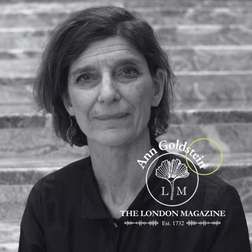
Ann Goldstein on Elena Ferrante and the art of translation
On this episode of The London Magazine Podcast, we speak to translator and editor Ann Goldstein, renowned for bringing Elena Ferrante’s work to English readers. A former editor at the New Yorker, Goldstein has also translated works by Primo Levi, Jhumpa Lahiri and, most recently, Donatella Di Pietrantonio’s The Brittle Age. In the episode, we discuss the oxymoron of the ‘celebrated translator’, her early encounters with Italian through Dante and the story of how she became Ferrante’s translator. Goldstein reflects on Ferrante’s unique syntax and style, as well as the broader challenges of Italian–English translation. Timestamps 0.45 - The oxymoron of the ‘celebrated translator’ 2.44 - Dante, Italian language lessons and the New Yorker 6.31 - Elena Ferrante: how it started 8.05 - Ferrante’s style, syntax and appeal 11.10 - Ann’s translation process: method vs instinct 14.58 - Translating difficult subject matter 16.09 - Technical problems in Italian–English translation 23.09 - The ‘gold standard’ of translation? 25.00 - Dealing with Ferrante fanatics Follow The London Magazine Podcast here to never miss an episode. To discover more content exclusive to our print and digital editions, subscribe here to receive a copy of The London Magazine to your door every two months, while also enjoying full access to our extensive digital archive of essays, literary journalism, fiction and poetry.
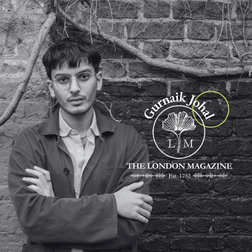
Gurnaik Johal on maximalist fiction, ecological anxiety and his debut novel, Saraswati
On this episode of The London Magazine Podcast, we speak to short story writer and novelist Gurnaik Johal. Gurnaik’s 2022 collection We Move won the Somerset Maugham Award and the Tata Literature Live! Prize, and his debut novel, Saraswati, is out now with Serpent’s Tail. In the episode, we discuss maximalism in the novel, the Indian diaspora and the difficulty of writing about current events – ‘this is where I say to any budding writers out there: write historical fiction!’ Timestamps 1.35 - The escapism of writing a maximalist novel during COVID 3.04 - Gurnaik reads an extract from Saraswati 7.43 - Moving from short fiction to the novel 9.36 - Research, knowledge acquisition and the editorial process 12.53 - How to write about current events that are changing day by day 14.24 - Maximalism and ambition in a debut novel 19.39 - Seeing India through the eyes of the diaspora 23.25 - Comedy and levity in the novel 26.54 - Origin stories and myth 29.08 - Writing ‘climate fiction’ 31.22 - The strange timewarp of publishing Follow The London Magazine Podcast here to never miss an episode. To discover more content exclusive to our print and digital editions, subscribe here to receive a copy of The London Magazine to your door every two months, while also enjoying full access to our extensive digital archive of essays, literary journalism, fiction and poetry.
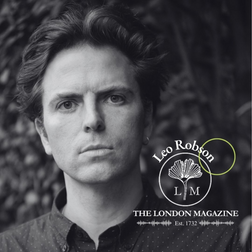
Leo Robson on cultural criticism, writing London and the virtues of obstinacy
Esplicito
On this episode of The London Magazine Podcast, we speak to award-winning cultural critic and novelist Leo Robson. Leo’s writing has appeared in the New Yorker, the London Review of Books, Granta and the New Left Review. He works for Literary Review and Granta, and The Boys is his first novel. In the episode, we talk about evoking London on the page, the strange nostalgia of the 2012 Olympics, the role of humour in serious writing and the virtues of obstinacy. Timestamps 0.32 - The joys of book promotion 2.43 - Leo reads an extract from The Boys 8.25 - Writing a ‘London’ novel 9.51 - The 2012 London Olympics and the legacy of New Labour 14.12 - Chronologies, rites of passage and parody 16.01 - The writing process and the evocation of place 20.49 - Stefan Zweig, Wes Anderson, Alt-J and Mark Fisher’s temporal paradoxes 28.22 - Iris Murdoch’s Under the Net and other inspirations 30.06 - Light and dark: balancing humour and serious subjects in a novel 33.45 - The process: writing cultural criticism vs writing fiction Follow The London Magazine Podcast here to never miss an episode. To discover more content exclusive to our print and digital editions, subscribe here to receive a copy of The London Magazine to your door every two months, while also enjoying full access to our extensive digital archive of essays, literary journalism, fiction and poetry.
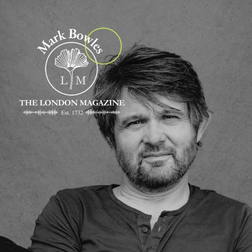
Mark Bowles on voice, espresso and his 'pro-European' novel
Esplicito
On this episode of The London Magazine Podcast, we talk to writer Mark Bowles. Mark grew up between Bradford and Leeds, and went on to study English at Liverpool and Oxford Universities. His debut novel, All My Precious Madness, was published at the end of last year, and has been nominated for the Goldsmiths Prize and the Authors’ Club Best First Novel award. In the episode, we hear more about the writing and editing process for All My Precious Madness. We discuss corporate jargon, Mark’s love of espressos and whether or not his book can be called an anti-English novel. Timestamps 0.37 - Mark Bowles in The London Magazine archives 2.58 - A passage from 'All My Precious Madness' 7.54 - Voice in the novel 10.15 - The virtues of exaggeration 13.50 - Ideas do not fully precede their expression 15.48 - Surprises when writing the novel 18.36 - Mark's love of espressos at Bar Termini 22.27 - 'All My Precious Madness' as a pro-European novel 24.24 - Aphorisms 29.58 - His next book? 31.57 - What Mark's been reading and enjoying recently Follow The London Magazine podcast here to never miss an episode. To discover more content exclusive to our print and digital editions, subscribe here to receive a copy of The London Magazine to your door every two months, while also enjoying full access to our extensive digital archive of essays, literary journalism, fiction and poetry.
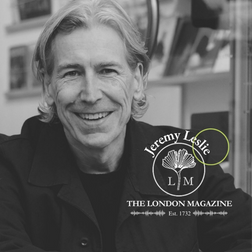
Jeremy Leslie on magCulture, his favourite magazines and why 'end of print' narratives are nonsense
On this episode of The London Magazine Podcast, we talk to designer and magazine aficionado Jeremy Leslie. Jeremy’s platform, magCulture, sells a huge range of magazines from its London shop and online, posts regular reviews and essays via its journal, runs annual conferences in London and New York, as well as recording a regular podcast of its own. A passionate advocate for editorial design, Jeremy has established himself as a commentator on the subject through the magCulture online Journal and a series of books. In the episode, we discuss the origins and growth of magCulture, as well as Jeremy’s personal favourite magazines. Jeremy also addresses the myth of ‘the end of print’ and shows how the industry has indeed changed, but for the better. Timestamps: 1.03 – magCulture, murder and The London Magazine 2.44 – The origins of magCulture 5.52 – Early magazine influences 10.48 – Devalueing print: the end of NME 12.40 – Curating magCulture: what makes a good magazine? 16.50 – The myth of 'the end of print' and how magazines have changed 22.16 – What's doing well and what's lacking in magazine culture 24.49 – Current favourite magazines Follow The London Magazine podcast here to never miss an episode. To discover more content exclusive to our print and digital editions, subscribe here to receive a copy of The London Magazine to your door every two months, while also enjoying full access to our extensive digital archive of essays, literary journalism, fiction and poetry.
Stagione 2
Paul Stephenson
On this episode of The London Magazine Podcast, we talk to poet and editor Paul Stephenson about his debut collection, Hard Drive, that has been shortlisted for the Polari Book Prize this year. Paul has previously published three poetry pamphlets (Those People, The Days that Followed Paris and Selfies with Waterlillies), and he occasionally teaches for the Poetry School. We discussed absurdity and the limitations of language, poetry as a source of healing in times of grief and Paul’s broad use of form. Timestamps: 0.05 – Intro 0.54 – Writing on trains and while travelling 2.07 – Paul reads ‘Anglepoise’, ‘The Thesis’, ‘Signature’, ‘Collecting you from Golders Green’ and ‘The Hymn of Him’ 7.38 – Poetry as healing in times of grief 10.31 – Use of form: Oulipo restraints 12.03 – Logistics of putting together a poetry collection 15.08 – Absurdity, Auden and Alice Notley: the limitations of language 19.06 – Humour and emotion in poetry 22.32 – How to edit a poetry collection 26.00 – Labelling the collection as a ‘queer’ book 28.09 – The numerous meanings of the title: ‘Hard Drive’ 29.29 – Things that had to be left unsaid in the collection 30.45 – The next book? Contemporary dating and situationships… 33.37 – Poets and art Paul’s been enjoying recently 35.22 – Paul reads ‘Writing to your Mother’
Joshua Jones
Esplicito
On this episode of The London Magazine Podcast, we talk to Joshua Jones, writer and artist from Llanelli in south Wales. Joshua was a Literature Wales Emerging Writer and a Hay Festival Writer at Work. He has published various poetry pamphlets, including Three Months in the Zebra Room and The City on Film, both out this year. On this episode, we talk to Joshua about his book, Local Fires. A collection of interconnected short stories and his first work of fiction, Local Fires was shortlisted for the Dylan Thomas Prize and the Polari First Book Prize. We chatted about the benefits of multiple POVs and interconnected stories, how not to get sued when writing autofiction and Joshua’s love of Chicago indie rock band, Joan of Arc.
Claire Carroll
On this episode of The London Magazine Podcast, we talk to Claire Carroll, a regular London Magazine contributor who writes experimental fiction about the intersection of nature, technology, and desire. She is also a PhD researcher at Bath Spa and Exeter Universities, where she explores how experimental writing – particularly short stories and prose-poetry – can reimagine how humans relate to the natural and non-human world. On this episode, she joins us to talk all about her new short story collection, The Unreliable Nature Writer. To discover more content exclusive to our print and digital editions, subscribe here to receive a copy of The London Magazine to your door every two months, while also enjoying full access to our extensive digital archive of essays, literary journalism, fiction and poetry.
Orlando Whitfield
On this episode of The London Magazine Podcast, we talk to Orlando Whitfield, writer and self-proclaimed failed art dealer. Orlando started dealing art while still a student at Goldsmiths, and worked in and around the art world for fifteen years. His writing has appeared in the The Paris Review and The White Review, among other places. Orlando joins us to talk about his new book: All That Glitters: A Story Of Friendship, Fraud And Fine Art. To discover more content exclusive to our print and digital editions, subscribe here to receive a copy of The London Magazine to your door every two months, while also enjoying full access to our extensive digital archive of essays, literary journalism, fiction and poetry.
Dan Sperrin
On this episode of The London Magazine Podcast, we talk to Dan Sperrin. Dan is a Junior Research Fellow in English at Trinity College, University of Cambridge, and The London Magazine's political cartoonist. He predominantly works on satire and satirists, with a special interest in the period 1660-1760. Dan talks to us about the state of satire in modern Britain, David Cameron's rogue return to cabinet, and where to draw the line - if there even is one - in cartooning. To discover more content exclusive to our print and digital editions, subscribe here to receive a copy of The London Magazine to your door every two months, while also enjoying full access to our extensive digital archive of essays, literary journalism, fiction and poetry.
1 di 3