The Early American Brass Band Podcast

The Early American Brass Band Podcast

di Chris Troiano, Stephen Cannistraci
Stagione 2

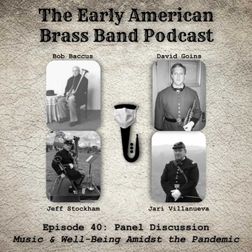
40 - Panel Discussion: Music & Well-Being Amidst the Pandemic

Episode 40 is our Season 2 finale! We’re joined by David Goins of Saxton’s Cornet Band, Jari Villanueva of the Federal City Brass Band, Jeff Stockham of the Excelsior Cornet Band, and Bob Baccus of Olde Towne Brass. Together we all discuss the effect that the COVID-19 pandemic has had on our personal music making, band activities, and the early American brass band community in general. We also discuss other ways the events of the past year have spurred reflection and conversation about the future of 19th century brass band performance. You can now support the show on Patreon and Teespring! No obligation, but we greatly appreciate any support you're willing to give. For show notes and resources, visit our website at www.eabbpodcast.com. You can get in touch with us on social media, and by emailing eabb.podcast@gmail.com Music in this episode comes from Our Musical Past from the Library of Congress. Episode Structure: 2:49 - How COVID has affected personal music making, and band activity. 17:01 sec - Other areas of interest explored and projects undertaken during COVID "free time" 29:55 - COVID precautions while performing 32:33 - Gigs scheduled for the upcoming months 35:30 - How the pandemic has affected instrument collecting and prices 39:50 - Thoughts on the future of early American brass band performance 56:29 - Grappling with the legacy of "Dixie" and monuments 1:07:49 - Purpose of keeping this history alive, different ways to do it 1:20:08 - Upcoming events for Jari, David, Bob, and Jeff, and where you can find out more about each person 1:33:41- Featured Albums: Sounds from the Opera House (Saxton’s Cornet Band), Hurrah for the Union (Federal City Brass Band), Yankee Bands in Dixie’s Land (Olde Towne Brass), Cheer, Boys, Cheer! (excelsior cornet band)

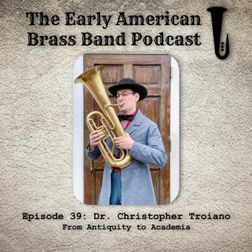
39 - Interview with Dr. Christopher Troiano: From Antiquity to Academia

Episode 39 is an interview with host and newly minted Dr. Christopher Troiano! Dr. Troiano discusses his doctoral dissertation “From Antiquity to Academia: A History of Early American Brass Bands and a Way Forward for their Adaptation Within Institutions of Higher Learning” and the 8th GM Regiment Band. Lots of time and effort went into researching and writing this dissertation, and we’re excited to share this research! You can now support the show on Patreon and Teespring! No obligation, but we greatly appreciate any support you're willing to give. For show notes and resources, visit our website at www.eabbpodcast.com. You can get in touch with us on social media, and by emailing eabb.podcast@gmail.com Music in this episode comes from Our Musical Past from the Library of Congress. 2:44 - How Dr. Troiano came to write a dissertation on Early American Brass Bands 6:41 - Brass music before and during The American Brass Band Movement 14:10 - How early American brass ensembles are different from the brass bands of today 22:41 - How Dr. Troiano compiled the list of currently active early American brass bands, similarities of these bands 27:01 - When the "revival" of early American brass bands took place and what inspired it 30:47 - How and when the modern day early American brass bands got their instruments 36:21 - Lack of band history in college curricula 45:14 - The value of early American brass bands in college music history courses 48:09 - Value of early American brass bands as a performance option in a college setting 51:50 - Forming the 8th GM Regiment Band at George Mason, appearance and goals 58:46 - Influence of the Civil War on these bands in an academic setting 1:06:58 - 19th century repertoire, influence on 20th and 21st century repertoire 1:15:56 - Where you'll be able to find Dr. Troiano's dissertation when it's available, additional resources on our website 1:17:05 - Featured Album: Dr. Troiano’s lecture recital

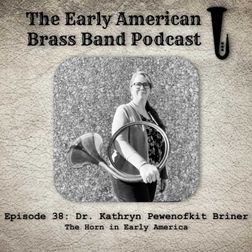
38 - Interview with Dr. Kathryn Pewenofkit Briner: The Horn in Early America

Episode 38 is our great conversation with Dr. Kathryn Pewenofkit Briner, early horn researcher and performer. We talk about her interest in the early horn in Europe and America, her project "Lost Legacy: The Horn in Early America" and her current studies in linguists relating to her family's Native American heritage. You can now support the show on Patreon and Teespring! No obligation, but we greatly appreciate any support you're willing to give. For show notes and resources, visit our website at www.eabbpodcast.com. You can get in touch with us on social media, and by emailing eabb.podcast@gmail.com Music in this episode comes from Our Musical Past from the Library of Congress. Episode Structure: 2:02 - Dr. Briner's musical background 3:55 - Where Dr. Briner's interest in historical horn began 7:25 - How historical horn performers find their instruments - reproductions and original horns 10:50 - A brief history of the horn 16:09 - How the horn made its way to America and how it was faring in the musical culture 22:20 - The move from natural horns to valve horns 26:04 - Horn soloists in the 1700's and 1800's 29:02 - Overview of Dr. Briner's "Lost Legacy" project 31:08 - The horn's connection to slavery in antebellum America 32:47 - Notable horn teachers in early America 35:45 - Availability and makers of horns in early America 39:05 - Highlights from Dr. Briner's research, topics for further exploration 44:57 - Female horn players in Early America 49:53 - Implications of Dr. Briner's research 53:33 - Dr. Briner's small collection of early horns 57:40 - Dr. Briner's Native American family history and current studies in linguistics 1:09:26 - Where you can find more bout Dr. Briner and her research 1:14:05 - Featured Album: Brahms, Beethoven: Music for Horn

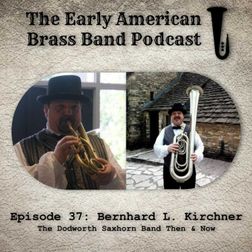
37 - Interview with Bernhard Kirchner: The Dodworth Saxhorn Band Then and Now

Episode 37 is our conversation with Bernhard Kirchner, instrument curator and arranger for the Dodworth Saxhorn Band. We discuss the history of the original Dodworth band, their performances and travels, and the current day band as well as Bernhard’s various roles in the band. You can now support the show on Patreon and Teespring! No obligation, but we greatly appreciate any support you're willing to give. For show notes and resources, visit our website at www.eabbpodcast.com. You can get in touch with us on social media, and by emailing eabb.podcast@gmail.com Music in this episode comes from Our Musical Past from the Library of Congress, and the Dodworth Saxhorn Band. Episode Structure: 2:08 - Bernhard's musical background 16:54 - The 19th century Dodworth Band 30:01 - Instrument makers, instrument development 33:04 - Final years of the 19th century Dodworth Band 38:10 - Today's Dodworth Saxhorn Band 46:18 - Notable performances of the modern Dodworth Saxhorn Band, music performed, makeup of the band 53:44 - How Bernhard got involved with the band, band owned instruments 1:13:38 - Arranging for the Dodworth Saxhorn Band 1:22:09 - Value and relevance of 19th century bands today 1:24:26 - Where you can find more about the Dodworth Saxhorn Band 1:28:40 - Featured Album: Tradition of the Season, the Dodworth Saxhorn Band

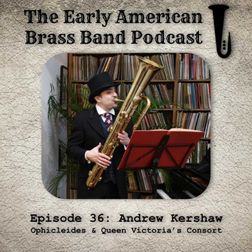
36 - Interview with Andrew Kershaw: Ophicleides & Queen Victoria's Consort

Episode 36 is our enthusiastic conversation with Andrew Kershaw, founder of Queen Victoria’s Consort, and former principal tuba of Opera House in Santiago, Chile. We talk about ophicleides, tubas, and Queen Victoria’s Consort - a Victorian era brass ensemble performing period music on instruments from the Victorian era and in traditional Victorian dress while making the music and instruments exciting and engaging to the general public. You can now support the show on Patreon and Teespring! No obligation, but we greatly appreciate any support you're willing to give. For show notes and resources, visit our website at www.eabbpodcast.com. You can get in touch with us on social media, and by emailing eabb.podcast@gmail.com Music in this episode comes from Our Musical Past from the Library of Congress, and Queen Victoria’s Consort. Episode Structure: 3:23 - Andrew's musical background 6:21 - How Andrew got interested and first involved with playing and studying historical instruments 10:11 - Period instrument sound vs. modern instrument sound 11:57 - Queen Victoria's Consort, formation, goals, performances 16:00 - Repertoire and instrument evolution and selection 24:58 - Queen Victoria's Consort instrumentation and instruments used 28:43 - Thoughts on authenticity, appearance of the group 33:50 - Highlighted instruments from Andrew's collection 39:00 - How Andrew acquires instruments for his collection 43:56 - Brief history of ophicleides, instrument development 59:48 - Historic performers and their influence on instrument development 1:21:26 - Where you can find more about Queen Victoria's Consort and their upcoming virtual concert

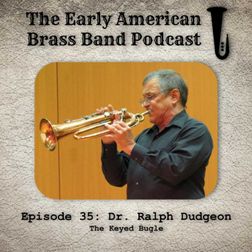
35 - Interview with Dr. Ralph Dudgeon: The Keyed Bugle

Episode 35 is our great conversation with Dr. Ralph Dudgeon, keyed bugle performer and researcher. We talk about the history of the keyed bugle, notable performers in the 19th and 20th centuries, Dr. Dudgeon’s recording and research projects, and thoughts on historical music in today’s musical culture. You can now support the show on Patreon and Teespring! No obligation, but we greatly appreciate any support you're willing to give. For show notes and resources, visit our website at www.eabbpodcast.com. You can get in touch with us on social media, and by emailing eabb.podcast@gmail.com Music in this episode comes from Our Musical Past from the Library of Congress, Music for Keyed Bugle by Ralph Dudgeon, and Antique Brasses by the London Gabrieli Brass Ensemble. Episode Structure: 2:20 - Dr. Dudgeon's musical background 15:42 - How Dr. Dudgeon got interested in historical instruments 18:57 - Dr. Dudgeons beginnings on the keyed bugle 24:30 - Keyed bugle performers in the 20th century 26:47 - History of the keyed bugle 32:29 - Difference between keyed trumpets and keyed bugles 35:38 - Public reception of the keyed bugle and notable makers 44:35 - More 19th century keyed bugler performers 47:55 - Music for the keyed bugle 50:19 - Information about Ned Kendall, 19th century keyed bugle player 51:53 - Musical example "Wood Up Quickstep" 1:00:04 - Musical example "Adagio and Polonaise" 1:01:37 - Dr. Dudgeon's instrument collection 1:09:00 - Current reproductions of keyed bugles 1:11:35 - Thoughts on what value historical music has in today's musical world 1:17:46 - Advice for people wanting to learn keyed bugle 1:20:39 - Where you can find Dr. Dudgeon's books and recordings 1:26:33 - Featured Album: Antique Brasses, London Gabrieli Brass Ensemble

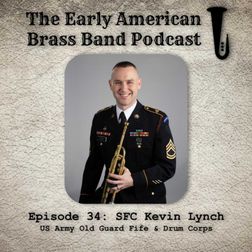
34 - Interview with SFC Kevin Lynch: US Army Old Guard Fife & Drum Corps

Episode 34 is our interview with SFC Kevin Lynch of the United States Army Old Guard Fife & Drum Corps. We talk about the history and duties of this unique unit as well as their role in preserving the military music traditions of the United States Army. You can now support the show on Patreon and Teespring! No obligation, but we greatly appreciate any support you're willing to give. For show notes and resources, visit our website at www.eabbpodcast.com. You can get in touch with us on social media, and by emailing eabb.podcast@gmail.com Music in this episode comes from Our Musical Past from the Library of Congress. Episode Structure: 4:06 - Kevin’s musical background 6:30 - What the audition for the Army Old Guard Fife & Drum Corps was like 10:26 - Field music and the musician’s role in the early military. History of the Old Guard Fife & Drum Corps 17:00 - Larger history of the 3d U.S. Infantry Regiment - The Old Guard 20:21 - Day to day duties of the Army Old Guard Fife & Drum Corps, preserving history 27:00 - Authenticity - balancing historical accuracy with the demands of the job and staying relevant 37:35 - Music of the Army Old Guard Fife & Drum Corps. Historical Trumpets and Historical Flutes 45:20 - Historical music playing outside of Army Old Guard Fife & Drum Corps 49:15 - Where you can find out more about the Army Old Guard Fife & Drum Corps 51:24 - Featured Album: The Army Old Guard Fife & Drum Corps, Celebrating 50 Years

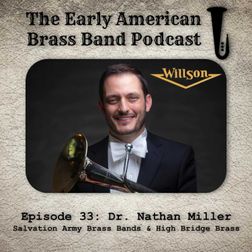
33 - Interview with Dr. Nathan Miller: Salvation Army Brass Bands and High Bridge Brass

Episode 33 is our conversation with Dr. Nathan Miller, Assistant Professor at Asbury University, Alto Horn player with High Bridge Brass, the Lexington Brass Band, and Saxton’s Cornet Band, Salvation Army member, and Willson Artist. We talk about the history of the Salvation Army and their musical traditions, brass bands in America independent of British Brass Bands, and larger points about band culture in the United States. You can now support the show on Patreon and Teespring! No obligation, but we greatly appreciate any support you're willing to give. For show notes and resources, visit our website at www.eabbpodcast.com. You can get in touch with us on social media, and by emailing eabb.podcast@gmail.com Music in this episode comes from Our Musical Past from the Library of Congress, and High Bridge Brass. Episode Structure: 2:08 - Dr. Miller’s musical background 14:50 - Salvation Army musical history 19:25 - Why the Salvation Army gravitated toward brass instruments, and how that tradition spread. Dr. Miller’s research 24:50 - Type of music the Salvation Army bands have played 29:12 - Instrument names: Alto Horn vs Tenor Horn 34:07 - Instrumentation and publishing of Salvation Army music 40:30 - Comparing the Salvation Army and Moravian musical traditions 43:18 - Musical excerpt - Shenandoah, High Bridge Brass 44:14 - Origins and forming of High Bridge Brass 50:30 - Discussing band culture in the United States 1:00:28 - Saxton’s Cornet Band 1:06:07 - Asbury University’s planned Brass Band Institute, brass bands as educational tools in smaller rural schools 1:15:42 - Where you can find more about High Bridge Brass, Willson Band Instruments 1:20:10 - Featured Album: High Bridge Brass, self titled album

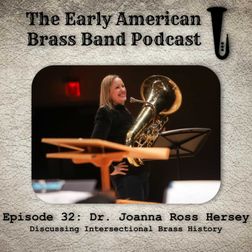
32 - Interview with Dr. Joanna Ross Hersey: Discussing Intersectional Brass History

Episode 32 is a fantastic conversation with Dr. Joanna Ross Hersey, President of the International Women’s Brass Conference, Professor of Tuba and Euphonium at the University of North Carolina at Pembroke, Yamaha and Parker Mouthpiece Performing Artist, composer, and arranger. We discuss her research into women brass players in 19th century America, and discuss many larger points about the importance of representation and diversity in music instruction, research, thinking, and writing. You can now support the show on Patreon and Teespring! No obligation, but we greatly appreciate any support you're willing to give. For show notes and resources, visit our website at www.eabbpodcast.com. You can get in touch with us on social media, and by emailing eabb.podcast@gmail.com Music in this episode comes from Our Musical Past from the Library of Congress. Episode Structure: 2:26 - Dr. Hersey's musical background 7:15 - Dr. Hersey's undergraduate and graduate studies 13:26 - Dr. Hersey's dissertation research on women brass players and larger points regarding considerations for telling this history 23:10 - Importance of including the history of everyone when teaching music 34:23 - Highlights from Dr. Hersey's dissertation, Boston Fadette Lady Orchestra, women in music at the university level 38:18 - Helen May Butler, Lora Antoinette Reiter, vaudeville 41:30 - Importance of sharing and including these musicians when teaching, International Women's Brass Conference 44:25 - Expectations and experiences, how they vary for different people 51:13 - The Dungill Family Concert Company 54:04 - Geographic effects on who played brass instruments 1:01:45 - Diversifying repertoire 1:09:23 - How we can learn from the past and use it to craft a better future 1:13:48 - Where you can find more about Dr. Hersey 1:16:26 - Featured Album: Dr. Joanna Ross-Hersey: O Quam Miribilis

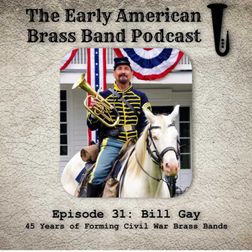
31 - Interview with Bill Gay: 45 Years of Forming Civil War Brass Bands

Episode 31 is our conversation with Bill Gay - founder of the 2nd Cavalry Brigade Band and experienced Civil War brass band reenactor and leader. We also talk about his time with and experiences starting both the Americus Brass Band and Saxton’s Cornet Band as well as his organizing and leading efforts in Ohio. You can now support the show on Patreon and Teespring! No obligation, but we greatly appreciate any support you're willing to give. For show notes and resources, visit our website at www.eabbpodcast.com. You can get in touch with us on social media, and by emailing eabb.podcast@gmail.com Music in this episode comes from the 2nd Cavalry Brigade Band and Our Musical Past from the Library of Congress. Episode Structure: 2:11 - Bill's musical background and how he got involved with reenacting bands 4:54 - Forming the Americus Brass Band - instruments, music, early gigs 14:49 - Rejoining the Americus Band for the 125th anniversary reenactments 17:50 - Moving to Kentucky and forming Saxton's Cornet Band 21:54 - Role of living history presentations in modern society 27:02 - Bill's activities after Saxton's Cornet Band - Cavalry Bands 29:44 - History of cavalry bands during the Civil War 38:06 - Audio of the 2nd Cavalry BrigadeBand in Parade 39:11 - Goals of the 2nd Cavalry Brigade Band 42:51 - Different business philosophies for running these bands 46:21 - Non-brass band projects Bill is involved in 52:00 - Mounted military bands in other countries, gigs the 2nd Cavalry Brigade Band has played 55:49 - Where you can find more about the 2nd Cavalry Brigade Band 1:00:30 - Where you can find more about the 2nd Cavalry Brigade Band 1:05:35 - Featured Album: Saxton's Cornet Band "Music of the Civil War"
2 di 6