The Myth of Religious Violence? Revisiting our Global, National, and Campus Conflicts and the Path to Peace
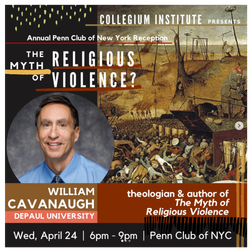
In 2009 the landmark monograph of William Cavanaugh, The Myth of Religious Violence: Secular Ideology and the Roots of Modern Conflict, was published by Oxford University Press. In that work, Cavanaugh showed how the term “religious violence” is not just an uncomplicated description of tragic phenomena witnessed all too frequently around the world. On the contrary, he argued, it is a foundational myth of western societies that denigrate religious actors as irrational and their conflicts as intractable while at the same time concealing and legitimating state violence against those same actors. Now in 2024, fifteen years later, it seems that many of the global conflicts – certainly in Ukraine and the Middle East as well as elsewhere in Africa, Asia, Latin America, and the US itself – which have embroiled college campuses and played a role in toppling their presidents, have involved unmistakable religious elements. So how then are we to understand them if not by religious violence? Is “religious extremism” any better or do alternatives like those mobilize new threats against religious liberty? And how might it become possible not only to understand religious communities and their traditions as not primarily responsible for global violence but also to activate them as vital sources of healing and reconciliation? For Collegium Institute’s annual reception at the Penn Club of New York this April, we are pleased to host a conversation with Professor William Cavanaugh (DePaul University), author of The Myth of Religious Violence, together with two distinguished discussants: (1) Archbishop Borys Gudziak, Ph.D., Metropolitan of the Ukrainian Catholic Archeparchy of the United States; (2) Professor Timothy Shah, Distinguished Research Scholar in Politics at the University of Dallas (UD), and Director of UD’s Jacques and Raïssa Maritain Program on Catholicism, Public Life, and World Affairs. This event will be introduced by Dr. Daniel Cheely, Executive Director of the Perry-Collegium Initiative of Penn’s PRRUCS Program and Director of Collegium Institute, who is teaching a Penn History course this fall on Histories of Religious Violence.