Tales From the Trail by MatchPlay

Tales From the Trail by MatchPlay

di Scot Cooper
Stagione 1

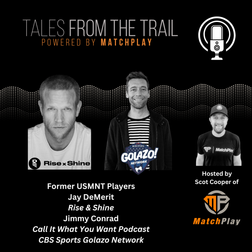
108. Jay DeMerit and Jimmy Conrad

In this episode, I welcome back Jimmy Conrad and Jay DeMerit.  The two former US Men’s National teammates enjoyed catching up and reminiscing about playing with each other, playing in the TST Tournament, their thoughts on development, and much more.  There are some great stories they share and fantastic insights as well. We discuss the experience participating in the TST tournament, including the emotional component and the unique atmosphere. They also talk about the physical demands of the tournament and the importance of athletic trainers. The hosts highlight the camaraderie and loyalty among the teams and the fun off-field activities. They also reflect on reuniting with old teammates and the importance of shared experiences. The conversation concludes with funny moments and bonding experiences. In this part of the conversation, Jay and Conradinho discuss their experience playing together, being late bloomers in their careers, preparing for the national team, and giving advice to young players. It also discusses the four areas of player development, coping mechanisms, and building resilience. The role of mentorship and experience in personal growth is highlighted, along with the need for better systems and products in youth development. The conversation emphasizes the importance of practice, self-actualization, self-awareness, consistency, and allowing players to be themselves. It concludes with a focus on creating good habits and discipline, and the potential for personal growth through self-evaluation. The TST tournament provides a unique and emotional experience for the participants. The camaraderie and loyalty among the teams contribute to the enjoyment of the tournament. Reuniting with old teammates and sharing experiences creates lasting memories. Playing with teammates who have similar work ethic and determination can lead to success. Late bloomers can bring a unique perspective and appreciation to their careers. Emotional and mental preparation is crucial when getting called up to the national team. Understanding oneself and having a clear why can help navigate challenges and make better decisions. Designing jerseys can be a fun and creative way to engage with the team and fans. Sponsorship and costs can be challenging for teams, and not all teams are able to pay players. Chapters 00:00 Introduction and Tournament Overview 00:30 The TST Tournament Experience 01:24 The Emotional Component of the Tournament 02:45 The Unique Atmosphere of the Tournament 04:14 The Magic Hands of Jay Demerit 05:19 The Loyalty and Camaraderie of the Teams 06:08 The Expansion of the Tournament 06:19 The Prize Money and Entry Fee Debate 07:16 The Fun and Off-Field Activities 08:02 The Sideline Crew and Team Spirit 08:58 Reuniting with Old Teammates 10:42 The Importance of Shared Experiences 12:26 Playing Together in MLS and the National Team 14:32 Funny Moments and Bonding Experiences 20:15 Late Bloomers 23:12 Preparing for the National Team 27:13 Advice for Young Players 29:57 Understanding Yourself 38:24 Investing in Players 39:03 Creating a Positive Environment 40:23 Understanding Players' Why 41:44 Helping Players Work Through Adversity 42:13 Four Areas of Development 43:08 Coping Mechanisms 44:28 Building Resilience 45:14 Mentorship and Experience 46:41 Creating Better Systems and Products 47:41 The Importance of Practice and Application 49:21 Self-Actualization and Self-Awareness 51:12 Consistency and Discipline 54:15 Allowing Players to Be Themselves 57:24 The Importance of Self-Evaluation 58:15 Creating Good Habits and Discipline 01:01:10 Self-Actualization and Personal Growth

107. ClubEleven

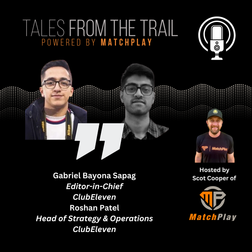
Hi I’m Scot Cooper and this is the Tales From the Trail Podcast by MatchPlay.  In this episode I welcome Gabriel Bayona Sapag and Roshan Patel of ClubEleven, a digital media publication connecting soccer audiences across North America.  They have the mission to highlight unique, personal stories in soccer in an effort to grow the game and through storytelling and a feeling of connection between those in the game.  Check them out at clubelevenmag.com and make sure to subscribe to their newsletter which provides great content every Tuesday, for free!  Thank you to Gabe and Rosh for all you’re doing! Summary In this conversation, Scot Cooper speaks with Gabriel Bayona Sapag and Rosh about Club Eleven's photography contest and their mission to highlight the diversity and uniqueness of soccer in North America. They discuss the categories and judging process of the contest, as well as the winners and community support. The conversation also touches on the growth of USL Two clubs and the importance of grassroots soccer. Gabriel shares his personal soccer journey, highlighting the challenges and opportunities in the sport. They conclude by emphasizing the need for accessibility and the power of informal play in soccer development. Club 11 is focused on growing grassroots awareness and telling the stories of players and characters in the soccer space. They started by profiling players and expanded into long-form editorial stories and video content. The team believes that storytelling is their most impactful way to make a difference. They have a clear strategy and are building a strong team to execute their vision. The team hosted an event that brought together people from different generations and backgrounds to share and enjoy soccer stories. They are passionate about preserving the history of soccer in the US. Takeaways Club Eleven's photography contest aims to showcase the diversity and uniqueness of soccer in North America. The contest features categories such as growing the game, match action, and soccer fandom. The judging process involves a panel of talented photographers from the soccer community. The contest winners receive recognition and support from their communities. USL Two clubs, like Vermont Green, have passionate fan bases and contribute to the growth of soccer in North America. Club Eleven focuses on grassroots soccer and aims to tell the stories that resonate with everyday soccer fans. The founders of Club Eleven have a personal connection to soccer, which drives their passion for the sport. Accessibility and opportunities in soccer are important issues that need to be addressed. Informal play, such as futsal in parks, can play a crucial role in soccer development. Chapters 00:00 Introduction and Background 00:57 Photography Contest and Its Purpose 04:27 Winners and Community Support 07:14 USL Two Clubs and Fandom 07:35 Selection of Categories 10:34 Growing the Game and North American Soccer 14:41 Personal Soccer Journey 29:02 Importance of Play and Informal Soccer 29:51 Growing Grassroots Awareness 31:09 Starting to Profile Players 34:25 Telling Editorial Stories 37:14 The Impact of Storytelling 39:25 Building a Strategy and Team 50:36 The Importance of Events 57:06 Preserving Soccer History

106. Mindset Monday #18 with Eric Manuel

Eric Manuel of expertmindsetcoaching.com discusses strategies for coping with defeat.

105. Women's Soccer Student-Athletes: Delaney Brown, Univ of Miami and Berkley Mape, The Ohio State Univ

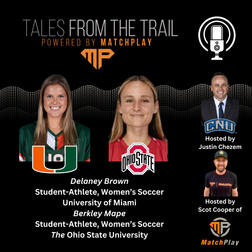
In this episode, Justin Chezem, head coach of Christopher Newport University men’s soccer and I welcome 2 women’s soccer student-athletes.  Delaney Brown just completed her career at the University of Miami and Berkley Mape is in her first year at the Ohio State University.  Thank you to Asia Mape of I Love to Watch You Play and Chris Brown of Student Athlete NIL for helping to make this happen! Summary They reflect on the impact of early commitments and the importance of mental and physical preparation. The conversation also highlights the differences between youth soccer and college soccer, as well as the significance of overcoming challenges and seeking support from loved ones. The conversation explores the challenges and experiences of college athletes, focusing on mental health, identity, and life beyond sports. The athletes discuss the importance of finding the good in difficult times and leaning on relationships and support systems. They also reflect on the role of mental health in sports and the need for athletes to have outlets outside of their teams. The conversation highlights the process of discovering one's identity beyond being an athlete and offers advice on making the most of off-time. Additionally, the athletes discuss career paths and opportunities, as well as the impact of name, image, and likeness (NIL) deals. Takeaways The recruiting process for college athletes can be challenging, and it is important to take the time to make informed decisions about the right fit for both academics and athletics. Early commitments in youth sports can lead to unforeseen challenges and may not always result in the desired college experience. The transition from high school to college athlete requires mental and physical preparation, as the level of play and expectations increase significantly. Facing adversity and seeking support from loved ones can help athletes overcome challenges and continue to pursue their passion for the sport. Find the good in difficult times and focus on the positive aspects of your experience as a college athlete. Build strong relationships and lean on your support system for guidance and reassurance. Prioritize mental health and seek professional help when needed. It's important to have someone outside of your team to talk to. Explore your identity beyond being an athlete and engage in activities and hobbies outside of your sport. Make the most of your off-time by participating in other campus activities and pursuing personal interests. Prepare for life after college sports by considering career paths and opportunities. Take advantage of name, image, and likeness (NIL) deals to create additional income and build your personal brand. 02:20 Transitioning from Playing to Post-Playing Life 04:26 Recruiting Process and Commitment Decisions 06:31 The Impact of Early Commitments 10:06 The Transformation from High School to College Athlete 13:30 Berkeley's Recruiting Story 16:21 The Importance of Mental Preparation 20:59 Delaney's College Soccer Experience 24:11 Overcoming Challenges and Regrets 26:29 Facing Adversity and Seeking Support 29:04 Finding the Good in Difficult Times 30:09 The Importance of Relationships and Support Systems 33:53 The Role of Mental Health in Sports 38:38 Identity Beyond Sports 41:44 Making the Most of Off-Time 45:09 Transitioning to Life After College Sports 48:33 Exploring Career Paths and Opportunities 50:13 The Impact of Name, Image, and Likeness (NIL) Deals

104. Mindset Monday #17 - Eric Manuel of Expert Mindset Coaching

Eric Manuel of expertmindsetcoaching.com continues the discussion about coping with defeat.

103. Soccer.com Founders Michael and Brendan Moylan

 In this episode I had the opportunity to visit the headquarters of soccer.com in North Carolina. I also had the privilege to meet Mike and Brendan Moylan who generously agreed to sit down and chat about the origins of soccer.com in 1984 and the journey they’ve been on for 40 years while building a hugely successful business.  Beyond selling soccer gear, they’ve been a big player in growing our game in the US by not only bringing equipment the rest of the world was using but also telling stories of the international game through their catalog.  Congratulations on 40 years of bringing the equipment the world has to offer to us and to being such a huge part of the growth of the beautiful game in the United States.  Thank you!

102. US Military Academy Men's Soccer Cadet Student Athletes

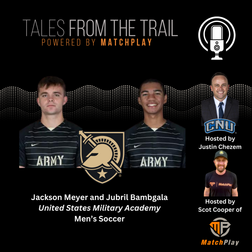
In this episode, Justin Chezem, head coach of Christopher Newport University men’s soccer, and I are privileged to welcome Jackson Meyer and Jubril Bamgbala, Cadet Student-Athletes from the United States Military Academy at West Point. Summary In this conversation, two West Point soccer players, Jubril Bamgbala and Jackson Meyer, discuss their experiences at West Point and the transition from high school to college soccer. They talk about their expectations versus reality, the leadership lessons they learned during the recruiting process, the preparation required before entering West Point, and their post-graduation plans and requirements. They also discuss the unique challenges and rewards of playing soccer at West Point. They talk about the unique challenges of balancing academics and athletics, the intensity of the Army-Navy rivalry, and the opportunities for off-season training. They also share insights into the academic year and breaks, the possibility of studying abroad, and the expectations and opportunities after graduation and commissioning. The conversation concludes with advice for high school students and a discussion about the potential for playing professional soccer. Takeaways The recruiting process for West Point involves meeting with senators, getting letters of recommendation, and understanding the type of school West Point is. Expectations versus reality: West Point is designed to humble and develop individuals, and failure is seen as a building moment. Leadership lessons from the recruiting process include the importance of respect, holding others to a standard, and caring for their well-being. Preparing for West Point involves physical training, packing, and spending time with loved ones before reporting. After graduation, West Point graduates are required to serve five years in the Army and have various opportunities for further education and career paths. Transitioning from Beast (basic training) to soccer involves getting back into the flow of the game and receiving support from the team and staff. Soccer at West Point is similar to other Division 1 schools, but the schedule and team dynamics create a unique and fulfilling experience. Balancing academics and athletics at a service academy requires discipline and time management skills. The Army-Navy game is a highly anticipated and intense rivalry that holds great significance for both teams. Off-season training is crucial for individual development and team improvement. The academic year at a service academy includes breaks and holidays, but the schedule is rigorous. Studying abroad is a possibility for service academy students, with popular destinations being Germany and Italy. Summer training and internships provide opportunities for further development and exploration. It is important to start developing good habits and leadership skills early on in high school. After graduation and commissioning, service academy graduates have the opportunity to become platoon leaders in the Army. Playing professional soccer after graduation is possible, but the financial implications and opportunities vary. 06:37 Expectations vs Reality 18:19 Leadership Lessons from the Recruiting Process 20:46 Preparing for West Point 26:10 Post-Graduation Plans and Requirements 34:05 Transitioning from Beast to Soccer 37:16 Soccer at West Point 39:41 Balancing Academics and Athletics 42:01 The Intensity of the Army-Navy Rivalry 44:06 Off-Season Training 46:36 The Academic Year and Breaks 51:15 Summer Training and Internships 53:22 Advice for High School Students 56:49 Life After Graduation and Commissioning 58:46 Opportunities in the Big Army 59:12 Playing Professional Soccer 01:01:24 Closing Remarks

101. Mindset Monday with Eric Manuel of Expert Mindset Coaching

Eric continues the discussion about coping with defeat and being cautious not to attach your identity to your sport.

100. Craig Appleby Johns Hopkins University Head Coach, Men's Soccer

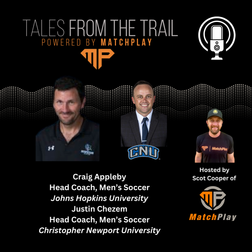
Hi I’m Scot Cooper and this is the 100th episode of the Tales From the Trail podcast by MatchPlay.  In this episode, Justin Chezem of Christopher Newport University Men’s Soccer and I welcome Craig Appleby.  Craig is the head coach of men’s soccer at Johns Hopkins University. Coach Appleby has been highly successful at a prestigious university and recruiting the right type of student-athlete is the lifeline to that accomplishment.  This is a great conversation with two leaders of perennial tournament teams who recruit and compete at the highest level.   Summary The conversation covers various topics including missing a convention, getting into high academic schools, financial aid and affordability, recruiting camps and events, the timeline for admissions and decision-making, and a thrilling game against Babson. The discussion also touches on the stress and academic rigor that student-athletes face. The conversation covers various topics related to soccer gameplay, strategy, outlook for the next season, spring training, coaching relationships, recruiting, and transfers. Takeaways Consider the location, content, and commitments when deciding which conventions to attend. Getting into high academic schools requires maximizing test scores, taking rigorous classes, and maintaining high grades. Financial aid and affordability play a significant role in the college decision-making process. Attending recruiting camps and events can provide valuable opportunities for student-athletes. Understanding the timeline for admissions and decision-making is crucial for prospective college athletes. Student-athletes at high academic schools face unique challenges and must manage their time effectively. Thrilling games and comebacks can create unforgettable moments in college sports. Student-athletes must navigate the stress and academic rigor of high academic institutions. Gameplay and strategy play a crucial role in the success of a soccer team. Spring training provides an opportunity for tactical development and introducing new concepts. Coaches often have friendly relationships and collaborate on recruiting players. Transfers can be challenging due to admission requirements and limited availability. Chapters 00:00 Introduction and Convention 03:00 Missing the Convention 06:00 The Comedy Store in LA 09:00 Getting into High Academic Schools 16:00 Financial Aid and Affordability 21:00 Recruiting Camps and Events 26:00 Timeline for Admissions and Decision-Making 36:00 The Exciting Game Against Babson 45:00 Dealing with Stress and Academic Rigor 46:05 Gameplay and Strategy 47:49 Outlook for Next Season 49:30 Spring Training and Tactical Development 51:59 Coaching Relationships and Recruiting 53:14 Transfers and Admissions 55:45 Closing Remarks

99. Mindset Monday #15 'Coping with Defeat' with Eric Manuel of Expert Mindset Coaching

Summary In this conversation, Scot Cooper and Eric Manuel discuss coping with defeat in sports and life. They explore the importance of the groundwork that can be done before encountering defeat, such as accepting the inevitability of failure and adopting a growth mindset. They also discuss coping skills for dealing with setbacks, including seeking social support, practicing positive self-talk, and practicing optimism. The conversation emphasizes the need to separate athletic identity from personal identity and the negative impact of perfectionism. They also touch on the influence of external expectations and the importance of investing in the groundwork to better manage the ups and downs of sports. Takeaways Accepting the inevitability of failure and understanding that defeat is part of the journey as an athlete. Adopting a growth mindset and viewing failure as an opportunity for growth and improvement. Managing emotions and practicing self-compassion to bounce back more quickly from defeat. Separating athletic identity from personal identity and finding fulfillment in other areas of life. Avoiding perfectionism and unrealistic expectations, as they can hinder coping with defeat. Seeking social support, practicing positive self-talk, and practicing optimism as coping skills for setbacks. Letting go of external expectations and focusing on personal growth and development.
5 di 15