Tales From the Trail by MatchPlay

Tales From the Trail by MatchPlay

di Scot Cooper
Stagione 1

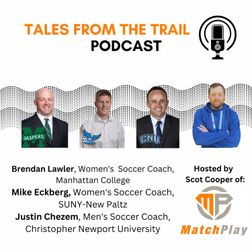
19. Women's Coaches- Brendan Lawler, Manhattan College, Mike Eckberg, SUNY-New Paltz

In this episode, Justin Chezem of Christopher Newport University Men’s Soccer and I welcome Brendan Lawler, the women’s coach at Manhattan College and Mike Eckberg, the women’s coach at State University of New York - New Paltz. This is a fantastic conversation with three college coaches who have all been at it a long time. I’m certain that you’ll find the discussion informative and beneficial. Please continue to subscribe and share the podcast as well as send me questions and comments through matchplayrecruit.com. Check us out on facebook and instagram. Summary The conversation explores the early recruitment of female athletes and the factors influencing this process. The coaches discuss the timeline differences between Division I and Division III women's sports and the impact of the transfer portal. They also emphasize the importance of managing player expectations and individual paths. The coaches share their insights on preparing incoming players for the season and the challenges they may face. They discuss the significance of grades and academic fit in the recruiting process. The conversation concludes with a discussion on evaluating fit for the program's culture. The conversation covers various topics related to college soccer, including the importance of culture, the role of ID camps in recruiting, and the view of coaches on consultants and recruiting advisors. The coaches also share their excitement for the upcoming preseason and provide profiles of their respective schools, Manhattan College and SUNY New Paltz. Takeaways Culture is a crucial aspect of a successful soccer program and requires constant work and attention. ID camps can provide valuable opportunities for coaches to evaluate players and for players to experience the program and culture firsthand. Coaches generally prefer direct communication from players rather than consultants or recruiting advisors. The preseason is an exciting time for coaches as they prepare for the upcoming season and welcome their players back. Manhattan College offers a unique blend of urban and residential living, strong academics, and a blue-collar soccer program, while SUNY New Paltz provides a vibrant community, outdoor activities, and a focus on personal growth. Chapters 00:00 Early Recruitment of Female Athletes 01:31 Factors Influencing Early Recruitment 03:50 The Impact of the Transfer Portal 05:40 Managing Player Expectations and Individual Paths 07:12 Introduction of the Coaches 09:21 Geographical Locations of the Colleges 09:52 Timeline Differences in Women's Sports 11:18 Recruiting Process for Division I and Division III Women's Sports 12:42 The Importance of Fit and Personal Interactions 17:04 Preparing for the Season: Expectations for Incoming Players 20:13 The Transition to College Athletics 24:00 The Importance of Grades and Academic Fit 27:02 The Impact of Physicality in College Athletics 29:14 Evaluating Fit for the Program's Culture 40:53 The Importance of Culture 44:10 Influencing and Carrying on the Culture 48:47 Value of ID Camps 53:38 Coaches' View on Consultants and Recruiting Advisors 01:01:32 Getting Excited for Preseason 01:04:11 School Profiles: Manhattan College and SUNY New Paltz

18. The Intersection of Sport and Mental Health

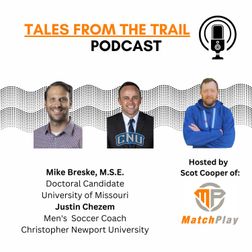
Justin Chezem (of Christopher Newport University Men’s Soccer) and I, welcome psychologist, Mike Breske who was also a former collegiate soccer player at Virginia Tech and Christopher Newport University. Mike just finished his internship with the University of Missouri Counseling Center for Student Health & Well-Being, and is also currently studying to earn his PhD in psychology. He currently has a role with the Stanford University athletic department to work with their sports psychologists. In this episode, we hear about his relevant and unique perspective, discussing the intersection of mental health, well-being and athletics. I hope you find the discussion helpful and interesting. Please share the podcast, subscribe, and send me your questions and feedback through matchplayrecruit.com. Summary The conversation covers various topics related to the intersection of mental health and college sports. Mike and Justin discuss their experiences as athletes and the challenges they faced. They also explore the role of sports psychology in helping athletes navigate mental health issues and enhance performance. The impact of social media and the COVID-19 pandemic on athletes' mental health is also discussed. The conversation emphasizes the importance of providing resources and support for athletes to develop coping skills and handle failure. Additionally, the role of parents in preparing athletes for the college experience is highlighted. The conversation explores the role of parents in supporting athletes, the importance of building trust with counselors, creating boundaries as a coach, the transition from performance enhancement to mental health, and understanding and respecting individual differences. Takeaways The mental health of college athletes is influenced by their performance and the pressure to succeed. The field of sports psychology is evolving and focuses on both mental health and performance enhancement. The use of social media and the COVID-19 pandemic have increased mental health challenges for college athletes. Parents play a crucial role in supporting athletes' mental health and helping them develop coping skills. Athletes should be prepared for the challenges and potential failures they may face in college sports. Parents play a crucial role in providing resources and support to athletes. Building trust with counselors is essential for athletes to open up and seek help. Coaches should create boundaries and separate the athlete's performance from their mental well-being. Performance enhancement often leads to discussions about mental health. Each athlete is unique and requires individualized support and understanding. Chapters 00:00 Introduction and Reflecting on Playing Days 06:04 Recruiting and Transferring to CNU 08:02 Intersection of Mental Health and College Sports 11:44 The Role of Sports Psychology 21:57 The Impact of Social Media and the COVID-19 Pandemic 30:23 Addressing Old School Mentality and Developing Coping Skills 36:36 The Importance of Providing Resources for Dealing with Failure 44:17 The Role of Parents in Preparing Athletes for College 45:35 The Role of Parents in Supporting Athletes 48:44 The Importance of Building Trust with Counselors 51:38 Creating Boundaries as a Coach 54:12 The Transition from Performance Enhancement to Mental Health 55:08 Understanding and Respecting Individual Differences

17. Discovery ID Camp Question and Answer Session

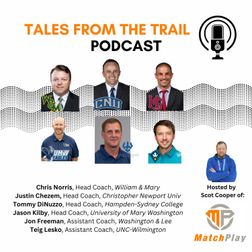
We recorded this live at Discovery ID camp on the campus of Christopher Newport University. This boy’s camp was attended by over 100 student athletes and coaches from 6 different colleges. We took the opportunity to do a question and answer session with the participants and coaches from each of the schools. Fielding questions from the audience was Chris Norris of William and Mary, Justin ‘Cheese’ Chezem of Christopher Newport University, Tommy DiNuzzo of Hampden-Sydney College, Teig Lesko of UNC-Wilmington, Jon Freeman of Washington & Lee, and Jason Kilby of the University of Mary Washington. There is a ton of great information in this episode and a couple questions are answered that I received previously from listeners. Please continue to share the podcast, subscribe, and as importantly, send me your questions and comments through matchplayrecruit.com or on instagram, facebook, or youtube.

16. Nate Daligcon, Men's Soccer Coach, Seattle University and Michael Teiman, Coach, Crossfire Premier, Seattle, WA

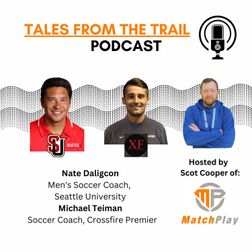
In this episode I welcome the head coach of the men’s soccer program at Seattle University, Nate Daligcon. Nate brings a ton of experience and a west coast perspective to the podcast. He’s been a part of the Redhawk program for over a decade and has been instrumental in being a perennial leader of the WAC conference. Also joining us is Michael Teiman. Michael came to the U.S. from Liverpool to play college soccer at the College of William & Mary and went on to coach at Wilkes University and Penn State-Berks. He then made his way west to become a coach at Crossfire, one of the premier youth clubs in the Pacific Northwest. Summary Nate Daligcon, head men's soccer coach at Seattle University, discusses his coaching journey, the differences in youth soccer on the West Coast, and the challenges of recruiting players. He emphasizes the importance of passion, work ethic, and internal conversation in player development. Nate also highlights the role of parents in the recruiting process and managing expectations. He shares insights on effective communication with college coaches and the changes in college soccer recruiting. Overall, Nate provides valuable advice for players, parents, and coaches involved in the college soccer recruiting process. The conversation explores the importance of passion and enjoyment in sports, the influence of coaches on athletes' mentality, creating a culture of passion, finding the right fit for college soccer, and the differences between East Coast and West Coast programs. It also discusses the impact of academies on the competitive level of athletes. Takeaways Passion and work ethic are crucial for success in soccer. Effective communication with college coaches includes providing detailed information and demonstrating interest in the school. Parents play a significant role in guiding their child's college decision-making process. Observing a player's behavior and attitude is important in the recruiting process. Developing a winning mentality and internal conversation can contribute to a player's success. Passion and enjoyment are crucial in sports and can greatly impact an athlete's performance. Creating a culture of passion within a team can lead to increased competitiveness and success. Finding the right fit for college soccer involves considering factors such as playing time and enjoyment. There are differences between East Coast and West Coast programs, including the level of competition and the number of available programs. Academies can sometimes focus more on individual development, which may require an adjustment when transitioning to college soccer. Chapters 09:46 Proving Interest in a College Program 10:38 Evolution of Youth Soccer 11:39 Importance of Individual Training and Extra Work 13:48 Parental Role in College Decision-Making 16:16 Role of Parents in the Recruiting Process 18:34 Importance of Input from Coaches and Parents 20:43 Managing Expectations of Parents and Players 24:09 Observing Interactions between Players and Parents 26:38 Recruiting Challenges and Changes 29:15 Changes in College Soccer Recruiting 32:09 Being Honest and Upfront with Players 33:33 Importance of Internal Conversation and Work Ethic 36:10 Observing Player Behavior and Attitude 37:22 Developing a Winning Mentality 40:59 Encouraging Internal Conversation and Discipline 42:51 Developing Leadership and Work Ethic 47:55 The Importance of Passion and Enjoyment 48:35 Influencing the Mentality of Young Athletes 51:37 Creating a Culture of Passion 52:35 Finding the Right Fit for College Soccer 53:33 Differences Between East Coast and West Coast Programs 55:31 Impact of Academies on Competitive Level

15. Emmett Rutkowski, Stetson University, Tommy DiNuzzo, Hampden-Sydney College, Glenn Gray, Richmond Strikers

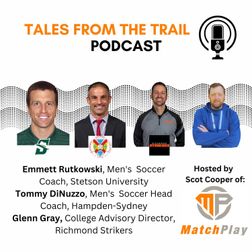
I’m privileged to welcome 3 former college teammates who remain involved in soccer. Emmett Rutkowski is the head coach of the Stetson University Men’s Soccer team, Glenn Gray is the College Advisory Director at the historic youth club, the Richmond Strikers in Richmond, Virginia. I also welcome back Tommy DiNuzzo the head coach of the men’s team at Hampden Sydney College in Virginia. It’s an enjoyable conversation among 3 old friends with a ton of useful information as well. Please remember to share this podcast and send me your questions and comments through matchplayrecruit.com. Summary The conversation explores the coaching connections and unique paths in soccer, particularly at Mary Washington. The guests discuss the importance of finding the right fit in college and the role of connections and recommendations in the recruiting process. They also provide insights on navigating the recruiting process, including first contact and catching a coach's attention. The conversation concludes with a discussion on considering different playing styles and dealing with parents in the recruiting process. The conversation covers various aspects of the college soccer recruiting process, including evaluating families and club coaches, assessing players' attitude and behavior, the importance of being yourself in the recruiting process, the significance of on-campus visits, and evaluating different styles of play. Takeaways When evaluating families and club coaches, it is important to observe how they handle different aspects of the recruiting process and whether they align with the values and goals of the college program. Assessing players' attitude and behavior is crucial in determining their fit within a team and program. Coaches pay attention to body language, reactions to game outcomes, and how players interact with teammates. Being authentic and true to oneself is essential in the recruiting process. It is important for both players and coaches to evaluate if there is a genuine fit between the player and the program. On-campus visits provide an opportunity for prospective student-athletes to experience the team's culture, training environment, and campus life. It allows them to assess if the program and campus align with their preferences and goals. Different styles of play exist in college soccer, and it is important for players to evaluate and understand the style of play of the programs they are interested in. This includes considering the tactics, formations, and playing philosophy of the team. Chapters 00:00 Coaching Connections at Mary Washington 01:01 Longevity of Head Coach at Mary Washington 02:15 Unique Connections and Paths in Soccer 03:06 Introduction and Background of Guests 04:00 Importance of Finding the Right Fit in College 05:09 First College Experience and Meeting 09:01 Importance of Connections and Recommendations 10:04 Role of College Advisory in the Recruiting Process 12:44 Navigating the College Recruiting Process 17:06 First Contact and Catching a Coach's Attention 20:47 Navigating the Recruiting Process for Different Schools 26:43 Considering Different Playing Styles and Fit 28:49 Dealing with Parents in the Recruiting Process 44:58 Evaluating Families and Club Coaches 49:04 Evaluating Players' Attitude and Behavior 56:07 Importance of Being Yourself in the Recruiting Process 59:10 Importance of On-Campus Visits 01:02:07 Evaluating Different Styles of Play

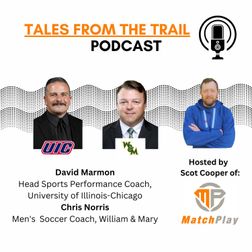
14. David Marmon, Head Sports Performance Coach, University of Illinois-Chicago & Chris Norris, Head Men's Soccer Coach, The College of William & Mary

In this episode I’m privileged to welcome David Marmon, the Head Sports Performance Coach at the University of illinois Chicago. David brings decades of experience in working with collegiate athletes to guide them through improving their performance and wellness. David is a wealth of knowledge and I’m lucky to have him on the podcast. Also joining us again is Chris Norris, the head men’s soccer coach at the College of William and Mary in Williamsburg, VA. One of the topics is how coaches work together to improve athletes’ performances.Please remember to share this podcast along with providing any questions and comments you have through matchplayrecruit.com. Summary In this conversation, David Marmon, a sports performance coach, discusses his background and journey in the field. He explains the role of a strength and performance coach in college athletics and the collaboration between coaches and performance staff. Marmon emphasizes the importance of off-season preparation for athletes and the need for individualized training plans. He also discusses the benefits of performance training for high school athletes and provides resources for those who don't have access to professional guidance. Marmon highlights the significance of warm-ups, recovery, and injury prevention in sports performance. This conversation covers various topics related to sports performance and fitness. The importance of warm-up and foam rolling is discussed, highlighting the role of these practices in preparing the body for exercise and preventing injuries. The conversation also delves into the use of supplements, with a focus on the benefits of sleep and creatine. The potential dangers of energy drinks are explored, emphasizing the negative effects on heart rate and overall health. The importance of avoiding painful movements and finding suitable alternatives is emphasized. Strategies for dealing with delayed onset muscle soreness are shared, emphasizing the benefits of movement. The conversation concludes with a funny story about miscommunication during a training exercise. Takeaways Strength and performance coaches play a crucial role in advising sport coaches and optimizing team performance in college athletics. Off-season preparation is essential for athletes to improve their fitness and prevent injuries. Individualized training plans and addressing lifestyle factors are key to maximizing athletic performance. Functional movements, such as sprinting, jumping, and changing direction, are important for sports-specific training. High school athletes can benefit from focusing on basic exercises like sprinting, jumping, and bodyweight calisthenics. Foam rollers and percussion massagers can be useful tools for warm-ups and recovery. Chapters 06:07 Collaboration between Coaches and Performance Staff 09:36 Off-Season Preparation for Athletes 13:59 Importance of Fitness in Recruiting 16:26 Fitness Testing and Training Plans 20:42 Training for High School Athletes 23:09 Maximal Strength Training and Arm Workouts 24:28 Injury Prevention and Lifestyle Factors 26:21 Functional Movements for Soccer Players 30:08 Benefits of Performance Training for Athletes 35:30 Resources for High School Athletes 38:40 Importance of Warm-ups and Recovery 44:06 Usefulness of Foam Rollers and Percussion Massagers 47:59 Importance of Lifestyle Factors and Injury Prevention 49:04 The Importance of Warm-up and Foam Rolling 50:01 The Role of Supplements in Performance 53:14 Choosing Safe and Effective Supplements 54:13 The Dangers of Energy Drinks 57:05 Avoiding Painful Movements 58:14 Strategies for Dealing with Delayed Onset Muscle Soreness 59:43 A Funny Story about Miscommunication

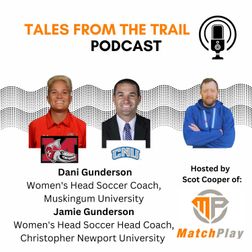
13. Dani Gunderson of Muskingum University & Jamie Gunderson of Christopher Newport University

I welcome siblings who are both head coaches of women’s collegiate soccer teams. Dani Gunderson is the head women’s soccer coach at Muskingum University in New Concord Ohio. Her brother, Jamie Gunderson is the head coach of the Christopher Newport University women’s soccer team in Newport News, VA. Our discussion delves into some deeper topics as well as recruiting. Summary The conversation covers topics such as favorite teams in the World Cup, empowering young women, representation in the LGBTQ+ community, developing leadership and confidence, assumptions and myths in recruiting, and the transfer experience and finding the right fit. In this conversation, Jamie and Dani Gunderson discuss their experiences as college soccer coaches and offer advice to recruits. They emphasize the importance of doing thorough research and making sure the school is the right fit academically and socially. They also highlight the value of the college experience beyond soccer, such as building lifelong friendships. When evaluating players, they look for those who stand out on the field and demonstrate good character and teamwork. Overall, the Gundersons stress the significance of finding the right balance between athletic and personal development. Takeaways The US women's team is a favorite in the World Cup, but England, France, and Australia are also strong contenders. Coaches play a crucial role in empowering young women and helping them develop confidence and leadership skills. The US women's team has been vocal about social issues, including equal pay and LGBTQ+ rights. Creating a supportive and inclusive environment is important in sports programs to help athletes feel valued and confident. In the recruiting process, it is important for athletes to find the best fit for themselves, considering factors such as team culture, coaching staff, and academic programs. Do thorough research and make sure the school is the right fit academically and socially. Consider the value of the college experience beyond soccer, such as building lifelong friendships. Stand out on the field and demonstrate good character and teamwork to catch the attention of coaches. Find the right balance between athletic and personal development. Chapters 00:00 Favorite Teams in the World Cup 03:06 Empowering Young Women 10:12 Representation in the LGBTQ+ Community 15:22 Developing Leadership and Confidence 22:13 Assumptions and Myths in Recruiting 29:28 Identifying Competitiveness in Players 42:30 Transfer Experience and Finding the Right Fit 46:56 Advice for Recruits 49:12 Considerations for Choosing a School 52:16 The Value of the College Experience 54:44 What Coaches Look for in Players 58:30 Closing Remarks

12. Julie Shackford- William & Mary Women's Soccer Coach

Julie Shackford of William & Mary women's soccer offers her perspective on the ins and outs of recruiting and college soccer.

11. Mike Brizendine - Virginia Tech Men's Soccer & Chris Norris - William & Mary Men's Soccer

Mike Brizendine the head men’s soccer coach at Virginia Tech and Chris Norris the head coach at William & Mary men’s soccer. We’re fortunate to be able to tap into their decades of experience recruiting student athletes and their insights into how to manage the recruiting process.

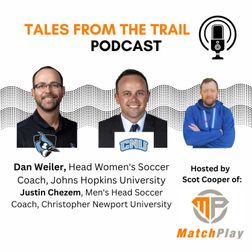
10. Dan Weiler, Head Coach, Johns Hopkins University Women's Soccer

Justin Chezem, head coach at Christopher Newport University men's soccer and I welcome Dan for another episode. Dan is coming off a national championship season and is looking for continued success through effective recruiting.
14 di 15