
The STEM Lab

The STEM Lab

di The Stem Lab
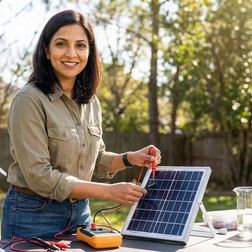
Everything You Need for a Renewable Energy Science Experiment
IA
Ever watched a kid's excitement deflate when their solar panel spins a motor but they can't explain *why* or measure *what's happening*? This episode breaks down exactly what supplies you need to transform a basic renewable energy demo into a real science experiment with variables, data, and genuine learning. Host Lakshmi Venkataraman draws on years of classroom experience to walk you through every category of equipment—from energy-generation components to measurement tools—so you can set up your child for actual scientific inquiry, not just a cool-looking display. Small solar panels with exposed terminals (rather than pre-wired connections) force students to build circuits themselves, which teaches fundamentals that plug-and-play kits skip entirely. DC hobby motors do double duty: they consume energy when powered by solar panels and *generate* energy when spun by wind or hand, demonstrating energy conversion reversibility in one cheap component. Different colored LEDs light up at different voltage thresholds (red at ~1.8V, blue/white at ~3V), giving you a built-in visual experiment for comparing power output without extra equipment. Hand-crank generators create a kinesthetic connection to energy production—students physically feel the resistance increase as they power a load, making abstract concepts concrete. NiMH rechargeable batteries are safer and more forgiving than lithium-ion for student experiments, though charging times can stretch to hours or days, which disrupts immediate feedback loops. The critical shift from demonstration to experiment happens when you add measurement tools like digital multimeters—without data collection, students are just watching things spin instead of doing science. Read the full article: https://stemlabguide.com/everything-you-need-for-a-renewable-energy-science-experiment

Solar vs Wind Energy Projects: Which STEM Kit Is Better for Learning?

IA
Standing in the store aisle with two renewable energy kits in hand, most parents ask the wrong question—they wonder which technology is greener when they should be asking which learning path fits their child's brain. This episode breaks down the fundamental difference between solar and wind STEM kits: solar teaches electrical engineering (circuits, voltage, semiconductors) while wind teaches mechanical engineering (aerodynamics, gear ratios, structural loads). Host Chloe Miller shares hands-on testing insights from her own lab, including turbine blades that shattered in Pacific Northwest wind and solar panels coaxed to work under Seattle drizzle, to help you choose the kit that builds skills that actually stick. Solar and wind kits aren't interchangeable—they develop completely different engineering skill sets, with solar focusing on circuit design and electrical troubleshooting while wind emphasizes mechanical problem-solving and material selection. Solar kits offer immediate feedback that's ideal for younger learners (light hits panel, motor spins), but the real educational value comes when something fails and kids must isolate variables to diagnose problems. Skill progression matters more than kit complexity: beginners (ages 6–9) learn cause-and-effect, intermediate learners (10–13) tackle series versus parallel wiring and multimeter use, and advanced students (14+) build Arduino-based charge controllers using the same logic found in EV battery management systems. Budget solar kits often ship with underpowered panels (under half a watt) that barely light an LED—look for at least one to two watts per panel and check the spec sheet rather than trusting marketing claims. For indoor testing, you'll need at least a 100-watt incandescent or LED grow light to generate meaningful power from educational solar panels. Durability is a real concern: solar panels crack easily under impact, and junction boxes with weak solder joints are common failure points in cheaper kits—households with kids under eight should enforce strict handling rules. Read the full article: https://stemlabguide.com/solar-vs-wind-energy-projects

How to Create a Wind Turbine Science Project Step-by-Step

IA
Most kids assume flat blades catch the most wind—and that's exactly why their turbines barely spin. In this episode, Lakshmi Venkataraman walks you through a classroom-tested blueprint for building a wind turbine that actually works, lights an LED, and teaches real energy conversion principles. Designed for upper elementary through middle school students (grades 4–8), this project goes far beyond craft time to introduce iterative engineering thinking used in actual renewable energy careers. If you've ever wanted to turn a science fair project into a genuine learning experience about clean energy, this is your starting point. Blade pitch angle—not surface area—determines how efficiently a turbine captures wind energy; a 10–20 degree pitch with an airfoil shape generates lift and maximizes rotational force, which is why flat blades underperform. Material choice significantly impacts durability and testing accuracy: cardstock warps in humidity, thin balsa wood survives dozens of trials, and 3D-printed PLA blades allow rapid iteration just like real engineering teams use. The turbine hub requires precise 120-degree blade spacing to prevent wobble; imbalanced blades waste kinetic energy and undermine the mechanical efficiency lesson. A small DC hobby motor (1.5–6V, 300–1000 RPM) functions as your generator, converting rotational kinetic energy into electrical output measurable with a basic multimeter. Standardized components like LEGO Technic connectors reduce confounding variables when running comparative tests across multiple blade designs. Optional enhancements including wind tunnels, Arduino-based data logging, and 3D printer access can elevate this from a demonstration into a rigorous experimental investigation suitable for high school physics. Read the full article: https://stemlabguide.com/how-to-create-a-wind-turbine-science-project-step-by-step

Renewable Energy Science Fair Projects Checklist: Planning to Presentation
IA
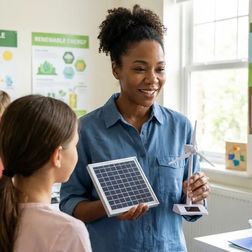
Ever started a science fair project with excitement only to find yourself scrambling three days before the deadline? Renewable energy projects are especially prone to this pattern because they involve equipment delivery times, technical compatibility issues, and measurement protocols that most students don't anticipate. This episode walks through the complete workflow for renewable energy science fair projects—from narrowing your concept to a single measurable question, through lab setup specifications, to presentation elements that actually satisfy judging rubrics. Whether you're a student tackling solar, wind, or another renewable source, or a parent helping guide the process, this checklist approach prevents the common pitfalls that derail otherwise promising projects. Narrow your focus to one energy type and one measurable question—"Which blade angle produces maximum voltage?" beats "How does wind energy work?" because specificity drives every supply purchase and data point you'll collect. Research industry-standard measurement protocols before building anything; calculating solar panel efficiency requires understanding power output divided by solar irradiance multiplied by panel area, not just shining a flashlight and observing results. Map your timeline backward from the fair date, building in at least four to six weeks and accounting for equipment delivery delays and the learning curve on assembly—brilliant projects collapse when students assume components arrive overnight. Solar projects need artificial lighting with known lumen output rather than natural sunlight, which introduces too many variables; wind projects require open testing space away from wall interference for reliable measurements. Consider hybrid approaches for first-time projects: use a pre-engineered kit for the core energy generation component to ensure consistent variables, then design your own testing apparatus around it to demonstrate authentic problem-solving. Define success criteria beyond "it works"—establish your dependent variable (voltage, current, efficiency), independent variable (blade count, panel angle), and controlled variables (light intensity, temperature) before collecting any data. Read the full article: https://stemlabguide.com/renewable-energy-science-fair-projects-checklist

What Is Renewable Energy for Kids: A STEM Learning Guide
IA
When your child asks why we can't just run cars on sunshine, they're not just being curious—they're asking the question that will define their generation's biggest challenges. This episode breaks down renewable energy in terms that make sense for young learners while giving parents the framework to turn those questions into real hands-on STEM projects. Host Chloe Miller explains how solar, wind, hydro, and other renewable sources actually work, why they matter for your child's future, and how building working energy systems transforms vague climate anxiety into genuine scientific understanding. Renewable energy comes from sources that replenish faster than we use them—sun, wind, water, geothermal heat, and organic matter—unlike fossil fuels that took millions of years to form and release stored carbon when burned. Solar panels work through the photovoltaic effect: photons knock electrons loose in silicon cells, creating electrical current that kids can measure with a multimeter and graph across different times of day, replicating real solar installer site assessments. Wind turbines demonstrate electromagnetic induction, where spinning magnets create changing magnetic fields that induce current in copper coils—the same principle powering every commercial power plant on Earth. Hands-on projects teach blade pitch optimization, flow rate calculations, and energy conversion efficiency—concepts that directly mirror the siting studies conducted before installing million-dollar commercial installations. Every renewable source faces intermittency challenges (no sun at night, fluctuating wind speeds, seasonal water flow), which is why understanding battery storage and grid integration matters as much as understanding the energy capture itself. Early exposure to renewable energy as a design challenge rather than a lecture topic builds scaffolding for careers in electrical engineering, environmental science, materials science, and energy policy—fields with urgent, well-funded problems waiting for solutions. Read the full article: https://stemlabguide.com/what-is-renewable-energy-for-kids

How to Build a Solar Panel Science Project from Scratch
IA
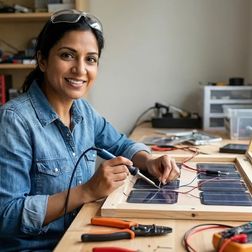
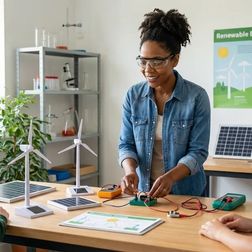
Ever wondered if you could actually build a working solar panel at home without expensive equipment or an engineering degree? In this episode, Lakshmi Venkataraman walks you through creating a functional cuprous oxide solar cell using copper sheets, table salt, and basic household tools. Perfect for students ages 10 and up, parents, and educators looking for a meaningful hands-on science project, this guide demystifies the same photoelectric principles that Einstein won his Nobel Prize explaining—and that power industrial solar farms today. You can build a working solar cell on your kitchen table in 3-4 hours using copper flashing sheets, non-iodized table salt, and common household items—no specialized equipment required. The homemade cuprous oxide cell operates on identical photoelectric principles as commercial silicon panels, generating 0.1 to 0.3 volts per cell in full sunlight, enough to power small DC motors or LEDs. Solar panels don't store energy—they convert light directly into electrical current in real time, which is why your panel's output will fluctuate with changing light intensity. Surface preparation is critical for success: any oxidation, oils, or contaminants on your copper sheets create resistance barriers that reduce cell efficiency, mirroring the purity standards used in industrial solar manufacturing. This project teaches foundational physics concepts including voltage-current relationships, semiconductor behavior, and band gap energy—terms students will encounter again in high school chemistry and college material science courses. Adult supervision is required for the heating elements and sharp tools involved, making this an ideal collaborative project for families or classroom settings. Read the full article: https://stemlabguide.com/how-to-build-a-solar-panel-science-project-from-scratch

Top 7 Renewable Energy Lab Kits for STEM Education
IA
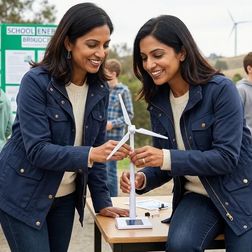
Most renewable energy kits marketed toward kids are little more than toy circuits that light up an LED and call it learning. In this episode, Chloe Miller breaks down seven lab kits that actually teach the systems thinking and engineering principles behind real-world power generation. After six months of hands-on testing with calibrated multimeters and hundreds of assembly cycles, she reveals which kits genuinely prepare learners for careers in clean energy—and which ones waste your money. Whether you're a parent, educator, or STEM program coordinator, this guide cuts through the marketing hype to find tools that bridge the gap between classroom experiments and grid-scale problem solving. The Horizon Renewable Energy Science Education Set packs six functional energy systems into one platform, including a hydrogen fuel cell module that produces and stores actual gas—the same principle powering today's heavy-duty fuel cell trucks. Hydrogen fuel cells are seeing massive investment in transportation and grid storage, making early exposure to their efficiency limitations and safety requirements valuable career preparation for engineering programs. The Thames and Kosmos kit offers 125 experiments and a curriculum manual that doesn't shy away from hard truths, like why solar alone can't power a city and what role baseload generation plays in grid stability. Solar panel output drops dramatically in indirect light, so basement labs or cloudy climates like the Pacific Northwest require a 100-watt-plus halogen lamp for realistic experiments. Fuel cell membranes in some kits degrade after 40–50 cycles with no replacement parts available, so plan to complete those experiments in concentrated sessions rather than spreading them over months. The included voltmeters and ammeters in most kits have low precision (±5% accuracy), but they're sufficient for comparative experiments that teach core concepts like energy conversion efficiency and load balancing. Read the full article: https://stemlabguide.com/top-7-renewable-energy-lab-kits-for-stem-education

Best Wind Energy Science Project Kits for Students
IA
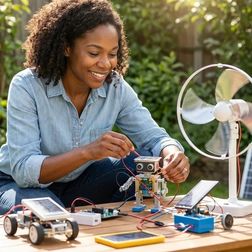
Most wind energy kits teach kids how to assemble a spinning turbine—but not how energy actually converts from motion to electricity. In this episode, Lakshmi Venkataraman breaks down what separates genuine STEM learning tools from decorative science fair props, helping parents and educators choose kits that build real engineering thinking. Whether you're preparing for a science fair or looking to deepen a student's understanding of renewable energy principles, this guide covers the technical specs, skill progression, and data integration features that actually matter. The KidWind Basic Wind Experiment Kit offers the most comprehensive learning progression with industry-standard multimeter integration, while Thames & Kosmos Wind Power 2.0 provides the strongest bridge to real-world turbine engineering for older students. Effective kits scaffold learning in a specific sequence: mechanical energy capture, rotational dynamics, energy conversion, and finally electrical generation with measurable output—not just "build and watch it spin." Look for kits offering at least three to four blade configurations, adjustable mounting angles, and interchangeable generator components so students can isolate variables and test hypotheses rather than follow a single predetermined build. Without a multimeter to measure voltage and amperage changes based on design modifications, students are stuck making subjective observations instead of building the quantitative analysis skills needed for real STEM work. For middle and high school students with basic coding exposure, kits that integrate with Arduino IDE or MicroPython environments allow for data logging, graphing performance over time, and systematic iteration testing. Durability matters more than you'd expect—look for metal generator housings, reinforced blade mounts, and availability of replacement parts, as the best kits support ten to fifteen build cycles with different configurations. Read the full article: https://stemlabguide.com/best-wind-energy-science-project-kits-for-students

Best Solar Energy Kits for Science Projects in 2026
IA
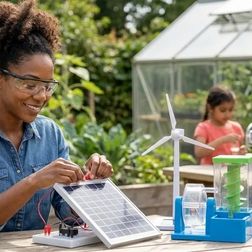
When a solar kit stops being homework and becomes a tool your kid uses to charge their phone, you know you've found something special. In this episode, Chloe Miller draws on her years of experience building off-grid solar installations to break down what separates genuine learning platforms from glorified toys. Whether you're a parent shopping for a science fair project or an educator building a renewable energy curriculum, this guide answers a critical question: which solar kits actually teach both the physics and the practical engineering skills students need for clean energy careers? Real solar kits produce measurable, variable electricity—not just enough to blink an LED. Look for multimeter compatibility and voltage outputs from 0.5V to 12V so students can test series versus parallel wiring and construct actual I-V curves. Expandability matters more than flashy features. Kits using standard barrel connectors, JST plugs, or alligator clips can interface with Arduino boards and Raspberry Pi systems, turning a single project into a building block for advanced experimentation. Avoid kits that require app connectivity, cloud-based logging, or subscriptions to function. Solar energy works offline, and the best educational kits reflect that with analog meters and printable data sheets. Durability separates serious learning tools from one-time demonstrations. Polycarbonate or tempered glass surfaces, reinforced solder joints, and UV-resistant casings let students experiment outdoors without destroying equipment on the first drop. Skip vague age ranges and look for explicit learning outcomes. A kit that states "students will measure open-circuit voltage and short-circuit current" teaches far more than one that simply promises kids will "learn about solar power." The Thames and Kosmos Solar Power Kit earns top marks for ages 10–14, offering six monocrystalline panels and 21 buildable models that support genuine efficiency calculations and real-world engineering progression. Read the full article: https://stemlabguide.com/best-solar-energy-kits-for-science-projects-in-2026

Renewable Energy Science Projects: Complete Guide to Solar, Wind & Sustainable Power Learning Kits

IA
Climate change is reshaping what skills kids need to thrive, and understanding renewable energy systems is quickly becoming essential knowledge. In this episode, Chloe Miller draws on a decade of hands-on experience wiring solar panels and testing DIY turbines to explain how structured energy projects transform abstract climate concepts into concrete engineering skills. Whether you're a parent choosing a first solar kit or an educator designing curriculum for future grid designers, this guide breaks down exactly what separates toy demonstrations from projects that build real career-ready competencies. Effective renewable energy projects require students to build functional systems, troubleshoot variables, and quantify efficiency—not just watch an LED light up and clap. Every project follows the same workflow professional engineers use: energy capture, conversion, storage and regulation, load testing, and data logging. Physics sets hard limits on efficiency that students can learn firsthand—the Betz limit caps wind turbines at 59.3% theoretical maximum, while single-junction silicon solar cells max out around 33%. The gap between spec sheet voltage and real-world performance is where the actual learning happens—understanding why a 6-volt panel delivers only 4.8 volts under load teaches system thinking. The best kits are modular, expandable, and compatible with Arduino or Python-based data collection, mirroring workflows used by professional renewable energy engineers today. Solar PV installer jobs are projected to grow 48% between 2022 and 2032, making these hands-on skills directly relevant to one of the fastest-growing career paths available. Read the full article: https://stemlabguide.com/renewable-energy-science-projects
13 di 15