Registrati gratis
Funzionalità
Risorse
Prezzi
Podcasts
Registrati gratis
Accedi
Raven's Gate Night Whispers
di Jamison Walker
Dramma
Feed RSS
Supporto
Ascolta su
Condividi
Episodi
Dettagli
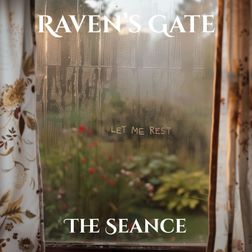
Letting Go
Ellie has been dead for two years, and Walter still sets two places at the dinner table. He talks to her empty chair. Tells her about the weather, the neighbor's dog, the crossword clue he couldn't get. Forty-one years of marriage built a language between them, and Walter refuses to believe the conversation is over just because one of them stopped breathing. He's right. Ellie is still here. She's been trying to make him leave. She puts his keys in the car ignition. Opens every window. Knocks his coat off the hook three times a day. Pushes open the front door until the hinges creak. Every act costs her energy she can't replace, leaves her faded and thin in a way that has nothing to do with light. Walter closes the windows. Hangs the coat. Shuts the door. Calls it drafts. Old latches. The house settling. Their daughter Maggie drives three hours to confront him. You're wasting away, Dad. You need to get out of this house. "Your mother's here, Maggie. I'm not leaving her alone." Ellie pushes her own photograph face-down on the mantle. Walter rights it, touches the glass, and whispers: "I miss you too." She wrote him a letter before she died. Hid it in her desk because she knew exactly what he would do. Sit in the house. Wait. Convince himself that staying was loyalty. The letter says: "I need you to live. Not for me. The dead don't need anything." Ellie has enough strength left for a few words in the fog on the window. She has to make them count.
The Seance
Jasper Creed is the most famous psychic medium in America. Twelve bestselling books. A Netflix special. Sold-out venues where grieving parents pay hundreds of dollars to hear him channel their dead children. Jennifer Stone grew up in foster care reading every one of those books. She believed Jasper was like her. That the whispers she'd heard since childhood, the shadows that moved wrong, the feeling of being watched by something vast and patient, meant she wasn't alone. That someone else could feel it too. She won a contest for the final seat at "An Evening Beyond the Veil," a live-broadcast seance at the Colby Memorial Temple in Cassadaga, Florida. Ten celebrities at fifty thousand dollars a seat. And Jennifer, the charity case, given one question and told to be seen and not heard. It takes her less than a minute to realize Jasper Creed is a fraud. Earpiece in the left ear. Assistant feeding information from backstage. Cold reading techniques she could spot from the cheap seats. Jennifer is not a fraud. She draws a symbol on her notepad that she learned from a book no library has ever catalogued. She presses the pen into her palm until it breaks the skin. She speaks a word that is not in any language the living have ever learned. What comes through the table is old and amused and very real. And it has questions for every celebrity in the room. Questions about the NDAs. The buried bodies. The minors. The fraud. The suicide they caused. Jasper Creed asked the dead to speak. He should have been more careful about who was listening.
The Return
Justin Deets has driven past this farmhouse three times in twenty-nine years. Once for Thanksgiving. Once for his mother's hip surgery. Once because his sister guilted him into it. Each time, he parked in the drive, walked through the door, and felt something in his chest clamp shut. Now both parents are dead, three weeks apart, and the estate needs inventorying. The house hasn't changed. Same furniture. Same positions. A clock on the mantle stopped at 3:47. His mother never wound it. "Time doesn't matter in this house," she said, and he was too young to hear the warning in it. The first night, the walls breathe. Justin had nightmares as a child. Bad ones. A doctor prescribed medication that stopped the dreams and took the memories with them. He's spent forty years not remembering what happened in this house. Now the memories come back. The kitchen. His mother frozen at the sink. Something standing in the corner behind her, something angular and wrong, something with edges where a person should have curves. When she turned around, her face was a mask and her voice came from somewhere hollow. He finds the photographs his mother hid in a shoebox under the stairs. Family portraits, dozens of them, where she had carefully cut a shape out of the background. The same shape. Every photo. She could see it. She knew what lived here. She and his father stayed anyway, because the house needed someone inside it, and if they left, it would have followed their son. Justin has been home for ten days now. He's stopped checking his phone. He sits in his father's chair and stares out the window for hours he can't account for. The thing with edges has been very patient.
The Silver Button Inn
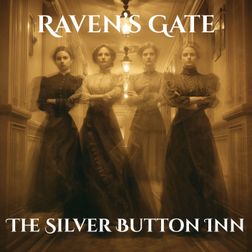
The Red Garter operated from 1872 to 1923. Four women worked there: Constance, the madam who ran the books. Clara, murdered by a client at twenty-five. Evangeline, taken by smallpox at thirty-four. Riley, dead of childbed fever and angry about it for over a century. The building is the Silver Button Inn now. A hotel in Georgia with exposed brick and local charm and four ghosts who have opinions about the guests. Forty-three members of Women of Virtue and Universal Truth have booked their annual convention. WVUT fights against marriage equality, defunded a women's shelter for serving "the wrong kind of women," and is led by Greta Bloomspoon, a woman who built her reputation on moral authority. The ghosts are initially content to watch. Then Clara finds Greta's diary. The entry is from 1962. Greta was fifteen. She stole a ruby ring from her mother's jewelry box and blamed Delilah Morrison, a fourteen-year-old Black girl who worked in the kitchen. Delilah spent eighteen months in juvenile detention. Her life never recovered. She died at forty-two. The diary also contains every corrupt deal, every diverted donation, every lie WVUT has told for decades. Constance hasn't killed anyone in a long time. She takes no pleasure in it. But she was an honest woman who did honest work, and there are sins that a century of death doesn't make her willing to forgive. The WVUT convention is about to experience some unscheduled programming.
The Miracle Child
Pastor Roger Mendelssohn prayed for a megachurch. In the dark of his empty sanctuary at New Hope Christian Fellowship, he asked God for fame, for reach, for a platform worthy of his voice. Something answered. It wasn't God. The next morning, his nine-year-old daughter Sarah was diagnosed with a brain tumor. The church doubled its membership within a month. The Southern Baptist Convention offered syndication. A sick child is the most powerful marketing tool in American Christianity, and Roger wielded his daughter's suffering like a professional. He rehearsed his tears in the mirror. His wife Leigh Anne discovered cocaine and stopped visiting the hospital. Sarah lay in her bed, alone, watching her parents build careers on her dying. Then the visitor came. Not a doctor. Not a chaplain. A friend who spoke to her like she mattered. Who asked her one question: do you want to be strong? Sarah said yes. The tumor vanished three weeks later at a televised healing service in front of forty thousand people. A miracle. The faithful wept. Roger fell to his knees. What no one saw was the moment it happened. The flicker behind Sarah's eyes. The instant she stopped struggling and was pushed into a small, silent corner of her own mind. Sarah is still in there. Watching. Unable to move or speak or scream. And the thing wearing her face is about to go on live national television.
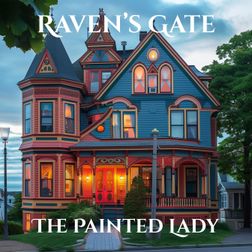
The Painted Lady
Elliot Davenport is fourteen, asthmatic, and small enough that the boys at school don't bother learning his name before shoving him into lockers. When his family moves from Ohio to a three-story Victorian in Marblehead, Massachusetts, a house so colorful the neighbors call it the Painted Lady, Elliot claims the attic bedroom because no one else wants it. The girl who lives up there has been dead since 1918. Violet Marsh was fifteen when the Spanish Flu quarantined her in this room. She watched the harbor through the window and waited for someone to come. No one came. She died alone, and she's been alone ever since. Elliot can see her. They talk every night after his parents fall asleep. Two invisible people who understand exactly what it means when the world looks through you like you aren't there. From the attic windows, Violet watches the neighbor's house. She sees what Elliot can't: Cody Brennan, the boy who makes Elliot's life hell, flinches every time his father enters the room. On a Thursday in November at 2:47 AM, the Brennan house catches fire. Mr. Brennan is on the lawn. Mrs. Brennan is trapped inside. Elliot runs into the fire without thinking. He pulls Mrs. Brennan out. She tells him Cody is still upstairs. Elliot goes back in. For the boy who broke his nose. For the boy who called him invisible. Cody isn't there. He snuck out hours ago. The floor gives way.
The Girl Who Broke
Maya Reyes has been in the foster care system since birth. Seven homes in sixteen years. She doesn't unpack anymore. Doesn't learn the names of the family pets. Doesn't say goodbye when she leaves, because no one asks her to stay. The Reeves family was different. Janet and Tom and their son Marcus. A cat named Cheeto. A bedroom with curtains she got to pick out herself. One week of feeling what normal might taste like before her caseworker moved her to a "permanent" placement with the Boggs family, who had a clean record and a spare bedroom. The Boggs house has locked cabinets and rationed food and two other children who have learned not to make eye contact. Destiny, fourteen, hasn't spoken in over a year. On the eighth night, Daryl Boggs opens Maya's basement door at two in the morning. He takes one step down the stairs. The lightbulb explodes. The mattress lifts off the floor. The concrete cracks from wall to wall. Maya doesn't understand what she can do. Not yet. But the memory that surfaces as she walks out of that house explains everything: she was nine years old, and a man named Gary Pruitt on Ashland Avenue taught her what fear really was. That was the first time something inside her broke open. She's going back to Ashland Avenue. Gary Pruitt is still there. And what broke open at nine has been growing ever since.
Blackwater Downs
The advertisement appeared in the paper exactly as it had appeared every sixty years since the house was built: GOVERNESS WANTED. TWO CHILDREN. ROOM AND BOARD. BLACKWATER DOWNS, THE MOORS. Abigail Willoughby was nineteen when she arrived. Mable was five. Dalton was eight. Their parents, the Buckingshires, were traveling abroad. That was sixty-three years ago. The children have been five and eight since 1742. Their parents died of fever and never came home. The house keeps them frozen, preserved, waiting for a mother and father who will never walk through the door. But they need someone living to see them, to believe in them, or they fade to nothing. Every governess falls in love with them. Every governess stays. And when a governess grows too old to serve, the house transforms her into staff. Mr. Barnes, the stiff-backed butler, was a governess in 1789. Mrs. Gates, the cook, in 1812. They don't remember being anything else. Abigail is eighty-two now. Her hands shake. Her vision blurs. She has placed the advertisement herself this time, interviewed the candidates, and selected Aileen Moira, twenty-two, Irish, recently orphaned. A girl with no one who would miss her. Tonight, at dinner, Abigail will tell Aileen the truth. She will show her the ghosts of every governess who came before. She will watch the girl scream and try to run. And then the children will appear at the top of the stairs, frightened, tearful, asking why the new lady is crying, promising to take care of her forever. No one has ever resisted that.
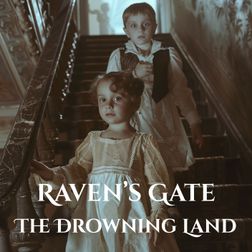
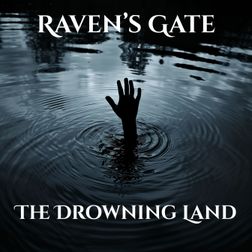
The Drowning Land
In 1941, the Santee Cooper Project dammed the rivers of Berkeley County, South Carolina, and flooded the lowlands for electricity. White cemeteries were relocated to higher ground before the water rose. Three thousand Black graves were left where they were. Della Mae Simmons owned forty acres in the flood plain. Land her family had worked since Reconstruction. She had two sons: Curtis, seventeen, full of a young man's fury, and Isaiah, twelve, gentle and slow from a birth injury. She refused to leave. Four men decided she didn't have a choice. The alderman who rezoned the land. The councilman who buried the lawsuits. The police chief who terrorized the family. And the engineer who opened the floodgates while the chief held a gun to his head and said: "Let their black asses drown." Reverend Ezekiel Boone was at the Simmons farm that morning, trying one last time to convince Della Mae to go. The water came too fast. All four of them drowned. But they didn't leave. Curtis hunts. Three Whitmores dead over six decades. Della Mae is methodical. Five Beaumonts, including one in a Manhattan apartment seven hundred miles from any river. Isaiah just reaches out, a twelve-year-old ghost who wants someone to play with, and everyone he touches fills with water. Now Marcus Holloway, great-grandson of the engineer, has bought a lakefront house built on former Simmons land. The water in the basement is rising. And it doesn't smell like lake water. It smells like mud from eighty years down.
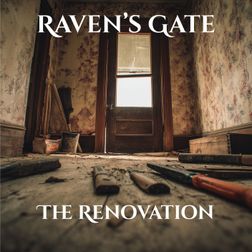
The Renovation
Lindsay and Carl Ryder were good at flipping houses. Buy ugly, renovate smart, sell beautiful. They'd done it nine times. The Victorian on Collier Road was number ten. Listed forty percent below market. Four owners in twenty years, none lasting longer than eighteen months. The previous owner had built strange walls inside the house. Not load-bearing. Not structural. Just walls where walls shouldn't be, sealing off spaces for no apparent reason. Carl broke through the first one on day three. He found something behind it. He didn't tell Lindsay what. That was the first secret. Not the last. The house works slowly. A too-attractive substitute inspector who lingers near Lindsay. A woman's voice whispering to Carl in the basement. Browser histories that neither of them created. A photograph on Lindsay's phone of Carl with a woman she's never seen. Every crack in their marriage, every silence that lasted too long, every argument they resolved by scheduling instead of talking, the house finds it, widens it, fills it with poison. By month three, they communicate by text message from different floors of the same house. Both of them are armed. Both of them are certain the other is planning something terrible. The previous owner didn't build those walls to hide something. He built them to contain it.
2 di 6