The Quantum Feedback Loop

The Quantum Feedback Loop

di James Myers
Stagione 2

Dr. Federico Carollo on the Intriguing Present and Future Potential of Time Crystals
Dr. Federico Carollo is a researcher at the University of Tübingen who is exploring a new, dynamic phase of matter called time crystals. First theorized by Nobel Prize laureate Frank Wilczek a dozen years ago, time crystals are quickly becoming practical reality. Federico explains how they operate, the different varieties of time crystals, and their potential uses for sensing, measurement, and other applications as a new platform for probing physics. Although time crystals aren’t perpetual motion machines, as the analogy is sometimes applied, we consider some of the technologies that could emerge and the exciting future as the science of time crystals evolves.

Twesh Upadhyaya on the Frontiers of Quantum Thermodynamics
Twesh Upadhyaha takes us on a tour of the science of thermodynamics as it has developed over two centuries, exploring the latest discoveries in the changes of energy and its various forms of heat and work at the smallest quantum level of atoms and molecules. Twesh is a PhD candidate at the University of Maryland, where he's a researcher in the Quantum Steampunk Laboratory. Join Twesh in exploring the frontiers of thermodynamics in the hidden world of energy at the microscopic level, the fascinating connection of quantum thermodynamics with information theory, the discovery of what he calls “an entire family of constraints” within the second law of thermodynamics at the quantum level, and the open question: “What does entropy even mean at the quantum level?”

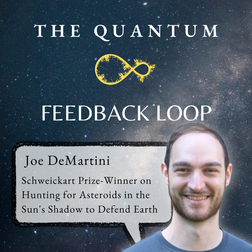
Schweickart Prize Winner Joe DeMartini on Hunting for Asteroids in the Sun’s Shadow to Defend Earth

Joe DeMartini is the first recipient of the Schweickart Prize, awarded by the B612 Foundation for his innovative proposal to detect and track asteroids during twilight hours. Joe’s proposal could significantly enhance planetary defence by locating asteroids in the large section of the sky that’s difficult for telescopes to observe because of the sun’s light. Joe talks about the details of his proposal, about meeting Apollo 9 astronaut Rusty Schweickart who founded the B612 Foundation, and about the asteroid Apophis which will pass between Earth and the moon in just under 5 years, on April 13, 2029.
Stagione 1

Arushi Nath: A Young Citizen Scientist Speaks About Asteroids and Defending Earth
Arushi Nath is a high school student who developed a passion for asteroid research when she attended the biennial Planetary Defense Conference in 2021. Since then, Arushi has been applying her coding skills in hunting for asteroids and contributing many new findings to the objects that astronomers are tracking as potential hazards to our planet. Arushi explains her work around NASA's DART mission, which successfully tested the ability of a probe to impact and redirect a moonlet orbiting a faraway asteroid, and she discusses the national and international conferences she has attended. Those interested in the asteroid collision simulation that Arushi mentions can find it on NASA's website at https://cneos.jpl.nasa.gov/pd/cs/pdc23/. Arushi is looking forward to the next Planetary Defense Conference in 2025, and we're looking forward to hearing more from this extraordinary young citizen scientist who offers a very bright and hopeful voice for the future.

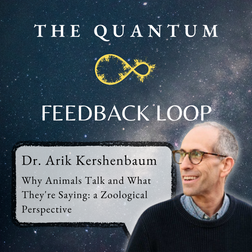
Dr. Arik Kershenbaum on Why Animals Talk and What They’re Saying: A Zoological Perspective

Why do animals communicate, and why and how did their many different methods of communication evolve? It's fascinating to learn from Dr. Arik Kershenbaum about such a crucial part of everyday living in the animal kingdom that we humans tend to overlook in our daily lives. A zoologist at the University of Cambridge, Arik studies vocal communications in animals, including wolves, dolphins, and gibbons. Arik speaks with us about his new book, Why Animals Talk, coming out this August, and we discuss his 2021 book, The Zoologist’s Guide to the Galaxy, which takes us on a journey through the incredible variety of animals and their communication here on Earth and quite possibly beyond. As Arik says, animals are “not just automata, but living species with communicative intelligence not unlike our own,” and he introduces us to the vast and fascinating array of information that animals are exchanging all around us.

Jessica West on Space Governance: The Challenges and Potential for Humanity Beyond Earth
We sat down with Jessica West, who is a senior researcher in space governance with a depth of experience in a rapidly evolving and crucially important field, to talk about the challenges and opportunities for humanity beyond earth. With competing military and commercial activity in space, and large numbers of satellites and objects to track, Jessica has said that the situation is becoming tense and requires a lowering of the heat. Jessica explains the history of space governance, beginning with the United Nations’ 1967 Outer Space Treaty and its ideals, and the extent to which humanity’s presence in outer space has multiplied many times over since. As she outlines the present state of global discussions and activity at the UN, Jessica gives a sense of hope that we are on a path toward real progress in the peaceful use of outer space.

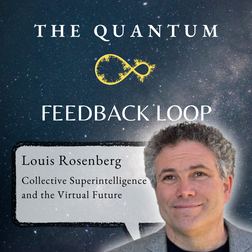
Louis Rosenberg on Collective Superintelligence and the Virtual Future
With his decades-long experience in virtual reality technologies, Louis Rosenberg talks about a new technological paradigm designed to facilitate a collective human superintelligence. Called Swarm AI, it's modelled after natural swarm intelligence among fish, bees, and other species, and aims to amplify the decision-making capacity of groups of people instead of the machine making the decision for them. Louis' new book, Our Next Reality, and his role with the Responsible Metaverse Alliance, highlight the crucial choices that lie ahead with increasingly powerful virtual reality applications, in building a future of humans, made by humans, and for humans. We can't know whether collective superintelligence is the answer, but the questions that Louis raises at the conclusion of the talk demand urgent attention and discussion.

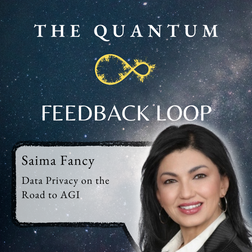
Saima Fancy: Why Privacy Matters on the Road to Artificial General Intelligence
Saima Fancy is a Privacy Specialist whose two decades of experience have spanned the explosion of AI and a series of privacy breaches of global consequence.  With the profit-driven development of artificial general intelligence now underway, and large language models like GPT-4 in the forefront, why does privacy matter?  When many believe technology leaves them with few options to protect their privacy, Saima provides a forceful answer to the question, encouraging a greater understanding of the data we are providing and our value as creative beings.

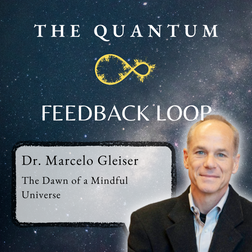
Dr. Marcelo Gleiser and a New Perspective on Our Cosmic Relationship
Professor of Physics and Astronomy Dr. Marcelo Gleiser shares a remarkably philosophical perspective on humanity’s relationship with the cosmos as we discuss his latest book, The Dawn of a Mindful Universe. Incorporating centuries of accumulated scientific knowledge, Marcelo’s book highlights the rarity of conditions for life in a vast universe, and our duty to protect the natural world that sustains life on Earth.  Marcelo makes a passionate case for a biocentric perspective that appreciates and treasures the interwoven existence of the physical universe and life as he describes “a new wind of awakening” that brings promise to harmonizing human living with the limitless resources of the universe.

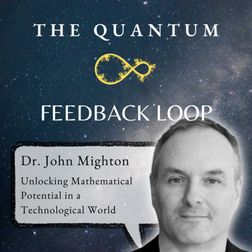
Dr. John Mighton: Unlocking Mathematical Potential in a Technological World

Mathematician and acclaimed playwright Dr. John Mighton discusses the JUMP Math charity that has, for over two decades since he founded it, provided learning resources in mathematics used each year by hundreds of thousands of students and teachers. Math is an essential skill in a technological world, particularly in understanding probabilities and risks, and Dr. Mighton explains JUMP Math's unique approach to engaging students and making math learning a positive experience with results that speak for themselves. As Dr. Mighton says, "it's so easy to close the gap" in mathematical knowledge and unleash a great measure of creative potential in the process.
2 di 3