Project Unlaced

Project Unlaced

di Project Unlaced
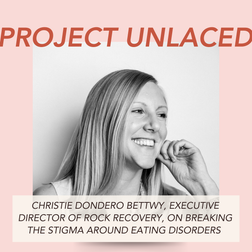
Christie Dondero Bettwy, Executive Director of Rock Recovery, on Breaking the Stigma Around Eating Disorders
In this episode of Project Unlaced, Mia Lerner interviews Christie Dondero Bettwy, the executive director of Rock Recovery, who shares her personal journey through eating disorders and recovery. Christie discusses the complexities of eating disorders, the importance of seeking help, and the mission of Rock Recovery to provide accessible treatment. The conversation also touches on leadership challenges in nonprofits, misconceptions about eating disorders, and practical advice for those struggling with recovery. Christie emphasizes the importance of community support and the need to redefine what recovery means. Chapters 00:00 Introduction to Recovery Journeys 02:38 Understanding Eating Disorders 06:21 The Turning Point: Seeking Help 09:33 Rock Recovery: Mission and Impact 11:45 Leadership Challenges in Nonprofit Work 14:34 Defining Recovery and Freedom 20:05 Misconceptions About Eating Disorders 23:13 Advice for Overcoming Recovery Overwhelm 26:36 Supporting Loved Ones in Recovery Find out more about Rock Recovery at rockrecoveryed.org Stay updated on what we are doing or learn how to get involved! Website: projectunlaced.org Instagram: @project_unlaced
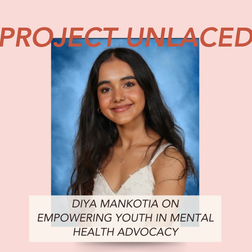
Diya Mankotia on Empowering Youth in Mental Health Advocacy
In this conversation, Diya Mankotia, founder of EDSA, shares her personal journey with eating disorders and how it inspired her to advocate for mental health awareness among youth. She discusses the challenges of starting a youth-led organization, the importance of outreach, and the need for more support in schools. Diya emphasizes the significance of relationships in recovery and offers valuable advice for aspiring advocates. She also shares her future plans for EDSA and her goals in public health, highlighting the need for prevention programs in mental health. Learn more about Project Unlaced at projectunlaced.org Follow us on Instagram at @project_unlaced
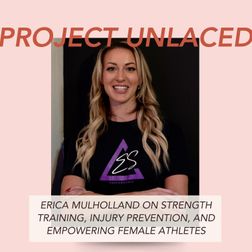
Erica Mulholland on Strength Training, Injury Prevention, and Empowering Female Athletes
In this episode of Project Unlaced, we’re joined by Erica Mulholland, a certified speed, agility, and strength coach and former Hall of Fame soccer player. Erica shares how her journey from elite athlete to coach shaped her mission to help young female athletes train smarter, stay healthy, and build confidence. Erica’s Athletic Journey Erica reflects on her path from youth soccer to semi-professional play in the U.S. and Brazil, and how passion, discipline, and resilience shaped her approach to both sport and life. Strength Training for Female Athletes We dive into common myths around girls lifting weights, why strength training is essential for performance and injury prevention, and how consistency—not overtraining—makes the biggest difference. Injury Prevention & ACL Rehab Erica explains why ACL and meniscus injuries are so common in soccer, what traditional rehab often gets wrong, and how proper return-to-play training builds both physical readiness and mental confidence. Coaching the Whole Athlete From body awareness and movement fundamentals to confidence-building and fun, competitive training environments, Erica shares how she supports athletes through growth, setbacks, and success. Advice for Young Athletes Erica closes with a powerful reminder: trust the process, embrace the highs and lows, and know that every part of the journey is shaping who you’ll become.
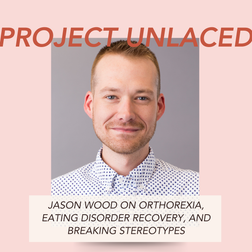
Jason Wood on Orthorexia, Eating Disorder Recovery, and Breaking Stereotypes
In this episode of Project Unlaced, we sit down with Jason Wood, Director of Community Engagement at ANAD (National Association of Anorexia Nervosa & Associated Disorders), to talk about eating disorders, recovery, and breaking long-standing stigma—especially for men. Jason shares his personal journey with orthorexia, including how weight-based bullying, perfectionism, and diet culture fueled over 20 years of disordered eating. He opens up about the pivotal moment in 2020 that led him to seek help and how recovery has reshaped his understanding of health, identity, and connection. Together, we explore: What orthorexia is and how “healthy eating” can become harmful How eating disorders impact mental, social, and emotional health, not just food Why men’s eating disorder experiences are often overlooked The role of perfectionism, control, and routine in eating disorders How sharing your story can be a powerful part of healing Ways friends, family, and coaches can support someone without causing shame Why recovery is nonlinear and doesn’t have a “look” Jason also talks about writing his book Starving for Survival, the importance of representation, and the work ANAD is doing to provide free, peer-led support to anyone struggling or supporting someone with an eating disorder. If you or someone you love is navigating disordered eating, this conversation offers honesty, hope, and practical insight—along with a reminder that you are not alone. Resources mentioned: National Association of Anorexia Nervosa & Associated Disorders (ANAD): anad.org ANAD Helpline, support groups, and peer mentorship programs (all free)
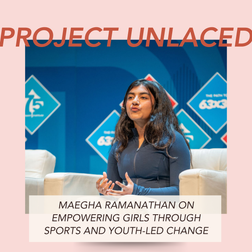
Maegha Ramanathan on Empowering Girls Through Sports and Youth-Led Change
In this episode of Project Unlaced, we sit down with Maegha Ramanathan, founder of Girls for Sports, a youth-led nonprofit working to combat gender inequality in sports. Founded when Maegha was just 13 years old, Girls for Sports has since grown to over 25 chapters, mobilized 1,500+ youth volunteers, and donated 10,500+ pieces of sports equipment worldwide. Maegha shares her journey as a multi-sport athlete and the moment she noticed girls dropping out of sports due to sexism and discouragement. From cold-emailing Olympians to hosting advocacy conferences, free sports camps, and international equipment drives, she walks us through how Girls for Sports grew from a local idea into a global movement. We also talk about: Why girls are more likely to drop out of sports around age 14 The power of community and mentorship in youth leadership Balancing academics, athletics, and running a nonprofit How small actions can grow into meaningful change This episode is a must-listen for anyone passionate about sports equity, youth activism, or turning personal experiences into impact-driven movements.
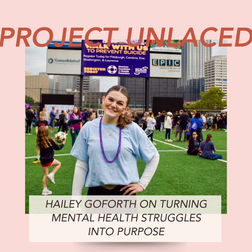
Hailey Goforth on Turning Mental Health Struggles into Purpose
In this episode of Project Unlaced, we’re joined by Hailey Goforth, a high school senior and the founder of the Crowded Minds Project. Hailey shares her personal journey with ADHD, anxiety, OCD, and emetophobia, and opens up about how therapy, medication, and a strong support system helped her through some of her lowest moments. We dive into what inspired her to start the Crowded Minds Project, how sharing her story online became a tool for both healing and connection, and the impact her work has had on others in her community. Hailey also discusses the realities of stigma, comparison on social media, and the importance of setting boundaries while being vulnerable. From practical self-care habits like “Self Love Sundays” to her hopes of expanding mental health advocacy into college, this conversation is an honest, encouraging look at how young people can turn lived experience into meaningful change.
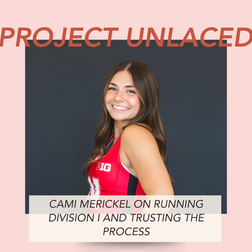
Cami Merickel on Running Division I and Trusting the Process
In this episode, we're joined by Cami Merickel, a Division I runner for Nebraska Track & Field / Cross Country. Cami shares her journey from growing up in Phoenix and playing soccer to competing at the collegiate level and serving as a team captain. We talk about navigating the recruiting process during COVID, adjusting to the demands of Division I training, and overcoming injuries and confidence setbacks. Cami also dives into how she discovered the 3K steeplechase, what makes it such a challenging (and painful) event, and why trusting your training is key. Beyond racing, Cami discusses body image in distance running, her studies in Nutrition, Exercise & Health Sciences with a minor in Psychology, and how consistency, sleep, and mindset play a major role in performance. She also shares advice for young female athletes hoping to run in college and why your identity should never be defined by your sport alone. Topics Covered: Soccer-to-running pipeline Recruiting during COVID Transitioning to college athletics Steeplechase & event specialization Injuries, burnout, and mental health Team culture & leadership Nutrition, psychology, and performance Advice for aspiring college athletes Follow Cami on Instagram @camimerickel
Dr. Nicky Keay on Energy Conservation, Hormones, and REDs
Dr. Nicky Keay explains how the body conserves energy much like we do in daily life: slowing down with an empty petrol tank or using low-power mode on a phone. She connects these examples to metabolic rate, hormonal shifts, and how low energy availability can progress into REDs. Key Takeaways The body reduces metabolic rate when energy is low, similar to low-power mode. Hormones act as signals, adjusting processes like thyroid function, reproduction, and recovery. Low energy availability can lead to REDs, affecting health and performance. Everyday behaviors around saving energy mirror biological energy-saving mechanisms. Understanding energy balance helps athletes make better training and fueling decisions. Find out more about Dr. Keay's work here: https://nickykeayfitness.com/
Stevie Lyn Smith on Fueling Young Athletes, Building Confidence, and Her New Book
Sports dietitian and endurance athlete Stevie Lyn Smith joins host Mia Lerner to share her journey into triathlon, her evolving philosophy on nutrition, and the inspiration behind her new book Power Up. She discusses how young women can build a healthier, more empowering relationship with food, body image, and performance. Key Takeaways Athletes can easily under-fuel when training volume increases without a matching nutrition increase. Food should be flexible, realistic, and personal rather than being defined as “good” or “bad.” Performance often improves when athletes properly fuel before practices and workouts. Social media nutrition trends (especially “high-protein” everything) can mislead young athletes. Parents and coaches should avoid body comments and keep food language neutral. Power Up was created to give young female athletes accessible, evidence-based, real-life nutrition guidance. It’s healthy and normal for athletes to take breaks from structured training to avoid burnout. Recovery from disordered eating involves learning to move through intrusive thoughts instead of expecting them to disappear entirely. Click here to learn more about Stevie Lyn Smith's new book: https://stronggirlpublishing.com/product/power-up-a-young-womans-guide-to-winning-with-sports-nutrition/ Follow Stevie Lyn Smith on Instagram @stevielynlyn
Rebecca McConville on REDs, Recovery, and Overcoming Fear Around Fueling
In this episode, sports dietitian and author Rebecca McConville joins us to break down the realities of eating disorder recovery, athlete underfueling, and the path toward a healthier relationship with food, movement, and performance. She shares practical, compassionate strategies for healing and for understanding the body’s true needs. Takeaways: Many athletes underfuel without realizing it. Rest and self-care are key to sustainable performance. Coaches need better education on REDs. Intuitive eating takes patience and practice. Challenging food fears rebuilds trust with the body. Recovery works best when broken into small steps. You can follow Rebecca McConville on Instagram at @rebeccaeddietitian.
1 di 3