
Potentia Podcast

Potentia Podcast

di Chelsea Toczauer
What Washington Gets Wrong About China’s Strategy in Iran and the Middle East

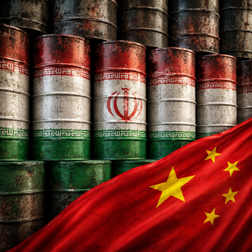
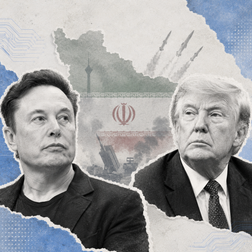
Is China really replacing the United States in the Middle East, or has Washington misunderstood what Beijing is trying to achieve? The war with Iran has revived a familiar Washington story: every conflict is another front in the U.S.-China rivalry. But Beijing’s actual strategy in the Middle East is more opportunistic, and more revealing, than the proxy-war frame suggests. China sustains Iran without fully betting on it, builds influence across the Gulf while avoiding the costs of regional security, and turns American intervention into evidence for its own vision of global order. From oil flows and sanctions evasion to Beijing’s limited record as a mediator, the deeper question is not whether China is replacing the United States in the Middle East, but how it continues expanding its position while leaving Washington to carry the risk. Lauren Barney joins Chelsea on the Potentia Podcast to discuss why the Iran war is not simply another front in the U.S.-China rivalry, how Beijing supports Tehran without absorbing its risks, and where Washington still holds the regional advantage. Full show notes on Potentia and watch interview on Youtube Subscribe! Join 3.3k+ followers! We genuinely appreciate every like save share and follow : ) Your support means the world!
What the New U.S.–China Détente Makes Possible
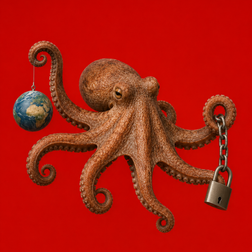
Owls, Not Hawks or Doves- The new U.S.-China détente creates an opening for Washington to rebuild American industrial capacity by using access to the U.S. market as leverage, rather than pursuing a more aggressive version of decoupling. Aaron Glasserman and Mitch Presnick join Chelsea on Potentia to discuss why Washington and MNC’s need to lean into strategic leveraging with clear eyes, rather than rely on outdated, comfortable and dangerous narratives. Glasserman, a postdoctoral fellow at the University of Pennsylvania’s Center for the Study of Contemporary China, and Presnick, a non-resident honorary fellow on Chinese economy at the Asia Society Policy Institute’s Center for China Analysis, argue in their paper "The Real Opportunity of the New Détente with China” that the United States should seek technology, manufacturing expertise, workforce training, and industrial knowledge from Chinese firms in exchange for access to American consumers. The prescription from Dr. Owl? Lean into strategic leveraging. Buckle up~ Full show notes at potentiamedia.org, or watch on Youtube
The Securitized World and the Business of Sovereignty

For the past thirty years, globalization made the modern economy feel almost frictionless: a chip could be designed in one country, manufactured in another, assembled in a third, financed through global capital markets, and sold everywhere. Multinational companies were built on that assumption. Governments largely encouraged it. Consumers benefited from it. And yet the same system that made the world richer has now become one of its greatest sources of leverage, coercion, and strategic vulnerability. What happens when the links that once created efficiency become the pressure points states can use against each other? In this episode, Max Zenglein joins Potentia to unpack the rise of economic security, why governments and companies often mean very different things when they use the term, why Japan and China appear more advanced in aligning state and corporate priorities, why Europe and Southeast Asia are struggling to navigate Chinese pressure and U.S. unpredictability, and why companies are still too often treating rare earths, export controls, tariffs, EVs, data, and supply chains like isolated fire drills rather than signs of a new global order. The answer, it turns out, is not deglobalization. It is something messier, more uncomfortable, and probably more durable: globalization is still happening, but it is being rewritten through security, power, trust, and coercion. Welcome to the era of securitized globalization. Buckle up. Full show notes here: https://potentiamedia.org/
How will Childhood Change?: Inside the 100-Year Study Tracking AI's Impact on Children and Society
Dr. Joseph Wilson joins Chelsea to discuss launching a century-long longitudinal study of AI-native children, the importance of human elements and why evidence should drive AI policy Full show notes here: https://potentiamedia.org/p/how-will-childhood-change-inside Dr. Joseph Wilson has been working in AI since before most people knew the term. He ran computer vision studies as a high school student in Central Florida and now serves as Managing Director at the American Institutes for Research, an 80-year-old nonprofit research institute. The team is launching the AI Century Study, a 100-year longitudinal project following the first generation of AI-native children, born between 2023 and 2025, alongside a comparison cohort born a decade earlier. AIR has done this before, and in the 1960s they launched Project Talent, which captured 5% of all U.S. high school students and is still producing research today. Living less than a mile from OpenAI’s headquarters in San Francisco, Wilson has a front row seat to the the AI hype cycle up close. He notes federal funding for rigorous longitudinal research is shrinking even as the need for it has never been greater. With these rapidly evolving technologies, he says policy must be guided by evidence. We need to question what comes out of these tools, and AI is not human (and never will be.) In the day-to-day, he encourages listeners to take the small act of taking out your earbuds and talking to the person in front of you, and to lead with empathy.
This Week in Power Week of June 8-15, 2026 | Briefing # 3
The US-Iran war 'ends' but the nuclear question doesn’t. Anthropic’s most dangerous model gets released and blocked, Xi Jinping visits Pyongyang and Musk becomes the first trillionaire. LOTR metaphors. Full show notes : https://potentiamedia.org/p/this-week-in-power-b1e
On My Radar Dispatch Who Builds the World, Who Gets to Live In It
From my émigré family stories under occupation to East India Trading Company, everything I’m paying attention to right now points to the same underlying question: who actually holds power, and how do you build your own? Full show notes here: https://potentiamedia.org/p/on-my-radar-dispatch
Supply Chain's Paradigm Break with Nick Vyas
Nick Vyas on agentic AI, the policy problem, and why removing friction from global trade may be the most consequential thing we do next. Full show notes here: https://potentiamedia.org/p/supply-chains-paradigm-break-with Nick Vyas has led global supply chains for Sears, Toys R Us, and Duty Free, built USC Marshall’s supply chain institute from the ground up, and is currently leading six case studies on agentic AI where the technology outpaces drafts before the team can finish them. He calls what’s happening right now not a paradigm shift but a paradigm break, because every transformation before this one still had a human at every node while this one doesn’t. The world produces enough food to feed everyone on earth, yet 40% of it rots between the farm and the table because the supply chain can’t move it. Democracies are structurally incapable of the long-horizon planning this moment demands, though China has been executing on a 45-year-long nine-cycle strategy without interruption. And AI is about to displace more white-collar jobs than any previous technology in history, but policymakers are falling asleep at the wheel, repeating the exact mistake of the Rust Belt, except this time the middle class will be hit hard.
This Week in Power Podcast Week of June 2–9, 2026 | Briefing #2
Trump and Sanders agree on potential nationalizing of Big Tech, the admin closes a chip loophole to China, and an important AI federal bill drops seeking to limit State governance of AI development. Full Show notes: https://potentiamedia.org/p/this-week-in-power-podcast
From Alibaba to Agentic AI: Christian Hu on Scaling Qoder to 200+ Countries in 10 Months
Christian Hu of Qoder joins Chelsea on Potentia to discuss why the next phase of AI is moving beyond chatbots toward agentic workmates, how Qoder is building AI coding and productivity tools for global users, and why companies that wait too long to adopt AI may struggle to catch up. This piece is sponsored and brought to you by Qoder — think deeper, build better. Thanks for listening Potentia! Every like, subscription and share means the world to us. Subscribe for free to receive new posts and support our work. https://potentiamedia.org/
This Week in Power
Week of May 25-31, 2026 | Briefing #1 The Pope enters the AI debate, Trump stalls regulation, OpenAI chases $1 trillion, and Silicon Valley delivers the Fail of the Week.
1 di 2