Pipes With Pappy

Pipes With Pappy

di Pappy Bob
Stagione 1

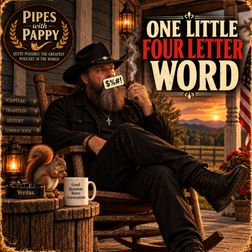
One Little Four Letter Word | Pipes with Pappy — Episode 4

What does the word “pray” actually mean? For many modern Christians, prayer means one thing: talking to God. So when Catholics say they “pray to Mary” or “pray to the saints,” the conclusion can seem obvious. If prayer belongs to God, Catholics must be worshiping them. But what if the argument begins with a definition Catholics never stopped using differently? In this episode of Pipes with Pappy, I dig into the history of one little four-letter word. We’ll look at how pray was used in ordinary English, how it appears in the King James Bible, why the biblical languages contain a much richer vocabulary than our single English word suggests, and why Catholics still use pray in its traditional sense of asking or entreating. Then we get into the real theological questions: Christ as the one Mediator in 1 Timothy 2:5–6, Christian intercession, the Body of Christ, the Communion of Saints, Revelation’s picture of prayer in heaven, and why asking a saint to pray for you is not the same claim as worshiping that saint. Understanding the word doesn’t prove every Catholic claim about the Communion of Saints. It does something more basic: it gets us past an argument about definitions so we can finally discuss the actual disagreement. I’ve been saying this since about 2006: If you want to rewrite history, you don’t have to change the words on the page. You can simply redefine them. Steelman the position first. Then tear it apart if you can. At least then we’re actually talking to each other. Seek deeply. Pray daily. Speak clearly. Share regularly. Serve humbly. Veritas.
What Is the Gospel? | Pipes with Pappy — Episode 3

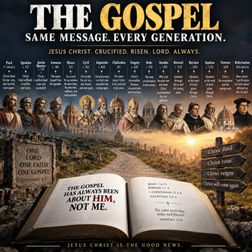
What exactly is “the Gospel”? Christians use that word constantly, and Galatians 1 is often quoted to accuse Catholics of preaching “another gospel.” But before making that accusation, there’s a more basic question we need to answer: What Gospel did Paul actually preach? In Episode 3 of Pipes with Pappy, I go back to Scripture, especially Mark 1, Romans 1, 1 Corinthians 15, and Galatians 1, and then follow the Christian proclamation through the early Church and into the centuries before the Reformation. We’ll also examine an important distinction: Is the Gospel itself “justification by faith alone,” or is justification a question about how we receive and participate in the saving work proclaimed by the Gospel? This isn’t an episode about settling every Catholic-Protestant disagreement. It’s intentionally narrower than that. One question: What is the Gospel? Jesus Christ is Lord. He died for our sins. He was buried. He rose from the dead. He reigns. He will come again. If Catholics and Protestants agree on that proclamation, then perhaps our real disagreements are somewhere else, and those are the disagreements we should actually be discussing. Steelman the position first. Then tear it apart if you can. At least then we’re actually talking to each other. Seek deeply. Pray daily. Speak clearly. Share regularly. Serve humbly. Veritas.
Catholic Does NOT Mean Roman | Pipes with Pappy — Episode 2

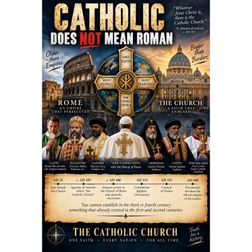
If you're going to disagree with Catholicism, disagree with what Catholics actually believe. In Episode 2 of Pipes with Pappy, I start a series aimed especially at my Protestant friends and family who debate Catholics. The goal isn't to eliminate disagreement. There are real and important differences between Catholics and Protestants. The goal is to make those conversations better by steelmanning the position you're arguing against before trying to tear it apart. Lesson One: Catholic does NOT mean Roman. We look at the difference between Catholic, Latin, Roman, Eastern, Church, and rite, and why those distinctions matter. We also look at Ignatius of Antioch, the early use of the term "Catholic Church," and the timeline behind the common claim that Constantine or the Roman Empire created the Catholic Church. Does any of that prove every Catholic doctrine? No. That's not the argument. The point is much narrower: if we're going to debate the history and teachings of Christianity, let's debate the strongest versions of the arguments and get the history right. You don't have to agree with me. You can think Catholicism is completely wrong. But first, understand the position well enough that a Catholic can hear you describe it and say, "Yes. That's what I believe." Then tear it apart if you can. At least then we're actually talking to each other. Seek deeply. Pray daily. Speak clearly. Share regularly. Serve humbly. Veritas.
I’m Not Here to Win | Pipes with Pappy — Episode 1

In the first episode of Pipes with Pappy, I lay out the standard I want to hold myself to whenever I talk about faith, theology, apologetics, truth, or anything else worth talking about: Seek deeply. Pray daily. Speak clearly. Share regularly. Serve humbly. I'm not interested in winning arguments at the cost of people. I want to understand before I answer, steelman positions I disagree with, follow the truth even when it takes me somewhere unexpected, and be willing to admit when I'm wrong. That doesn't mean abandoning conviction or pretending every argument is equally true. I can fiercely challenge an idea while loving the person I'm talking to even more fiercely. There's a Latin phrase I remind myself of often: Nemo dat quod non habet. "You cannot give what you do not have." So first, fill the well. Study. Pray. Learn. Be corrected. Grow. Then share what you've been given. There is no shortage of people waiting for the dipper. I'm not here to win. I'm here to grow, to help others grow when I can, and to serve God and the truth wherever it leads. Veritas.