
Note sull'episodio
What is a difficult reaction really trying to communicate?
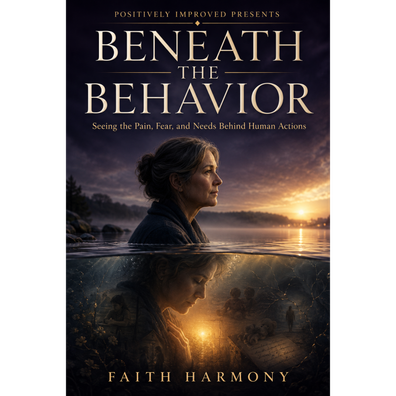
In this episode of Beneath the Behavior, we explore five powerful emotional drivers that frequently operate beneath anger, withdrawal, criticism, defensiveness, control, and other challenging behaviors: fear, old wounds, unmet needs, the desire to be seen, and survival instinct.
These drivers rarely operate independently. Fear may be layered over an old wound, intensified by an unmet need, and expressed through an automatic survival response. Understanding this complexity helps us move beyond simplistic labels and approach human behavior with greater curiosity, discernment, and compassion.
We also turn the lens inward to examine how these same drivers shape our reactions. When something touches a vulnerable place within us, judgment can feel like clarity and defensiveness can feel completely justified. Learning to notice what has been activated creates the space needed to respond more intentionally.
In this episode, we explore:
- How fear can appear as anger, control, criticism, or avoidance
- Why present experiences can activate unresolved wounds from the past
- How unspoken needs can become resentment and passive aggression
- Why the desire to be seen is often mistaken for arrogance or attention-seeking
- How fight, flight, freeze, and fawn responses affect behavior
- Why automatic reactions are not always deliberate choices
- How several emotional drivers can operate simultaneously
- Why judgment can provide a temporary sense of safety
- How two people’s hidden drivers can create escalating conflict
- The role of self-awareness in interrupting automatic reactions
- How to remain compassionate without overlooking boundaries or accountability
Questions for reflection:
- Which of the five drivers most often influences your reactions?
- What fears tend to hide beneath your anger, control, or avoidance?
- Which present-day experiences activate wounds from your past?
- What needs have you struggled to communicate directly?
- Where in your life do you long to feel more genuinely seen?
- How does your body respond when it perceives emotional danger?
- What might change if you asked, “What just got touched in me?” before reacting?
Fear, old wounds, unmet needs, the desire to be seen, and survival instinct are not character flaws. They are human experiences. The goal is not to eliminate them but to recognize when they are influencing how we perceive, interpret, and respond.
Self-awareness is not self-condemnation. It is the willingness to become curious about ourselves with the same compassion we hope to extend to others.
PI Reading for Growth is presented by Positively Improved™ and created to support greater self-awareness, emotional healing, and intentional personal growth.
Namaste.