Behind the Funnel

Behind the Funnel

di Yarek Matacz
Stagione 3
Marc Petitpas on Leadership, Grief, Business & Rebuilding Your Life From Scratch
Esplicito
IA
This was one of the most honest conversations we’ve had on Behind the Funnel. Marc Petitpas has led some of the biggest organizations and venues in Canada — from opening BMO Field as its first General Manager, to leadership roles with MLSE, the Air Canada Centre, Fusion Homes, and beyond. But this episode wasn’t really about titles. It became a conversation about: leadership pressure grief starting over fear purpose and the responsibility that comes with leading people Marc shares the reality behind building a career across multiple industries, losing family members during the pandemic, nearly losing his house while launching his consulting business, and how those experiences completely changed the way he coaches leaders today. We also dive into: why most leadership training fails the problem with “fake experts” online transferable skills across industries communication in business mental health and leadership the difference between real experience vs internet marketing and the deeper meaning behind his book The 50-Year-Old Millennial This is not your typical business podcast. It’s a conversation about becoming the kind of person people trust. Topics Covered: Opening BMO Field as General Manager Building leadership skills through retail and sports The importance of mentors Anxiety and fear early in life Leadership lessons from construction and home building Why communication matters in business Losing family during the pandemic Starting a consulting business from scratch Leadership and mental health Why most coaching online lacks real experience The true story behind The 50-Year-Old Millennial About Marc Petitpas: Marc Petitpas is a leadership consultant, business coach, speaker, author, and fractional executive with decades of experience across sports, retail, construction, and executive leadership. He is the founder of Marc Petitpas Business Coaching and winner of the 2025 Canadian Choice Award for Business Coaching. Connect with Marc: Website: www.marcpetitpas.com LinkedIn: https://www.linkedin.com/in/marcpetitpas/ Book: The 50-Year-Old Millennial on Amazon JPM MEDIA x BEHIND THE FUNNEL http://jpmmedia.ca/ https://jpmmedia.ca/behind-the-funnel.html
AI Isn’t the Advantage. Integration Is | Amir (BlackOps)
IA
Episode Summary AI is everywhere. But most businesses are still using it wrong. In this episode of Behind the Funnel, I sit down with Amir Samani from BlackOps Studio to break down why most AI systems fail and what real integration actually looks like inside a business. We go deep into why businesses feel overwhelmed, how to actually implement AI step by step, and why most teams aren’t ready for the tools they think they need. If you’ve been experimenting with AI but not seeing real results, this episode will show you what’s missing. What We Cover Why most AI systems fail inside businesses The difference between tools and real integration Why businesses feel overwhelmed with AI The “A to Z problem” and skipping fundamentals What it actually means to be an integration partner Why most companies aren’t ready for advanced AI systems The truth about scaling and why it creates chaos A phased approach to implementing AI properly How to connect marketing, sales, and operations Real examples of AI creating leverage in businesses Where AI is being misunderstood in marketing Why fear and misinformation are slowing adoption How top operators are quietly using AI to gain leverage The future of hiring and “bring your own AI” workflows A simple prompt strategy that changes how you use AI Timestamps 00:00 – Intro and Amir’s background 02:39 – Why most businesses struggle with AI 05:01 – The importance of foundations 06:27 – What an integration partner actually does 08:08 – Why scaling creates chaos 09:14 – How AI implementation should start 10:59 – The brand DNA questionnaire 12:58 – The phased integration model 15:41 – Why AI takes time to work properly 16:26 – Connecting marketing, sales, and operations 20:06 – Real case study: saving $20,000 with AI 23:55 – Automating lead generation and follow-up 25:15 – Where AI is misunderstood 26:42 – Why people fear AI 32:46 – Case study: $1.8B company built with AI 37:10 – What to do if you’re just getting started 38:48 – Final advice on using AI properly Key Takeaway AI is not the advantage. The advantage is knowing how to use it in the right order, at the right time, for the right problems.
Enterprise Marketing Secrets Most Small Businesses Miss | Angelo (Jacker Digital)
IA
Episode Summary Most businesses focus on tactics. Very few understand the systems behind them. In this episode of Behind the Funnel, I sit down with Angelo Masters Jr., founder of Jacker Digital, to break down what actually changes when you move from small business marketing to enterprise-level execution. We cover everything from running campaigns for brands like Netflix and Warner Brothers to helping small businesses scale with better systems, automation, and positioning. If you're generating leads but struggling to convert, or feel like your marketing isn’t scaling, this episode will show you where the real gaps are. What We Cover The difference between small business and enterprise marketing Why most funnels generate leads but don’t convert How enterprise companies scale using asset volume The biggest mistake small businesses make after generating leads Why nurturing and follow-up matter more than lead volume Automation vs AI and where people get it wrong Simple automations that create disproportionate results How to structure pipelines to avoid losing leads The power of internal notifications and clean systems Diagnostic offers and why they convert better How to build trust and credibility in client acquisition Why most agencies feel generic and how to stand out A non-traditional lead generation strategy that actually works How to use local chambers to land clients and build authority Timestamps 00:00 – Intro and Angelo’s background 01:59 – What property management taught about systems 02:48 – Transition into marketing 05:04 – Demand vs scalability 07:13 – What changes at enterprise level 09:23 – Breaking down a high-performing campaign 12:46 – Enterprise strategies small businesses can use 14:52 – The importance of creative volume 16:42 – Why funnels fail to convert 18:52 – Automation vs AI explained 20:51 – Simple automations that work 23:12 – Organizing pipelines and systems 25:26 – Diagnostic offers explained 28:44 – Building trust in client acquisition 30:24 – Credibility and positioning 34:02 – Lead generation strategies that work 37:20 – Using chambers to get clients 39:27 – Where to find Angelo Key Takeaway Most businesses don’t have a lead problem. They have a system problem. Better assets, better follow-up, and better structure will outperform more leads every time.
You Can Build Anything… So Why Are You Still Stuck? (The AI Efficiency Trap Explained)
IA
Episode Summary AI made execution easy. Too easy. Now the real problem isn’t how to build — it’s what to build. In this episode of Behind the Funnel, I sit down with Samim Safaei again to break down something most people won’t admit: They open ChatGPT, Claude, or any AI tool… and sit there with zero clarity on what to actually do next. We dive into the “efficiency trap” — why people feel productive with AI but aren’t actually moving forward — and what it really takes to turn capability into direction. If you’ve been building, testing, and still feel stuck… this episode explains why. What We Cover Why AI made building easier… but decision-making harder The “efficiency trap” and fake productivity Why most people don’t know what to build (even with AI) The Zork analogy: infinite options, zero direction Why AI tools act like interns (and why that’s a problem) The real bottleneck: intent, not execution Why service businesses waste time building things they don’t need How founders fall into the “build everything” trap The difference between speed vs direction Why most ideas fail before they even hit the market The role of marketing as experimentation (not certainty) Founder journey cycles (Hormozi framework) Why niche-hopping happens — and when it’s actually useful How better filtering can save YEARS of wasted effort Why “why me?” is the most important question before building Timestamps 00:01 – The problem nobody admits: “I don’t know what to build” 00:55 – The AI efficiency trap 01:40 – Why AI feels productive but isn’t 02:44 – Real-world client confusion with AI 04:22 – The self-driving car problem (no direction) 05:06 – The hidden cost of AI experimentation 06:05 – The Zork analogy explained 08:59 – Intent vs hand-holding in AI tools 09:30 – Is intent now the user’s responsibility? 10:48 – Prompting vs real thinking 12:01 – AI as intern vs AI as operating system 14:27 – The future of intent-based systems 15:15 – Why most founders lack clarity 18:03 – Niche hopping and founder journey reality 19:11 – Marketing = experimentation 21:03 – Why marketing isn’t predictable 23:51 – Why most products fail to reach market 25:07 – Speed vs direction (why faster isn’t better) 27:51 – The danger of false validation 28:56 – Can filtering cut years off your journey? 32:57 – Real founder journey (what actually happens) 35:26 – How AI should guide decisions (without replacing you) 37:50 – Purposeful vs fast execution 38:20 – The ONE question to ask before building anything 39:32 – Where to find Siift.ai Key Takeaway AI didn’t solve the hard part. It removed the barrier to building… and exposed the real problem: You don’t need more capability. You need better direction.
AI Didn’t Fix Growth… It Made It Harder | Samim From Siift.ai Explains Why
IA
Episode Summary AI was supposed to make building a business easier. But instead… it’s exposed a completely different bottleneck. In this episode of Behind the Funnel, I sit down with Samim Safaei from SIFT to break down what’s actually happening behind the scenes right now. We go deep into why most founders are stuck even with AI, what “expensive motion” really looks like, and why the real advantage today isn’t tools — it’s direction. If you’ve been feeling like you’re doing more… but not actually moving forward — this one will hit. What We Cover Why AI didn’t remove bottlenecks — it shifted them The difference between automation and direction What “expensive motion” looks like in AI workflows Why founders feel productive… but stay stuck The real risk of too much optionality How AI is increasing decision-making pressure Why most AI agents are inefficient (and spinning in circles) The difference between using AI as an assistant vs. an operator Why memory is the biggest limitation in current AI tools How businesses will evolve into micro teams powered by AI What it actually means to run a business on an AI operating system Timestamps 00:00 – Intro + why this conversation matters now 01:05 – How SIFT started and the shift in AI 03:14 – Is autonomy actually solved? 04:33 – “Expensive motion” explained 06:06 – Why direction > automation 07:57 – AI is increasing pressure on founders 08:48 – Why people feel productive but aren’t progressing 10:08 – The problem with too much optionality 11:35 – Strategy vs execution in AI 12:01 – Where real ideas should come from 13:48 – AI bias and dangerous feedback loops 15:08 – Assistant vs operating system thinking 17:02 – Should AI run your business? 18:43 – Liability and responsibility with AI 20:04 – Privacy risks and blind spots 21:50 – What a real AI business OS looks like 23:27 – Why AI tools break at scale 30:06 – Why startups still fail (even with AI) 31:47 – The future: micro teams + AI leverage 33:31 – Where SIFT fits into this shift 35:15 – Ideate → Validate → Accelerate framework 38:22 – AI agents vs GPS analogy 38:35 – Where to start if you’re overwhelmed 39:35 – Final thoughts Key Takeaway You don’t have a tools problem. You don’t even have an execution problem. You have a direction problem. And until that’s solved, AI just makes you move faster… in the wrong direction. 🚀 Want More Conversations Like This? Watch more episodes here: http://www.youtube.com/@yarekmatacz
Stagione 2
Beyond Chat AI: The AI Playbook That Keeps Founders Focused

Solo or small team? Then you know the drill: 40 chat threads, half-finished docs, and no clear next step. In this episode, Samim Safaei, co-founder of SIIFT.AI, breaks down how their “Founder’s Compass” turns messy ideas into structured, repeatable validation — without losing speed. We cover: Why generic chat tools say “yes” to everything — and how SIIFT removes the fluff The real blocker: information architecture (not another app) Guided chat plus a structured canvas: brain dump in, clean strategy out What beta users taught the team about UX, education, and overwhelm Partnerships with accelerators and mentors to scale guidance (not replace it) Privacy and IP: why paying for software beats paying with your data Go-to-market goals, pricing philosophy, and where SIIFT goes next Guest: Samim Safaei — Co-founder, SIIFT.AI Topics: Early-stage ops, validation, founder workflows, AI tooling, product UX Learn more: siift.ai Connect with Samim: LinkedIn (search “Samim Safaei”) If this episode saved you from another “where did I write that?” moment, share it with a founder friend and subscribe for more no-BS playbooks for building from zero to one.
Not Just Bake Sales: The $400B Nonprofit World—And the Data OS Powering It
Most people underestimate nonprofits. They’re not small or slow—they’re a $400B U.S. engine (trillions globally) that run on trust. Our guest Cyrus Kazi, co-founder & CEO of Quantably, explains why trust is a data problem—and how his team built an “operating system for impact” that finally connects collection, analysis, and reporting. We cover: The multi-tool mess: why orgs juggle 17–25 disconnected apps—and what to do first Data strategy > data entry: collecting only what serves outcomes (Theory of Change, operationalized) Quantably’s “Impact LLM”: automated analysis for CEOs, CFOs, fundraisers—no stats degree required Reporting that donors believe: SROI, audit-ready narratives, and younger data-native donors GTM that works in this sector: partner channels (auditors, fundraising consultants) over cold outreach The future: why “data entry” dies this decade—replaced by conversational capture and inference Founder lessons: go to market right vs fast, vision-aligned teams, and knowing your limits Guest: Cyrus Kazi — Co-founder & CEO, Quantably Topics: Nonprofit ops, impact measurement, data strategy, SROI, AI for social good Learn more: quantably.com Connect with Cyrus: LinkedIn (search “Cyrus Kazi”) | Email: ckazi@quantably.com
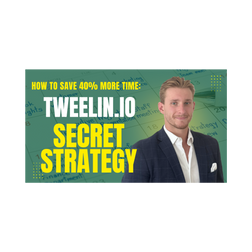
Kill the Meeting Chaos: How Tweenlin Uses AI to Free Your Calendar
Sick of living in your calendar? Founder Dario De Santis (Tweenlin) breaks down how his team is cutting the meeting overload—turning endless 1:1s and “quick syncs” into fast, human conversations without scheduling gymnastics. We dig into: The real cost of meeting sprawl (and why remote work made it worse) How Tweenlin’s AI deflects 1:1s and small-group meetings into on-the-fly conversations What early pilots show: measurable productivity gains and “empty calendar” serenity Selling true workflow change into 10k–100k-person enterprises Why you don’t fail if you don’t give up: Dario’s 4-year founder journey from idea → Gartner “Cool Vendor” If your team complains about meetings, send them this. Guest: Dario De Santis — Founder & CEO, Tweenlin Topics: AI collaboration, meeting reduction, enterprise workflow, remote culture, productivity Connect with Dario: LinkedIn (search “Dario De Santis”) Learn more: Tweenlin Subscribe for more founder playbooks on building the future of work.
Stop Hiring, Start Automating: AI “Employees” That Scale You
On this episode of Off the Grid on the Record, I sit down with Trey DeMobile, founder of Immersive Agentics, to unpack how small teams (from 2–15 people) are plugging in AI “employees” to reclaim time, reduce busywork, and tighten security without adding headcount. We dig into practical, repeatable workflows—like an autonomous social media manager and a personalization enginethat drafts 1,000 custom emails in a few hours—plus where AI shines (high-volume, repetitive tasks) and where humans still win (empathy, relationship building, lateral problem-solving). What we cover: Building AI “employees” from real job descriptions (qualifying, research, social, outreach) Why the goal isn’t “replace people,” it’s free them to shake more hands & close more deals The limits today: AI needs a “pitch,” struggles with human nuance, and shouldn’t fake being human Security reality check: AI increases both attack velocity and defense—how to think about risk Tool sprawl vs. training: why teams underinvest in AI fluency and overpay for features Ideal fits: nonprofits, real estate, trades, solopreneurs—anyone who thrives on relationships Culture shifts: upskilling entry roles to higher-value work as AI takes the grunt work Guest links: Immersive Agentics — immersiveagenetics.com 👉 Subscribe for more founder stories on tech, security, and the future of work.
Inside the $1T Ad Machine: How Revenue Arc’s 50% Rev-Share Model Delivers 5–8× ROAS
This week on Off the Grid on the Record, I sit down with Andrew Barrow, founder of Revenue Arc, a white-label programmatic ad agency running campaigns for household names—and flipping the traditional agency model on its head with a 50% gross revenue share back to partners and lifetime referral commissions. Andrew pulls back the curtain on how programmatic really works (CTV, display, audio, premium publishers), why most brands overspend on fees, and how Revenue Arc’s model lets agencies earn from media instead of getting drained by it. We also cover the playbook behind consistent 5–8× ROAS (and a standout case that raised $145M on ~$2M ad spend), plus the AI systems that now spin up media plans in minutes. What we cover: Programmatic in plain English: how every impression is auctioned in 1/100th of a second The 50% gross rev-share + lifetime referrals (why partners often make more than the trader) Budgets that work: why $500/day is a realistic floor for performance, and when to scale Predictive modeling: targeting people before they’re in-market (and outpacing competitors) The three biggest campaign killers: weak landing pages, bad targeting, and “not bought-in” leadership Beating “engagement farms,” avoiding toxic optimization data, and tightening guardrails AI as force-multiplier: media plans, decks, and daily optimizations generated in minutes If you’ve ever wondered how the ads you see on Hulu, top news sites, Spotify, and mobile apps actually get there—and how to run them profitably—this episode is your blueprint. 🔗 Connect with Andrew & Revenue Arc: Website (Marketing): revenuearkmarketing.com Website (Corporate): revenueark.com 👉 More episodes: youtube.com/@yarekmatacz
1 di 5