Now That's Not A Very Interesting Podcast!

Now That's Not A Very Interesting Podcast!

di Craig Chapman
Stagione 2

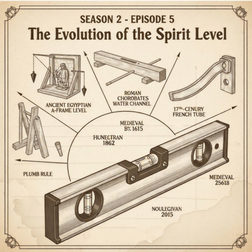
The Evolution of the Spirit Level.

​In this 18th episode, Craig Chapman explores the unwavering honesty of the spirit level, a tool that remains the ultimate arbiter of truth in an inherently wonky world. From Melchisédech Thévenot’s 17th-century discovery that alcohol (spirits) makes for a better bubble-vessel than water, to the modern use of fluorescent fluorescein to provide that signature radioactive glow, Craig tracks the journey of the horizontal. ​The episode features a personal investigation into Craig’s own refrigerator and its 1.2-degree lean toward the kitchen door—a discovery that has significantly altered his kitchen-based equilibrium. In the "What Do I Have Here?" segment, Craig examines the industrial silence and questionable mint flavoring of a 40-meter container of unwaxed dental floss. ​This episode also includes: ​Administrative Refresh: An update on the podcast's steady growth, now averaging 70 downloads a month. ​The Grout Gallery: Announcements regarding new high-resolution additions to the website’s tiling archive. ​The Listeners Corner: Craig addresses Arthur from Birmingham's query on postage stamp perforations and Eleanor from Vermont’s deep-seated distrust of high-velocity hand dryers. ​Join us next week as we investigate the Rubber Thimble, followed by an upcoming inquiry into exactly how long it takes for the verge puddle to become stagnant.

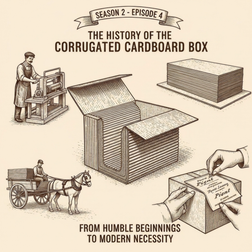
The History of the Corrugated Cardboard Box.

In this episode, Craig Chapman returns from a necessary three-week recalibration period to explore the structural majesty of the world’s most common brown rectangle. After a brief, structurally sound apology for his absence and a moving observation of a bathtub-dwelling spider, Craig peels back the layers of the corrugated cardboard box. We journey from the sweat-prone Victorian gentlemen who wore cardboard as hat liners in 1856 to Robert Gair’s fortuitous printing mistake in 1879 that gave us the flat-pack revolution. ​Highlights include: ​The Physics of the Flute: Why your toaster is supported by the same architectural principles as a Roman aqueduct. ​What Do I Have Here?: A deep dive into "Arthur," a 12-centimeter vulcanized rubber door wedge. ​The Lingerie Phase: When cardboard was just a "rhythmic scarf" for glass bottles. ​The Listeners Corner: Addressing invasive questions from Wales and impressive vanilla extract longevity in Seattle.

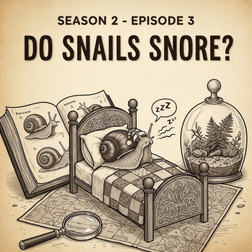
Do Snails Snore?

In this episode of Now That’s Not A Very Interesting Podcast, Craig Chapman turns his attention to the horticultural underbelly to investigate the acoustic habits of the common garden snail. Do they produce a miniature ruckus when they retreat into their calcium-carbonate shells, or is the garden truly as silent as it appears? Craig explores the mechanics of the pneumostome and the structural integrity of the "mucus door" known as the epiphragm. In our "What Do I Have Here?" segment, we take a clinical turn as Craig examines a pair of medium-sized latex gloves. We discuss the 1889 origins of the surgical glove and why they are the preferred choice for anyone wishing to reorganise their collection of vintage envelopes. In this episode, you will hear: The technical difference between a snore and a "high-tenacity sigh" in gastropods. Why a snail might choose to sleep for three consecutive years (the ultimate beige dream). The history of William Stewart Halsted and the birth of the medical-grade secondary skin. A very firm correction in The Listeners Corner for Kim from West Rainton, whose suggestions were deemed "too exciting" for broadcast.

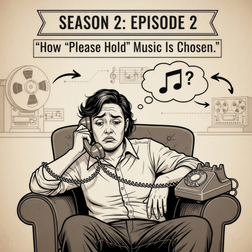
How "Please Hold" Music Is Chosen.

In this installment of Now That’s Not A Very Interesting Podcast, Craig Chapman explores the acoustic purgatory known as "Please Hold" music. Have you ever wondered why a billionaire corporation forces you to listen to a flute solo recorded through a tin can? Craig breaks down the technical "Audio Mulch" created by frequency clipping and pays homage to the unsung heroes of MIDI synthesizers. ​We also dive back into the kitchen cupboard for a new "What Do I Have Here?", where we examine the humble T-shirt carrier bag. It’s a story of Swedish engineering, unintended environmental consequences, and the structural superiority of high-density polyethylene. ​In this episode, you will hear: ​An analysis of the three main genres of hold music, from "Corporate Zen" to the 1989 classic, Opus No. 1. ​The technical reason why Mozart sounds like a robot screaming when played over a telephone line. ​The history of Sten Gustaf Thulin’s 1965 patent and the birth of the "bag of bags." ​International correspondence from Gary in Nebraska, who has successfully used bivalve anatomy to avoid his neighbors. ​Digital Hub: Our brand new, aesthetically neutral website is now live at www.nowthatsnotaveryinterestingpodcast.co.uk. Stop by to browse our archive of dull topics, ask Craig a question about stationary, or submit yourself for a guest appearance (strict "No Excitement" policy applies).

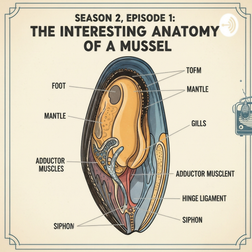
The Interesting Anatomy of a Mussel!

Welcome to the Season 2 premiere of Now That’s Not A Very Interesting Podcast. To celebrate the start of 2026, host Craig Chapman dives into the thrillingly static world of the bivalve mollusk. While most people see a seafood starter, Craig sees a masterclass in biological engineering and antisocial behavior. ​In this episode, we analyze the Byssal Threads (nature’s answer to the industrial glue gun) and the Mantle (the fleshy 3D printer that turns anxiety into a limestone house). We also debut our new segment, "What Do I Have Here?", featuring a deep dive into the aggressive history of the common jaw-type staple remover. ​It’s a Very Beige New Year, and we are starting it exactly as intended: with a creature that has no brain and refuses to move. ​In this episode, you will learn: ​Why mussel "spit" is currently being studied by high-end surgeons. ​How to read a mussel’s life story through its structural failures. ​Why the staple remover is the physical manifestation of office-based regret. ​Get in Touch: Visit our brand new, functionally grayscale website at: www.nowthatsnotaveryinterestingpodcast.co.uk.

Where Are We Going?

Bonus
After a prolonged absence due to personal health struggles, Craig Chapman returns to look at the future of the show. Craig pivots from sewing history to address a looping question: What's next? Discover upcoming plans for an interactive WhatsApp number, drama-free YouTube Live streams for outsiders, a potential new video show, and details on the upcoming Season 2 finale and the lukewarm launch of Season Three. No pressure, no malarkey—just a quiet look forward. Stay functional! www.nowthatsnotaveryinterestingpodcast.co.uk nowthatsnotaveryinterestingpodcast@mail.com

A Measured Absence - "I need a break"

Bonus
In this transitional announcement, Craig Chapman discusses the necessity of intentional stillness and the structural integrity of a quiet departure after observing a puddle’s successful evaporation. Craig explains that he is stepping away from the microphone to recalibrate his internal levels and address a persistent digestive biscuit crumb on his desk; however, due to the importance of accuracy and structural stability, we cannot provide a specific return date at this time. Please be assured the show will resume as soon as is functionally possible with our deep dive into The History of the Corrugated Cardboard Box, featuring Victorian hat liners and the accidental genius of Robert Gair. In the meantime, the digital hub at www.nowthatsnotaveryinterestingpodcast.co.uk will remain in its optimal, low-energy state, and listeners are encouraged to engage in low-impact activities, such as reorganizing a junk drawer by weight, until we return. See you all soon!

Now That's Not A Very Interesting Podcast: SEASON 2 TRAILER!

Trailer
We’re back... for some reason. They said it couldn't be done. They said, "Please, Craig, don't do it." But we didn't listen. Now That's Not a Very Interesting Podcast returns for a second season of deep dives into the delightfully mundane, the oddly specific, and the stories that are just "okay" enough to keep you listening. Join host Craig Chapman as he explores more topics that occupy that strange space between "fascinating" and "why am I still listening?" Whether you’re commuting, doing dishes, or trying to fall asleep, Season 2 is the perfect companion for anyone who likes their information served with a side of dry wit and zero hype.
Stagione 1

The Longevity of Shipping Containers in Saltwater Environments.

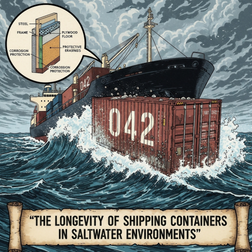
This week​, Craig takes a deep dive into the most predictable structural failure in global trade: the shipping container. ​We ignore the thrilling drama of cargo pirates and instead focus on the chemical inevitability of decay. This episode analyzes Corten steel, the supposedly "self-healing" material designed to resist corrosion, and why that system fails catastrophically when introduced to simple salt water. We dissect the difference between benign surface rust and aggressive saline pitting, before moving to the most compelling conclusion: why it is cheaper, more efficient, and structurally necessary to simply let the container fail than to try and save it. It’s a guaranteed losing battle—and global trade has already done the math. ​Contact the Program: If you have an uninteresting structure or system that requires our rigorous analysis, contact the program at: nowthatsnotaveryinterestingpodcast@mail.com or visit our predictably functional website at www.nowthatsnotaveryinterestingpodcast.co.uk. ​#ShippingContainer #CortenSteel #Corrosion #MaterialScience #GlobalLogistics #StructuralFailure #CostBenefitAnalysis #MundaneFacts
Let's Look At the Dictionary!

​This week, host Craig Chapman turns his analytical focus toward the ultimate structure: The Dictionary. This episode ignores the literary merit and instead analyzes the dictionary as a colossal, yet perpetually flawed, organizational system. ​We break down the historical chaos of inconsistent spelling and definition, and examine Samuel Johnson's monumental 18th-century attempt to lock the language down with permanent rules. Was this massive data-collection project doomed from the start? We dissect the system's greatest flaw: the inevitable problem of time—the static book trying to contain a moving, fluid system. A noble effort, but ultimately a losing battle against the unstoppable force of change. ​Contact the Program: If you have an uninteresting structure or system that requires our rigorous analysis, contact the program at: nowthatsnotaveryinterestingpodcast@mail.com or visit our predictably functional website at www.nowthatsnotaveryinterestingpodcast.co.uk. ​#Dictionary #Linguistics #OrganizationalFailure #HistoryOfBooks #Rules #SystemsAnalysis #LanguageHistory #MundaneFacts
2 di 4