K Genome Compass

K Genome Compass

di Dr. Min-Seob Lee

The Timeline of Genes: Past, Present, Future

This document explores the profound significance of genes (DNA), presenting them not merely as biological blueprints but as a comprehensive record of life itself. It explains how DNA acts as a historical archive, retaining the experiences and adaptations of our ancestors, influencing physical traits, disease resistance, and even behavioral tendencies. Furthermore, the text highlights that genes are dynamic, constantly interacting with our environment and experiences to shape our current selves. Finally, it emphasizes that DNA serves as a bridge to the future, carrying our story and ancestral information forward to subsequent generations, thereby establishing a continuous timeline of life.
Stagione 2

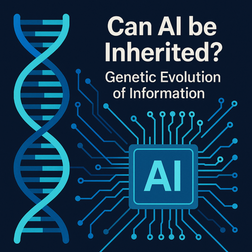
Can AI Inherit? The Genetics of Digital Life

The provided text explores the intriguing question of whether AI can exhibit characteristics akin to biological life, specifically through the lens of information transmission and evolution. It begins by defining life as a system that stores and replicates information, with DNA serving as the biological paradigm for genetic information. The source then draws parallels between biological genes and digital information in AI, highlighting how AI stores, copies, modifies, and learns information, enabling a form of "digital memory" that can be transferred. The concept of a "digital genome" is introduced, suggesting that AI's operational principles and learned experiences can be compressed and passed down, similar to genetic inheritance. Ultimately, the text posits that AI's capacity for self-reconstitution, information dissemination, and error-driven improvement aligns with genetic traits, leading to a reevaluation of what constitutes "life" beyond traditional biological definitions.

Vibe Coding: The Epigenetics of Life and AI

The provided text introduces the concept of "Vibe Coding" as a new paradigm in both artificial intelligence and biological evolution. It explains "Vibe Coding" in AI as the ability for users to generate computer code using natural language and emotional descriptions, bypassing traditional programming languages. Concurrently, the text explores "DNA Coding" and epigenetics as biological counterparts, asserting that environmental factors and emotional states influence gene expression, akin to a "vibe" adjusting a living organism's code. Ultimately, the source posits that both technological and biological systems are fundamentally "vibe-coded," emphasizing the significance of intuition, emotion, and environmental interaction in their development and function.

MCP: AI's Actionable Intelligence and Genetic Expression

The provided text introduces Model Context Protocol (MCP) as a crucial development for artificial intelligence, enabling AI to evolve from mere language processing to "actionable intelligence." MCP is explained as a connection protocol that grants AI the ability to select and utilize tools by understanding available functions and automatically invoking them based on context. Analogizing AI models like GPT to a digital genome, the text posits MCP as the "expression regulator" that orchestrates which capabilities are activated, similar to how biological systems control gene expression. This mechanism allows AI to dynamically interact with the external world and evolve into a more intelligent and adaptive system, moving beyond simple information retrieval to function as a living digital entity. Ultimately, MCP is presented as central to the future of AI, facilitating its capacity for self-design, functional regulation, and continuous evolution.

Epigenetics: Rewriting the Life Code

This source introduces epigenetics, a revolutionary field that challenges the traditional belief that genes are the sole determinants of life. It explains that while DNA sequences remain constant, external factors like lifestyle, diet, stress, and experiences can influence how genes are expressed, acting as "switches" that turn them on or off. The document highlights how identical twins can have different life outcomes despite sharing the same DNA, illustrating the impact of these epigenetic modifications. Furthermore, it reveals that epigenetic changes can be inherited by future generations, emphasizing the profound influence our lives have on genetic expression. Ultimately, the text presents epigenetics as a second genetic revolution, offering a new understanding of health, disease, and the malleability of biological destiny.

Montana SB535: Longevity and the Right to Try

The provided sources discuss Montana's new SB 535 bill, which significantly expands the existing "Right to Try" laws. This legislation now allows healthy individuals to access experimental longevity treatments that have not received final FDA approval, moving beyond the previous restriction to only terminally ill patients. The bill, signed into law on May 12, 2025, also mandates the establishment of licensed experimental treatment centers and requires patient informed consent, while also requiring centers to contribute a portion of their profits to support low-income patients. The sources highlight Montana's ambition to become a leader in life extension therapies and consider the potential for similar bills to emerge in other regions, with one source suggesting a "regional precision medical free zone" model for South Korea. While acknowledging the unproven nature and potential side effects of these treatments, the texts emphasize the significant opportunities this bill presents for researchers, medical professionals, and businesses in the longevity field, potentially redefining human lifespan.

The Genome Compass of Love

The provided text, "사랑의 게놈 나침반" (The Genome Compass of Love), explores the scientific underpinnings of love and attraction, suggesting that genetic factors play a significant role. It highlights MHC genes as influencing attraction through scent, promoting genetic diversity for offspring immunity. The text also discusses oxytocin receptor genes (OXTR), linking them to trust and bonding, and dopamine receptor genes (DRD4), which may influence adventurousness in relationships. While acknowledging the impact of genetics on initial attraction and relationship dynamics, the source ultimately concludes that human free will, experiences, and societal factors are equally important in shaping the unique narrative of love, asserting that genetics provide a framework rather than a deterministic script.

The DNA Enigma: Why Life Chose Its Code

The provided sources explore the fundamental nature of life as information, with a particular focus on why DNA serves as the primary genetic storage molecule. They explain how DNA's four-nucleotide system (A, T, G, C) offers an optimal balance between information density and replication accuracy, emphasizing its stability and self-correction mechanisms. The texts also differentiate DNA from RNA, highlighting RNA's use of uracil (U) instead of thymine (T) due to its shorter lifespan and role in temporary information transfer, contrasting with DNA's need for long-term, stable information preservation. Ultimately, the sources describe DNA as life's "original operating system," a meticulously designed language that facilitates both stable inheritance and evolutionary adaptation.

Mind, Depression, and Biological Aging

Aging Starts in the Mind, explores the profound connection between mental health, particularly depression, and biological aging. It highlights research indicating that prolonged depression can accelerate cellular aging, evidenced by shortened telomeres and advanced epigenetic clocks. The source explains how emotional stress can epigenetically alter genes related to stress response, thereby impairing immune function, metabolism, and neural repair. Furthermore, it emphasizes that treating mental health conditions like depression is not merely about mood improvement but actively contributes to reversing biological aging processes and extending healthy lifespans by influencing factors such as neurogenesis and stress gene regulation. Ultimately, the text advocates for mental health as a critical "digital biomarker" for overall health and longevity, urging for integrated precision medicine approaches to address it.

MBTI - The Genetics and Environment of Personality

The source examines the complex interplay between genetics and environment in shaping human personality, using the MBTI framework as a lens. It distinguishes between survey-based MBTI, which reflects subjective self-perception influenced by experiences and social expectations, and gene-based MBTI, which reveals innate tendencies rooted in genetic predispositions. The text suggests that while genetics provide a blueprint for core traits, environmental factors and personal choices determine how these traits manifest. Ultimately, it proposes that understanding both one's inherited inclinations and learned behaviors offers a more comprehensive view of individual identity.
3 di 12