Impractical Privacy

Impractical Privacy

di Sudo

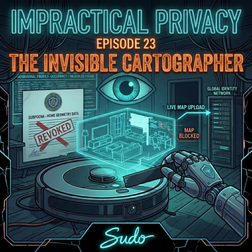
The Invisible Cartographer

In this episode, Sudo peels back the lid on the quiet surveillance happening in your living room—smart vacuums. From LiDAR mapping your home's exact layout to cloud-synced floorplans sold to data brokers, these "harmless" cleaning robots are actually autonomous surveyors building detailed dossiers on your domestic life. The episode explores what happens to your home's blueprint once it leaves your Wi-Fi, the bystander problem affecting guests and family members who never consented, and actionable steps to reclaim your floorplan before it becomes someone else's commodity. 📚 Chapters Cold Open: Sudo paints the scene of coming home to what feels like a private sanctuary, only to reveal that the Roomba humming across your floor has spent the last 45 minutes building a millimeter-accurate digital model of your home and uploading it to a server you don't own. The Invisible Cartographer – Smart vacuums aren't just cleaners; they're mapping machines using LiDAR, cameras, and AI to build millimeter-accurate 3D models of your home. The Data Trail – Once your floorplan leaves your house, it enters a world you don't control, where it can be subpoenaed, breached, or sold to data brokers. The Bystander Problem… in Your Home – Smart vacuums map everyone in your space—guests, roommates, children—who never consented to being surveyed. What Can You Actually Do? – Practical steps for owners to disable cloud sync, revoke permissions, apply physical safeguards, and delete old maps, plus advocacy tips for everyone. Outro: Sudo closes with hope, drawing parallels to how we learned to lock down smartphones, smart speakers, and tracking cookies, and urges listeners to start small—disable cloud sync, cover that LiDAR sensor, talk to your neighbors—because your home is your sanctuary, not a data mine. 🛠️ Resources & Tools iRobot Privacy Policy Ecovacs Privacy Policy Technology Review Article on Smart-Vac privacy The Hacker News Article on Smart-Vac maps 🌐 Connect Website: https://impracticalprivacy.comThe tracker-free, telemetry-free hub for the show, now including Bitcoin and Monero support options. Patreon: https://impracticalprivacy.com/patreon X (Twitter): @The_IP_Podcast Mastodon: mastodon.social/@ImpracticalPrivacy Bluesky: impracticalprivacy.bsky.social

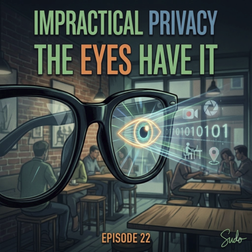
The Eyes Have It

Sudo peels back the sleek frames of smart glasses to reveal the sophisticated surveillance nodes hidden within, exploring how devices like the Ray-Ban Meta and Echo Frames have evolved into constant data harvesters. We dissect the terrifying asymmetry between wearer convenience and bystander anonymity, the "normalization" of invisible recording, and the legal vacuum allowing our daily interactions to be monetized without consent. Finally, we pivot to action with concrete strategies for reclaiming agency and pushing back against the erosion of privacy in public spaces. 📚 Chapters Cold Open: A casual café scene reveals the unsettling reality of invisible recording, introducing smart glasses as the latest frontier in the surveillance state. What’s Actually Inside Those Frames?: Unpacking the high-tech sensors and AI capabilities that turn everyday eyewear into a direct pipeline for corporate data collection. The Wearer’s Privacy Problem: Examining the wearer's hidden risks, from accidental cloud uploads and false-positive wake words to invasive gaze-tracking analytics. The Bystander Problem: Tackling the "Bystander Problem" and how invisible recording erodes the social contract of privacy for everyone on the street. The Legal Vacuum: Navigating the legal vacuum where outdated wiretapping laws fail to protect against modern wearable surveillance. What Can You Actually Do?: Actionable steps for wearers to secure their data and for bystanders to advocate for "recording by consent" laws. Outro: While acknowledging the technology's potential for good, the episode urges listeners to establish privacy norms and legal safeguards before invisible surveillance becomes the default. 🛠️ Resources & Tools Wired Article on Meta Glasses Fortune Article on Meta Glasses Techtimes Article on Smart Glasses EFF: Surveillance Self Defense 🌐 Connect Website: https://impracticalprivacy.com The tracker-free, telemetry-free hub for the show, now including Bitcoin and Monero support options. Patreon: https://impracticalprivacy.com/patreon X (Twitter): @The_IP_Podcast Mastodon: mastodon.social/@ImpracticalPrivacy

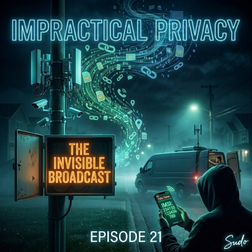
The Invisible Broadcast

This episode of "Impractical Privacy" explores the fundamental privacy vulnerabilities built into cellular network infrastructure itself. Sudo explains how GSM, 3G, 4G, and even 5G protocols were designed for connectivity rather than security, leaving users exposed to IMSI catchers, SS7 signaling exploits, and pervasive metadata tracking. The episode balances technical depth with practical countermeasures while emphasizing that individual actions alone cannot fix systemic infrastructure problems. 📚 Chapters Cold Open: Introduces the paradox of feeling digitally secure while broadcasting identity via cellular networks. The Illusion of Security: Explains how cellular protocols were designed for connectivity, not privacy, creating inherent trust vulnerabilities. The Three Big Leaks: Details IMSI catchers, SS7 signaling exploits, and metadata collection as the three primary cellular surveillance vectors. Why 5G Isn't the Silver Bullet: Argues that 5G improvements are undermined by downgrade attacks and legacy protocol support requirements. What Can You Actually Do?: Offers six practical countermeasures including airplane mode, encrypted messaging, hardware keys, and advocacy. The Bigger Picture: Frames privacy as awareness and collective action rather than just individual technical solutions. Outro: Closes with a reminder about VPN-aware session auditing and encourages sharing the episode. 🛠️ Resources & Tools Signal: End-to-end encrypted messaging Session: Anonymous messaging without a phone number. EFF article on Rayhunter and IMSI catchers Harvard.edu paper on IMSI catcher impact EFF: Surveillance Self Defense 🌐 Connect Website: https://impracticalprivacy.com The tracker-free, telemetry-free hub for the show, now including Bitcoin and Monero support options. Patreon: https://www.patreon.com/cw/SudoBurnToast X (Twitter): @The_IP_Podcast Mastodon: mastodon.social/@ImpracticalPrivacy

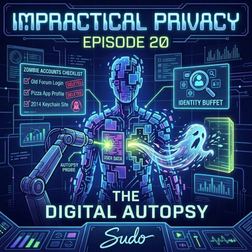
The Digital Autopsy

In this episode of Impractical Privacy, Sudo peels back the layers of your digital past to reveal the "Digital Shadow" trailing behind you. The show breaks down how old, forgotten logins and "Zombie Accounts" serve as an "Identity Buffet" for data brokers and scavengers who buy up bankrupt databases. Ultimately, Sudo argues that your legacy email address acts as a dangerous "Primary Key" tying your current life to fifteen years of digital debris. He provides technical strategies to perform a digital autopsy, poison the well with fake data, and sever the links between your past and your present. 📚 Chapters The Ghost in the RAM: Sudo challenges the idea that securing your current devices is enough, explaining that your "digital junk drawer" is full of active threats. The Identity Buffet: 03:25 This segment details how a single legacy email address acts as a "Primary Key" indexing your entire identity. Sudo explains the rise of "Data Scavengers" and how to use tools to fight back. The Data Extraction Maze: 06:52 Sudo explores the "Dark Patterns" designed to keep you stuck in a company's database. He introduces the "Garbage In, Garbage Out" strategy of poisoning your profiles with fake data before deactivation, and stresses the importance of incinerating "Zombie Cookies" in your browser. Future-Proofing the Void: 10:44 This chapter focuses on the "Burner by Default" lifestyle, urging listeners to use unique, encrypted aliases for every interaction. Sudo also covers the "Permission Audit" for GrapheneOS users, emphasizing the use of Storage Scopes to limit app access. #DigitalHygiene Challenge 14:22 The episode concludes with a practical mission: find the oldest zombie account you have, perform a full deletion, and rigorously unsubscribe from unrequested emails. Outro 15:01 Sudo wraps up with reminders to support the show via Patreon or cryptocurrency (Bitcoin and Monero), and teases an upcoming April bonus episode for "Big Fan" tier subscribers. 🛠️ Resources & Tools Have I Been Pwned: A tool to use as a map for finding "Handshake Protocols" you need to terminate. SimpleLogin & Addy.io: Services for the "Identity Masking Pivot" to swap your primary email for a masked alias. GrapheneOS Storage Scopes: A feature to restrict app permissions rather than giving an app the keys to the whole house. 🌐 Connect Website: https://impracticalprivacy.com The tracker-free, telemetry-free hub for the show, now including Bitcoin and Monero support options. Patreon: https://www.patreon.com/cw/SudoBurnToast X (Twitter): @The_IP_Podcast Mastodon: mastodon.social/@ImpracticalPrivacy

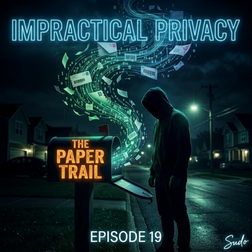
The Paper Trail

In this episode of Impractical Privacy, Sudo peels back the high-gloss exterior of the postal system to reveal the "Paper Trail" of analog metadata. The show breaks down how every envelope you receive is digitized, indexed, and tracked by a surveillance apparatus that has been running since 2001. Ultimately, Sudo argues that your home address is the "Primary Key" tying your anonymous online persona to your physical front door and provides technical "physical defense" strategies to decouple your residence from the data brokers' reach. 📚 Chapters Intro: The Analog Tracker Sudo challenges the illusion of privacy in "The Mail," explaining that before a letter ever reaches your driveway, it has been indexed by high-speed sorting machines that digitize the metadata of your physical life. The Identity Buffet: A Deep Dive into the Analog Harvesting Machine 01:52 This segment details the Mail Isolation Control and Tracking (MICT) program, which captures images of every piece of mail to map out your physical social graph for law enforcement—no warrant required. The "Informed Delivery" Trap: Bridging the Air-Gap 03:33 Sudo explains how "convenience" services link your physical home address to your email, IP address, and smartphone ID, effectively telling trackers exactly where your "anonymous" hardened devices sleep at night. The Address as a Product: NCOA and Validation Pings 05:40 This chapter explores how the USPS acts as a data broker by selling "New Mover" lists and how "Current Resident" mail serves as a "Validation Ping" to confirm your home is an active target for identity harvesting. The Sudo Pro-Tips: Hardening the Physical Perimeter 10:06 The episode concludes with practical strategies for physical sovereignty, including the "PO Box Pivot" to create a physical firewall, using the "Opt-Out Trifecta" to cut the data supply line, and implementing strict digital hygiene for postal apps. 🛠️ Resources & Tools DMAchoice: The "Do Not Call" list for your physical mailbox. OptOutPrescreen: The nuclear option to stop credit bureaus from selling your data to lenders. Catalog Choice: A free tool to unsubscribe from specific retail catalogs. Physical Security: Cross-cut or micro-cut shredders and identity-theft roller stamps for obliterating Intelligent Mail Barcodes (IMb). 🌐 Connect Website: https://impracticalprivacy.com Patreon: https://www.patreon.com/cw/SudoBurnToast X (Twitter): @The_IP_Podcast Mastodon: mastodon.social/@ImpracticalPrivacy

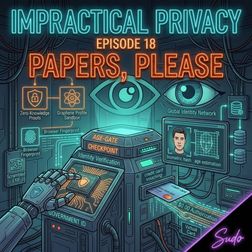
Papers, Please

In this episode of Impractical Privacy, Sudo explores the rising "gold rush" of digital age verification and how it serves as a "backdoor" for creating a global identity network. The show breaks down how uploading government IDs, using facial recognition AI, or linking credit cards transforms users into "data products" and creates permanent digital fingerprints that track movement across the web. Ultimately, Sudo argues that these "safety" measures are often corporate overreach and encourages listeners to use technical "self-defense" like GrapheneOS sandboxing and metadata scrubbing to remain "unreliable data" in the eyes of brokers. 📚 Chapters Intro: The Digital Bouncer Sudo contrasts the privacy of a physical bar's bouncer with 2026’s "digital doors," where "Walled Gardens" demand your papers just to look through the fence. The Identity Buffet: A Deep Dive into the Harvesting Machine 1:05 This segment details how methods like ID uploads, biometric estimation, and credit card "vouching" create permanent, leak-prone trails that link your real-world identity to your private browsing habits. The Third-Party Middleman: The Legalized Man-in-the-Middle 6:23 Sudo explains how websites outsource verification to third-party providers, giving these middlemen a "God-eye view" of your entire life across hundreds of different platforms. The Graphene Approach: Selective Disclosure and Data Poisoning 10:18 This chapter offers practical defense strategies, such as using GrapheneOS "Sacrifice Profiles," scrubbing EXIF metadata from ID photos, and using email masking to break the link between your name and your habits. The Conclusion: Privacy vs. Permission 14:23 The episode concludes by warning that normalized age gates are building a "Social Credit" infrastructure and challenges listeners to audit their accounts and refuse non-essential identity checks. 🛠️ Resources & Tools EFF Age Verification Resource Hub: eff.org/Age TechPolicy Press - Age Gating Risks: techpolicy.press/risks IDScan.net - 2026 Roadmap: idscan.net/2026-trends ExifRemover (Web-based): exifremover.com 🌐 Connect Website: https://impracticalprivacy.com Patreon: https://www.patreon.com/cw/SudoBurnToast X (Twitter): @The_IP_Podcast Mastodon: mastodon.social/@ImpracticalPrivacy

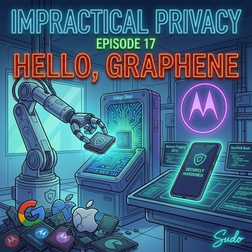
Hello, Graphene

We dismantle the mobile duopoly and uncover the third door: GrapheneOS. With Motorola’s historic partnership announced at MWC 2026, privacy-focused hardware is finally diversifying beyond the Pixel. From Sandboxed Google Play to the "AI Tax" on standard OSs, we explore why your phone shouldn’t be a data-gathering sensor and give you the blueprint for a fortress that survives forensic scrutiny. 📚 Chapters Intro – The Duopoly: Why iOS and Android are just walled gardens with different fences. Moto’s MWC Announcement: The 2027 roadmap, ThinkShield, and Memory Tagging (MTE). The "One is None" Rule: Diversifying hardware to ensure GrapheneOS survival. Security vs. Privacy Trap: Why LineageOS and /e/ OS fail the security test. The Forensic Fortress: Auto-Reboot, USB Port Scrambling, and BFU/AFU states. The AI Tax on Privacy: Resisting the pivot from phone companies to AI data harvesters. Outro & Call‑to‑Action: Wait for the rollout, support the resistance, and reclaim autonomy. 🛠️ Resources & Tools GrapheneOS Foundation – The open-source hardening project. Motorola's MWC Updates – Upcoming Graphene-ready hardware (2027). Hardware Memory Tagging (MTE) – Chip-level exploit mitigation. Titan M2 Security Chip – Protection against brute-force attacks. 🌐 Connect Website: https://impracticalprivacy.com Patreon: Support the show & get bonus episodes. X (Twitter): @The_IP_Podcast Mastodon: mastodon.social/@ImpracticalPrivacy

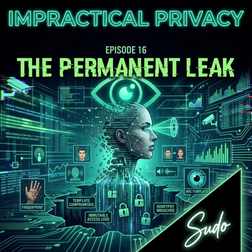
The Permanent Leak

We peel back the glossy veneer of “biometric convenience” and expose why your face, thumb, and gait are the weakest links in today’s digital defenses. From centralized biometric honeypots to synthetic‑identity injection attacks, we lay out the hidden costs of handing over your biology and give you a practical playbook for reclaiming control. 📚 Chapters Intro – The Friction‑less Dream: Why “you are unique” is a marketing myth. The Permanent Breach: Immutable biometric templates = permanent keys. Synthetic Identities & the “Injection Attack”: Virtual‑camera deepfakes that fool banks. Function Creep & The Death of Anonymity: From palm scanners to gait analysis. The Ghost in the Machine: Behavioral biometrics as continuous authentication. Taking Back the Key: Hardware‑bound passkeys, audit permissions, opt‑outs. Global Resistance: How the EU AI Act, US state laws, UK ICO, Australia, Canada, etc., are pushing back. Outro & Call‑to‑Action: Support the show, spread the word, tease next episode (GrapheneOS & Motorola). 🛠️ Resources & Tools Hardware Passkeys – YubiKey Behavioral‑Authentication - Ping Identity Legal References – Colorado Privacy Act (2026), EU AI Act (2026) 🌐 Connect Website: https://impracticalprivacy.com Patreon: Support the show & get bonus episodes. X (Twitter): @The_IP_Podcast Mastodon: mastodon.social/@ImpracticalPrivacy

The Convenience Tax

In this episode, Sudo dives into the hidden costs of reclaiming your digital sovereignty: the "Convenience Tax". He explores how a "coding error" at PayPal exposed the sensitive "Big Four" data of business users, providing a perfect starter kit for identity theft through SIM swapping and account takeovers. The episode balances the technical fortress of GrapheneOS and self-hosting against the real-world friction of app crashes, banking blocks, and the literal "physical tax" of carrying hardware keys. Sudo offers a tactical guide to fighting "privacy burnout" by reframing tech hurdles as intentional security wins and managing your home lab without bankrupting your family's happiness. Chapters The PayPal "Oopsie": Sudo breaks down how an internal exposure of Names, Addresses, SSNs, and DOBs creates a "permanent tax" on your identity that cannot be simply reset like a credit card. The Account Takeover Workflow: A step-by-step look at how scammers use leaked data to trick cell providers, perform SIM swaps, and bypass "Forgot Password" security. Impractical Mitigation: Why a credit freeze is a "fire suppression system" rather than just a smoke detector, and the necessity of pivoting to hardware keys like YubiKeys to stop SMS-based recovery attacks. Living in the Fortress: A raw look at daily-driving a Pixel with GrapheneOS, navigating the friction of Sandboxed Google Play, and the "Banking Wall" that can leave you stranded at the checkout counter. The Physical Tax: Examining the "Sovereignty Surcharge" of carrying physical tokens, offline maps, and the extra bulk of a privacy-focused everyday carry. The Sunk Cost of Self-Hosting: The reality of being your own 2:00 AM SysAdmin for tools like Immich or Nextcloud, and the "Family Tax" paid when a Pi-hole update brings down the household internet. Fighting the Burnout: Strategies to stay sane, including reframing broken sites as "diagnostic reports" and setting professional "maintenance windows" for your home lab to protect family time. Celebrate the Victories: A reminder to notice the targeted ads that don't appear and the data breaches that don't affect you because of the aliases and layers you've put in place. Resources GrapheneOS Hardware Keys: YubiKey & Google Titan Self-Hosted Tools: Immich, Nextcloud, and Pi-hole. Connect Website: impracticalprivacy.com Patreon: SupportTheShow X (Twitter): @The_IP_Podcast Mastodon: mastodon.social/@ImpracticalPrivacy Stay safe, stay private... even when it's a pain.

The Dark Side of Public Wi‑F

In this episode, Sudo pulls back the curtain on the "wolf in sheep’s clothing" that is public Wi‑Fi. He explains how "Evil Twin" hotspots and Man-in-the-Middle attacks allow hackers and the surveillance state to siphon personal data, from bank logins to fitness tracker syncs. The episode covers real-world horror stories from hotels to airports and provides a tactical #WiFiWarrior playbook for securing your digital life using VPNs, HTTPS-Only mode, and encrypted DNS. Chapters The Alure: Sudo describes the "siren song" of free Wi‑Fi and how it acts as a digital candy store where your most intimate data is the product Anatomy of a Rogue Hotspot: A tactical look at "Evil Twins," Wi-Fi Pineapples, and captive-portal hijacks used to harvest credentials before you even send a tweet Man-in-the-Middle (MITM) Explained: Breaking down the primary tools used to strip privacy, including packet sniffing, SSL stripping, and DNS spoofing Real-World Horror Stories: A look at the "receipts" of Wi‑Fi attacks, including the Pineapple Hotel Hack (2019), library ransomware (2022), and airport loyalty program scams (2023) Spotting & Disarming: Practical steps to perform a "health check" on your connection by identifying MAC addresses, verifying certificate chains, and using the HTTPS Everywhere test Hardening Your Playbook: The #WiFiWarrior guide to security: using trusted VPNs (WireGuard/OpenVPN), enabling HTTPS-Only mode, turning off auto-connect, and utilizing personal hotspots The Aftermath: Steps to take if you’ve already used a sketchy network, such as revoking active sessions, changing passwords, and monitoring credit reports Stay Sane: A reminder that privacy is a journey, not a destination, and it is not worth sacrificing your mental health for OpSec perfection Outro & Challenge: The #WiFiWarrior challenge: pick one public hotspot, enable a VPN, verify the connection with howsmyssl.com, and share your results Resources Wi‑Fi Pineapple How’s My SSL? HTTPS-Only Mode DNS-over-HTTPS (Cloudflare) Free Credit Monitoring Connect with Us Website: impracticalprivacy.com Patreon: SupportTheShow X (Twitter): @The_IP_Podcast Mastodon: mastodon.social/@ImpracticalPrivacy Stay skeptical. Stay safe. Keep those packets private.
3 di 5