HealthTech Hour

HealthTech Hour

di Steve Roest
Stagione 1
The Truth About Your Health Data - with Matthew Whitty (MDClone, ex-NHS England)
Matthew Whitty is the former Director of Innovation, Research and Life Sciences at NHS England and now Director of Commercial Partnerships at MDClone, a global healthcare data platform. Combining senior NHS leadership with frontline experience in healthcare data and AI, he is an expert on NHS data strategy, safe AI adoption and how health systems can unlock the value of data while protecting patiWho actually owns your health data? Most people assume there's a single patient record sitting somewhere in the NHS. There isn't, and that gap sits at the heart of one of healthcare's most important and least understood debates. This week, Steve Roest is joined by Matthew Whitty, Director of Commercial Partnerships at MDClone and former Director of Innovation, Research and Life Sciences at NHS England. Drawing on a career that's spanned hospital pharmacy, commissioning, consultancy and national policy, Matt offers a rare view from the intersection of government, industry, academia and patient care. Together they unpack why the "privatisation" debate is really about trust and motivation, what the Federated Data Platform and the Palantir contract actually involve, and why de-identified data can still put patients at risk - including the recent UK Biobank breach. They also explore synthetic data, the case for sandbox environments that could make Britain the number one place to build healthtech, and why Matt believes there's far more reason for optimism about the NHS than the headlines suggest. In this episode: Why the NHS can't build everything itself, and what the private-sector "tension" is really about Who owns your health data, and why no single patient record exists The Federated Data Platform and Palantir controversy, explained How de-identified data gets re-identified, and what happened with UK Biobank Synthetic data and the case for UK healthtech "sandboxes" Why the NHS may compare far better to other systems than people assume 🎧 New episodes every week with the founders, clinicians, journalists and leaders shaping the future of healthcare.ent privacy.
Can the NHS Reform Without Losing Universal Care? | Paul Gallagher
What would meaningful NHS reform actually look like—and why is it so difficult to discuss? In this episode of Health Tech Hour, Steve Roest speaks with veteran health journalist Paul Gallagher about the pressures facing the NHS, including waiting-list backlogs, workforce shortages, delayed hospital discharges, social-care gaps and the political sensitivity surrounding reform. Paul draws on two decades of healthcare reporting to examine why the NHS repeatedly falls into short-term crisis management, how public expectations compare with the amount the UK is willing to spend, and why discussions about restructuring are so often reduced to fears of privatisation. The conversation also explores the role technology can play in moving care from hospitals into communities, improving prevention and making services easier to access. Steve shares how a single SMS offering an at-home health check generated 80% uptake among previously unresponsive patients, illustrating how service design, not patient apathy, can determine engagement. They discuss: Why social-care shortages keep medically fit patients in hospital How fragmented care and workforce vacancies create system-wide delays Whether technology can meaningfully reduce pressure on NHS staff Why convenience matters for preventative-health participation The difference between private delivery and charging patients Why NHS reform debates often default to comparisons with the US What the UK could learn from healthcare systems in Europe and Japan Whether higher taxation could support better public services How politics and the media reinforce short-term decision-making Paul Gallagher is a health journalist with more than 20 years of experience, including a decade as health correspondent at the i Paper and work for publications including The Times, The Telegraph and The Mirror. He is also contributing to an Alzheimer’s Disease International report focused on clinical trials. Health Tech Hour features the founders, clinicians, journalists and system leaders changing healthcare in the UK and beyond.
Why Outpatients Should End | Tom Whicher, CEO of DrDoctor
The NHS has invested billions in digital records - but what if the real breakthrough isn't more software, it's what sits on top? In this episode of HealthTech Hour, Tom shares how a naval architecture degree and a chance consultancy project peeling onions for Domino's Pizza led him to co-found DrDoctor in 2012 - and why 13 years later, he believes outpatient care as we know it shouldn't exist. We explore: why hospital appointments haven't fundamentally changed since the 1600s, how DrDoctor has powered nearly 200 million NHS appointments for 37 million patients, why 40% of outpatient activity could be delivered at home, how agentic AI is now transforming how patients interact with the NHS, why EPRs alone don't deliver the savings the NHS was promised, the shift from digitisation to optimisation in NHS strategy, why every CEO of a software business needs to embrace AI, the paradox of the most-wanted job being a doctor while most doctors want to leave, how UK health tech founders can build lasting relationships with the NHS Tom also explains how DrDoctor is becoming the agentic operating system for the NHS — integrating deeply with EPRs, powering the NHS App, and building the AI tools that free up clinicians to focus on patient care. Whether you're a healthcare professional, founder, investor, policymaker, or simply interested in the future of healthcare, this conversation offers a rare inside view of what really needs to change to make the NHS fit for the future. #HealthTech #DigitalHealth
How Remote GPs Could Save the NHS | Julian Titz, CEO of Asterix Health
The NHS needs thousands more GPs - but what if the solution isn't training more doctors, but reconnecting qualified clinicians already outside the workforce? In this episode of HealthTech Hour, Julian shares how a personal diagnosis of a bicuspid aortic valve sparked his journey into healthcare and why he believes preventative care should be far more accessible. We explore: why the NHS workforce crisis continues to worsen, why thousands of GPs are leaving the profession, how remote UK-qualified doctors can support primary care, the future of global healthcare workforces, why AI won't replace doctors anytime soon, the challenges of building healthtech companies in the UK, the role of prevention in reducing long-term healthcare costs, what the NHS 10-Year Plan means for healthcare innovation Julian also explains how Asterix Health is helping GP practices manage complex clinical workloads, reduce administrative burden, and improve patient care by reconnecting experienced doctors with the healthcare system. Whether you're a healthcare professional, founder, investor, policymaker, or simply interested in the future of healthcare, this conversation offers a fascinating look at one of the biggest challenges facing health systems today. #HealthTech #DigitalHealth
Navigating the US Healthcare System for UK Founders with Demi Radeva, CEO of Across
This week on HealthTech Hour, Steve sits down with Demi Radeva, CEO and co-founder of Across, who is helping UK health tech founders enter and succeed in the United States. With nearly 20 years of experience spanning the world's largest US payer, the London School of Economics, and a teaching role at the University of Minnesota, Demi brings a rare dual perspective - she's lived inside both health systems, studied how they finance themselves, and built and co-founded multiple digital health ventures of her own. Demi is particularly passionate about helping founders follow the money - understanding reimbursement, structuring ROI, and accessing the right buyers across the 1,100 decision-making bodies that shape US healthcare. We get into what that looks like in practice - why UK health tech consistently brings stronger evidence to the table, how to access programmatic spend when no billing code exists, and why making your customer money beats saving them money every time. Outside of work, Demi is shaped by her own immigration journey from Bulgaria to the US, an experience that informs how she thinks about culture, incentives, and what it actually takes to move between two very different systems. A sharp, practical conversation with one of the leading voices helping UK health tech founders take their first serious step into the American market. Follow HealthTech Hour for more conversations with the founders, operators and builders shaping the future of UK health and tech.
Tackling Health Inequalities with Data and Innovation with Sam Fay, CEO of SISU Health
This week on HealthTech Hour, Steve sits down with Sam Fay, CEO of SISU Health, who is leading the mission to make preventative health more accessible across the UK. With 25 years of experience in strategic transformation and senior leadership, Sam has a strong track record of scaling organisations and delivering measurable impact - and she brings that operator's lens to one of the biggest challenges in healthcare today: shifting the system from treating illness to preventing it. Sam is particularly passionate about using innovation and data to tackle health inequalities and improve outcomes at scale, and we get into what that looks like in practice - what's actually working, where the system gets stuck, and how SISU is building for reach rather than just reach for those who already engage with healthcare. Outside of work, Sam is a keen outdoor adventurer - long walks with her Ridgeback, skiing, and coastal escapes when the diary allows. A practical, grounded conversation with one of the leaders putting preventative health within reach of the people who need it most. Follow HealthTech Hour for more conversations with the founders, operators and builders shaping the future of UK health and tech.
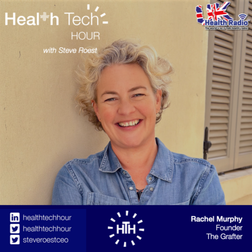
From the NHS App to Eight-Figure Exit - Rachel Murphy on Building What Lasts
Rachel Murphy launched the NHS App and sold multiple businesses. Now she helps other founders do the same. In this episode of HealthTech Hour, we sit down with Rachel Murphy — founder of The Grafter and one of the UK's most trusted operators when it comes to building real business value. Rachel has grown, scaled and sold multiple companies, including the eight-figure exit of her second business, Difrent. She also led the launch of the NHS App, now with over 30 million downloads and one of the UK's most impactful digital programmes. At the start of 2026, Rachel was recognised on the Ideas Fest New Year Honours List, reflecting not just what she's built, but how she shows up for founders and leaders across the UK. Through The Grafter, Rachel works alongside ambitious business owners who want to build something that stands up commercially, strategically and emotionally — helping founders create clarity, drive sustainable revenue, and build long-term value, whether they're scaling, raising, or preparing for their next chapter. Known for her calm authority, straight talking, and ability to sit with complexity when it matters most, Rachel is the person founders trust when the stakes are high — because she's been there, she's done it, and she doesn't flinch. Follow HealthTech Hour for more conversations with the founders, operators and builders shaping the future of UK health and tech.
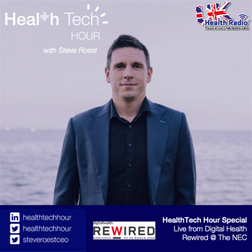
Rewired at the NEC - A Live Panel on the Future of UK Digital Health
This week, HealthTech Hour comes to you live from Digital Health Rewired at the NEC - one of the UK's biggest gatherings of the people building, leading and shaping digital health. Steve is joined at the event by three special guests: Alex Lawrence - Fellow at The Health Foundation, bringing a sharp policy and research lens to the conversations happening across the show floor. Hassan Chaudhury - one of digital health's best-known advisors and connectors, with a knack for cutting through hype and spotting what actually moves the needle. Hayley Grafton - an accomplished digital nurse leader, representing the clinical voice that so often gets left out of the tech conversation. Together, they unpack what's really happening in UK digital health right now: the ideas getting traction at Rewired, the gaps between policy and frontline reality, and where the next wave of impact is most likely to come from. A live, on-the-ground episode you don't want to miss. Follow HealthTech Hour for more conversations with the founders, operators and builders shaping the future of UK health and tech.
The National Joint Registry is the most impactful health data science project you've never heard of - why and how it's transformed healthcare in the UK
20 years ago, there was a scandal around dodgy hip replacements failing. The NHS had no national register for hip replacements - so Richard Armstrong and others set about building one and that is called the National Joint Registry. Scroll forward to today and it is the leading global database for implants and connecting to outcomes. The data is so comprehensive that Richard and his team are able to predict which implants will deliver the best outcomes and the best long-term ROI for any healthcare system. Richard Armstrong is Director of Registries and RWE at NEC Software Solutions and his passion is data science in health - and the impact of his passion is felt throughout the healthcare service, Richard has worked in healthcare informatics for the past decade, running national programmes associated with the collection and reporting of healthcare data. A key aspect of Richard’s work is designing and managing medical registries which analyse data on medical procedures, devices and outcomes. Richard has a pivotal role in advancing real-world evidence initiatives in healthcare, which can significantly impact treatment decisions and patient safety.
Why language barriers in the NHS hurt patients - and one woman's mission to solve this problem with Kavita Parmar, founder of Word360
The data is clear - language barriers hurt patients, in any healthcare setting. In some settings, for example acute, maternity and others, these barriers can lead to very serious situations. Kavita Palmer is a clinician by background and Co-Founder of Word360, a multilingual and translation support platform used across the NHS. Her mission is to solve this, at scale - and the problem is vast. Think about all the communication, written, verbal, paper, electronic, across all healthcare pathways. Last year in London alone, they provided 167 different languages to NHS clinicians and patients and have the ability to offer 450+. As Britain's demographics shift, this will become ever more important to solve efficiently.
1 di 16