GuaxiCast

GuaxiCast

di Luiz Mendes
Stagione 1
Beyond the Prompt: Building Robustness in the Age of AI Agents
IA
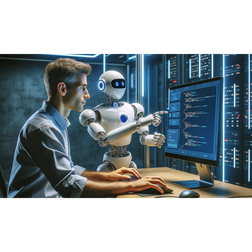
Episode Overview In this episode, we dive into the insights of data scientist and entrepreneur Luiz Felipe Mendes as he explores the shifting landscape of Artificial Intelligence. We move beyond simple LLM prompts to discuss the rise of AI Agents—autonomous programs that don't just talk but act. We also tackle the critical need for ML Prediction Robustness, examining why large-scale systems like those at Meta and iFood require more than just good engineering to stay reliable. Key Discussion Points Defining the AI Agent: Understanding how agents differ from standard chatbots by using external APIs and iterative loops to achieve complex goals. Agentic Workflows: A look at Andrew Ng’s theories on "agentic workflows," where AI systems use feedback loops—such as one agent writing code while another tests it—to improve quality autonomously. The "Reality Check" on Autonomy: A candid discussion on the current limitations of agents, including their struggles with long-term task tracking, limited context windows, and the ongoing necessity of human supervision. The Pillar of Robustness: Why technically "functional" models can still fail in production due to the stochastic nature of data. Engineering for Reliability: A breakdown of Meta’s approach to robustness, focusing on four critical areas:Model & Feature Robustness: Detecting anomalies (like a car priced at 10 reais) before they break a system. Label & Prediction Robustness: Ensuring distributions remain consistent over time. ML Interpretability: Using tools like SHAP values to peer inside the "black box" of complex models. Major Takeaways Iterative vs. Direct: The power of AI today lies in "agentic" workflows that allow for self-correction. Constant Vigilance: ML systems are core components of modern products and require continuous monitoring of features, labels, and predictions to remain robust. Resources Mentioned Luiz Felipe Mendes’ "Weekly Readings" series. Andrew Ng’s lecture on AI Agentic Workflows. MIT Technology Review: "What are AI agents?". Meta’s engineering blog on ML prediction robustness. This podcast was generated based on these show posts https://lfomendes.medium.com/weekly-reading-ai-agents-8414e387bfd8 https://lfomendes.medium.com/weekly-reading-metas-approach-to-machine-learning-prediction-robustness-fae46957cf41
Is AI Evil? Revisiting "Coded Bias" in the Age of LLMs
IA
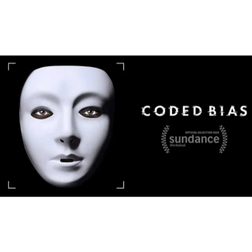
Netflix's documentary Coded Bias argues that machine-learning systems quietly absorb the sexism and racism of the society that builds them — and that facial recognition in the hands of governments and big tech raises serious privacy stakes. In this episode, drawn from Luiz Felipe Mendes' 2021 essay (updated for the GPT era), we walk through what the film gets right, where it oversimplifies, and why "the technology isn't evil — how we deploy it is" is the throughline. We also connect the film's warnings to today's large language models. In this episode: Why AI isn't inherently evil, and how the same models that encode bias can be used to detect and reduce it The film's strengths: human stories, concrete real-world examples, and that it actually proposes solutions (regulation, not just alarm) Where it falls short: treating algorithms as sinister "entities," and the overstated "black box" framing Transparency vs. global interpretability vs. local interpretation — and the tools that make models explainable Regulation in practice: Brazil's LGPD and Europe's GDPR A 2023 update: how GPT-4, Bard, and other LLMs inherit the very biases the documentary warned about Resources mentioned: Documentary: Coded Bias (2021) Bolukbasi et al., "Man Is to Computer Programmer as Woman Is to Homemaker?" — arxiv.org/abs/1607.06520 "A Survey on Bias and Fairness in Machine Learning" — arxiv.org/abs/1908.09635 Explainability tools: LIME (github.com/marcotcr/lime), SHAP (github.com/slundberg/shap), Shapash (maif.github.io/shapash) Christoph Molnar, Interpretable Machine Learning — christophm.github.io/interpretable-ml-book Read the original post on Medium: medium.com/@lfomendes GuaxiCast turns Luiz Felipe Mendes' essays on AI, data science, and building in public into short, honest conversations. Built with curiosity, shipped with ☕.
Beyond the Model: Building Production-Ready Machine Learning Systems

IA
In this episode, we explore the reality of taking machine learning out of the classroom and into the real world. While many believe that modeling is the core of AI, it is often the smallest and sometimes the "easiest" component of a successful system. We break down the complete, iterative workflow required for industry success—from Project Setup and Data Pipelines to Modeling and Serving. Drawing on insights from Luiz Felipe Mendes and the work of Chip Huyen, we discuss why simplicity is a superpower, how strong baselines can outperform complex deep learning models, and why you should spend more time cleaning data than chasing the latest hype. We also tackle the critical "forgotten" aspects of ML, including model interpretability, handling algorithmic bias, and navigating privacy concerns. Whether you are preparing for a machine learning interview or building your first production application, this episode provides the foundational best practices every practitioner needs to know