Free and Direct

Free and Direct

di Indirect Books
Stagione 1
Elaborate Your Garden! The Story of Talbot & The Fall
In this episode of the Free and Direct Podcast, we’re joined by Michael Nath to discuss his forthcoming novel—and Indirect Books’ debut title—Talbot & The Fall: A Comedy (With Support). Along with Michael we welcome on friend of the show Eliza Marley (last heard in conversation about Henry James) and Indirect’s Social Media Manager Luke Alchin-Scolnick. A four-person podcast; who knew! We cover quite a bit of ground, as could be expected. Michael tells us about his influences, including The Fall, the London Underground, Welsh mythology, and much more. We also cover broader questions in art and writing, touching touching on everything from craft issues to literary ancestors. Michael implores everyone to form their own curriculum, which is surely self-explanatory. It’s a great conversation about a great book--one that you can order right here!
Rachel León on HOW WE SEE THE GRAY
This episode features the excellent Rachel León joining the show to discuss her debut novel, How We See The Gray. Rachel wrote for L’Esprit back in Issue Zero, and we’re super excited to celebrate her book. We talk about her use of perspective, the setting in Rockford, Illinois, and the intersection of personal life with writing life. Set over the course of a year, Rachel’s documentary-esque novel is told from multiple perspectives, including those of case workers, birth parents, foster parents, and foster children. Written with the working-class humor and heart that defines the Midwest, How We See the Gray is a story about mistakes, second chances, and trying to do better in a system that seems doomed to fail. We hope you enjoy this conversation, and please do order yourself a copy of Rachel’s excellent book. Merci !
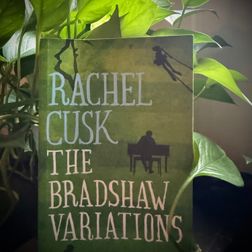
The Sculptural Rightness of Her Limbs: Rachel Cusk's The Bradshaw Variations
In this episode we talk about Rachel Cusk's The Bradshaw Variations, from 2009, looking at how Cusk’s narration and its interest in philosophical depth power the book. We talk about how her use of free indirect style—one more attuned to an “observational mirroring” rather than the messier, more associative syntactic refraction of, say, Woolf—enables her to cover an entire year in the lives of several perspective characters while still getting us close to them. We read out a few passages and talk about the ways that art—what it is and why it matters—gets into this novel. I would definitely encourage everyone to check it out; it’s a great first Cusk book if you’ve never read her. Some really incredible lines and passages all over this one. Hope you enjoy this one, and in the meantime—stay critical. Merci !
Sensitized To Linguistic Difference: Rebecca Ruth Gould on Translation and STRANGERS
In this episode of Cordelivres Club, we are joined by Rebecca Ruth Gould, a UK-Based Translator and Writer, to discuss her relationship with translation, global perspectives, and immersion across borders. Rebecca is a special guest of ours because she was our first translated submission, where her translated novel extract from Night of Terror is featured in Issue Two of L’Esprit Literary Review. She has won awards with her full book translation, and has a short story collection called Strangers that came out at the end of 2025. In this week’s podcast, we talk about the impact of translation in her personal and creative life, and how the world of her characters involves a multilingual approach. Through upholding emotion through language changes and abandoning the idea of perfectionism, Rebecca explores how moving away from mastery allows for freedom to feel the impact of a story. I hope you enjoy this conversation, and in the meantime—stay critical. Merci !
Jessica Swoboda and Attention Ecology in "Outline"

Jessica Swoboda joins the show to talk about her essay, “Rachel Cusk’s Attention Ecology,” adapted from her PhD dissertation and published in Contemporary Literature. We talk about the Outline trilogy and Jessica’s scholarship, and the fascinating work she does into the intersections of narrative theory and interpersonal relationships—the ecologies of attention, and the ways in which they serve as a lens to viewing how a novel might impact, or inform, the world around us. Listen in as Dan and Jessica discuss the novels, PhD life, and drop some very cool book recommendations (Cusk and non-Cusk alike) throughout the show. In the meantime, check out the continuation of our Dalloway centenary series next week and, as always, stay critical!
The Past As A Place We Can Find: A Conversation with Lincoln Hirn
This episode is our first Past Contributor Conversation (we’re still workshopping the name…), featuring Lincoln Hirn! Lincoln has one story out with us already—Until You Return in Issue Five—and one forthcoming in Issue Seven, as a Finalist in the 2026 Clarissa Dalloway Prize, Carry Me Along. Subscribe now We talk about both pieces, as well as Lincoln’s ongoing pursuit of his PhD in American History and how both his academic work in slave narratives and his reading of writers such as Melville, Faulkner, and Morrison have influenced his creative style. As Lincoln puts it on the show, his goal is to “write in a way that is somewhat oceanic,” which is great—and can be seen in both his pieces at L’Esprit. We close off this wonderful conversation with Lincoln reading from the opening of his new story. I hope everyone enjoys this talk, and please do go check out Lincoln’s work on his website and elsewhere—it’s formidable!
Merely A Gifted Eccentric: Dalloway Intertextualities [Part Two]
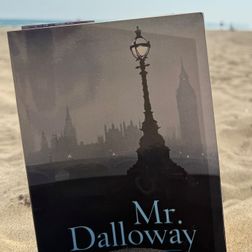
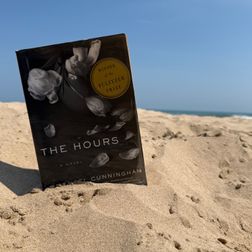
Happy New Year! This episode is the second half of our conversation on Mrs Dalloway intertextualities, looking at Michael Cunningham's The Hours and Robert Lippincott's Mr. Dalloway. We dove right back into composition, looking at how both novels look to make their readerly impact through plot-based narrative developments rather than through narration itself, which differs from Woolf's approach in MRSD. We also covered the books’ status as queer literature, their meta-textual elements, and a look at how POV functions in each. In this second part, we focused a lot on the various ways in which Lippincott and Cunningham “win”—by which we simply mean how they seek to execute the plans and goals of their work and, ultimately, achieve an emotional resonance. Check out the Substack post with complete show notes, and in the meantime—stay critical. Merci !
Dreaming Animal Dreams: Dalloway Intertextualities [Part One]
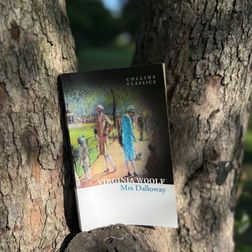
This episode is the first half of our conversation on the intertextualities of Mrs Dalloway, looking at Michael Cunningham's The Hours and Robert Lippincott's Mr. Dalloway. We introduced the books, spending a little time on each and discussing the MRSD legacy more broadly before turning to the texts themselves. We talk about how both authors approach narration differently, with Lippincott using a more playful style that closely mimics Woolf's technique of moving between multiple character perspectives within a single point of view, particularly during a party scene set on a train. Cunningham's approach is a bit more structured, with distinct chapters for each timeline and perspective character. Ultimately, these are both very accomplished novels that are super cool emanations of the great Mrs Dalloway. Check out the Substack post with complete show notes, and in the meantime—stay critical. Merci !
Waves of Pure Lemon: Katharine Smyth and "All The Lives We Ever Lived"
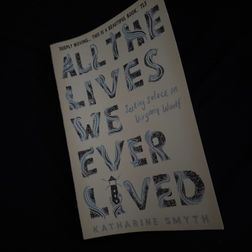
Katharine Smyth joins the show to talk about her memoir, All The Lives We Ever Lived, her Woolfian inheritance, her family, and much more. She takes us through how Woolf inspired the emotional symbolism of her memoir and connected it with the impact of her father’s death. Listen in as Dan and Katharine discuss tattoo parallels, going to Woolf’s former house, and how the publication of her memoir affected her family. In the meantime, check out Katharine’s website and, as always, stay critical!
It Was His Sayings One Remembered: Mrs Woolf and Mrs Dalloway
Suddenly Elizabeth stepped forward and most competently boarded the omnibus, in front of everybody. This episode is the first in our series on Mrs Dalloway, for the 100th anniversary of its publication. In this episode, we talk somewhat generally about the novel, getting into Woolf’s style and narrational mode, and how she manages to create a sense of her book being “lived-in.” What’s really interesting about MRSD, (well, one of the many, many things), is how scenic it is. Literally: the novel is almost entirely scene. This creates a sense of it being “shot in one continuous take,” to use a cinematic comparison, and deepens the feeling of life at its core. This universality, I think, gives MRSD its remarkable staying power. This series will continue over the rest of the year, looking at other texts, taking a deeper dive into MRSD itself, and having a guest or two on to discuss. It’s my favorite book and I really enjoyed recording this one; an excellent way to spend Halloween. Stay tuned for the Substack post with complete show notes next week, and in the meantime check out everything happening at the journal and the press and, of course—stay critical. Merci !
1 di 3