Farm To Stable: An Equine Nutrition Podcast (TM)

Farm To Stable: An Equine Nutrition Podcast (TM)

di Dr. Nettie Liburt
Stagione 2

Nutrition and Mobility - Supplement Review
Diet can have an influence on a horse's soundness and mobility. There are seemingly endless amounts of products on the market claiming to support movement, but do they work? In most cases the research is limited. Individual horses may respond differently to each supplement, so as long as a product is safe, it can be a matter of trial end error. Don't forget the importance of a balanced diet to lay the foundations for optimum performance. That includes maintaining a healthy body condition. Here is an excellent video produced by TheHorse.com, that features Dr. Bob Coleman of the University of Kentucky describing how to body condition score (BCS) a horse. The link is: https://youtu.be/bq0ZXnSlsNQ?si=NlQJAZRkGrjB6KRj I highly recommend watching this and getting familiar with BCS! We're getting into the available science (as always) this week, so listen in and see what we know (and what we don't!)

Basic Foal and Stallion Nutrition

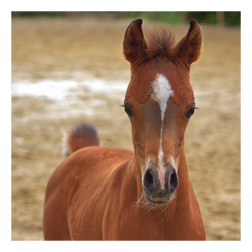
Following up to last week's podcast all about the broodmare, this week the focus is the foal and stallion. The growing foal has tremendous nutrient needs, often much higher than that of a high performance horse! Healthy growth takes a careful balance of exercise, energy, protein, vitamins and minerals. Some general feeding examples will be discussed. We won't forget about the stallion, of course, but from a nutritional point of view, he's probably the easiest to feed! Episode Photo Art: Pixabay

Broodmare Basic Nutrition

It's foaling season here in North America, and the nutrition of the broodmare is key for a healthy foal. A pregnant mare's nutritional needs are not static, and they do change throughout pregnancy and lactation. For example, a mare in the first month of lactation has about double the calorie needs compared to maintenance! Protein needs almost triple, and that also means amino acids increase too. Vital nutrients need to be balanced and carefully changed to address the mare's needs at each stage of pregnancy to ensure the foal has the best foundation for proper development in utero and growth when born. Listen in for some general guidelines! Episode Photo Art: Soledad Lorieto/Upsplash.

Feeding Performance Horses Part 2: Diets by Discipline

In part one, you heard about the building blocks of a performance horse's diet. This week incorporated muscle fiber types, a very general description of the types of fuel each muscle type burns, and how to use that information to build a diet based on the type of work your horse does. The differences between feeding for a sprint and feeding for endurance are just some of the examples discussed. Remember, the discussion here is very general and for illustrative purposes only. Each individual horse has unique dietary needs. Episode Art Photo Credit to TheHorse.com.

Feeding Performance Horses Part 1: Background
In the first of this two-part series, I'll talk about the background basics for feeding a performance horse. Many of the ideas hold true for ANY horse. But remember, good nutrition will support optimum performance, no matter the discipline. Junk in = Junk out, so the conversation begins with a basic understanding of how nutrients play an actual role in supporting a horse's best output.

Leaky Gut Syndrome In Horses: What is it and what do (or don't) we know?

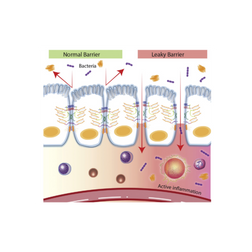
At the recent Kentucky Equine Research symposium, Dr. Wendy Pearson of the University of Guelph gave a comprehensive review of Leaky Gut Syndrome (LGS) in horses. Since questions about LGS arise frequently, I wanted to share some of that information, as well as some additional peer-reviewed information to talk about what LGS is, and what we do and don't know about it (which, unfortunately is a lot!) So if you've heard about "leaky gut," and aren't sure what it is or what the consequences are, tune in to find out. Episode art, and some of the information in this episode, is from Stewart, et al., 2017. "Alterations in Intestinal Permeability: The role of the "leaky gut" in health and disease." Journal of Equine Veterinary Science. Vol. 52, pp. 10-22.

Hair Mineral Analysis and Serum Allergy Testing: Are they worth it?
Fresh from the Kentucky Equine Research Equine Health and Nutrition Symposium, I want to highlight one of the talks given by Dr. Katie Young, a well-respected equine nutritionist with many years in the industry and as a horse owner. She discussed the merits (or lack thereof) of hair mineral analysis and serum allergy testing. This is important information for any horse owner - tune in to find out why!

Choke In Horses, with special guest Kristen Janicki, MS, PAS

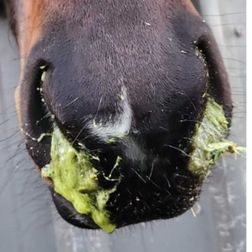
This week, I welcome my first guest, good friend and colleague, Kristen Janicki, MS, PAS to the podcast! Recently, a social media post went viral on the topic of choke in horses and soaking feed. Kristen wrote an outstanding response that broke down the myths and misconceptions of this frightening condition. Choke is something different in horses than it is in people. When a person is choking, their trachea (windpipe) is blocked and breathing in obstructed. In horses, choke refers to a blockage of the esophagus, the muscular tube that brings food from the mouth to the stomach when swallowed. Choke is a veterinary emergency, but managing diet is absolutely part of mitigating the risk. Listen in to our conversation as we talk about risk factors and mitigations of choke! (Episode art image by Dr. Maxine Brain in Equestrian Life Magazine).

The Metabolic Horse - General Feeding Guide
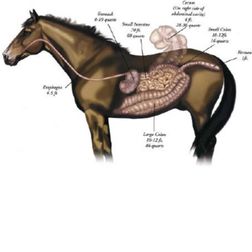
What does it mean for a horse to be "metabolic?" We'll talk about that this week, particularly the difference between Equine Cushing's Disease and Equine Metabolic Syndrome. I'll give some very general tips to keep in mind for feeding horses with metabolic concerns and explain why. There's a LOT to unpack this week, so get ready for a ton of information!

Talking Colic: Diet and Management

Colic is a general term for abdominal pain, and colic is the top killer of horses. While there is nothing we can do to prevent colic 100%, there are some dietary and management steps we can take to help reduce the risk. Tune in and
3 di 5