History Unpacked

History Unpacked

di Englishthroughhistory
Stagione 13

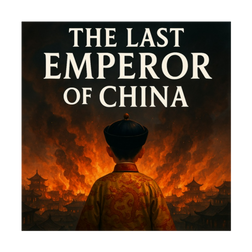
The Last Emperor Of China: The Boy Who Lost A Dynasty
Once the most powerful child in the world, Puyi—the last emperor of China—watched his empire crumble before his eyes. From his lonely throne in the Forbidden City to his forced abdication and manipulation by the Japanese, Puyi’s life mirrored the collapse of imperial China itself. This episode of History Unpacked explores how one boy became both ruler and prisoner, caught in the chaos of revolution, war, and political betrayal. Discover the fascinating story of China’s final emperor, the fall of the Qing Dynasty, and the dawn of a new era that would change the nation forever.

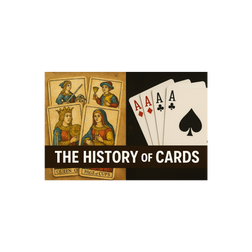
From Tarot To Poker: The Surprising History Of Cards
Discover the incredible journey of playing cards—from their mysterious origins in ancient China to their evolution into the 52-card deck we use today. This episode of History Unpacked reveals how cards spread across continents, inspired gambling, influenced art, and carried secret meanings through time. Learn the surprising stories behind kings, queens, and jokers, and how a simple deck became a mirror of history itself.

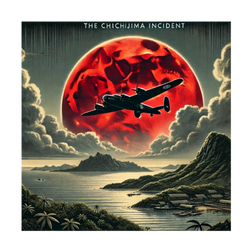
The Chichijima Incident – A Secret That Haunted WWII
The Chichijima Incident remains one of the most disturbing and little-known events of World War II. In 1944, downed American airmen were captured by Japanese forces on the remote island of Chichijima, part of the Bonin Islands. What followed was a chilling story of survival, brutality, and secrecy that shocked even hardened soldiers. This episode explores the background of the incident, the fate of those captured, and why this story was hidden for decades. Discover the darker side of WWII history and learn why the Chichijima Incident has been remembered with both horror and silence.

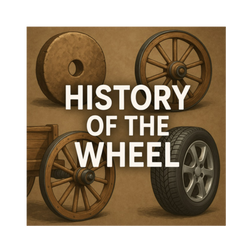
The History of the Wheel: Humanity’s Greatest Invention
The wheel is often called humanity’s greatest invention—and for good reason. From its humble beginnings in ancient Mesopotamia to its vital role in modern transportation, the wheel has shaped every stage of civilization. But the story is more complex than it seems. The first wheels weren’t even used for transport, and their design evolved over thousands of years before transforming into the foundation of modern technology. In this episode, we explore the fascinating history of the wheel—how it was invented, why it spread across cultures, and how it changed the world forever.

Machiavelli: The Father of Modern Politics

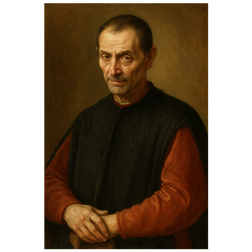
Niccolò Machiavelli remains one of history’s most controversial thinkers. His name has become synonymous with cunning, manipulation, and ruthless politics — but was he really the villain many imagine? In this episode of History Unpacked, we dive into the life and legacy of Machiavelli, exploring his role in Renaissance Florence, his most famous work The Prince, and his lasting impact on politics, philosophy, and leadership. From misunderstood statesman to “father of modern political thought,” Machiavelli continues to shape how we think about power.

Six-Day War: How Israel Defeated Three Nations in a Week
The Six-Day War of 1967 reshaped the Middle East in just under a week. Israel fought Egypt, Jordan, and Syria in a lightning-fast conflict that changed borders and set the stage for decades of regional tension. This episode explores the causes, the major battles, and the dramatic consequences of the Six-Day War—from Israel’s preemptive airstrikes to the capture of Jerusalem and the West Bank.

Dark History of the Victorian Workhouse
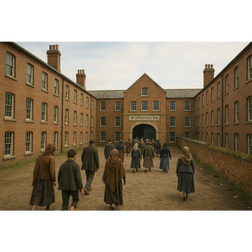
Step inside the world of the Victorian workhouse, a place designed to shelter the poor but remembered for its harsh conditions. Families were torn apart, children forced into labor, and the elderly left in bleak dormitories. In this episode, we uncover how workhouses operated under the Poor Law, why they became symbols of cruelty, and how they shaped society in 19th-century Britain. Discover the daily struggles of those trapped inside, the punishments they faced, and the system’s long-lasting impact. Join us as we explore the grim history of the Victorian workhouse.

The Lost Generation of South Korea (part 2)
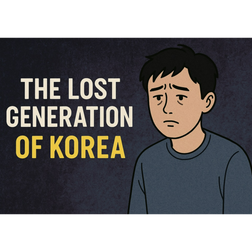
Part 2 of our deep dive into South Korea’s N-Po Generation reveals how a growing number of young Koreans are rejecting traditional life goals in the face of economic hardship, high housing costs, and intense social pressures. We explore how the phenomenon has evolved beyond giving up on marriage and family, extending to friendships, home ownership, and personal dreams. Using real data, cultural analysis, and historical context, this episode concludes why an entire generation feels disconnected from society — and what this means for South Korea’s future. Watch to understand the roots and consequences of this profound cultural shift

The Lost Generation of South Korea (part 1)
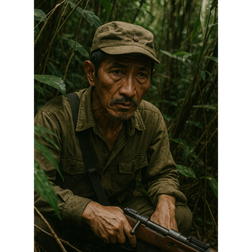
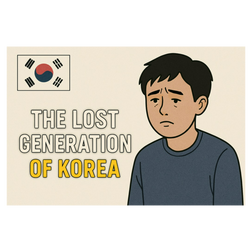
In this first part of our deep dive into South Korea’s N-Po Generation, we explore why so many young Koreans are giving up on traditional life goals such as dating, marriage, home ownership, and even personal dreams. From skyrocketing housing costs to a hyper-competitive education and job market, the pressures facing Korean youth have led to a cultural shift unlike anything seen before. Discover how economic hardship, social expectations, and shifting values have shaped an entire generation’s outlook on life. Join us as we uncover the real story behind Korea’s “generation that gave up.”

Hiroo Onoda: The WW2 Soldier Who Wouldn’t Surrender

Hiroo Onoda was a Japanese soldier who continued fighting World War II for nearly 30 years after the war had ended. Stationed in the Philippines, Onoda evaded capture, dismissed surrender leaflets as enemy propaganda, and remained loyal to his orders—until 1974. His story is one of extraordinary endurance, loyalty, and psychological resilience, raising deep questions about war, duty, and belief. In this episode, we unravel the life of one of history’s most astonishing holdouts and explore what kept him fighting long after the guns fell silent. Discover the man who refused to surrender: Hiroo Onoda.
2 di 18