Diary of an African Entrepreneur

Diary of an African Entrepreneur

di Deji Adebusoye
Stagione 1
From Failure to Factory: Rebuilding African Agriculture with Data
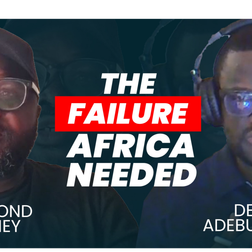
Most entrepreneurs start with a dream. Desmond Kony started with a death. In this episode of The Diary of an African Entrepreneur, Deji Adebusoye sits down with Desmond Kony, CEO and Founder of Complete Farmer, to unpack one of the most misunderstood industries in Africa: agriculture. After the sudden death of his father, Desmond inherited a small pineapple farm in Ghana — a business he never wanted. The farm failed. Crops collapsed. Logistics broke down. Cash ran out. But that failure sparked a revelation. Desmond stopped seeing farming as land and started seeing it as a factory floor. He realized that most of Africa’s agricultural challenges — from policy failures to broken supply chains — are data problems, not farming problems. Today, Complete Farmer is building an end-to-end digital marketplace that connects African farmers directly to global buyers, treating agriculture with the same rigor as manufacturing and software engineering. In this conversation, we explore: Why farming fails when it ignores market demand Why “farming is not a security” How poor data destroys African supply chains Why infrastructure and know-how are the real barriers to scale How Complete Farmer pivoted from crowdfunding to a global marketplace Why the future of African agriculture will be built in the cloud, not on guesswork This episode is a masterclass in first-principles thinking, resilience, and building systems that scale across Africa. 👉 Subscribe to The Diary of an African Entrepreneur for deep conversations on African business, systems, and scale.
From Obscurity to Impact: Scaling to Billions & The Art of Leadership with Tayo Osiyemi
How do you move from the "quiet kid" in the background to the CEO of a company with an N11bn turnover? In this episode of The Diary of an African Entrepreneur, Deji sits down with Tayo Osiyemi, the newly appointed CEO of SKLD Integrated Services. Tayo shares his incredible journey from his early days at Lagos State Polytechnic and OAU to leading one of Nigeria’s most dynamic companies. We dive deep into the mechanics of scaling a business - moving from N150m to over N11bn in revenue, and the specific strategies used to navigate economic downturns, including backward integration into manufacturing. Tayo also opens up about the "Commanding Heights" of leadership: how to balance the demands of being a CEO, a Pastor, and a dedicated family man without dropping the ball. If you want to understand how to build character that commands opportunities and systems that solve real problems, this conversation is for you. Quotes from the Episode: "You don't have perspective as to what you need to do if you have not told yourself where you are trying to get to." "Nothing significant was ever built casually." "The scale of the problem you solve determines the scale of the reward." About the Guest: Tayo Osiyemi is the CEO of SKLD Integrated Services, a Pastor at The Covenant Nation, and a founder of Value Tag. He is a leader passionate about life, human capital development, and solving complex problems at scale.
Why Investors Reject Businesses: Legal & Regulatory Mistakes You Must Fix First!
Every entrepreneur wants investors , but are YOU ready for investment? In this full episode of Diary of an African Entrepreneur, Deji Adebusoye breaks down the four major legal and regulatory areas that every founder MUST examine before presenting their business to an investor. This episode will help you understand: 🔥 Why investors walk away during due diligence 🔥 The legal documents and registrations every SME must have 🔥 How permits, licenses and statutory filings affect your fundability 🔥 The power of contracts in proving commercial viability 🔥 Why ownership clarity is a non-negotiable requirement 🔥 How to avoid compliance mistakes that destroy investment deals Many entrepreneurs are building great businesses but missing paperwork, expired licenses, poor documentation and unclear shareholding structures stop them from ever attracting serious investment. This episode shows you EXACTLY how to fix that. I’d love to hear from you: 👉 Which of these legal/regulatory areas do you struggle the most with? 👉 Do you currently have all your permits, licenses and contracts in place? 👉 What part of due diligence do you want us to explain next?
How to Know If Your Business Is Ready for Investors | Diary of an African Entrepreneur
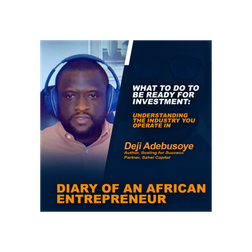
In this episode of Diary of an African Entrepreneur, Deji Adebusoye dives deep into what it really means to be ready for investment. Before investors carry out due diligence on your business, you must first diligence yourself. From mindset to market understanding, Deji explains how to evaluate your own readiness, identify gaps, and understand your industry dynamics, whether you’re in a growing, mature, or declining market. Learn how to position your company for investment, avoid common founder mistakes, and build credibility with investors. 👉 Watch till the end to learn what investors are really looking for, and don’t forget to subscribe, comment, and share this episode with another entrepreneur who’s preparing to raise capital. 🎧 Episode Highlights: 1. Why does self-diligence matter before investor due diligence? 2. How to understand your industry tailwinds and headwinds 3. Positioning your business for investment readiness 4. What investors want to see beyond your product 5. Common founder blind spots when pitching for capital
How Zeraki is Transforming African Education | Isaac Nyagolo’s Journey from Scholarships to Startups
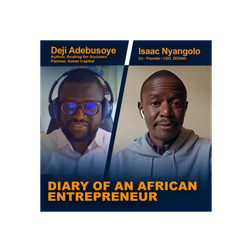
In this episode of Diary of an African Entrepreneur, we sit with Isaac Nyagol, founder and CEO of Zeraki—a Kenyan EdTech company redefining how schools, teachers, students, and parents interact through technology. Isaac’s journey began in education management, where he led scholarship and mentorship programs at the Equity Group Foundation in Kenya. While helping top-performing students from low-income backgrounds succeed in high school, he discovered a deeper challenge: many learners struggled not just financially, but academically—and teachers lacked the tools and data to support them effectively. This realization became the seed for Zeraki. What started as an effort to support struggling students has evolved into a powerful platform used by over 7,700 schools across seven African countries, offering tools like Zeraki Analytics, Zeraki Learning, and Zeraki Touch. These products enable data-driven decision-making, simplify school administration, and deliver engaging, curriculum-aligned digital content to classrooms—even in low-connectivity environments. Listeners will gain insight into how Isaac: Transformed insights from a scholarship program into one of Africa’s leading EdTech solutions. Built tools that empower teachers, engage parents, and help students thrive through data and technology. Scaled Zeraki across multiple African markets—without government contracts, one school at a time. Balances business growth with social impact, staying grounded in the mission of educational inclusion. Leads with humility, innovation, and a deep understanding of Africa’s education ecosystem. Isaac’s story is one of vision, persistence, and purpose—showing how a problem discovered in a rural classroom sparked a continental movement toward data-driven learning. 📌 This episode is more than a story about technology—it’s a masterclass on using data, empathy, and innovation to reimagine education in Africa.
From Dining Room Startup to Nigeria’s Book Giant | Diary of an African Entrepreneur
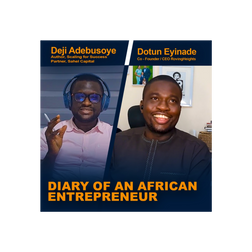
How do you turn a dining room side hustle into one of Nigeria’s most recognizable literary brands? In this episode of Diary of an African Entrepreneur, Deji Adebusoye sits down with Dotun Eyinade, CEO and co-founder of Roving Heights (Rovenites), the bookstore and literary brand transforming how Nigerians access books. 📚 From his childhood in Agege, where books shielded him from the chaos of military-era Nigeria, to his early curiosity that had him secretly reading history books at age 9, Dotun’s journey is one of resilience, curiosity, and imagination. Raised by two teachers during the harsh SAP years, books became his refuge, his window to the world, and ultimately, his life’s calling. 🌍 In this conversation, Dotun shares: How Roving Heights started in his family’s dining room and grew into a nationally recognized bookstore. The role of his sister Tobi and wife Bola in co-founding and shaping the business. How books not only protected him from the streets but also inspired him to dream beyond Nigeria. The struggle of turning a side hustle into a serious business while working in consulting and development. Why building a reading culture matters for Africa’s future, and how bookstores can become community hubs for learning and imagination. Today, Roving Heights is celebrated for supporting African writers, championing self-published authors, and curating some of the best contemporary titles for readers across Nigeria and beyond. What started as a small family venture has become a movement to keep Africa reading.
From Flutterwave to $18M in Loans Disbursed: How VeendHQ is Fixing Africa’s Credit Problem
In this powerful episode of Diary of an African Entrepreneur, we sit down with Femi, the founder of VeendHQ, a fintech startup transforming credit access across Africa. Femi shares his raw and inspiring journey, from being a software engineer at Flutterwave and Carbon, to identifying the painful challenges of loan collections in Africa, and finally launching VeendHQ, a platform that has disbursed over $18 million in short-term credit to more than 300,000 Nigerians. 💡 Discover how VeendHQ evolved from a struggling SaaS model into a fast-scaling embedded credit infrastructure that solves Africa’s credit and collections problem at scale. 🎙️ Hosted by Deji Adebusoye, this conversation dives into: Femi’s early days building tech for banks The cultural challenges of running SaaS in Africa How VeendHQ pivoted and grew its revenue What it takes to build resilient tech for African consumers and lenders If you're building a fintech in Africa or dreaming of launching your own startup, this episode is a must-watch.
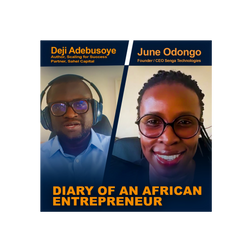
June Odongo: From Harvard to Building Africa’s Logistics Future | Diary of an African Entrepreneur
In this episode of Diary of an African Entrepreneur, we sit with June Odongo, founder and CEO of Senga Technologies—a Nairobi-based logistics and supply chain company on a mission to simplify order fulfillment for Africa’s retail sector. June’s story begins in Nairobi, where she finished high school at 16 and—through the collective sacrifice of family and friends—moved to the United States to pursue higher education. What followed was a 20-year journey across America: working countless jobs to fund her studies, earning a computer science degree, advancing her career at global tech firms like EMC and Meraki, and ultimately obtaining an MBA from Harvard Business School. Her return to Kenya in 2015 marked the beginning of Senga Technologies. What started as an exploration of logistics soon sharpened into a clear focus on streamlining supply chains for formal retail—manufacturers, distributors, and the supermarkets they serve. Today, Senga combines asset-light logistics services with cutting-edge software, enabling goods to move efficiently without relying on traditional centralized warehouses. Listeners will gain insight into how June: Turned years of resilience, hard work, and global exposure into a logistics venture tailored for Africa. Built a company that integrates services and software to tackle inefficiencies in retail fulfillment. Balances the lessons from Harvard and Silicon Valley with the unique realities of African markets. Sees adversity as not just a challenge, but a necessary ingredient for innovation and leadership. June’s story is one of grit, global perspective, and relentless problem-solving. From her early days as a home health aide in the US to becoming a leading African entrepreneur, her journey shows how resilience and vision can rewire entire industries. 📌 This episode is more than logistics—it’s a deep dive into the intersection of global expertise and local execution in Africa’s growth story. #DiaryOfAnAfricanEntrepreneur #AfricanLogistics #SengaTechnologies #SupplyChainInnovation #BuildInAfrica #FounderStories
What to do to be ready for an Investment: The Frame of Mind Entrepreneurs Need
In this new series on Diary of an African Entrepreneur, Deji Adebusoye breaks down what it really means to be ready for investment. If you're building a business in Africa and thinking about raising capital — whether debt or equity — the first thing you must get right is your mindset. In this episode, Deji explores how investors think, what they look for, and why many entrepreneurs fail before they even pitch — not because of bad business ideas, but because they lack the mental framework to manage external capital. 🎯 In this video, you’ll learn: Why mindset is more important than money The difference between seeking funding and being investment-ready What self-due diligence looks like How investors assess risk — and how you can reduce it The key questions to ask yourself before bringing in external money 🔔 This is the first part of our Investment Readiness Series, designed to help African founders build fundable, scalable businesses. ✅ Watch, reflect, and subscribe to catch all future episodes. ➕ Don’t chase capital. Build a business that deserves it.
Revolutionizing Poultry Farming in Africa – The Pullus Africa Story with Ope Fayomi
What does it take to turn a small poultry farm into a tech-enabled agribusiness impacting over 30,000 farmers across Nigeria? In this episode of Diary of an African Entrepreneur, I sit down with Ope Fayomi, co-founder and CEO of Pulus Africa, an innovative platform transforming the poultry value chain by solving its biggest hidden problem - trust. From guaranteeing farmers payment within 24 hours to building an investor-ready business, Ope’s journey is a testament to grit, vision, and problem-solving at scale. We unpack how she transformed a $25K grant into a nationwide operation, scaled from 6 to 41 employees in just 18 months, and created financing solutions that keep farmers producing without fear of delayed payments. Ope also shares candid lessons on leading through rapid growth, overcoming gender bias as a young female founder, and why sustainable impact always starts with solving the real problem before seeking funding. Whether you’re an agripreneur, investor, or simply passionate about African innovation, this episode delivers practical wisdom on building for scale, leading with integrity, and making measurable impact.
1 di 2