Debt Talk

Debt Talk

di Ripon Ray
Stagione 2

Debt Talk: Poverty & ethnicity premium

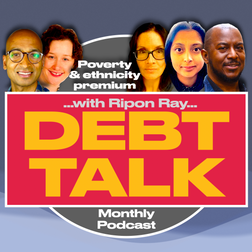
Another thought-provoking podcast on Debt Talk is ‘Poverty & ethnicity premium’. This time, leading experts from academia, think tanks, debt advice, and funders spoke about issues that matter in financial services. Maria Booker from Fair By Design explained the poverty premium and how communities are paying more and being financially discriminated against because many can’t afford to pay by direct debit and are also on low incomes. This is particularly the case with paying for insurance and fuel or customers who pay a fee for withdrawing cash from a cashpoint when they have no alternative option. Sara Davies from Bristol University explored how many customers are directly impacted by services in the retail finance sector based on her research on those digitally excluded or affected by disability. However, when one product has been regulated, others seem to come into the market to exploit vulnerable customers. Jerry, during MBE from Money A&E, passionately spoke about how direct and indirect discrimination exists when the system disadvantages minority communities. He emphasised that Muslim South Asian communities may find that financial products are not Sharia compliant and the Afro-Carribean community may end up paying more towards mortgages compared to their white counterparts. He argued for representing such communities in product development processes to drive change. Ayesha Begum from Fair4All Finance, which published ‘Levelling the playing field—Building inclusive access to financial services for people from minority ethnic groups’, explained that minority communities face multiple barriers and exclusion in financial services while also experiencing frequent financial shocks compared to their white counterparts. When mainstream lenders do not support some minority communities, they turn to their community or fintech companies due to a lack of trust from mainstream lenders. My guests also provided TOP TIPS to listeners of Debt Talk for regulators, policymakers, customers and businesses. The following podcast will be on ‘UK Waters & Our Bills.’ Thank you for listening to the Debt Talk podcast with your host, Ripon Ray.

Debt Talk: Consumer duty & the debt sector

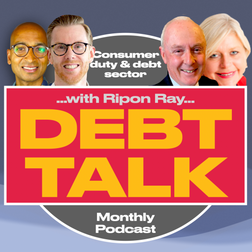
Introducing Consumer Duty principles by the Financial Conduct Authority resulted in a dramatic shift from treating customers fairly to focusing on customer outcomes, which requires a readjustment of thinking for many regulated firms in Britain. To navigate such an insightful subject on the Debt Talk podcast, Ripon Ray invited distinguished experts from research and consultancy, debt recovery, and the advice sector. Kathy Ellison from Savanta, a research and consultancy firm, explained how some regulated firms had changed their governance structure, consumer terms and conditions, communications and marketing, and in dealing with vulnerable consumers. Savanta's research showed that although many firms have significantly addressed regulatory expectations to benefit consumers, some work is still needed to improve consumer outcomes. Bob Winnington of the Money Advice Liaison Group emphasised the importance of delivering world-class service. He explained how the group brought different regulated communities within the financial services market together to encourage firms to share best practices in a highly competitive environment. Alex Pitcher from Step Change emphasised that Consumer Duty enabled them to revisit their consumer advice journey through the organisational process. They had to explore diverse ways of communicating with their clients whilst considering their client profiles and meeting regulated funders' expectations to demonstrate how their mission is aligned with the best outcome for consumers in debt advice. They also provided TOP TIPS to listeners who require extra support and firms struggling with implementation today. The following podcast is as pressing as the current one. It is on 'Poverty and ethnicity premium'. If you want to provide feedback on the content of this and other podcasts, do not hesitate to contact Ripon Ray: ripon.ray@yourdoctordebt.com

Debt Talk: Council finance, tax & debt recovery

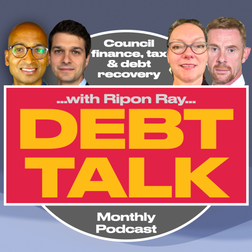
Birmingham Council went bankrupt and accelerated its debt recovery to collect council tax and other fines by 500% between 2022 and 2023. It was revealed under the Freedom of Information Request. Other councils throughout the United Kingdom also use enforcement agents to recover unpaid debts since many are overstretched with their finances. To highlight the severity of this issue in this month's podcast on Debt Talk, Ripon Ray explored: 'Council finance, tax & debt recovery’. To assist him with the subject, Helen Ganney from Christians Against Poverty explained the challenges the debt advice sector faces in negotiating with some councils when many clients have insufficient funds to pay council tax debts and are in a deficit budget. Yet, there have been challenges with them and their agents to accept minimal payment or to hold enforcement action. She emphasised that many of these agents focus on collecting debts whilst not considering whether some residents can afford to pay. Russell Hamblin-Boone from the Civil Enforcement Association (CIVEA) looked at the causes of the intensification of recovery of many councils and, most importantly, the causes of the Birmingham Council going bankrupt and its debt recovery. He explained that as part of the commercial agreements with councils with private enforcement agents, enforcement agents are required to identify client vulnerability and provide welfare support as part of the agreement. He emphasised that enforcement agents don’t get a commission from council tax recovery but only a set fee. To standardise the behaviour of the enforcement sector, however, CIVEA proactively funded the set up of an independent regulatory body to make sure the enforcement sector works for all. Chris Nichols recently joined the newly founded Enforcement Conduct Board as CEO to make sure the Board works for the public interest. As part of developing a framework to ensure the enforcement market is fit for purpose, it creates a robust and accountable governance structure and complaints system to ensure any complaints against an enforcement agent are investigated fairly. He emphasised that input from the debt advice, enforcement agents, vulnerable communities, and other stakeholders is crucial to keeping the enforcement sector accountable. They also provided TOP TIPS to assist Debt Talk listeners in conversing on such a charged and tense subject. On the next Debt Talk podcast, Ripon Ray will cover: 'Consumer duty & debt updates’.

Debt Talk: Gambling & debt

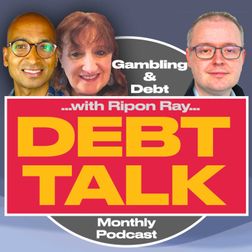
In this month's Debt Talk podcast with Ripon Ray, the subject is: 'Gambling and debt'. To navigate such a sensitive topic, he has experts from academia and gambling therapy. Prof John McAlaney from Bournemouth University speaks about the meaning of gambling, the different types of gambling activities in the UK and how the behaviour of gambling differs based on age and sex. He also explores the role of the Gambling Commission and how the Commission and the British government could be influenced to drive change for the benefit of vulnerable communities who face problem gambling. Kathy Wade from GamCare highlights the types of gamblers they support as part of their broad strategy whilst working with other sectors connected with gambling and debt. She explores the chemicals in the brains of many gamblers, which may cause them to gamble. Many gamblers face unsustainable loss of income as a result of gambling and homelessness. The impact of gambling is not simply on the person who risks but also on their family and friends. They also provide TOP TIPS to Debt Talk to support regulators, companies, and voluntary sectors in making policy decisions for the benefit of vulnerable communities. My next episode will be on 'Local government finance, tax and debt'.

Debt Talk: Debt, housing costs & homelessness

According to Shelter, a homelessness charity, there are 271,000 people recorded as homeless in England of which 123,000 children. To navigate this month’s Debt Talk podcast with Ripon Ray on: ‘Debt, housing costs and homelessness', expert panellists who specialise in the benefits system, policy and debt. Deven Ghelani, Founder and Director of Policy in Practice, spoke about the true meaning of homelessness in the UK, and how the current benefit system that was initially ‘designed ‘to simplify things, as it stands, appears not fit for purpose because the current system does not pay sufficient financial assistance to support vulnerable communities who are homeless or vulnerable to homelessness. Although he was involved in designing universal credit during its initial policy development, there are wider issues that require discussion, such as the number of homes available and the cost of renting and owning a home. Amy Taylor, Debt Adviser and Chair of the Greater Manchester Money Advice Group, spoke about how local governments are on the verge of collapsing due to cuts from the central government, the demand for temporary accommodation getting higher each year and they also have to prioritise services. She emphasised that many migrants are evicted from hostels and they are also left destitute and homeless. She also explored the impact debts can have on getting onto the property ladder - either as a tenant or homebuyer - home due to the impact debts can have on someone's credit rating. Social landlords may emphasise that prospective tenants pay previous rent arrears to their social landlord before providing prospective tenants with a new home. They also provided TOP TIPS to my listeners to address some of the homelessness-related challenges to vulnerable communities and professionals. The next podcast is to cover: ‘Gambling and debt’. If you want to hear a specific subject on the Debt Talk podcast, you can get in touch with Ripon Ray: ripon.ray@yourdoctordebt.com or Twitter: YourDoctorDebt.

Debt Talk: Alternative lending & debt

Mainstream lenders are here to stay. It does not mean we are not seeing a variety of lenders in the financial market. In this month's podcast on Debt Talk, Ripon Ray spoke about: 'Alternative lending & debt'. To navigate the subject, there were experts from financial inclusion and debt. Gareth Evens - Co-founder and director of the Financial Inclusion Centre - spoke about the variety of lenders and the make-up of lenders in the United Kingdom. He explored the relevance of alternative lenders, such as the role of local credit unions within the consumer credit market, the benefit of such lenders compared to mainstream lenders and the obligation of any lenders when dealing with vulnerable consumers in financial difficulties whilst considering affordability to borrow. Sam Nurse - CEO of Money Advice Hub & Zeus Design Hub - spoke about the importance of living within your means and that lenders should carry out affordability assessments and treat consumers fairly at every step. She emphasised that some debt advisers need clarification about ways to identify illegal lenders. Yet there is help at hand from the Illegal Lending Team. Debt Talk panellists also provided Debt Talk listeners with TOPS TIPS for those considering approaching lenders just before Christmas. The next Debt Talk podcast is on: 'Housing costs & homelessness'

Debt Talk: The cost of fuel

As we head towards another winter, the cost of electricity and gas will yet again be of concern for many households. Ripon Ray spoke with a savvy pensioner and a Fuel Poverty Action representative to address such an important issue on this Debt Talk podcast episode to explore the causes of the fuel crisis. Barry Duckett, a local pensioner in South London, spoke about the challenges he and many pensioners fear in the coming winter due to the existing fuel cost. Yet, no government subsidy support is being provided to them compared to last winter. Chia Harrington explained the causes of the rise in fuel cost and some of the strategic decisions many fuel suppliers had made by putting prepayment meters in many vulnerable households. This resulted in OFGEM developing tighter guidelines to support susceptible consumers and strong supervision measures. She questioned the relevance of social tariffs within the broader context of fuel poverty. They also provided TOP TIPS to Debt Talk listeners. Next Debt Talk podcast, the subject matter: 'Alternative lending & debt'.

Debt Talk: DRO or IVA? That is the question...

One in 422 adults entered insolvency between 1 July 2022 and 30 June 2023. The economic factor is crucial in considering bankruptcy for many individuals, particularly when personal Individual Voluntary Arrangements (IVA) and Debt Relief Orders (DRO) are concerned. In this episode of the Debt Talk podcast, Ripon Ray explored: ‘DRO or IVA? That is really the question...’ Sara Williams, the founder of Debt Camel, began the conversation by looking at the history of bankruptcy and IVA leading up to the introduction of DRO in 2009, the commercial drive for many IVA providers to solely provide the only option who do not consider the interest of consumers through to its sales tactics and providing misleading information to entice consumers. There are early IVAs termination due to unsustainability for many low-income households. She also provided recommendations for short and long-term changes to regulations to consider for the interest of indebted communities. Kevin Still is the CEO of the Debt Managers Standards Association (DEMSA), a trade body for debt solution providers. He emphasised the importance of coming together and tightening the quality and compliance framework to eliminate harmful practices. He recognised that community-free advice providers are essential in holistically delivering impartial service. Both panellists provided TOP TIPS for listeners on such an important topic. The next topic is: 'The cost of fuel'.

Debt Talk: The cost of financial exclusion

There are 17.5 million people in financially vulnerable circumstances, one in three adults in the UK. Some of these vulnerabilities can be seen in the form of financial exclusion. In this episode, Ripon Ray discusses: ‘The cost of financial exclusion’. To navigate the Debt Talk podcast topic, panellists were from a financial inclusion funder, a debt crisis and money training social enterprise, and a household debt campaigner. Diane Burridge, Community Finance Propositions and Segmentation Lead for Fair4AllFinance, develops strategies for financial inclusion projects and provides funds. She focused on supporting innovation to reduce financial exclusion by undertaking research and working with various third sector organisations to promote ways to make the financial services sector fair. Jerry During MBE, Co-Founder of Money A and E, a community money and debt advice organisation in London, emphasised the need to form partnerships with community groups and government agencies to help change policy and remove barriers for marginalised communities to access financial services. He argued that lived experience must be at the heart of the decision-making process to address financial exclusion. Joe Cox, Senior Policy Officer of the Debt Justice campaign group, is part of a global movement to end debt inequality. He focused on the strength of financial institutions, which are far more influential than vulnerable communities that are excluded from decision-making. He believes grassroots campaigns can bring about positive change for communities in financial difficulties. Debt Talk podcast panellists also provided helpful TIPS to listeners. The following podcast is on: ‘DRO or IVA? - that is the question'. For those who are listing to the Debt Talk podcast and want to share your experience or want to hear a subject of your choice, you can get in touch with me: ripon.ray@yourdoctordebt.com or Twitter: yourdoctordebt
Stagione 1

Debt Talk: Artificial Intelligence, financial services & debt sector

Do you know about Artificial Intelligence (AI) and, most importantly, AI within the financial services and debt sector? You will once you have listened to the 12th episode of the Debt Talk podcast. In this episode, Ripon Ray explored the subject with experts from academia, visionaries and tech gurus as they spoke about the actual workings of AI in the financial services and debt sector. Prof Carmine Ventre - Director of King's Institute for Artificial Intelligence - explained the history of AI, the actual workings of machine learning and the algorithm required to create a tool where AI is weak and strong. He emphasised that AI machines require feeding with information and patterns from humans to complete tasks. Douglas Silverstone - Director of Southern Housing and tech visionary, looked at the use of AI for social purposes and emphasised the genuine operational and organisational need to establish AI to be successful with the ultimate user in mind. Rachel Curtis - CEO of Inicio, a debt recovery firm that uses AI to complete affordability assessments - explored how AI solves the affordability assessment problem within financial services and debt space to provide consumers with a supportive space based on consumer needs and outcomes. Maysam Rizvi - founder of Elifinty, a debt management firm and a tech entrepreneur - embarked on developing AI to support debt advisers to focus on the consumer journey within a problem debt space. This is a must-listen podcast for those considering developing AI within the financial services and debt sectors. The panellists have also provided TOP TIPS to Debt Talk listeners considering moving to AI. Next podcast: The cost of financial exclusion.
3 di 5