Dawn At Witness Radio

Dawn At Witness Radio

di Witness Radio
Stagione 1

How dependence on GMOs has affected public health, environment and democratic oversight
In this episode, we examine the growing dependence on genetically modified organisms (GMOs) and its far-reaching impacts on society. Our discussion explores how GMO adoption has influenced public health, altered ecosystems and biodiversity, and reshaped farming systems—particularly in developing countries. We also unpack critical questions around democratic oversight: Who controls seeds and food systems? How transparent are regulatory processes? And to what extent are farmers and communities involved in decisions that affect their livelihoods and health? Through expert insights, community voices, and evidence-based analysis, this episode invites listeners to reflect on food sovereignty, environmental sustainability, and the right of citizens to participate meaningfully in decisions about their food systems.

Government sets aside 24 Billions UGX to compensate National Oil Palm Project affected persons
In this episode, we unpack the government’s decision to set aside UGX 24 billion to compensate persons affected by the National Oil Palm Project. We examine who qualifies for compensation, what the funds are intended to cover, and whether the process addresses the long-standing concerns of affected communities. Through voices from the ground, expert insights, and policy analysis, the discussion highlights the social, environmental, and livelihood impacts of the project, while questioning transparency, fairness, and accountability in the compensation process. We also explore what justice, restoration, and meaningful consultation should look like for communities whose land and livelihoods have been disrupted. This episode invites listeners to reflect on development, land rights, and the need for people-centered approaches in large-scale agricultural projects.

Global Land Observatory - land tenure and governance preliminary findings
In this episode of the Global Land Observatory podcast, we share early findings on land tenure and governance and what they mean for ordinary people and communities. The discussion focuses on how land is owned, used, and controlled, and how government decisions, investments, and development projects affect people’s land and livelihoods. Drawing from real community experiences, the episode highlights common challenges such as land grabbing, weak land protection, lack of information, and limited community participation in land decisions. We also explore why secure land rights matter for food security, culture, and future generations, and what can be done to strengthen fair and transparent land governance. This episode is meant to inform, empower, and amplify community voices, helping people better understand their land rights and the systems that should protect them.

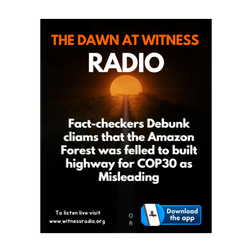
Fact-checkers Debunk cliams that the Amazon Forest was felled to built highway for COP30 as Misleading
In this episode, we unpack viral claims suggesting that large sections of the Amazon rainforest were cleared to construct a highway ahead of COP30. Through verified evidence and expert fact-checking, we examine what truly happened, separate facts from misinformation, and explain why these claims are misleading. The discussion highlights the importance of accurate reporting on climate issues and how misinformation can distort public understanding of environmental protection efforts. Join us as fact-checkers shed light on the reality behind the headlines and reinforce the need for truth in climate conversations.

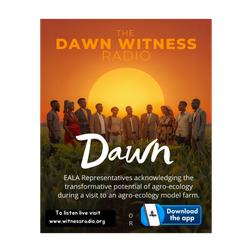
EALA Representatives acknowledge the transformative potential of Agro-ecology during a visit to an agroecology model farm in Uganda
In this episode, we explore how agroecology is reshaping sustainable agriculture in East Africa. During a field visit to an agroecology model farm in Uganda, Members of the East African Legislative Assembly (EALA) acknowledged the transformative potential of agroecological practices in improving food security, protecting the environment, and strengthening community livelihoods. Through firsthand observations and reflections, the representatives highlight how farmer-led, climate-resilient, and environmentally friendly farming approaches can influence regional agricultural policies and development strategies. This episode brings listeners closer to the voices shaping the future of agriculture in East Africa.

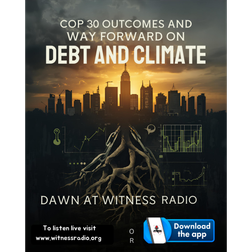
COP 30 outcomes and way forward on debt and climate
As the world reflects on the outcomes of COP30, this podcast unpacks what the decisions mean for climate-vulnerable countries, especially across Africa and the Global South. We examine key commitments made at COP30, the gaps that remain, and the growing link between climate action and public debt. Why are countries already burdened by debt expected to finance climate adaptation and mitigation? Who should pay for climate loss and damage? And what reforms are needed to ensure climate finance is fair, accessible, and people-centered? Join us as we explore pathways toward debt relief, climate justice, and sustainable development, centering the voices of communities most affected by climate change.

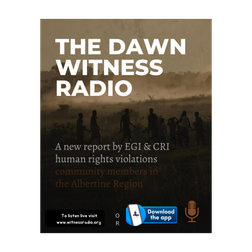
Exposed: New EGI & CRI Report Reveals Gross Human Rights Violations in Uganda’s Albertine Region

A newly released report by the Economic Governance Initiative (EGI) and the Center for Research and Innovation (CRI) exposes alarming human rights violations against community members in Uganda’s Albertine Region. From forced land evictions and intimidation to loss of livelihoods and restricted civic space, this report sheds light on the harsh realities faced by communities living in resource-rich areas. In this podcast episode, we unpack the key findings of the report, amplify the voices of affected communities, and examine the role of government institutions, investors, and duty bearers. We also explore pathways toward justice, accountability, and community-led development in the Albertine Graben.
2 di 2