Conversations with Musicians, with Leah Roseman

Conversations with Musicians, with Leah Roseman

di Leah Roseman
Stagione 3

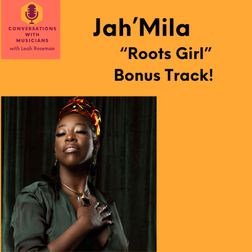
Jah'Mila: "Roots Girl" complete track

Bonus
As a bonus, this track, which is a special version of "Roots Girl" has generously been provided by Jah'Mila. The interview with her also features two other tracks, within this fascinating episode. You can listen to it on your favourite podcast player, watch the video, or read the transcript. The shownotes are also linked here: https://www.leahroseman.com/episodes/jahmila

Jah'Mila: Rooted in Reggae and Connecting with New Audiences

Jah’Mila is a 🇯🇲 Jamaican-born Reggae singer-songwriter based in Halifax, Canada. In this episode you’ll hear about both her youth in the countryside of Jamaica singing gospel and then her immersion in Reggae roots and Rastafarian culture in Kingston. Her father is the legendary Earl “Chinna” Smith who has performed extensively with the Soul Syndicate, been featured on over 500 albums, and also played with Bob Marley and the Wailers on the Rastaman Vibration album, Live at the Roxy, and the historic One Love Peace Concert of 1978. Jah’Mila speaks so eloquently about being grounded in a strong sense of identity and purpose, her love of music and communicating with a wide audience and she has also generously shared two tracks from her album Roots Girl which are part of this episode, and a special version of Roots Girl which is available as a bonus podcast.You can use the timestamps to navigate to any topics or musical selections, and you can listen to this on your favourite podcast player, watch the video on YouTube or read the transcript; everything is linked with the show notes on my website: ⁠https://www.leahroseman.com/episodes/jahmila⁠ You may want to sign up for my newsletter to get access to exclusive sneak peeks for upcoming guests. Please also consider supporting this show with a tip: ⁠https://ko-fi.com/leahroseman⁠ I met Jah’Mila in her role as the Associate Artistic Director and lead singer of the Reggae Roots program which is available to all 🇨🇦Canadian schools free of charge, created with Daniel Bartholomew-Poyser and the National Arts Centre. If you missed my episode with Daniel in Season 2, you should have a listen: https://www.leahroseman.com/episodes/e8-s2-daniel-bartholomew-poyser Timestamps (00:00) Intro (02:39) Roots Girl album, and Jah’Mila’s dad Earl “Chinna” Smith (07:59) Nayabinghi Groundings rom roots Girl (09:58) Jah’Mila’s childhood (14:17) Jamaican culture and Patois (17:04) performing with The Wailers (22:21) excerpt from Roots Girls (22:32) different audiences for Reggae (27:51) Reggae Roots with Daniel Bartholomew-Poyser (31:17) performances at the NAC (33:14) paying tribute to other artists (36:15) intro to Irie Meditation (38:39) Irie Meditation (42:17) new album, processing emotions through songwriting, journaling, gratitude (46:51) Rastafarianism and Jamaican culture (53:44) working with children (56:51) Influences of sound system culture (01:04:06) finding your niche and new audiences

Anže Rozman and Kara Talve: the music of Prehistoric Planet and Personal Reflections

Kara Talve and Anže Rozman are composers with Bleeding Fingers Music and together wrote with Hans Zimmer the acclaimed score to the incredible tv series Prehistoric Planet. I was so impressed by this series, and the first part of this episode digs into the unique instruments that were created for this powerful score, and the other part of this episode is a personal and in-depth conversation with Kara and Anže about their lives. They shared their individual stories about challenges, mentors, and have great advice for younger composers. In the show notes and linked to the podcast are 2 bonus tracks which are concert pieces by both Anže and Kara; these pieces are excerpted in the main episode as well. I’ve included detailed timestamps and you can listen to this on your favourite podcast player, watch the YouTube video, read the transcript and see the gallery of images related to this episode,all linked on my website: https://www.leahroseman.com/episodes/ane-rozman-and-kara-talve Timestamps: (00:00) Intro (05:10) creating the music for Prehistoric Planet with custom instruments (19:23) help support this series through my Ko-fi page (19:39) Euphone audio sample, more about unique instruments used in Prehistoric Planet (22:46) Mark Deutsch Banzantar (24:48) Bleeding Fingers Music, working with Hans Zimmer and Russell Emanuel (31:08) Anže’s early years composing, challenges, networking (34:08) excerpt from Flight/Death from Phoenix for Solo Flute and Orchestra by Anže Rozman (34:49) finding opportunities to write for different instruments (37:08) emigration: dealing with homesickness (38:42) working with orchestras (41:09) Berklee in Spain, networking skills, connecting with Hans Zimmer (46:21) advice for people who want to move to LA (49:13) Kara Talve experience of moving to LA (51:57) composing for The Simpsons (52:49) how Tara’s grandmother was saved from the Nazis by her piano teacher Andrée Levallois (57:34) excerpt from “Winter Rhapsody” by Kara Talve (58:45) mentors at Berklee Ruth Mendelson and Steven Hunt, Kara’s dad (01:02:01) Anže reflecting on negative attitudes, advice about following your interests, Jani Golob (01:08:07) Tara’s bad experiences with piano lessons

Summer Update and Highlights Compilation for Season 3

Bonus
I had a lot of fun stitching together some of the many highlights from this Season 3 so far, in a 10 minute compilation I’ve posted to both my podcast and here on my YouTube: I've included clips from every full episode in 2023 so far in this video! It’s time for my summer break, but the podcast will be back September 2nd with a special episode with two composers who are life partners and also work together with Hans Zimmer at Bleeding Fingers Music. Anže Rozman and Kara Talve will inspire you with both the music of Prehistoric Planet and their personal stories, insights and compositions. I’m including some clips here from that episode, and I’ve also recorded a couple of other fascinating episodes that will be released in September. If you’d like access to regular Sneak Peeks, you need to sign up for my newsletter on my website: https://mailchi.mp/ebed4a237788/podcast-newsletter Please check out my back catalog for episodes you’ve missed, and keep in mind that you can use the timestamps if you ever want to skip to a certain section or music track. The podcast, show notes and transcripts are on my website: https://www.leahroseman.com/about Support this podcast: https://ko-fi.com/leahroseman Photo of me: Curtis Perry

Bukhu Ganburged: Mongolian throat singer and morin khuur player

Bukhu Ganberged is an incredible Mongolian-Australian musician who is a master of both the Morin Khuur, the Horsehead fiddle, and Khuumii, the Mongolian Overtone Throat Singing. This episode features a lot of special music, and Bukhu’s personal story of growing up in Mongolia and emigrating to Australia. Like all my episodes, this is available as both a video with Closed Captions, a transcript, and a podcast wherever you listen to podcasts, the link to my website: https://www.leahroseman.com/episodes/bukhu-ganburged Please do consider supporting this series; every dollar helps: https://ko-fi.com/leahroseman At the beginning of this episode Bukhu explains how he learned overtone throat singing and demonstrates different styles. You’ll then hear some incredible music on Morin Khuur, the horsehead fiddle and learn about Mongolian culture and Bukhu’s experiences in Australia where he’s gone from busking on the street to performing at the Sydney Opera House and being featured on The Voice. I have included detailed timestamps below. I encourage you to listen to Bukhu’s albums wherever you listen to your music! ⁠https://www.horsefiddle.com/⁠ Bukhu’s audio was captured by his phone directly in Australia (I generally avoid recording over the internet) but the mic placement wasn’t ideal to capture the beautiful complexities of both the horsehead fiddle performances and Bukhu’s singing. However, he has also allowed me to also share within the episode a couple of his recordings both solo and with his group Equus, so you’ll be able to hear him explain about different regional styles of singing and playing in the episode as well as hear the studio quality recordings. Timestamps: (00:00) Intro (02:36) khoomei Mongolian throat singing, how Bukhu learned and different styles (14:23) some of Bukhu’s albums (16:00) Equus (18:00) Huurhun Haliun with Equus (22:28) please support this independant podcast! (22:46) Bukhu’s immigration to Australia (26:20) Morin khuur horsehead fiddle, different regional styles (37:55) legend of Khuhuu Namjil (41:11) morin khuur with khoomei Mongolian throat singing “Khuhuu Namjil” (45:06) Mongolian nomadic culture with animals, weeping camel (49:09) khoomei Mongolian throat singing weeping camel song (50:40) Bukhu’s childhood and training in music (58:16) Linsey Pollak and Lizzie O’Keefe (59:14) balancing life as a father

Sandro Morales-Santoro: award-winning Film Composer from Venezuela

This episode features the Venezuelan composer Sandro Morales-Santoro who composes for film, tv and new media and is based in L.A. In this episode you’ll hear lots of music and our in-depth conversation during which Sandro tells the inspiring story of how he learned to read and write music while attending law school in Venezuela, then was accepted into the Berklee college of music, and was awarded their achievement scholarship, then how moved to L.A. and created community both professionally and personally. Sandro is on the Executive committee for the Composers’ Diversity Collective and we talked about biases in the industry and increasing exposure for composers from diverse backgrounds. Sandro is the fourth film and tv composer I’ve featured so far on this podcast, please take a look at my complete catalog of episodes to check out episodes you may have missed. Like all my episodes, this is available wherever you listen to podcasts, is also a video on my YouTube channel, and the transcript is also linked: https://www.leahroseman.com/episodes/sandro-morales-santoro I've included detailed timestamps below. Please help me with a tip: https://ko-fi.com/leahroseman Sandro Morales-Santoro Website: https://www.sandromorales.com/ Composers Diversity Collective: https://www.composersdiversitycollective.org/ Timestamps: (00:00) Intro (02:25) Sandro’s start in music and family’s resistance to his aspirations (07:27) studies with Angel Balan to learn composition, getting into Berklee after law school (18:33) The Shadow of the Sun (19:04) music clip Slices of Bread from The Shadow of the Sun (23:16) using Venezuelan traditional styles, different South American instruments, various influences (30:07) music clip A Decent Job from The Shadow of the Sun (32:12) process of writing music for The Shadow of the Sun (34:08) music clip Late for Work from The Shadow of the Sun (35:14) Vela, Dayana Gauthier, emigration experience (41:50) trailer to Vela (42:57) the making of Vela (45:39) prejudice, and the founding of the Composers Diversity Collective (52:04) please help support this series with a tip! Ko-fi link in the description (52:20) Composers Diversity Collective, Michael Abels, Amanda Jones (57:30) learning about the film industry, making Vela, the role of the film composer (01:05:07) writing for orchestra, use of synthesizers (01:11:20) benefits of modular synthesizers (01:13:19) demo of Eurorack synth (01:16:56) feeling and expressing emotion in music and acting, The Shadow of the Sun (01:22:07) creating community (01:28:26) Restaurants at the End of the World, including 3 music clips by David Benjamin Steinberg and Sandro Morales-Santoro, National Geographic Disney+ (01:40:09) reflections on different careers in music, other film composers

Kavisha Mazzella: Building Community and Finding the Fearless Note

I have in-depth conversations with a fascinating diversity of musicians worldwide, and I hope these personal stories highlight the incredible breadth and depth of a life in music for listeners everywhere. Like all my episodes, you can listen to all this on your favourite podcast player, watch the video, and read the transcript, all linked here: https://www.leahroseman.com/episodes/kavisha-mazzella Kavisha Mazzella is a renowned Australian songwriter and singer who has won both an ARIA award and an Australia Day Honor. We talked about her work through the lenses of social justice, community building, and the search for deeper meaning and connection. This is a personal, in-depth conversation with lots of beautiful singing in both Italian and English. You can use the detailed timestamps to jump to a song or a topic, but I encourage you to listen through and listen to the stories behind “The Fearless Note”. I’m an independant podcaster who needs my listeners help to keep this huge project going; every dollar helps: https://ko-fi.com/leahroseman Kavisha Mazzella website: https://www.kavisha.com/ Timestamps: (00:00) Intro (02:09) Italian songs, “The Joys of the Women” (10:34) Italian song: “Mamma Mia Dammi Cento Lire” (15:13) emigration, Kavisha’s family’s migration stories (25:13) Kavisha’s childhood and music, I Papaveri, “The Joys of the Women” (28:23) Kavisha’s projects with refugees, children, Musica Viva (33:14) song: “My Brown Yarra” by Frank Jones, dealing with sadness and trauma through music (35:26) I really do need my listeners’ help: Ko-fi link in description (35:42) learning confidence as a performer (38:29) intro to “Philosophy Man” (40:42) “Philosophy Man” by Kavisha Mazzella (45:39) teaching singing to community groups (52:11)experiences of the benefits of meditation, Empty Sky album and performances (59:32) art school and why Kavisha turned to music full-time (01:04:08) ARIA award Fisherman’s Daughter, Mick Thomas (01:05:23) intro to Sing for No One, Sing for Everyone (01:07:24) Sing for No One, Sing for Everyone by Kavisha Mazzella (01:11:07) Kavisha’s song-writing process and influences from Italian songs (01:15:18) Linsey Pollak (01:17:42) Women’s Anthem “Love and Justice” commission The Victorian Women’s Trust (01:23:21) great advice from Liam Clancy, Luka Bloom, Ronan Ó Snodaigh (01:28:36) “The Fearless Note” by Kavisha Mazzella (01:34:41) the importance of community

Kelly Thoma: Lyra Player and the Magic of the Labyrinth Musical Workshop

Kelly Thoma is a Greek musician who plays the Cretan lyra player and this episode has beautiful music and a wide-ranging conversation including Kelly’s personal story of becoming a musician after training as a dancer, Cretan culture, the influence of Ross Daly and the Labyrinth Musical Workshop which he founded in 1982. Kelly speaks so eloquently about her love of music and collaboration; I really appreciate this opportunity to have in-depth conversations with my musical guests; please use the timestamps if you want to jump to any topics or music, but I hope you’ll take the time to listen to the whole episode on your favourite podcast player or the video on my YouTube. Show notes and transcript linked here as well: https://www.leahroseman.com/episodes/kelly-thoma Please support this series! I really do need my listensers' help and every dollar is appreciated: https://ko-fi.com/leahroseman Timestamps: (00:00) Intro (02:12) Crete, the lyra, Ross Daly (12:13) lyra duo Kelly with Ross “Anamkhara” (18:49) how Kelly discovered the music of Ross Daly and changed her life (33:24) learning and teaching music (43:34)cellist Mayu Shviro (44:43) duo with Mayu Shviro “Kontylies” (51:04) Mayu Shviro (53:29) “Flutter” Kelly Thoma quartet from the album Anamkhara. Mayu Shviro, Paavlos Spyropoulos, Kirill Osherov (57:28) TOKSO quartet (01:01:18) TOKSO compilation video clip (01:06:24) different bowed instruments I’ve featured on this series (01:07:52) Cretan culture, history, food, language (01:18:28) tours to Australia, Linsey Pollak, Tunji Beier, Philip Griffin (01:28:52) the pandemic, teaching online (01:33:27) the importance of performing and why Kelly stopped studying dance (01:40:42) the importance of performing for music students (01:45:41) Labyrinth Musical Workshop opportunites to study in Crete

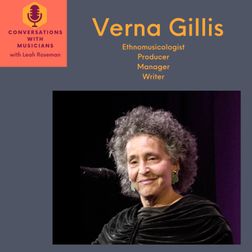
Verna Gillis: Ethnomusicologist, Producer, Manager, Writer

It’s hard to sum up how important Verna Gillis has been for music lovers. First of all, she is an ethnomusicologist who recorded traditional music around the world including in Kashmir, Afghanistan, Iran, Haiti, the Dominican Republic, Peru, Surinam, Ghana, and the United States. This episode will bring you along on some of these journeys. 25 of these recordings are available through Smithsonian Folkways and Lyrichord, and I’m very grateful to Smithsonian Folkways for allowing us to use some of these tracks for this specific episode. The albums that this music comes from are linked here in the show notes, where you'll find the video version, transcript, and photo gallery from Verna's career: ⁠https://www.leahroseman.com/episodes/verna-gillis⁠ In 1979 Verna opened Soundscape, the first multi-cultural performance space in New York City, which put on hundreds of performances over 5 years. You’ll also hear Verna reminisce about her work on career development with phenomenal international musicians including Youssou N’dour from Senegal, Salif Keita from Mali, and Carlinhos Brown from Brazil. As a producer, Verna was twice nominated for a GRAMMY award for two of the albums she produced with Roswell Rudd. She’s also a writer and spoken word performer. We’ve included in this episode one of her recent spoken word videos with British musician Jennifer Maidman. There’s so much more in this episode, and I hope a wide audience will be inspired by Verna Gillis’ reflections on her remarkable life in music.

Frédéric Moisan: Languages, Life-balance and Learning the violin

I’m joined by my colleague in Canada’s National Arts Centre Orchestra, violinist Frédéric Moisan. Originally from the Breton town of Saint-Brieuc in France, he immigrated to Finland and then Canada. In this wide-ranging conversation we talked about wind-surfing,family, languages, different cultures’ approaches to education, the challenges of playing the violin, the original version of the Sibelius violin concerto (which was the subject of Fred’s Doctoral Dissertation), life balance, and fly fishing. We talked about the differences between being a freelancer to being an orchestra member; Fred has great advice for colleagues and students preparing auditions, and you can find these various topics in the timestamps. Like all my episodes, this is available as both a video on my YouTube, and a podcast wherever you listen to podcasts; the transcript is also linked on my website: https://www.leahroseman.com/episodes/frdric-moisan Finally, do check out the link to my Ko-fi page in the description, since I really need my listeners’ support to keep this project going! https://ko-fi.com/leahroseman Timestamps: (00:00) Intro (02:12) growing up in Brittany, studies in France, the Conservatoire system (09:52) moving to Finland (20:45) violin studies with Anne-Marie De Boisgisson, windsurfing, education systems (29:07) please help me keep this series going: Ko-fi support page linked! (29:35) Anne-Marie De Boisgisson (30:26) different education systems Finland, France, Canada (37:20) Fred’s parents, grandparents, the loss of his mother (48:05) reflections on parenting and balancing life, bringing up multi-lingual children (54:25) differences between freelancing and having an orchestra job (01:00:31) orchestra auditions (01:05:06) violin practice routines (01:09:00) Sibelius violin concerto original version (01:14:50) performing as a soloist with orchestra (01:17:02) goals and aspirations for music students (01:24:24) Breton language and culture (01:27:33) fly-fishing and the benefit of hobbies
16 di 26